• Skip to primary navigation
  • Skip to main content
  • Skip to primary sidebar

Coral + Co. logo

  • Sewing
    • Free Tutorials
    • Free Patterns
    • Accessories
    • Apparel
    • Baby Sewing
    • Beginner
    • Home Sewing
    • Kids
    • Minky Sewing Projects
    • Tips and Tricks
  • Quilting
    • Learn How To Quilt
    • Free Quilt Patterns
    • Quilt Blocks
    • Quilt Patterns
    • Quilt Alongs
    • Holiday
  • Crafts
    • Cricut
    • Holiday
    • Printables
  • Holiday
    • Valentines Day
    • Easter
    • Mother’s Day
    • Summer
    • Patriotic Sewing
    • Halloween
    • Christmas
  • FREEBIES
    • Coral + Co. Resource Library
  • Contact
  • Shop
  • Nav Social Menu

    • Bloglovin
    • Email
    • Facebook
    • Instagram
    • Pinterest
    • YouTube
You are here: Home / Sewing and Quilting Patterns and Tutorials

Sew a Scrappy Patchwork Baby Bib with the FREE Pattern

Feb 27, 2024 · 1 Comment

Baby-Bib-Pattern-Cover-4

Let’s Sew Together: Making a Scrappy Patchwork Baby Bib with a Free Pattern

Hey there! So, you know how prepping for a new baby involves a whole lot of getting ready? Well, why not add a personal touch with some DIY magic? Today, I’m excited to show you how to whip up something adorable and practical: a scrappy patchwork baby bib!
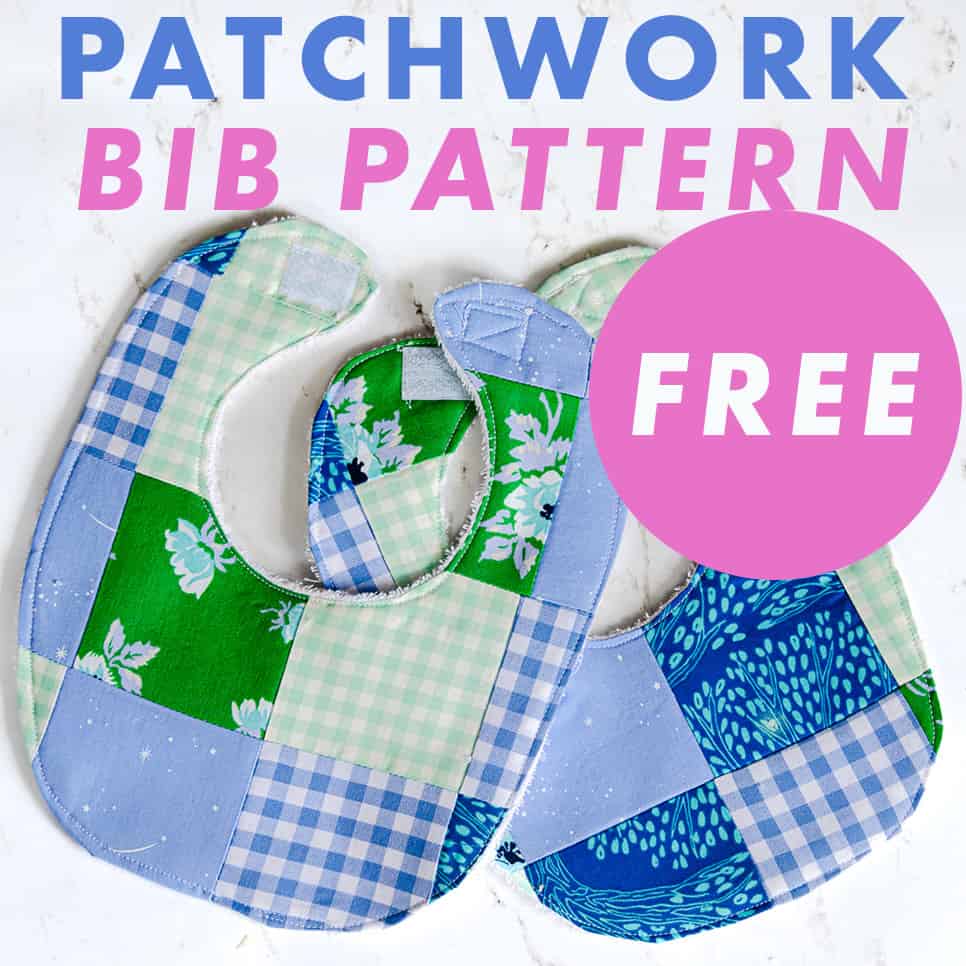
two-blue-green-cornflower-patchwork-baby-bibs

Bibs are a must for any parent, right? But making them yourself? That’s where the fun is. In this little walkthrough, I’ll guide you through crafting a sweet patchwork bib using leftover fabric scraps. And guess what? There’s a free pattern available in four sizes, so you can adjust it as your little munchkin grows.

Oh, and here’s the best part: we’ll be using the secret chain piecing method to make this project super quick! Whether you’re a seasoned pro or just dipping your toes into the sewing world, this project is super satisfying. So, grab those fabric scraps lying around, thread your needle, and let’s get creative! Together, we’ll make a one-of-a-kind bib that’ll not only catch those drools but also steal hearts. Ready? Let’s dive in!

Table of Contents

  1. Click Below to Get the Patchwork Bib Pattern
  2. More Baby Sewing Projects For You:
  3. What are the Finished Baby Bib Sizes?
  4. Baby Bib Supplies List:
  5. Watch the Youtube Video
  6. Patchwork Baby Bib Pattern Tutorial
    1. Follow the Instructions below or watch the Patchwork Baby Bib Video
  7. Pin the Patchwork Baby Bib Pattern to Save for Later

Click Below to Get the Patchwork Bib Pattern

Patchwork-Baby-Bib-PatternDownload

More Baby Sewing Projects For You:

  • 50+ Cutest Baby Sewing Projects
  • Burp Cloth Pattern – 3 Styles
  • Side Snap Baby Bib Pattern
  • FREE Top Knot Baby Hat Sewing Pattern
  • FREE Basic Baby Hat Sewing Pattern
  • How to Make a Sherpa Fleece Baby Blanket
  • Minky Crib Sheet Tutorial
  • Knot Bow Headband Pattern
  • Easy Newborn Baby Swaddle Blanket
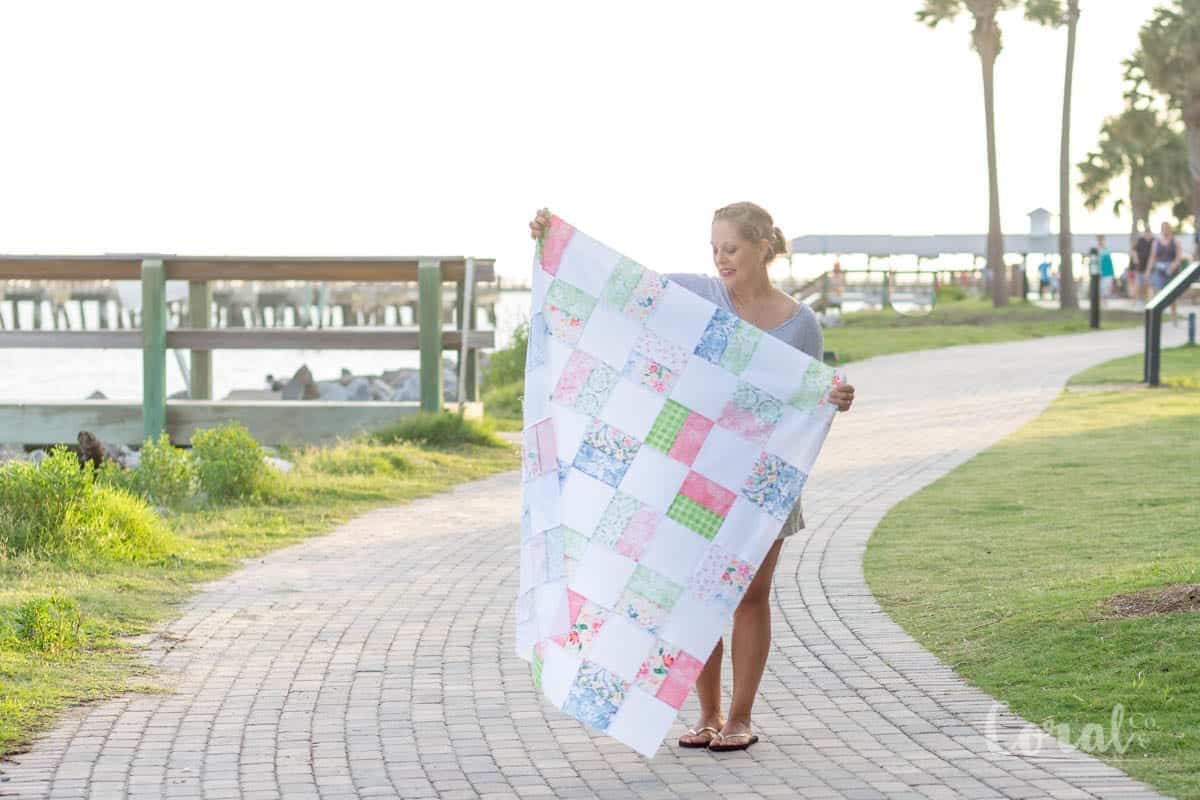
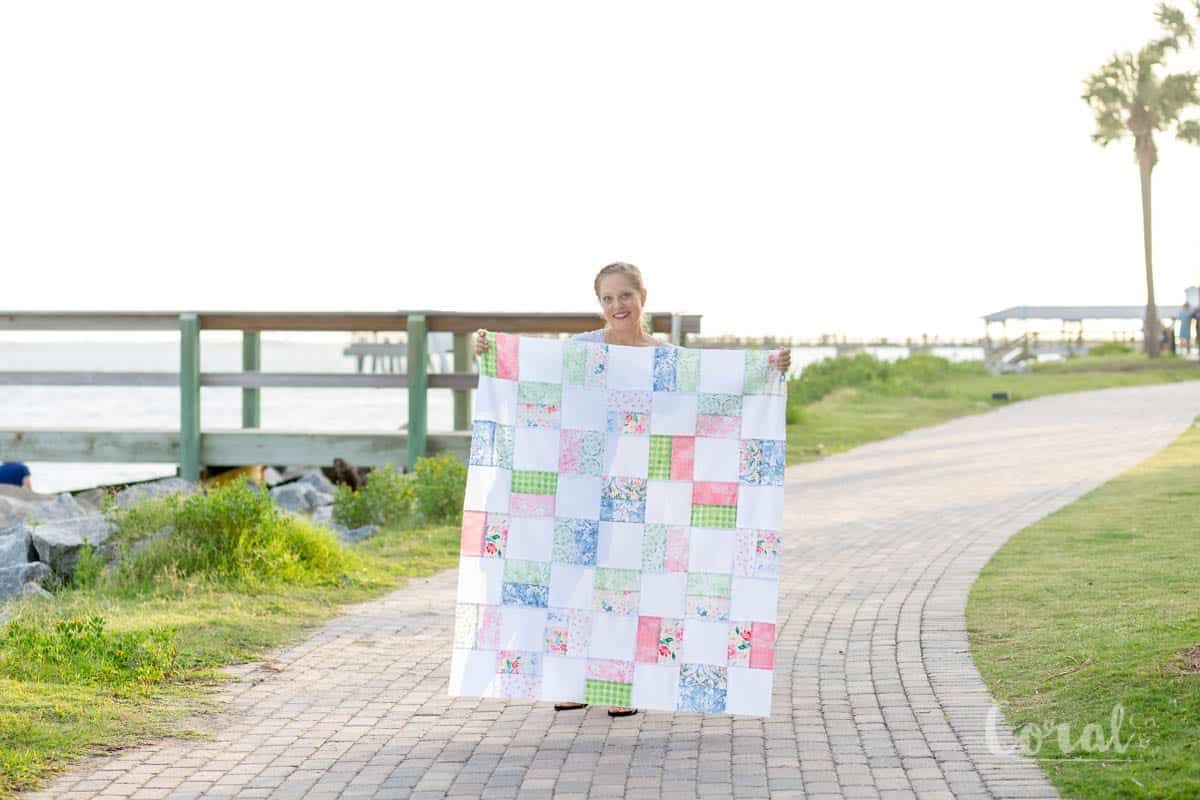
  • Simple Squares Baby Quilt Pattern

The baby bib pattern comes in 4 available sizes:

  • Newborn
  • 3-6 Months
  • 6-12 Months
  • 1-4 Years

What are the Finished Baby Bib Sizes?

Width x Length

  • Newborn: 7.5″ x 10″
  • 0-3 Months: 9.25″ x 10.5″
  • 6-12 Months: 10″ x 11″
  • Toddler: 1 – 4 Years: 10″ x 12.5″

Be sure to sign up for the Blog Freebie Resource Library to access the baby bib pattern in 4 Sizes.

Baby Bib Supplies List:
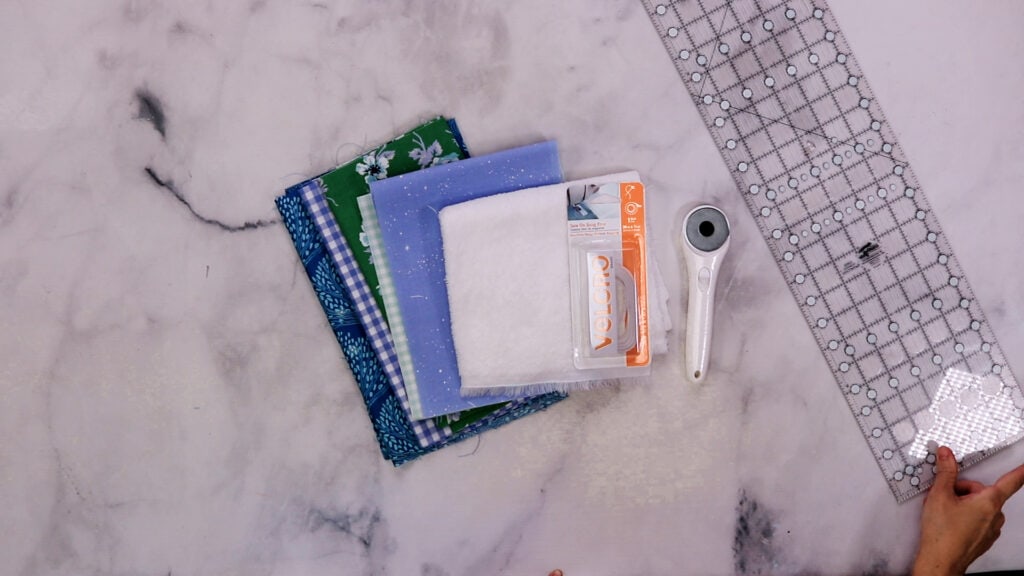
  • 20 – 25 – 3 1/2″ squares of scrap fabric or 5 fat quarters or 1/8 or 1/4 yards of quilting cotton or flannel fabric.
  • 1 Fat Quarter or 1/3 yard ofTerry Cloth, Chenille, or Minky Fabric
  • Baby Bib Pattern Template (Available in the Resource Library – Sign up to Access)
  • KAM Snaps, Metal Snaps or Velcro
  • Pins or Wonderclips
  • Sewing Machine Needle
  • Thread
  • Scissors or Rotary Blade and Cutting Mat

Watch the Youtube Video

Patchwork Baby Bib Pattern Tutorial

Follow the Instructions below or watch the Patchwork Baby Bib Video
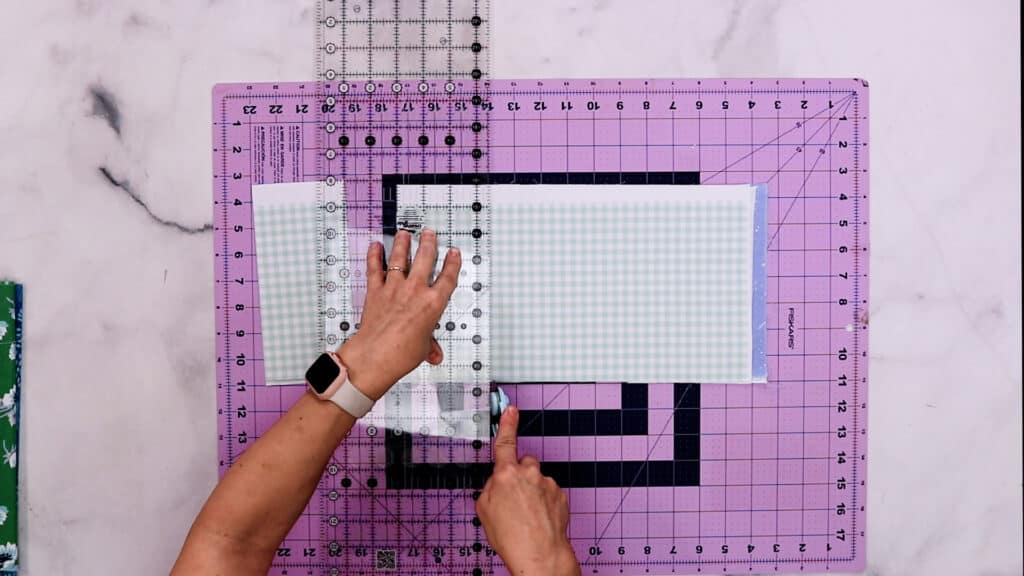
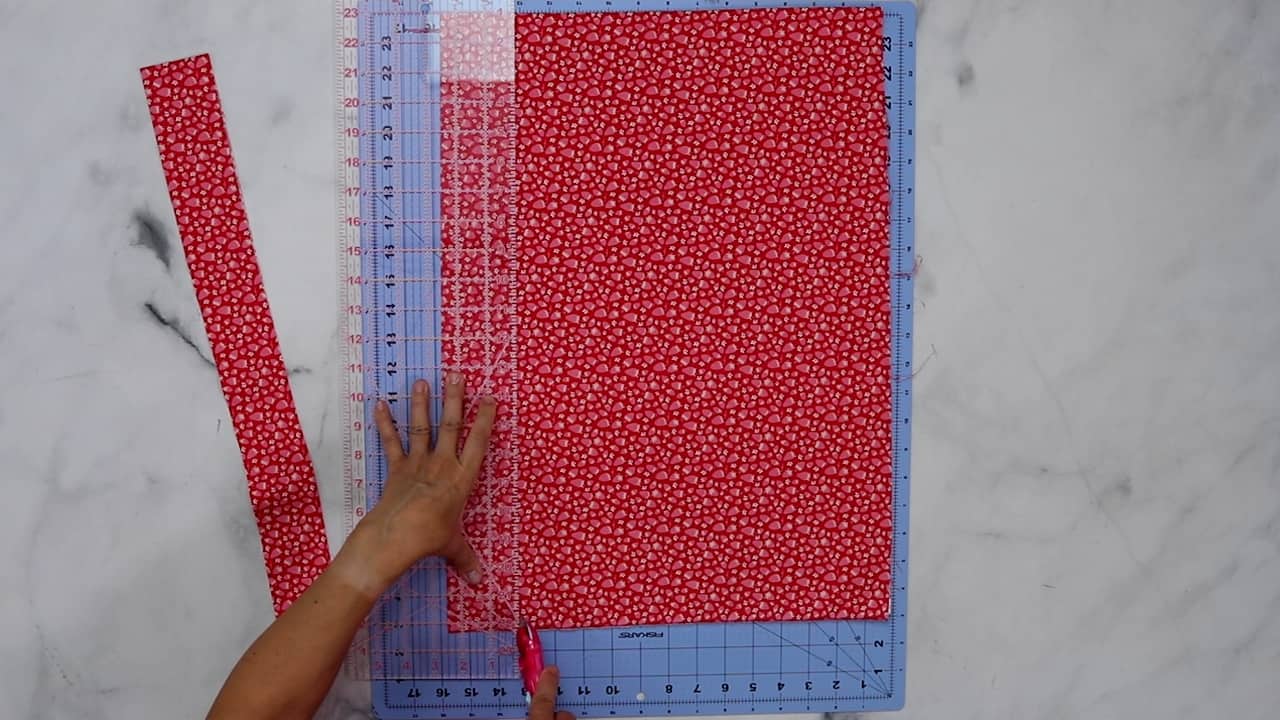
Step One: Cut four (4) 3.5″ squares from each of the five fabrics. If using scrap fabric, cut 16 – 20 squares according to the bib size you are making.
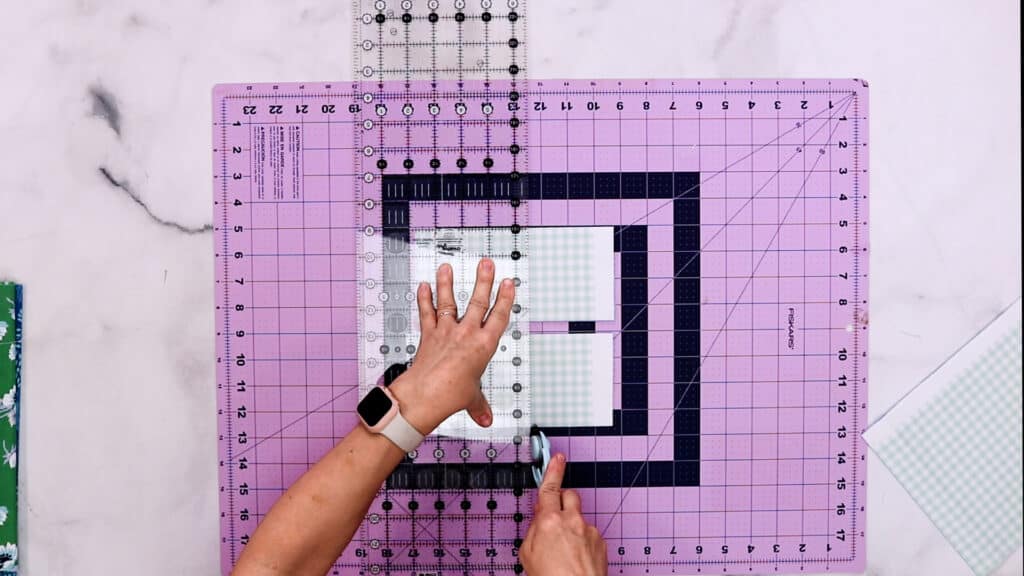
If using fat quarters or 1/4 yard cuts of fabric, cut two strips of 3.5″ x the width of the fabric (WOF). Then turn the strips horizontally and cut to 3.5″ squares.
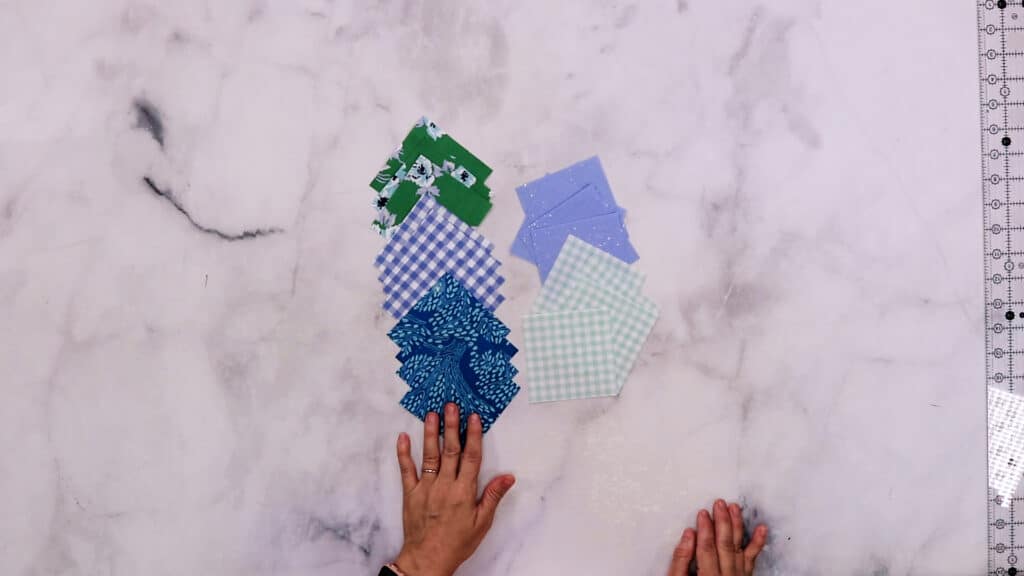
For the Newborn and 0-3 month sizes you will need 16 squares. For sizes 6-12 months, and 1-4 years you will need 20 squares.
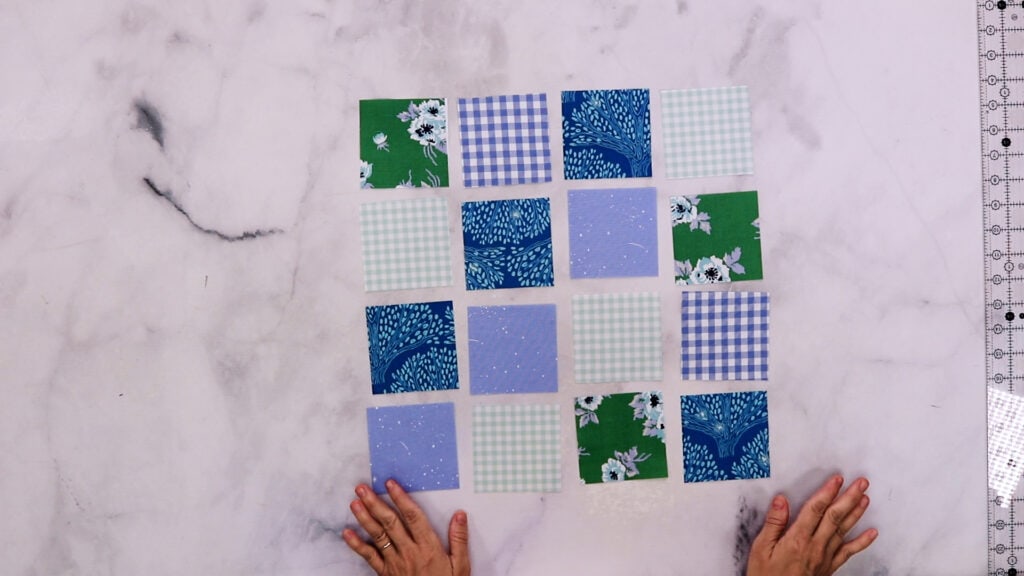
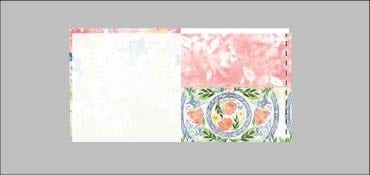
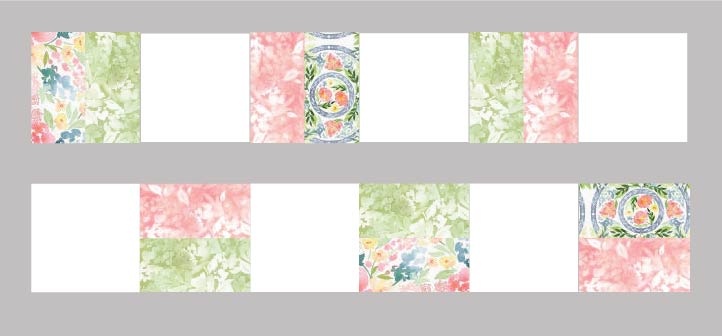
Step 2: Arrange the squares to your liking in a 4 x 4 square block for the newborn and 0-3 months sizes. Arrange the squares in a 4 x 5 square block placement for the 6-12 month and 1-4 year sizes.
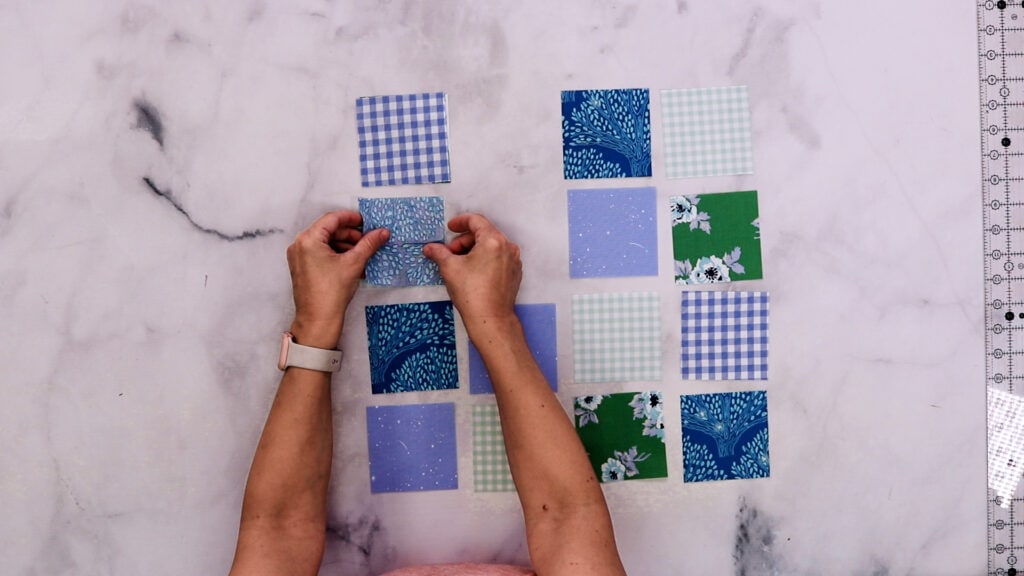
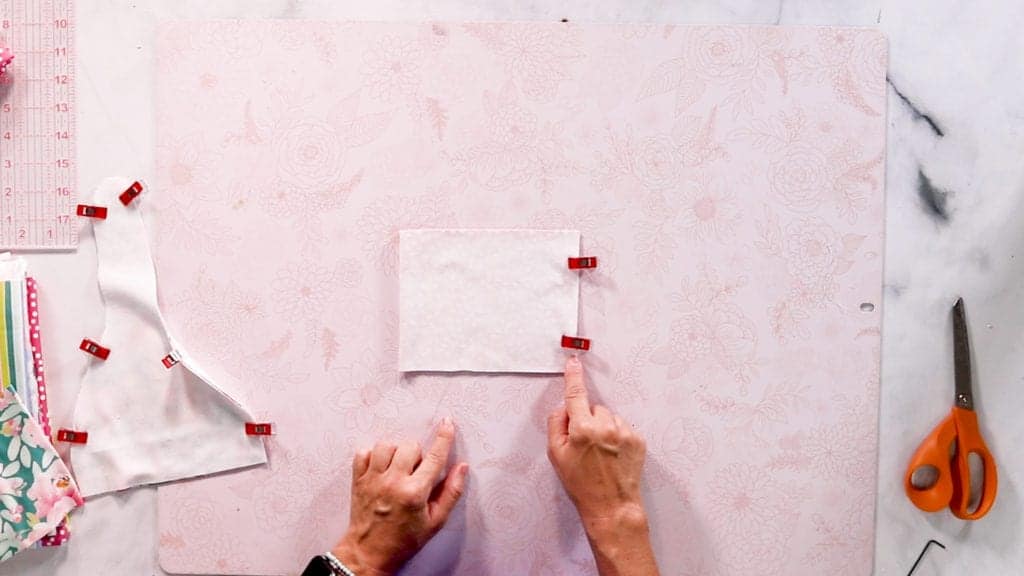
Step 3: place the squares in the second column right sides together with the adjacent square in the first column. Repeat so the fourth column squares are right sides together with the third column squares.
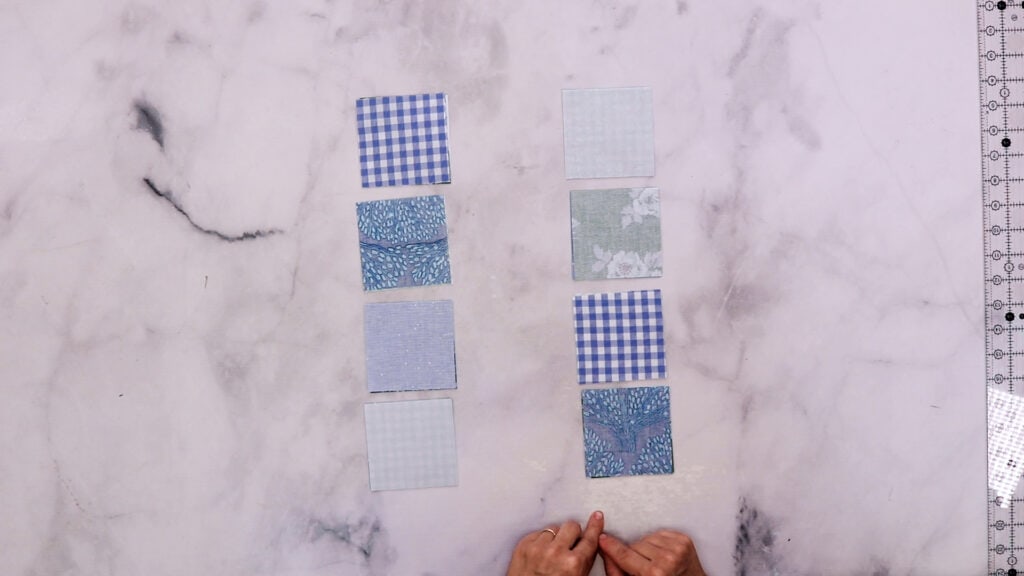
You will be using the chain piecing technique to sew the squares together.
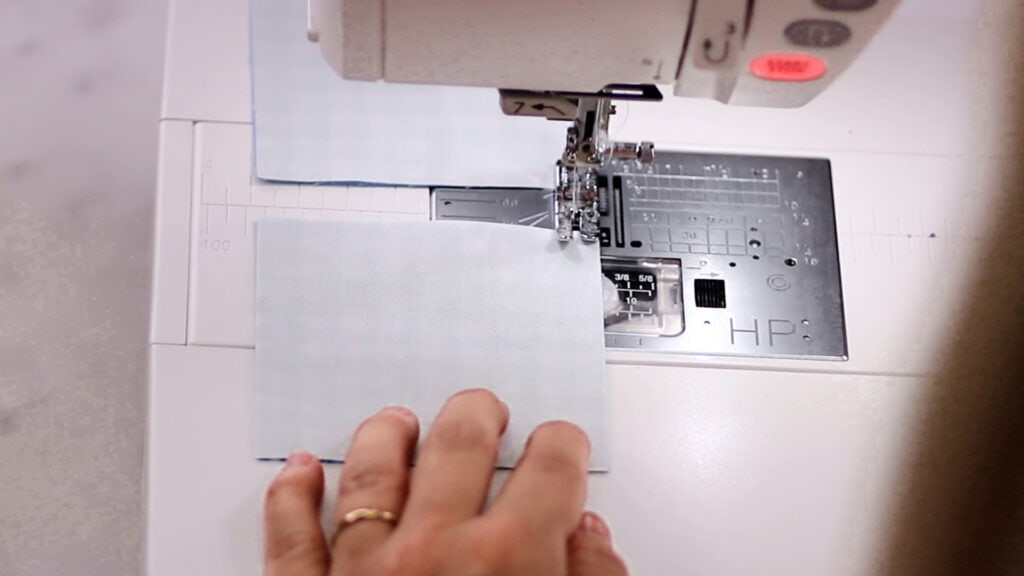
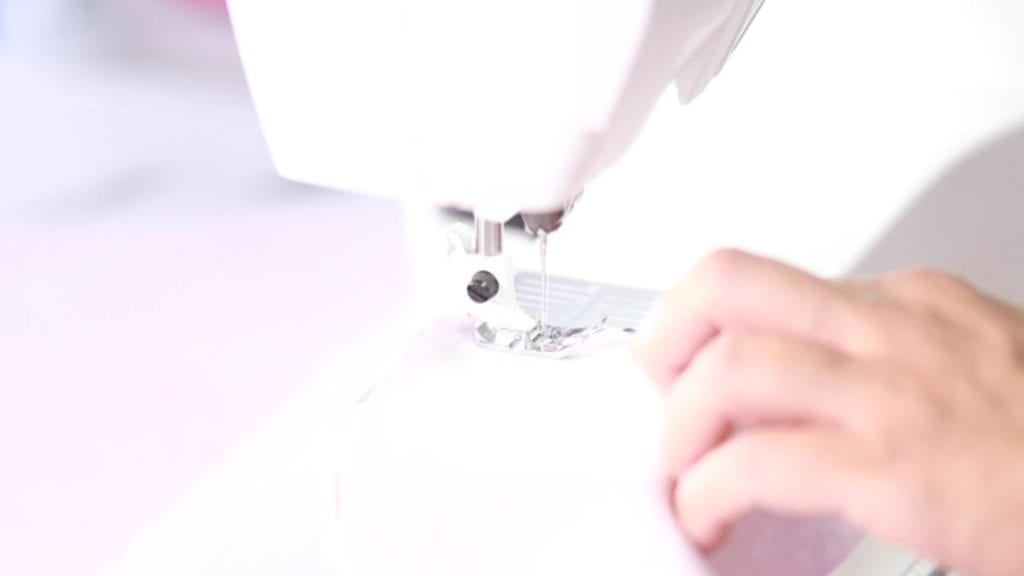
Step 4: Sew down the right side of the squares starting with the first square in the first column using a 1/4″ seam allowance . Continue sewing the second, third, and then fourth square in the column using a 1/4″ seam allowance. Repeat for the second column.
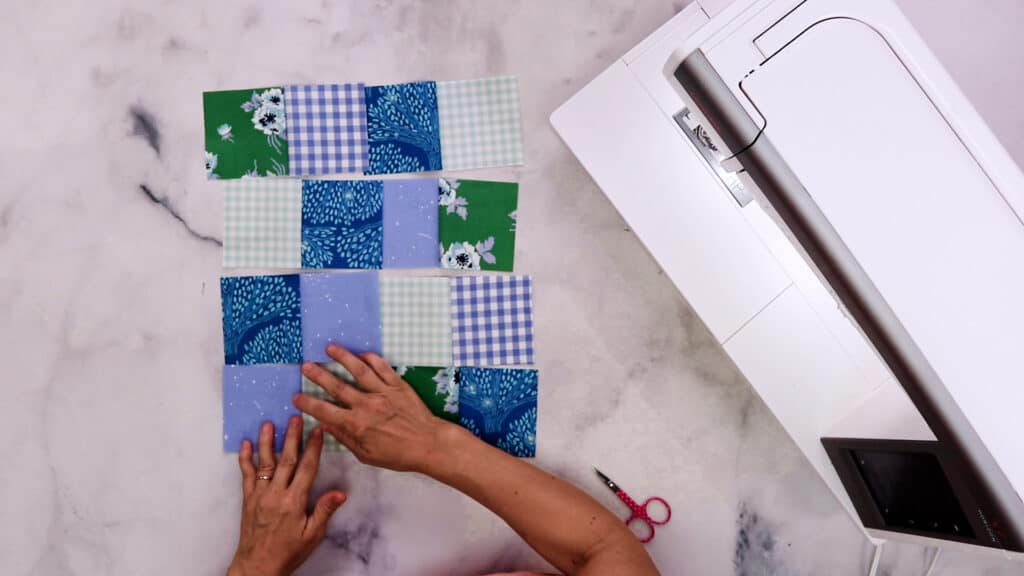
You will leave the threads between each set of squares attached. Lay flat. It will look like this when completed.
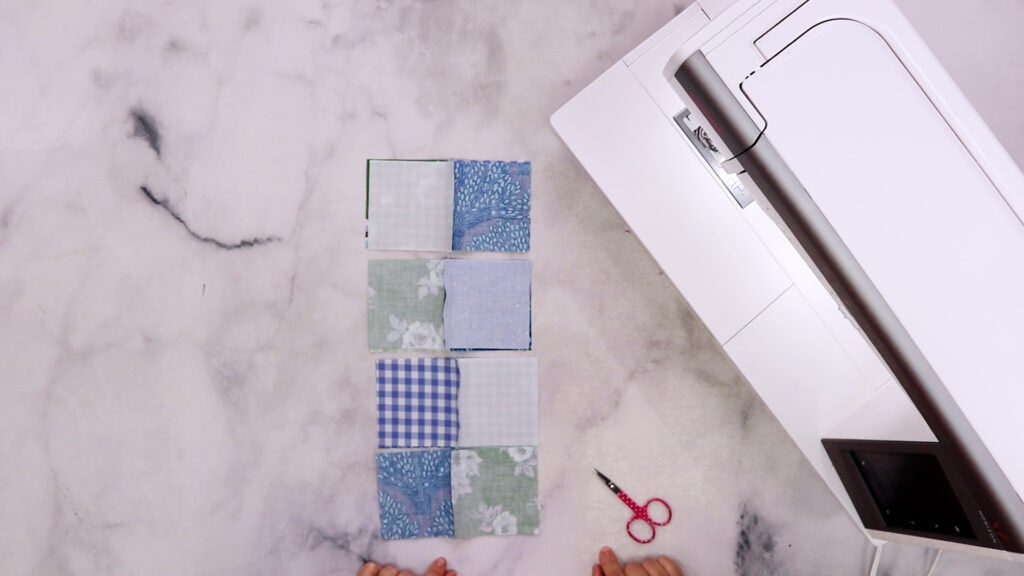
Step 5: fold in half vertically so the third and fourth columns are right sides together over the first and second columns.
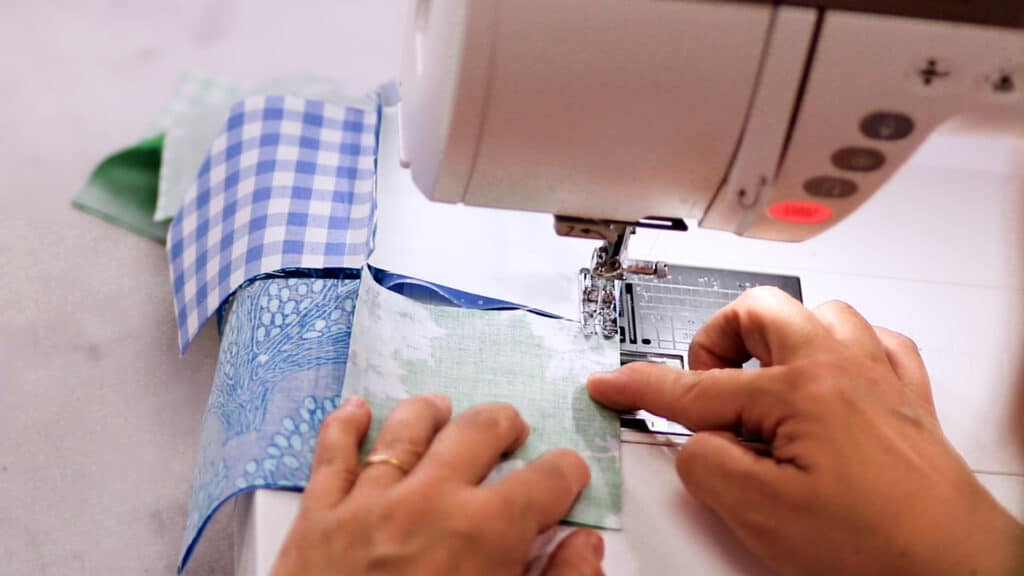
Step 6: Sew 1/4″ seam allowance down the right side of all the squares in the unit formed in the previous step.
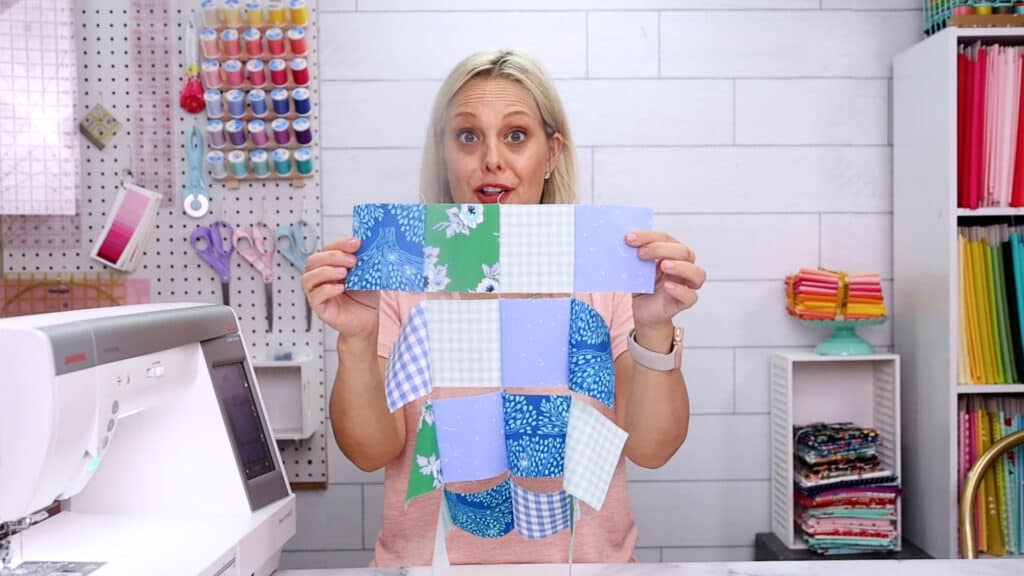
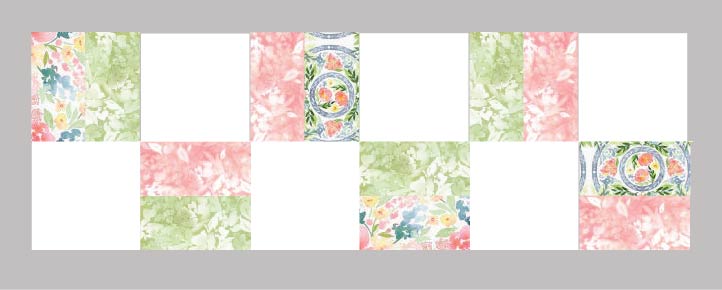
All the squares are now sewn into rows as shown.
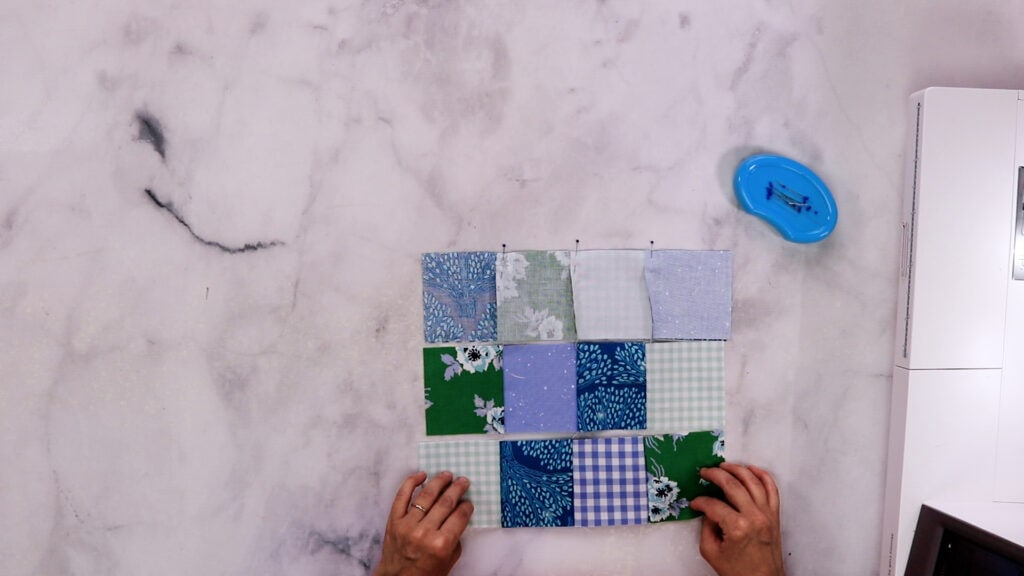
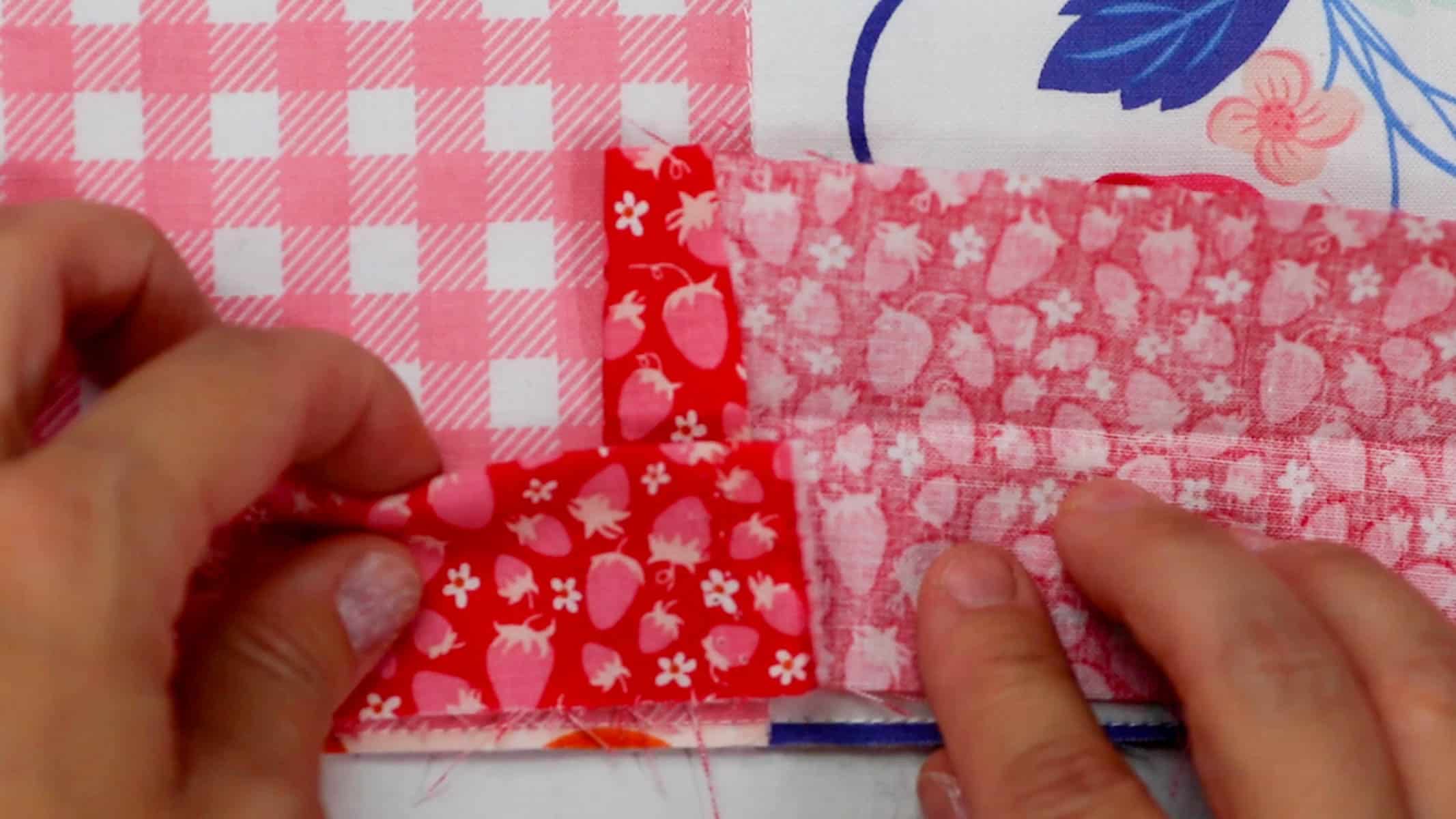
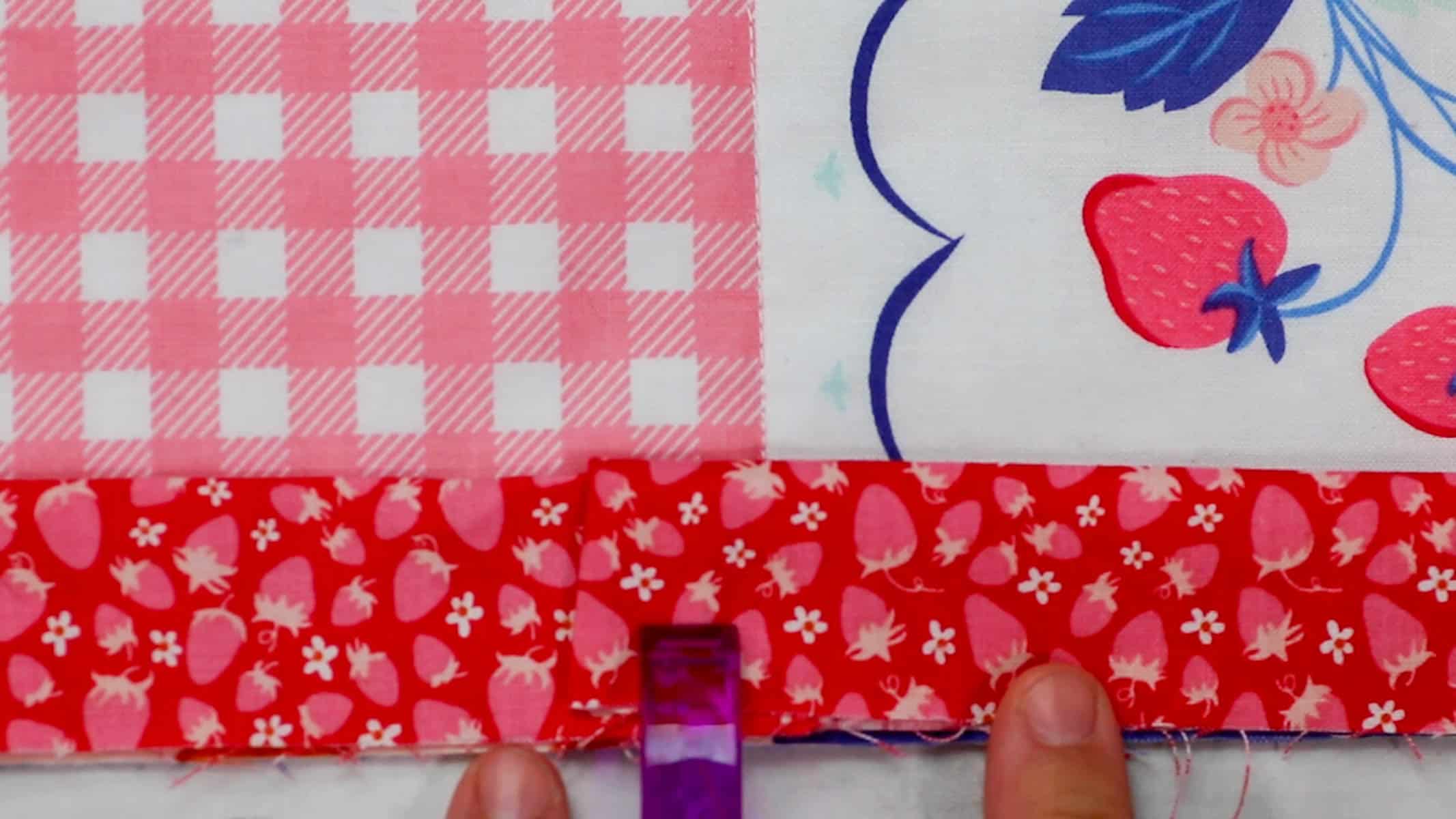
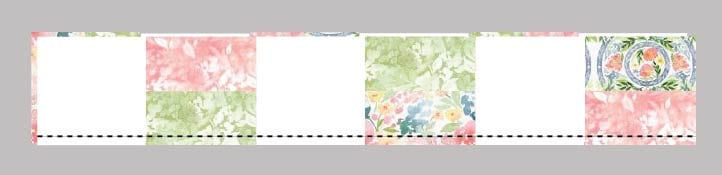
Step 7: Fold the top row right sides together over the second row and pin in place. Be sure to nest the seams as shown in the pictures below.
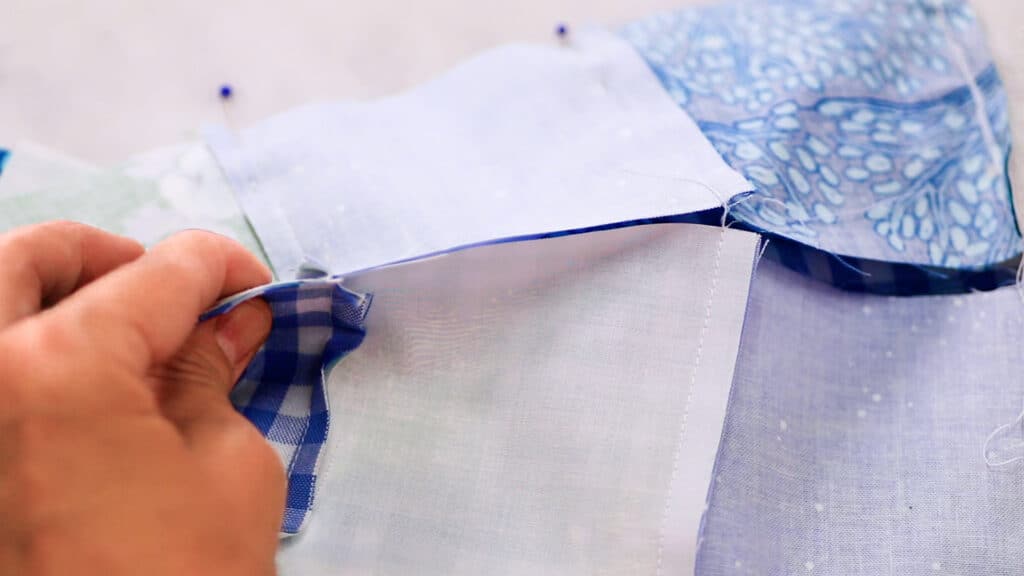
Step 8: Fold the seam allowances for the first row to the right side and press. Fold the seam allowances for the second row to the left side and press.
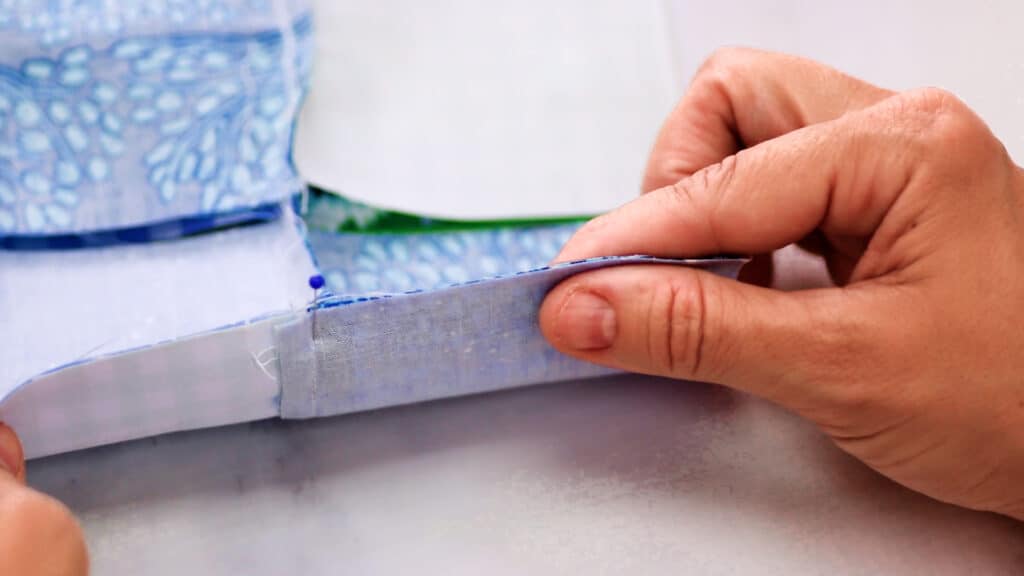
Step 9: Line the seam allowances up so they are facing the opposite direction to reduce bulk and pin along the seam.
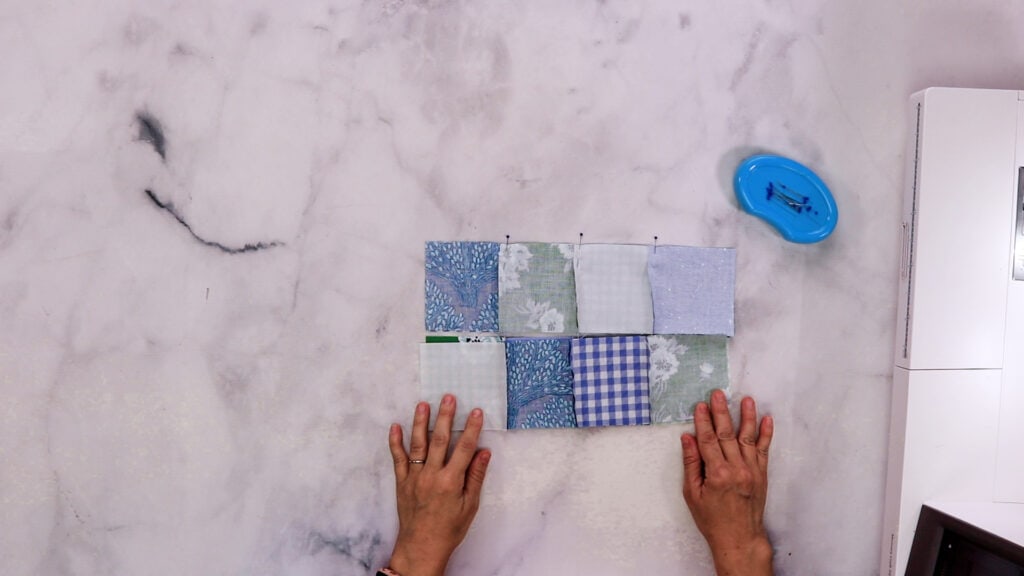
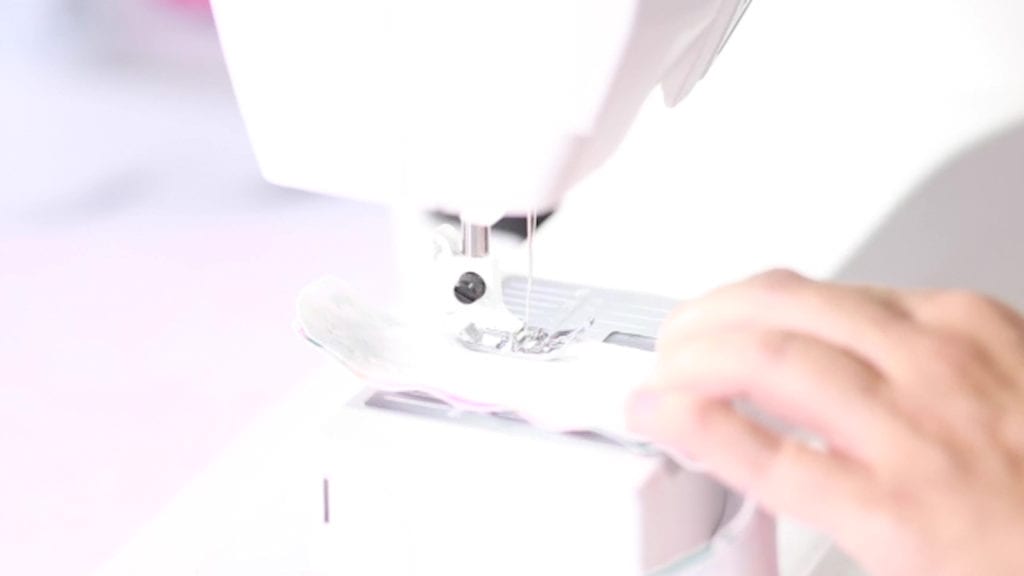
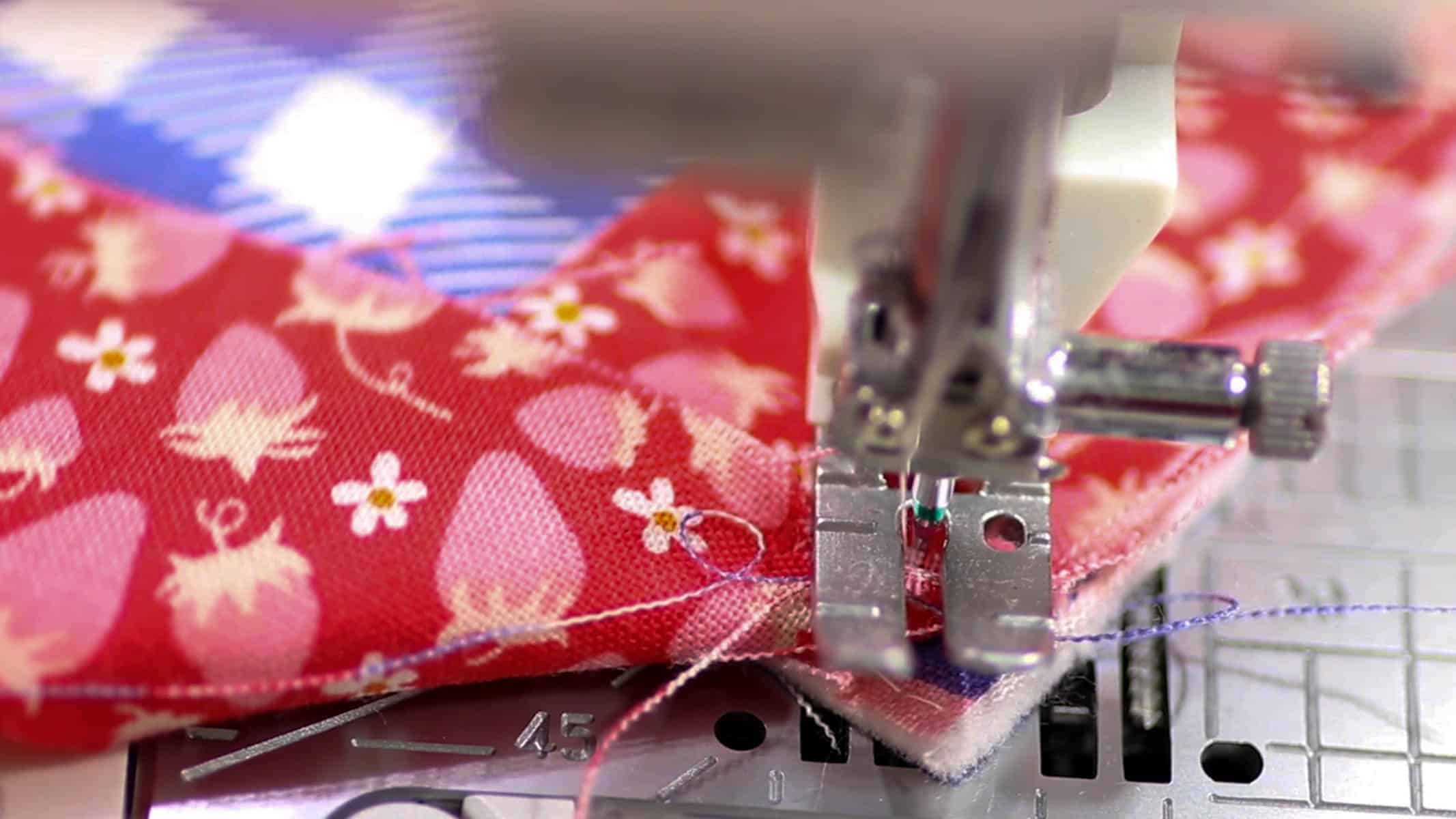
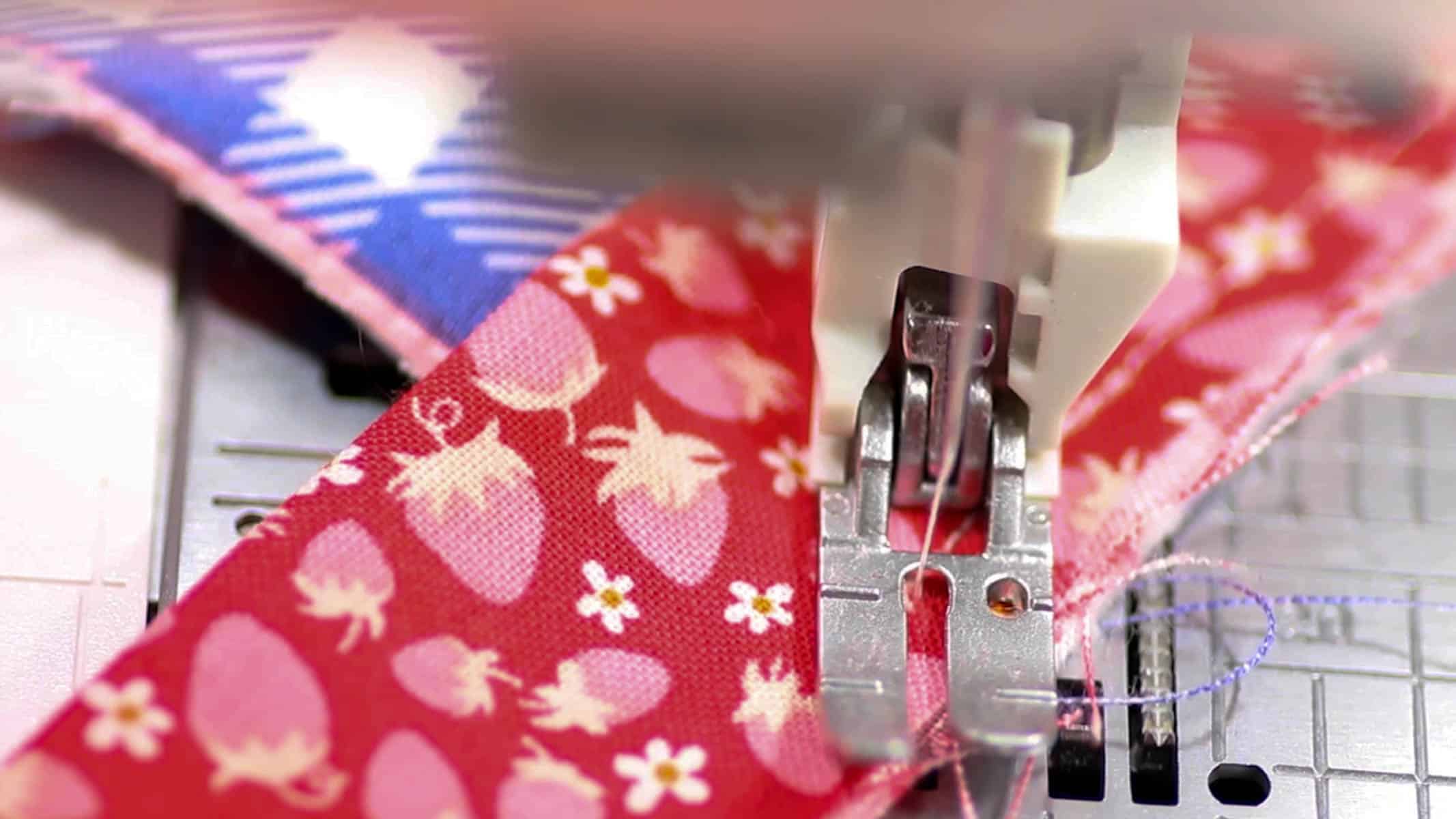
Step 10: Fold the fourth row right sides together over the third row and pin in place. Be sure to nest the seams as in the previous step to reduce the bulk in the seam allowance. Sew 1/4″ seam along the top and bottom rows. Then fold in half, nesting the seams, and pin in place. Sew 1/4″ seam to finish joining the patchwork square.

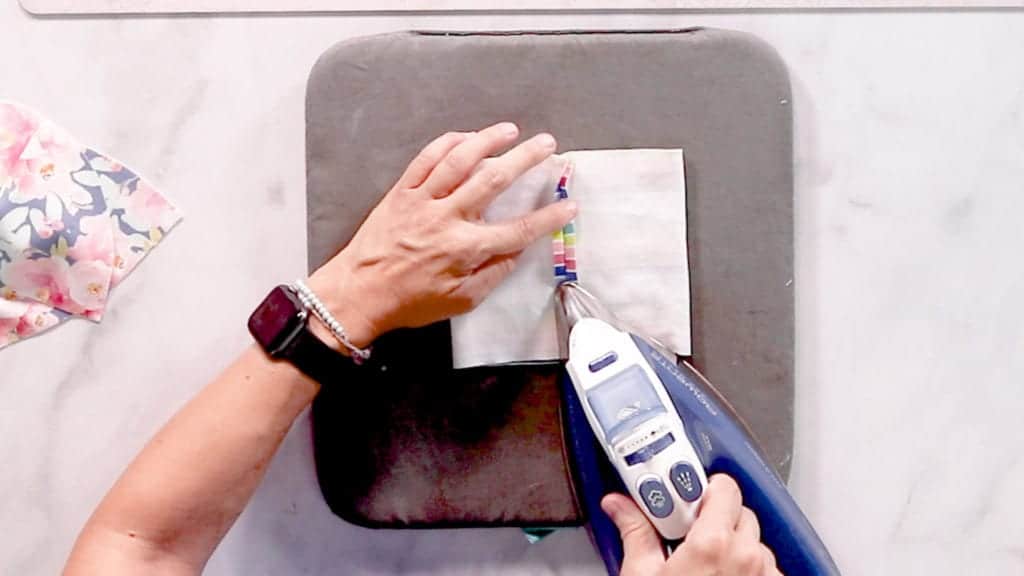
Step 11: Press the seams to one side.
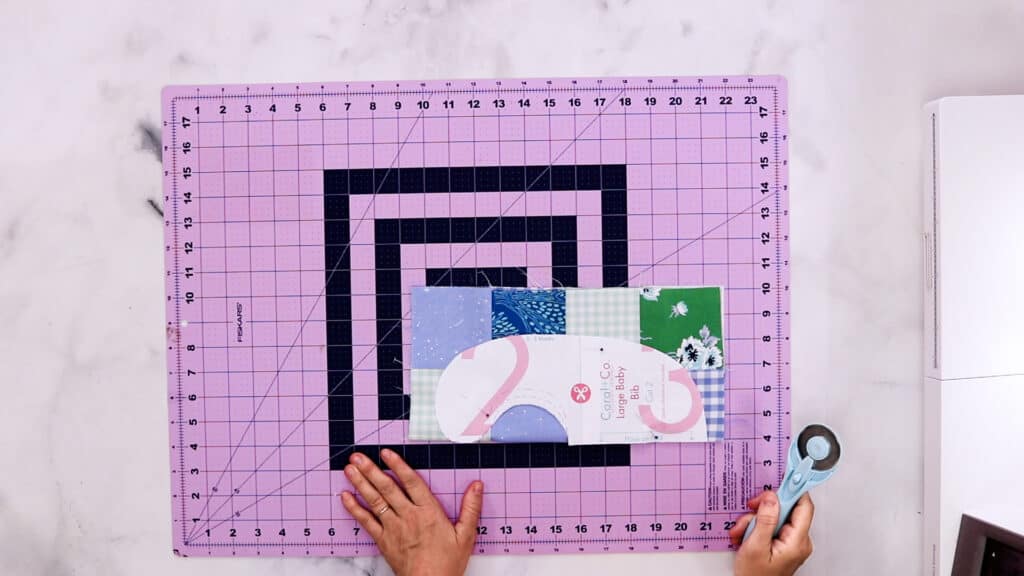
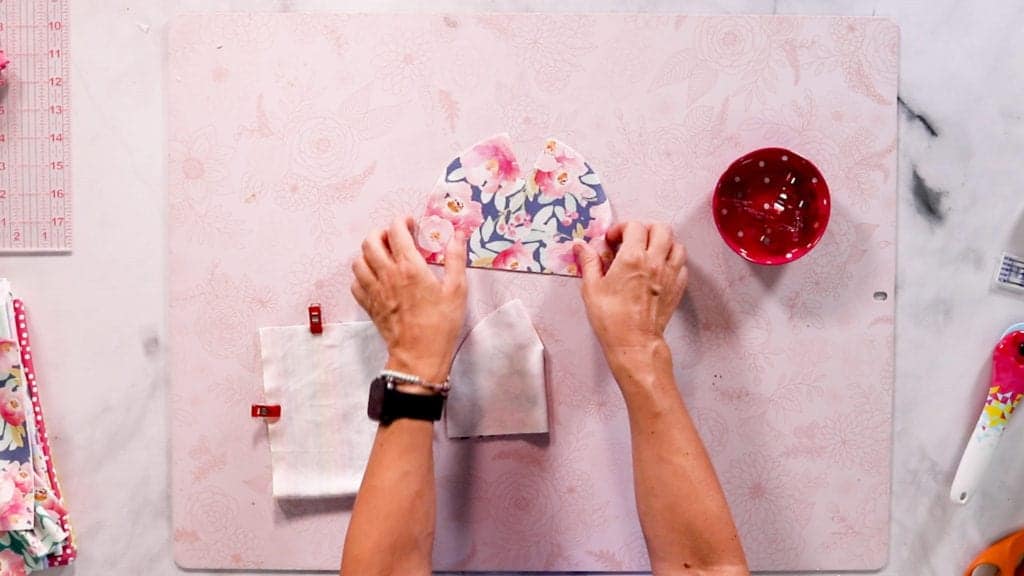
Step 12: Fold the patchwork square in half wrong sides together. Place the bib pattern template on top and pin in place. Cut the bib shape out of the patchwork fabric.
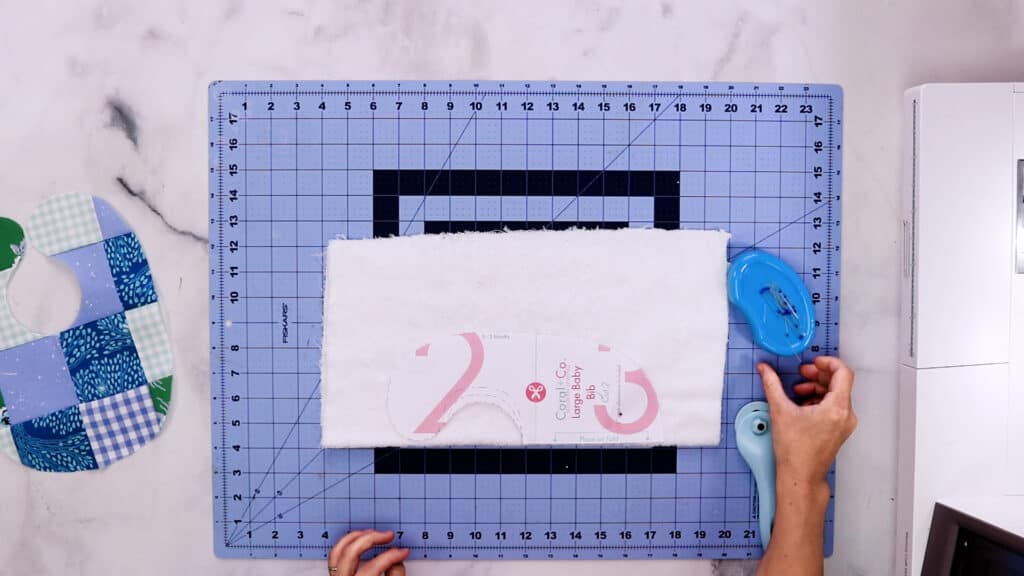
Step 13: Fold the terry cloth in half wrong sides together. Place the bib pattern template on top and pin in place. Cut the bib shape out of the terry cloth fabric.
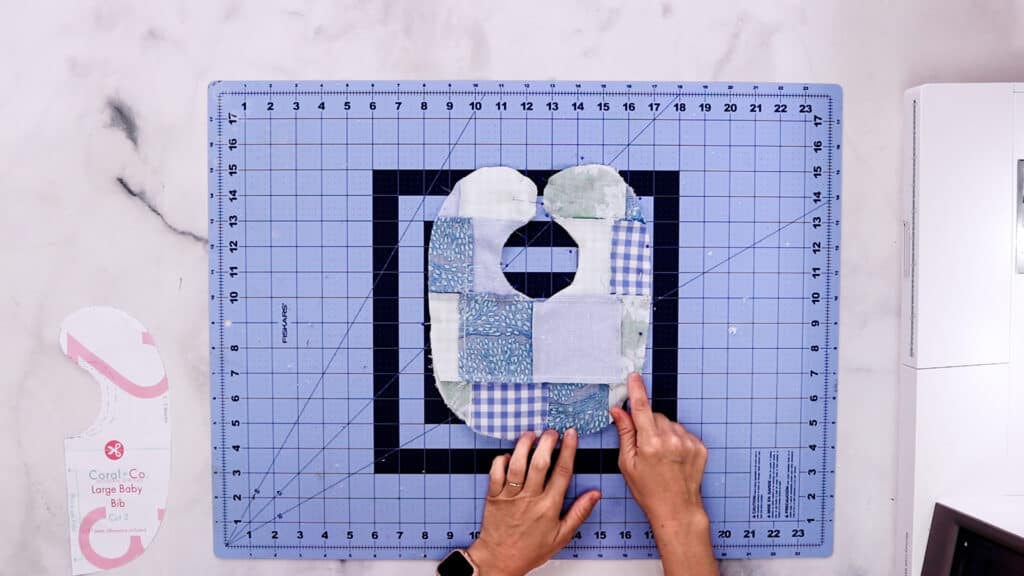
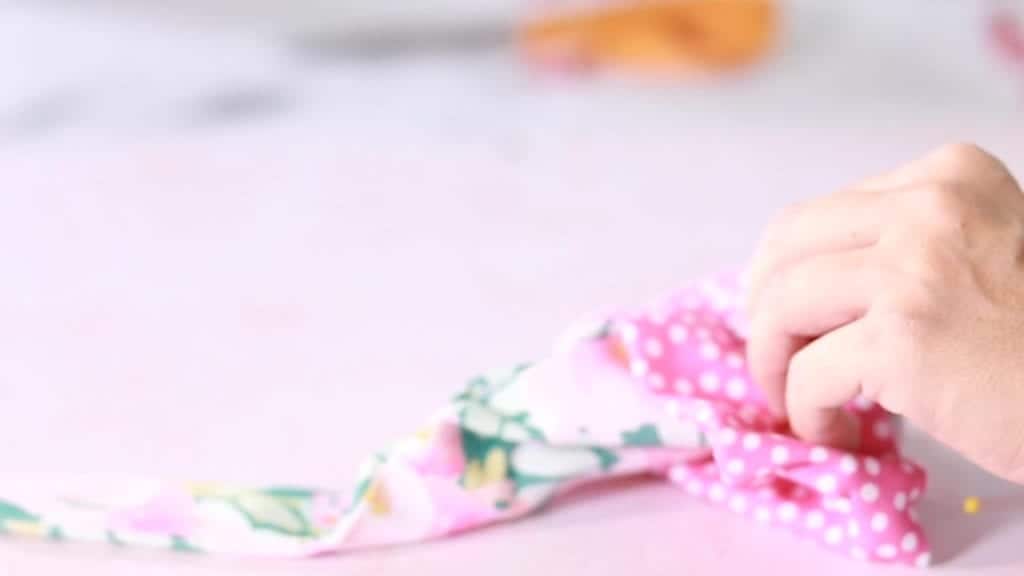
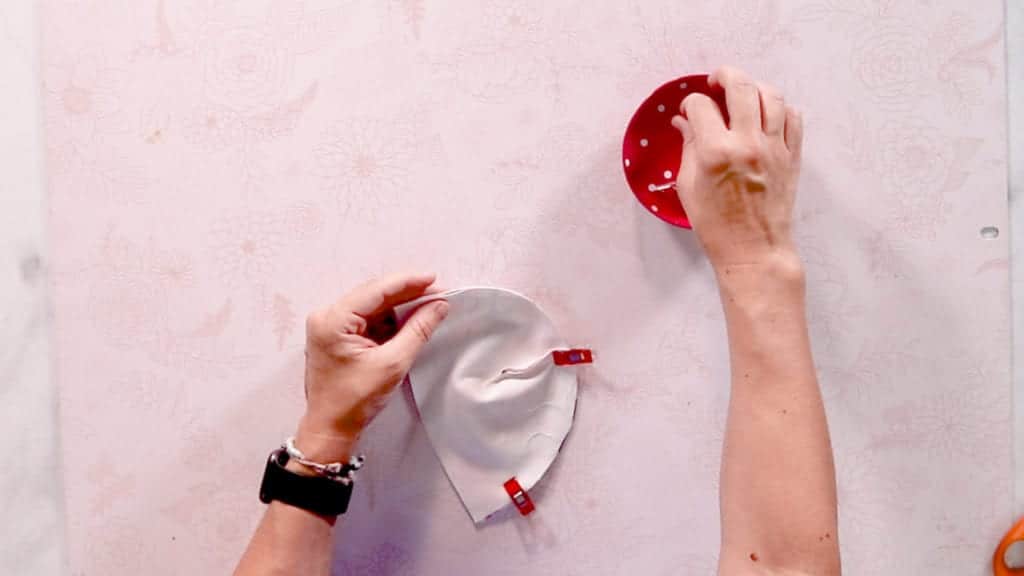
Step 14: Place the bib front and back right sides together and pin in place leaving a 2 – 3″ opening along the side or bottom.
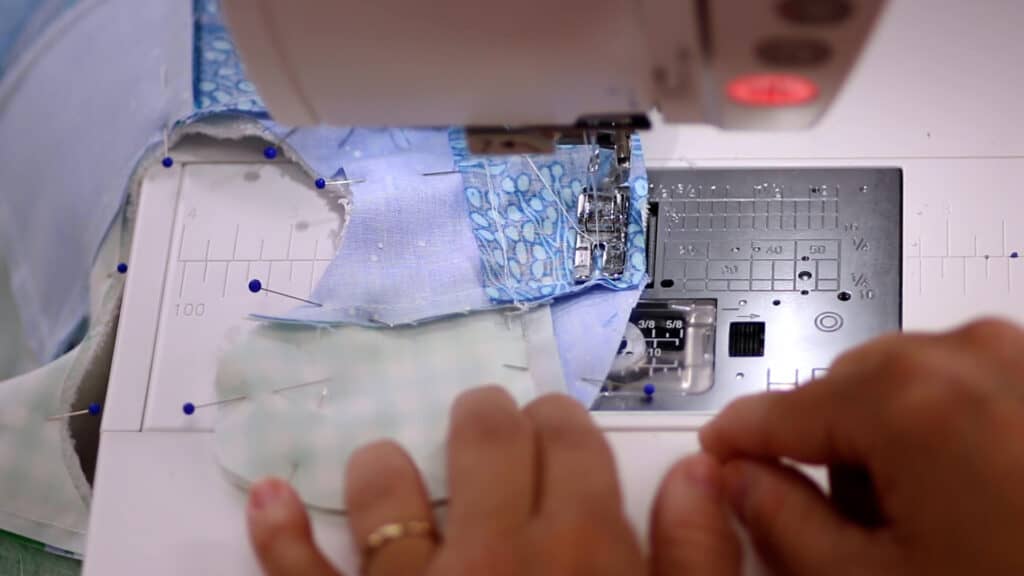
Step 15: Starting at the bottom of the opening sew 1/2″ seam allowance around the edge of the bib. Backstitch in place at the beginning and end. Stop at the beginning of the opening.
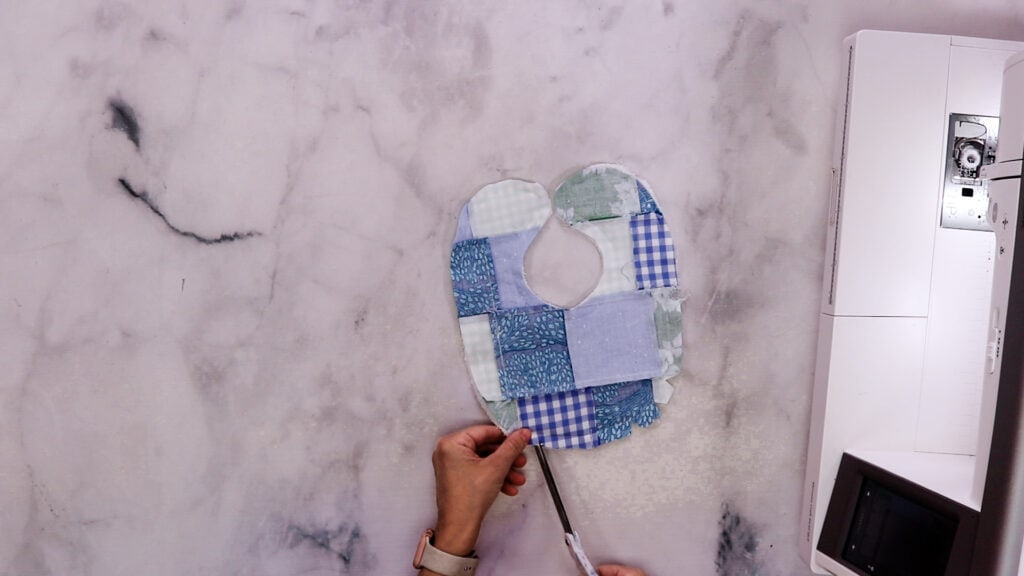
Step 16: Clip 3 -4 V notches around the outward bottom and closure curves. Clip straight lines along the neckline to reduce bulk when turning the bib right side out. Make sure not to clip through the seam.
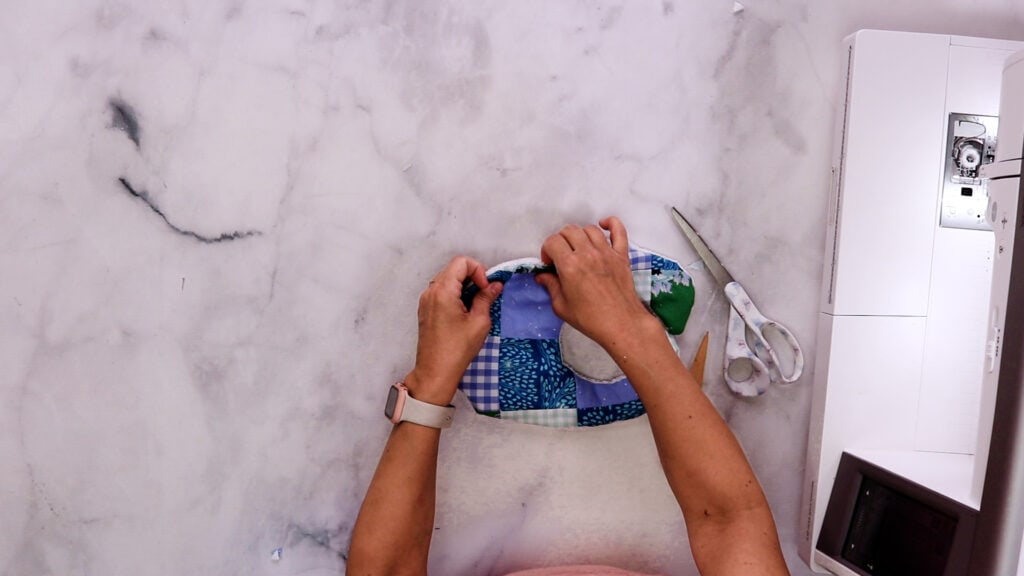
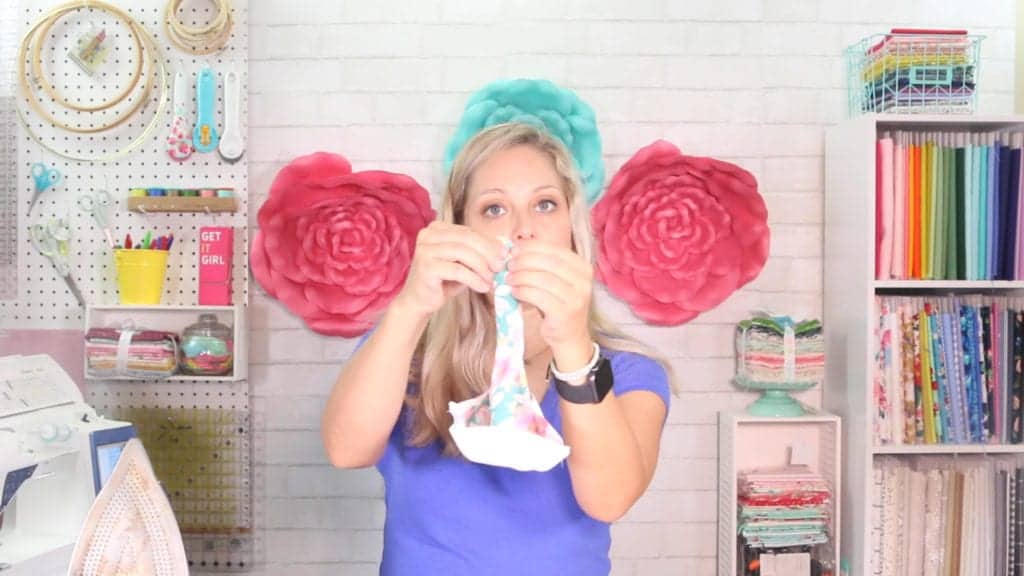
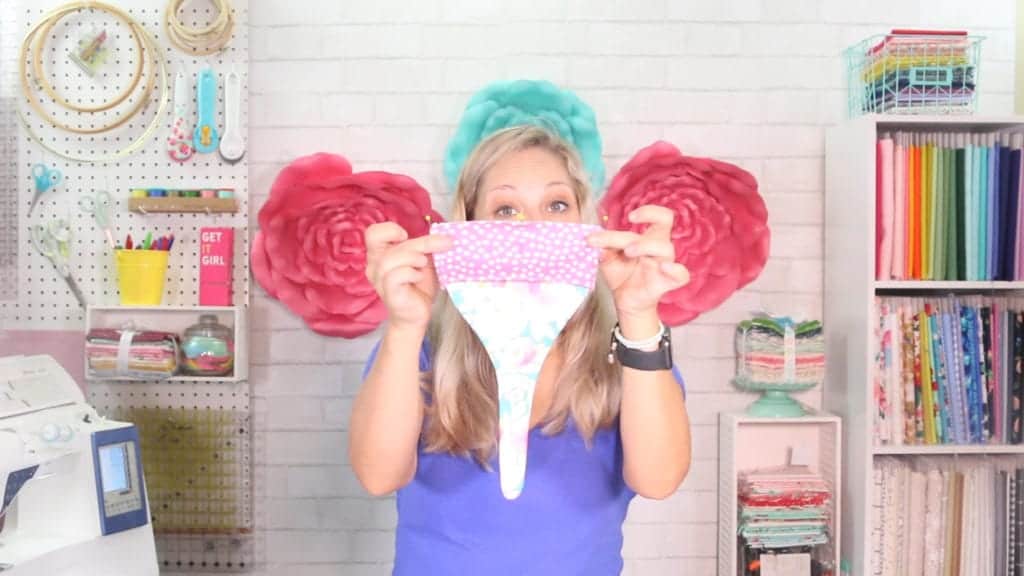
Step 17: Turn the bib right side out. Use a pencil or turning point tool to push the seams all the way out. Roll the seam edges with your fingers to push the seams of the bib flat.
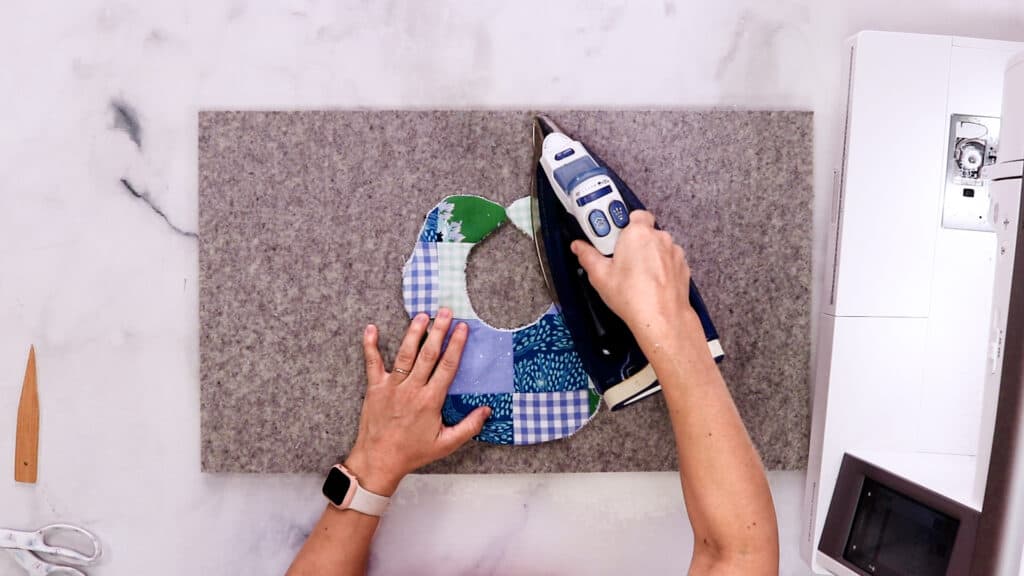
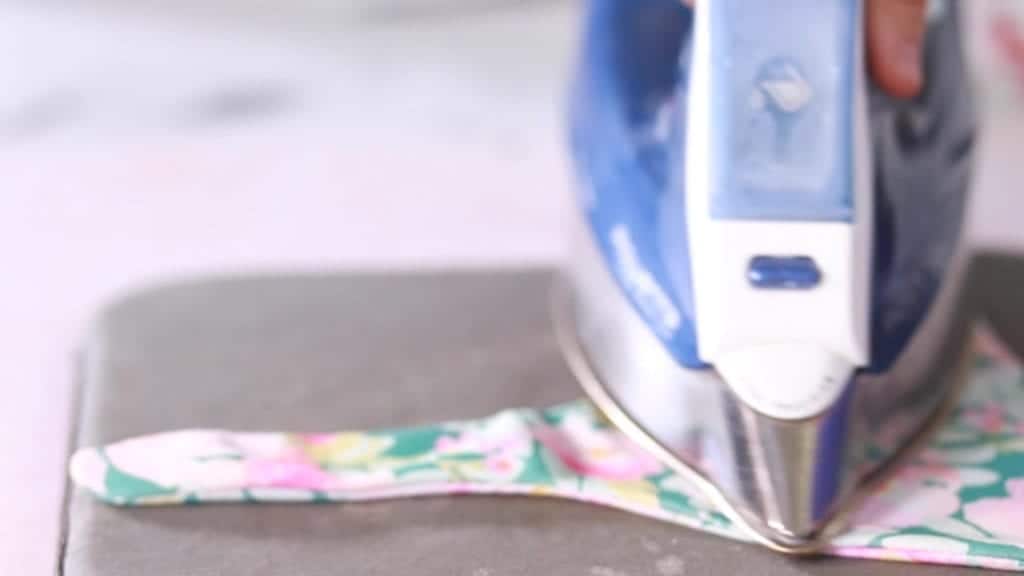
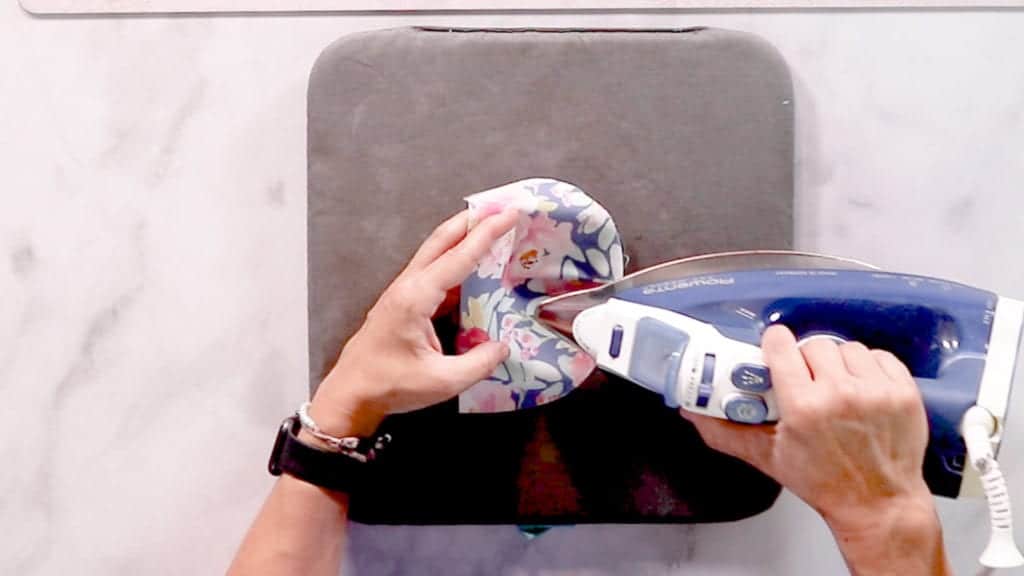
Step 18: Press the bib flat with the iron.
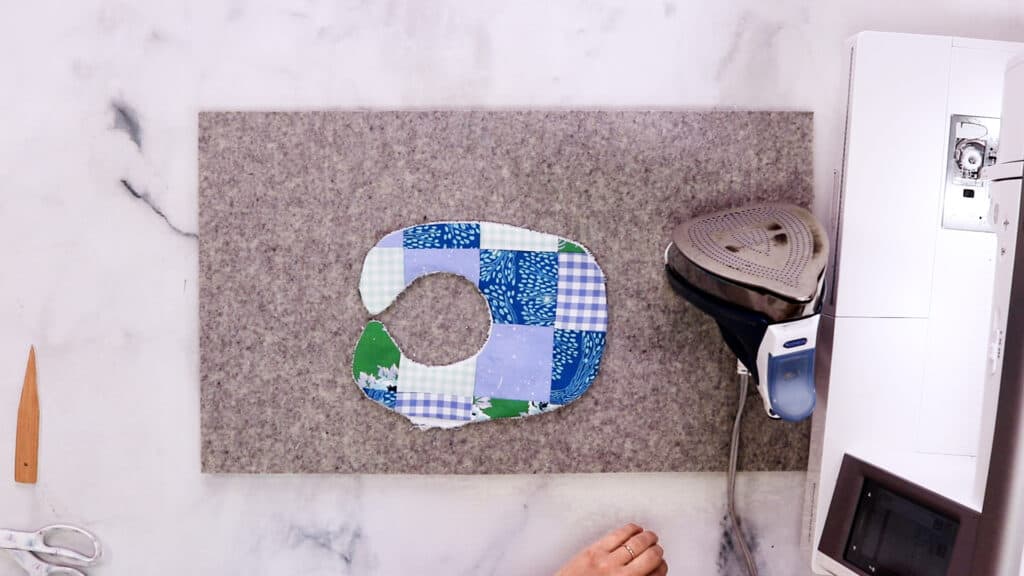
Step 19: Tuck the fabric flap of the opening in and press flat. Pin in place to secure.
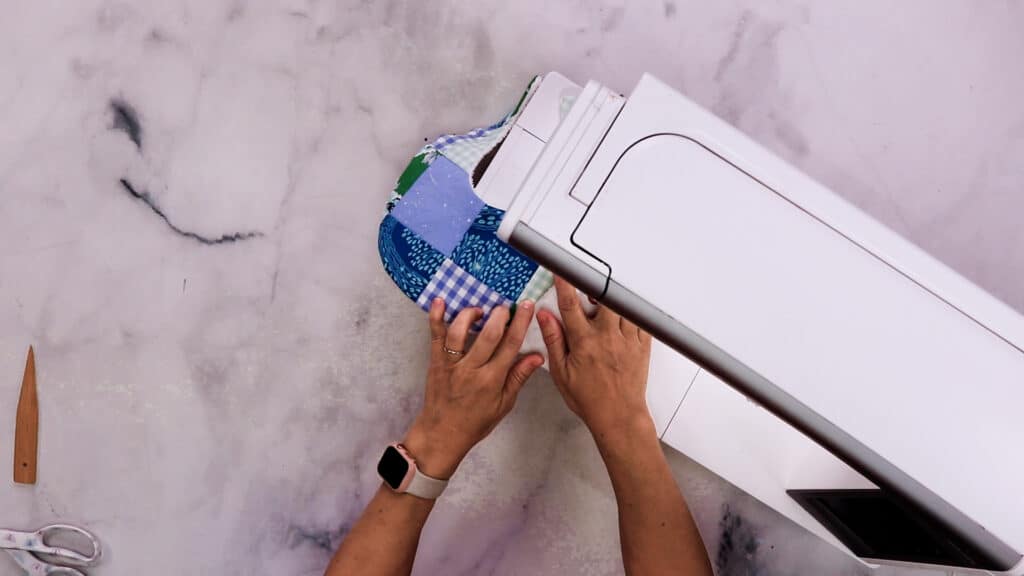
Step 20: Top stitch around the edge of the bib using 1/8″ seam allowance to create a professional finish. Stitch over the opening to close.
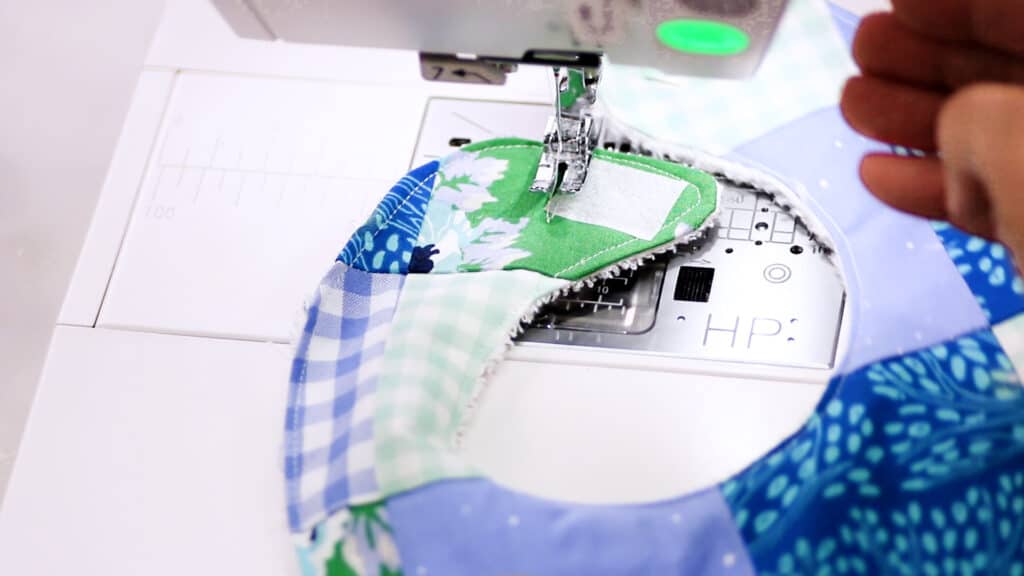
Step 21: Add KAM Snaps or velcro to the baby bib to open and close the bib.

Cut two (2) 1″ squares of velcro. Pin in place on opposite front and back sides of the neck opening. Sew around the edge of the velcro and then make an X through the middle of each to create a strong stitch.

Step 22 – You are all finished. Give the bib to an adorable baby and make some more!

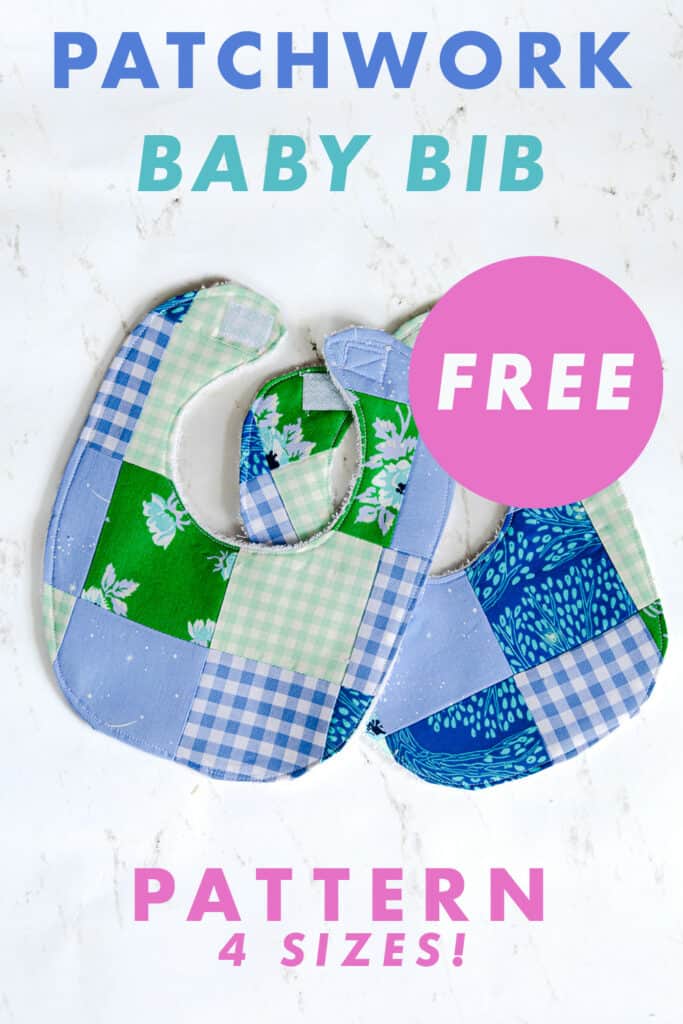
Pin the Patchwork Baby Bib Pattern to Save for Later
two-blue-and-green-patchwork-baby-bibs

***If sewing the Bibs and Burp Cloths with Flannel you may also find These MUST HAVE TIPS FOR SEWING WITH FLANNEL FABRIC helpful.
Baby Sewing, Free Tutorials

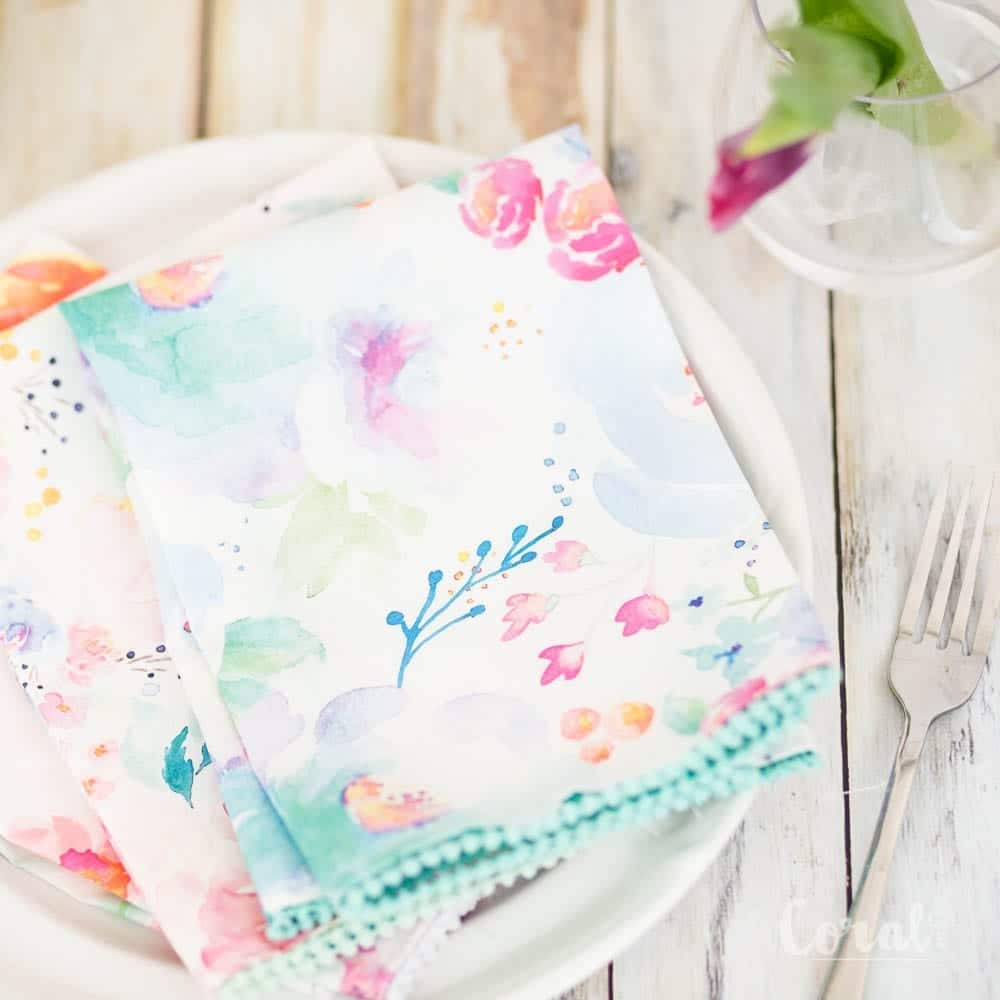
DIY Pom Pom Dinner Napkins with No Sew Mitered Corners

Feb 14, 2024 · 12 Comments

diy-pom-pom-napkin-tutorial
diy-pom-pom-mitered-napkin-tutorial

Sew Your Own DIY Pom Pom Napkins with No Sew Mitered Corners

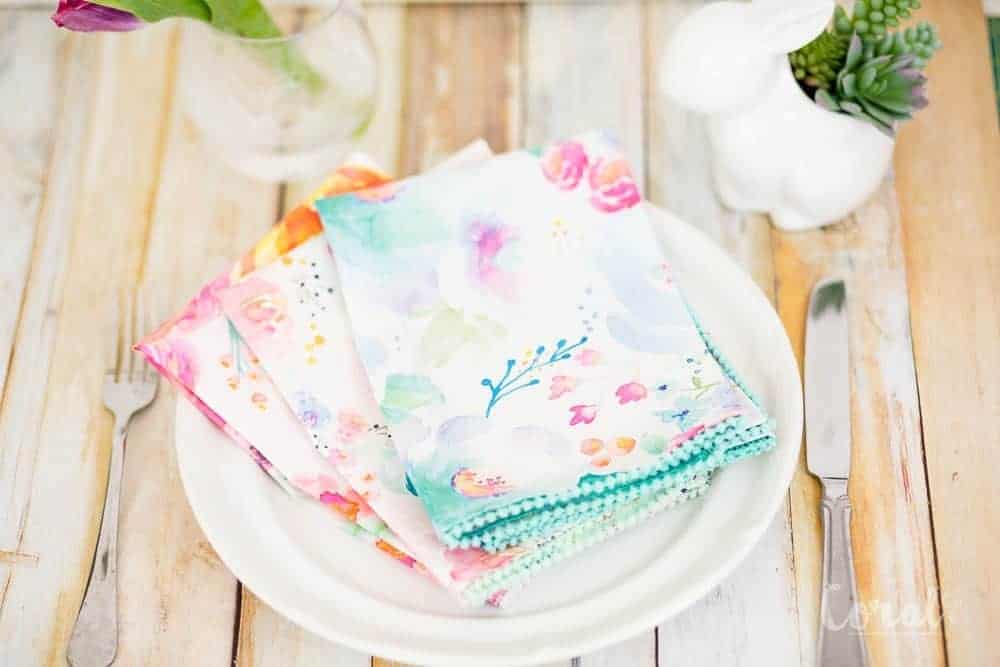
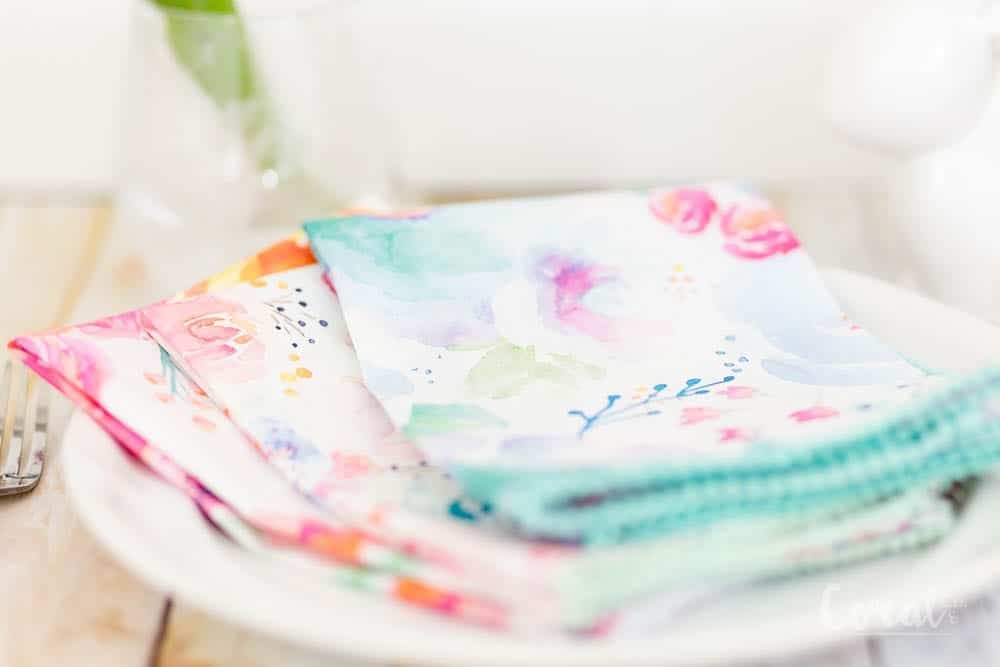
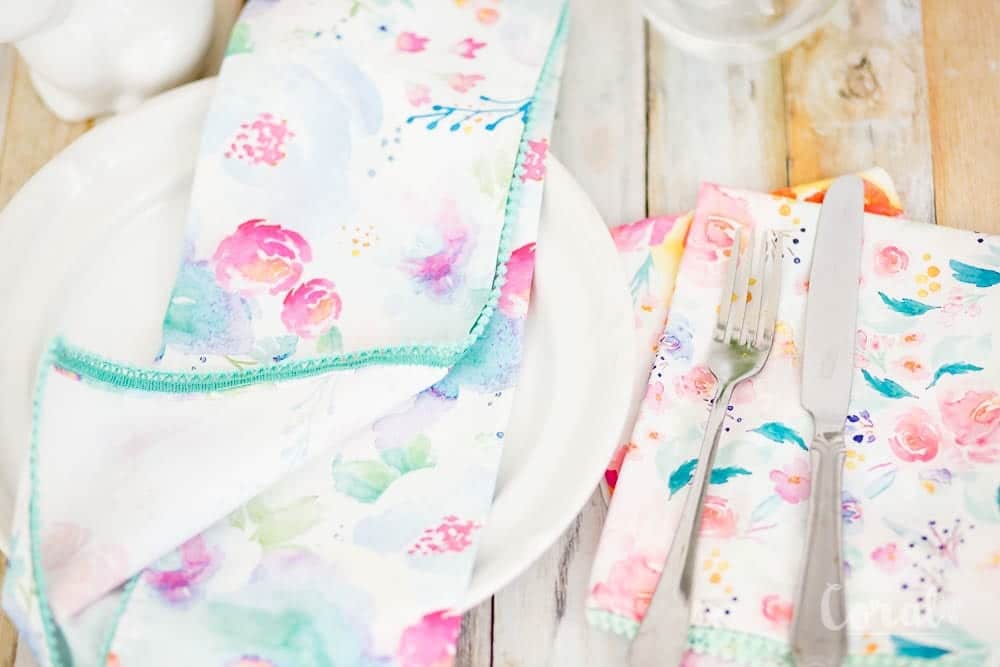
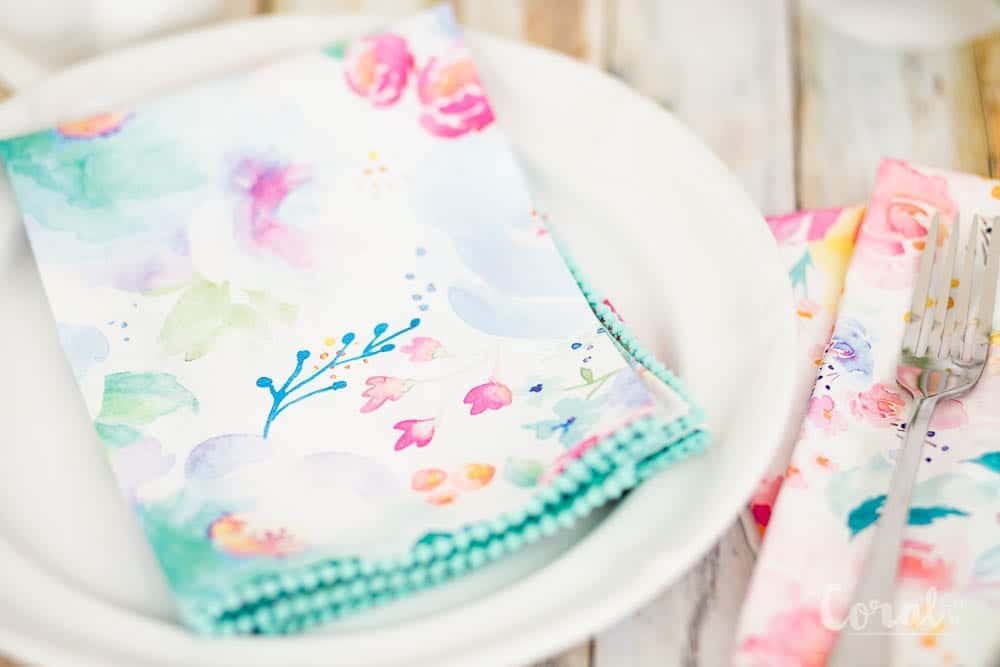
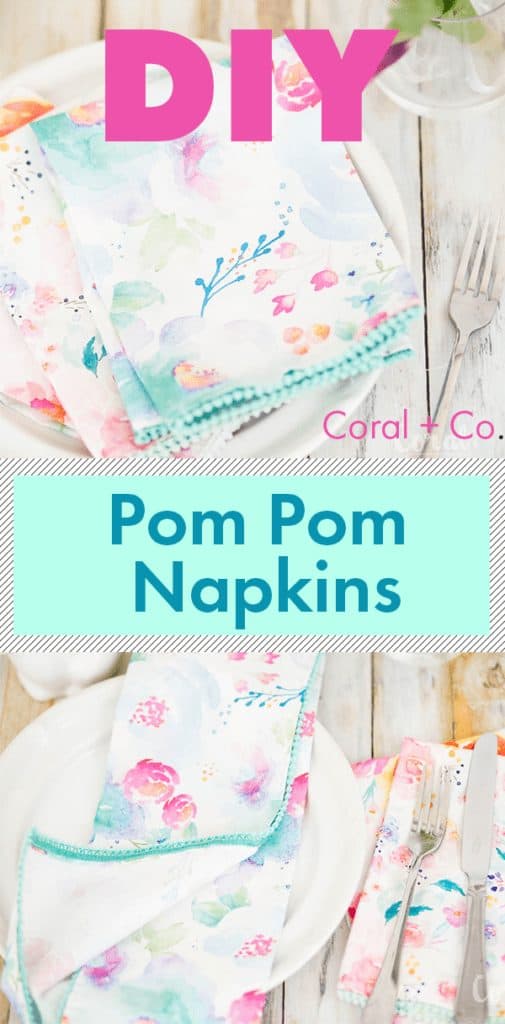
Make your own DIY Pom Pom Trimmed fabric napkins. These fantastic fabric napkins have a crisp no sew mitered corner, giving them a professional finish without a lot of bulk. They are super simple to sew and you can make no-sew napkins with mitered corners in 15 minutes! They are the perfect addition to any spring or holiday decor!

pom-pom-dinner-napkin-sewing-tutorial

Table of Contents

  1. Sew Your Own DIY Pom Pom Napkins with No Sew Mitered Corners
  2. Watch the Video on Youtube
    1. What you will need to make DIY Pom Pom Napkins
  3. How to Sew DIY Pom Pom Dinner Napkins with a No-sew Mitered Corner
    1. Pin the DIY Pom Pom Napkins with No Sew Mitered Corners for Later
diy-easter-napkin-tutorial

The sun is shining and I am ready for all things that scream spring!  Hello, pastels and florals <3.  I think spring decor is among everyone’s favorite because who isn’t ready to see flowers grow after the doldrums of winter.  So I’m partnering up with Viking Husqvarna and to get the Easter party started and show you how to make these cute DIY Pom Pom Dinner Napkins with a video tutorial (skip to the bottom to watch the video). Pom poms always seem to have the right feminine touch for all things Easter and Springtime too.  Maybe, I could drape myself in them and call it my Easter dress!  Ha!  Okay but for real, I could totally drape myself in these gorgeous floral prints from Hawthorne Threads.  The collection is Watercolor Florals from Indy Bloom.  They are all totally swoon-worthy.  I think my favorite is the Daydream Floral in Tropical.  I love the purple hue!  It totally screams spring!

diy-pom-pom-dinner-napkin-tutorial
diy-pom-pom-napkin-tutorial-with-mitered-corner
diy-pom-pom-napkin-tutorial

I think my favorite thing about these super easy and capital Q for quick DIY pom pom dinner napkins is that I used a faux no-sew mitered corner.  Anything thing that I can make with one less step is A-OK by me!  Instead of sewing the mitered corner, you simply trim the corner edge and fold into the napkin, so the corner isn’t all bulky.  The faux mitered corner edges fit snugly and look beautiful.Plus it makes it super easy to add the pom pom trim without having to topstitch around the napkin first to keep the seams in place.This is totally a sew it one time around kind of project!  And they come out looking truly beautiful!  All your guests will be jealous and want these diy pom pom dinner napkins for themselves!

Watch the Video on Youtube

What you will need to make DIY Pom Pom Napkins

  • 1 Fat Quarter for One napkin or 1 Full yard for Four Napkins
  • 72 inches or 3 yards or Pom Pom Trim (I bought mini pom pom trim on Etsy)
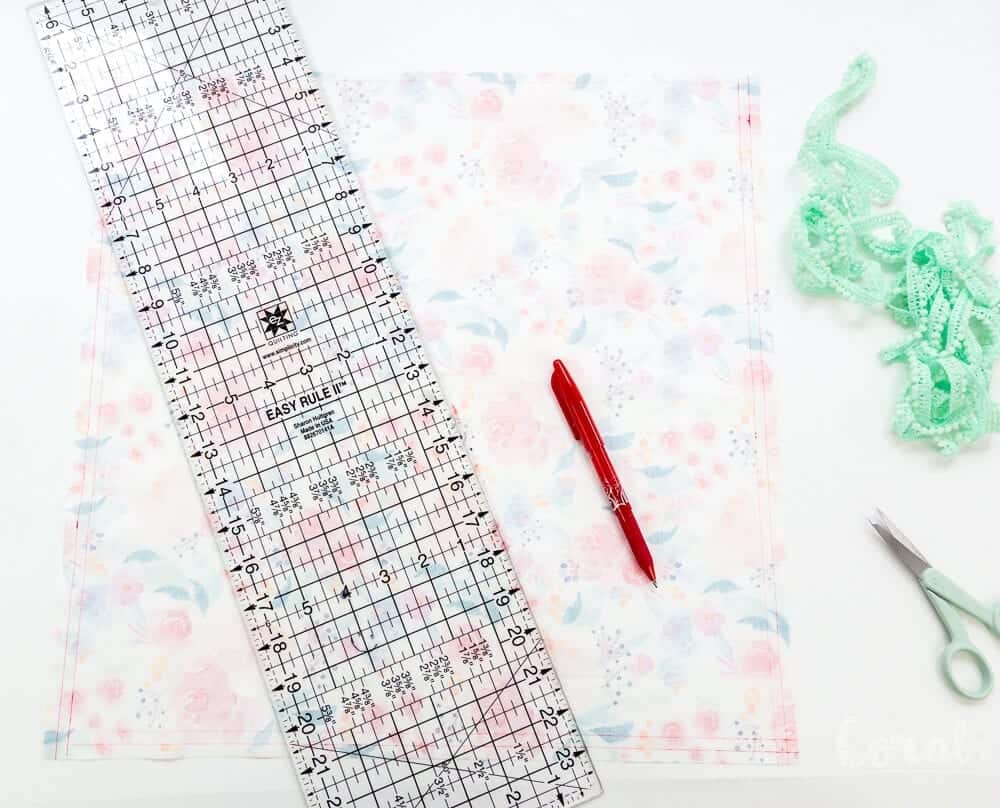
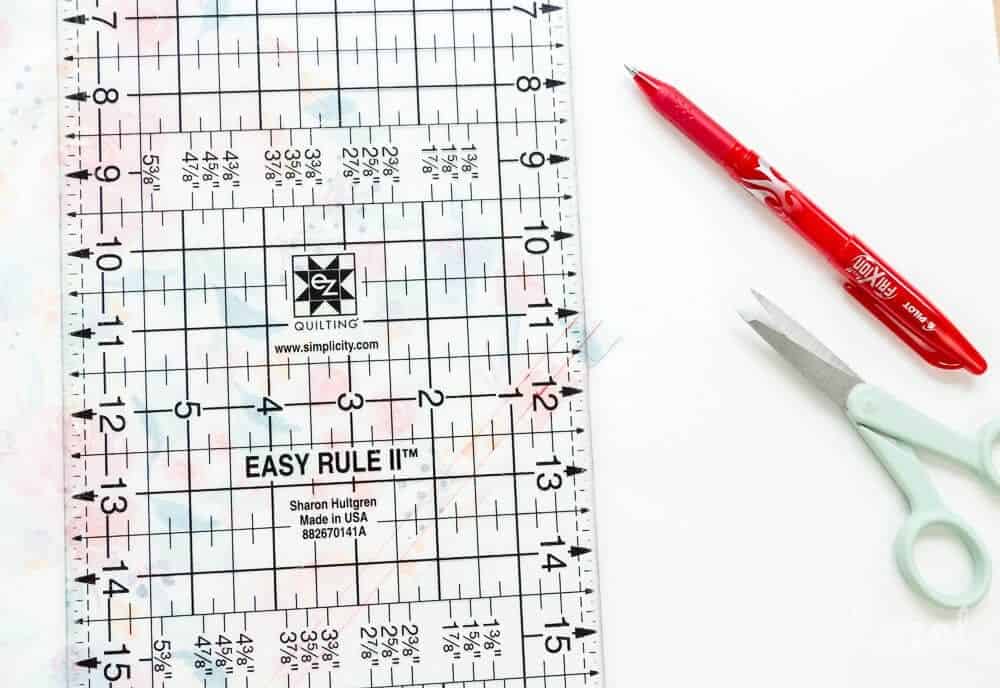
  • Clear Plastic Ruler, Rotary Blade, and Cutting Mat
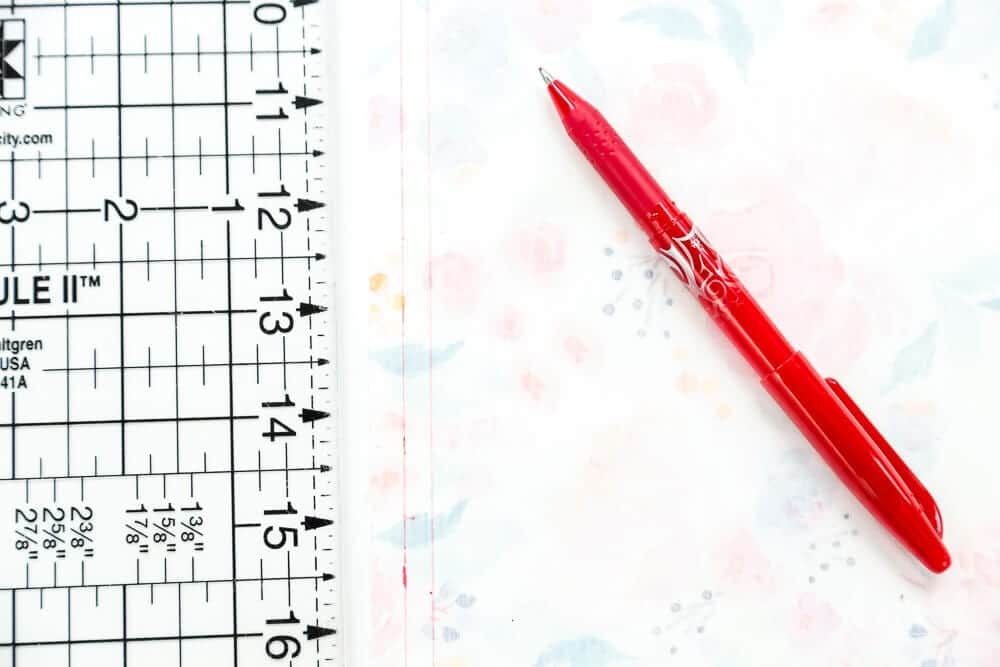
  • Frixon (my favorite brand) or another erasable marking pen.how-do-you-sew-a-mitered-corner

How to Sew DIY Pom Pom Dinner Napkins with a No-sew Mitered Corner

sapphire-965q-review

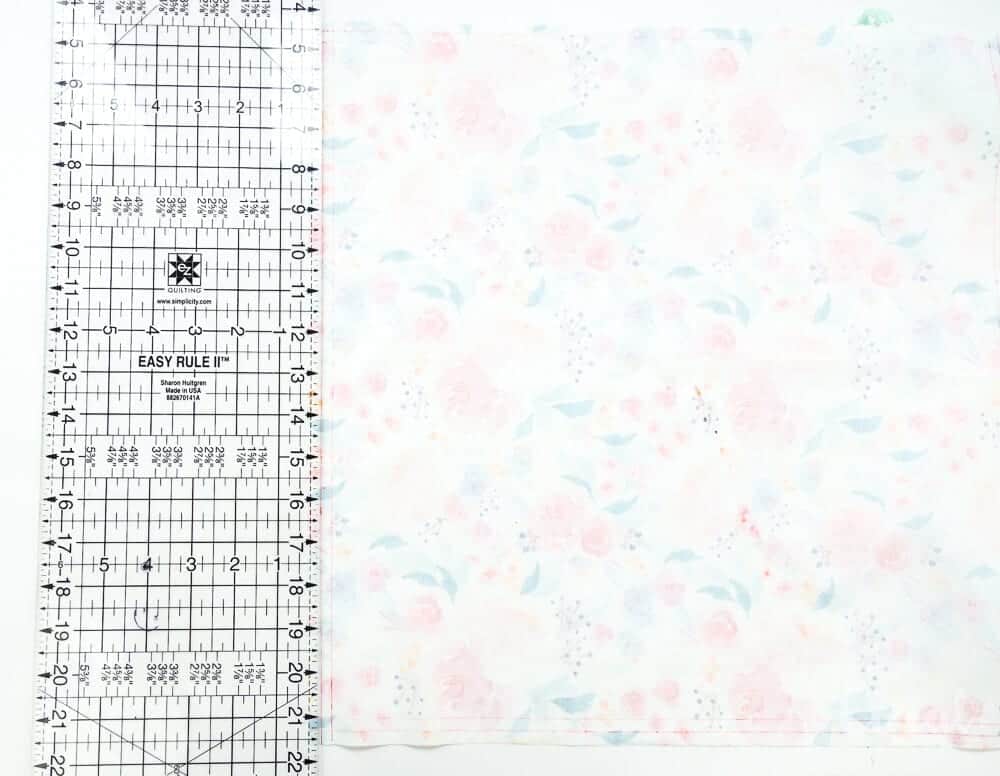
  • Step 1 – Cut an 18in by 18in square of your favorite fabric. diy-cloth-napkins-with-mitered-corners
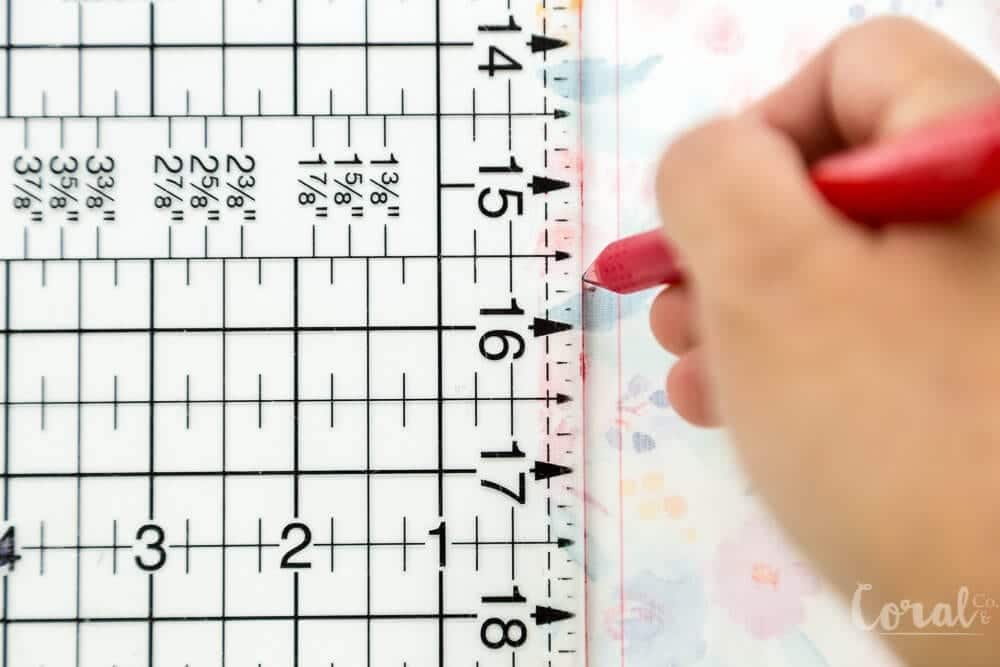
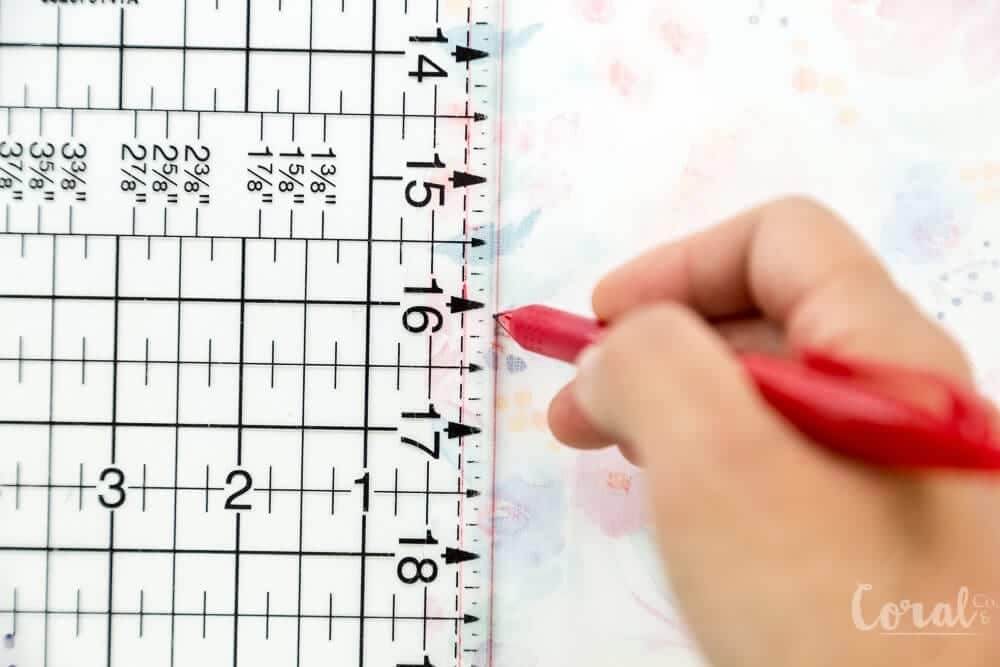
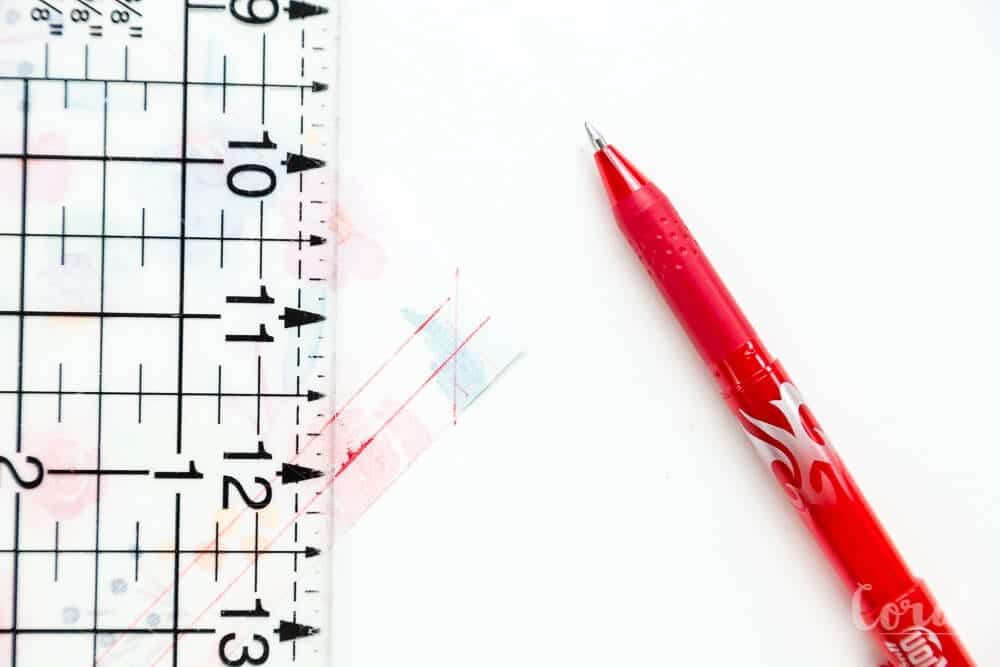
  • Step 2 – Draw a line down the side of the fabric 1/4in from the raw edge.  mitered-corner-napkins-tutorialsewing-dinner-napkins-tutorial
  • Step 3 – Draw a second line 1/2in from the raw edge of the fabric.  So you will have two lines 1/4in apart from each other.sewing-napkin-tutorial-with-mitered-corners
  • Step 4 – Repeat for all four sideshow-do-you-sew-corners-of-a-cloth-napkin
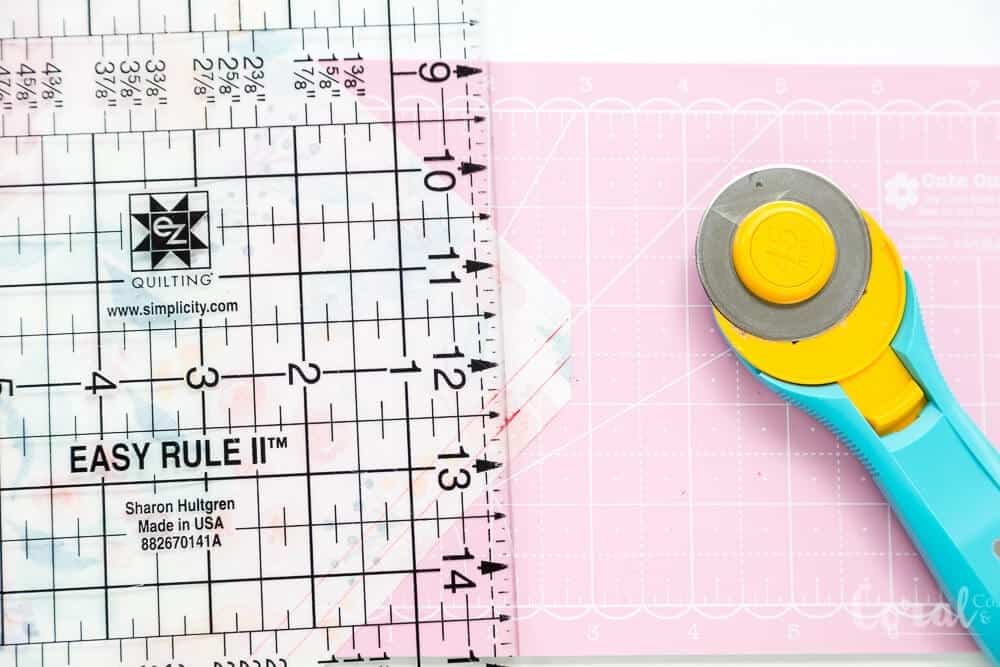
  • Step 5 – Draw a diagonal line where the corner lines intersect, this is for making the faux mitered corner.how-to-make-a-mitered-corner-without-sewing
  • Step 6 – Trim corners on the line.mitered-corner-napkins-tutorial
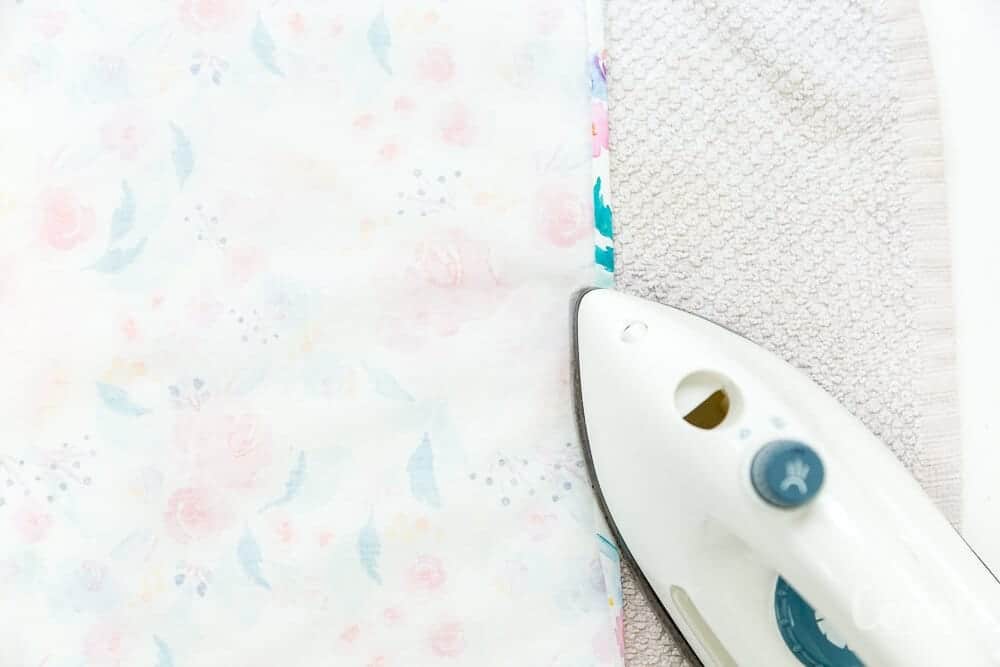
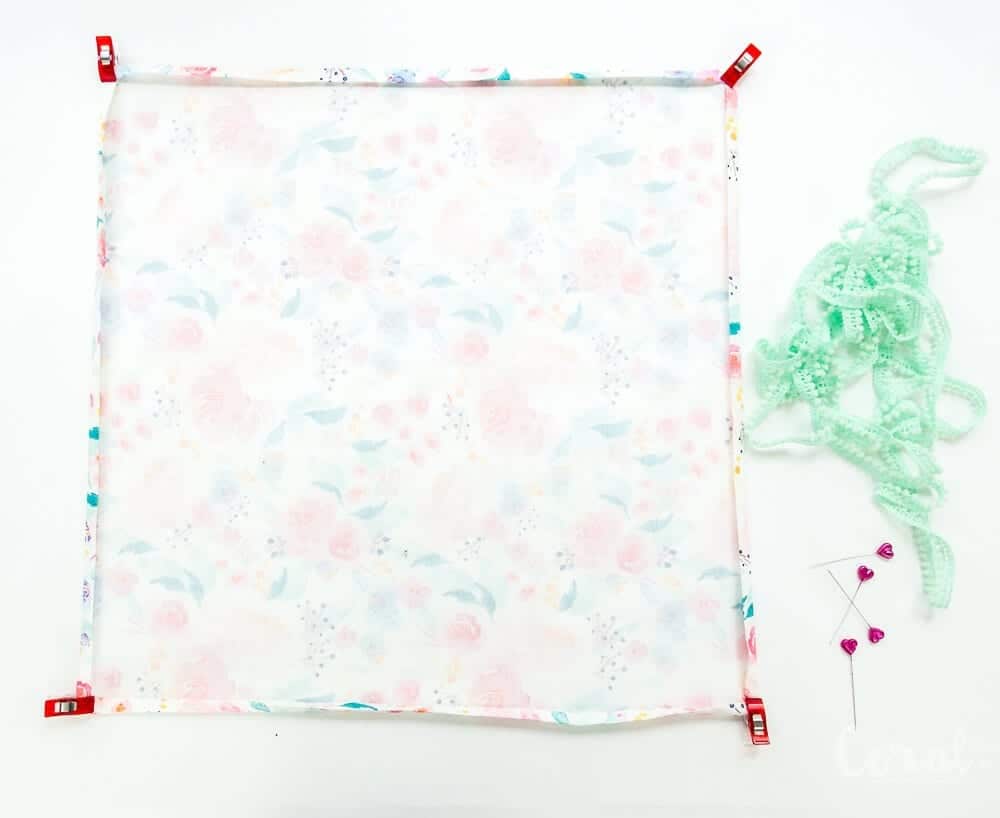
  • Step 7 – Fold raw edge inward on the first line so there a 1/4in fold on the napkin edge for all four sides and pressdiy-cloth-napkin-tutorial
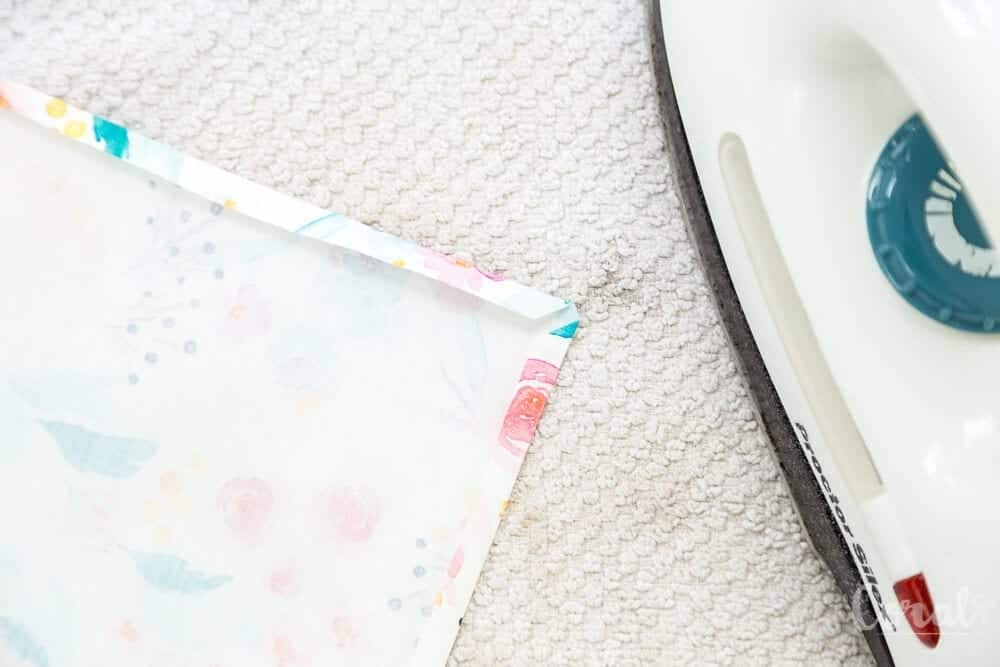
  • Your corner will line up neatly like this.how-to-sew-mitered-corner-napkins
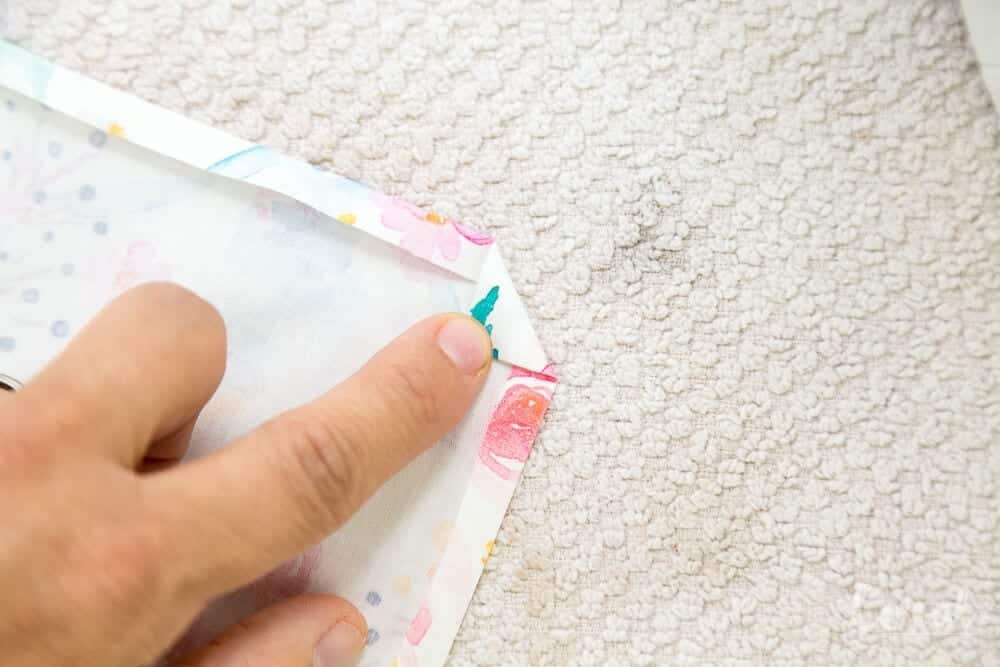
  • Step 8 – Fold corner inward 1/2in so it corner edge is 1/4in from the second line and press.how-to-make-napkins-with-mitered-corner
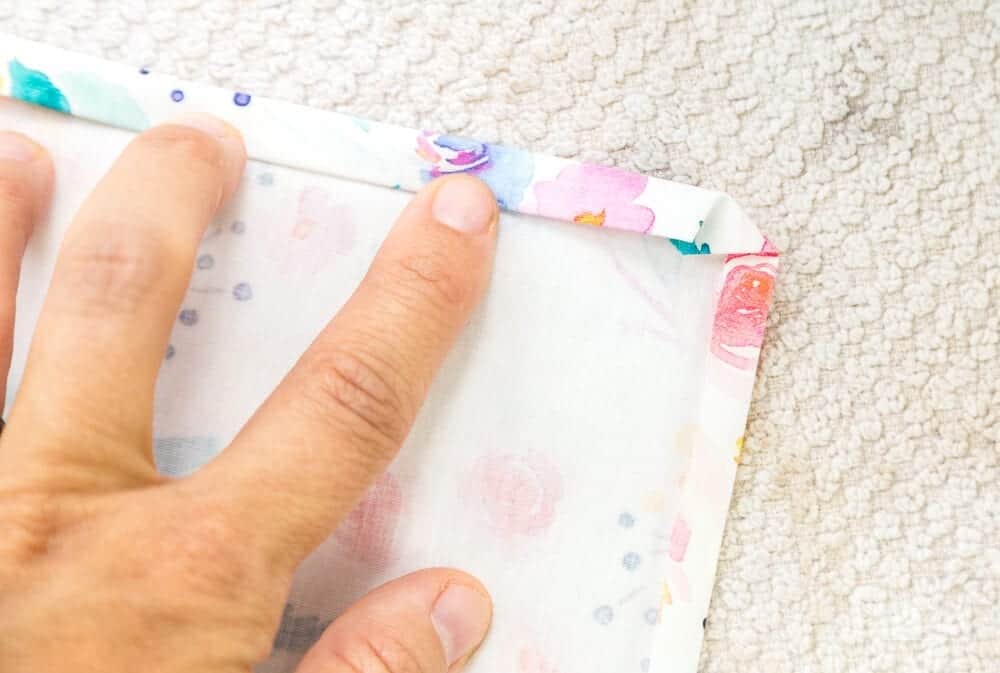
  • Step 9 – Fold edges over again 1/4in at the second line and press.no-sew-mitered-corner-napkins
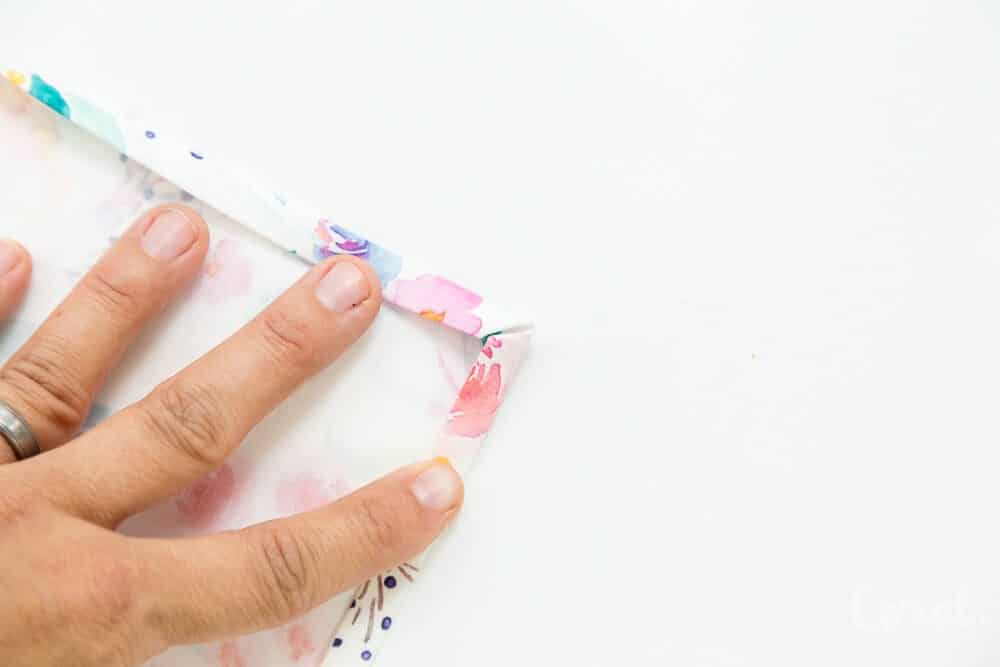
  • Repeat this for all four sides.  This is how you make a mitered corner or in this case a no-sew faux mitered corner.how-to-sew-mitered-corners-on-fabric-napkins
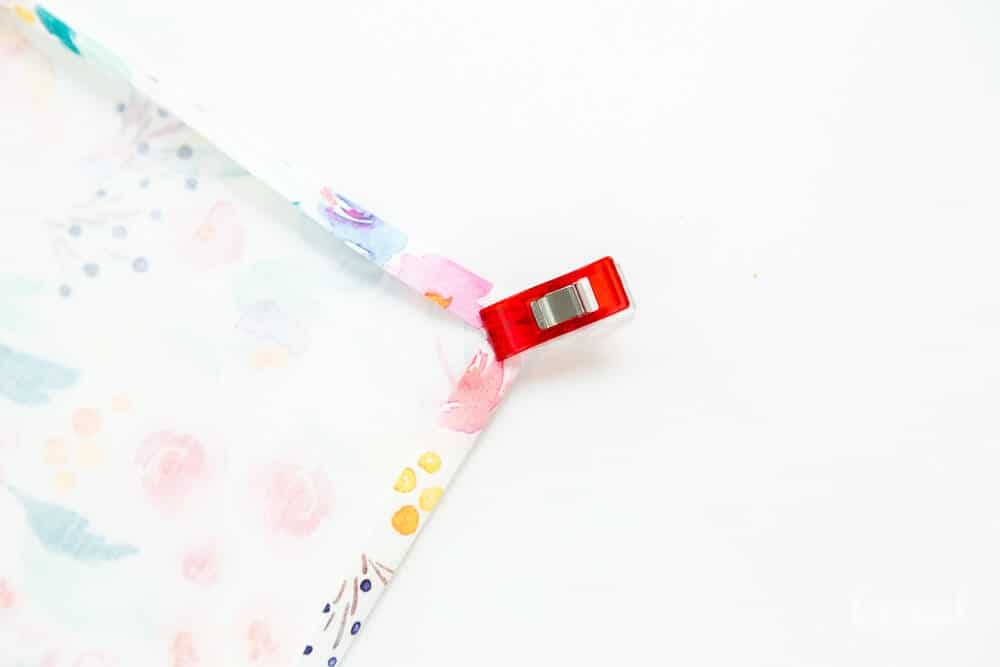
  • Step 10 – Pin or clip corners in place.how-do-you-sew-a-mitered-corner
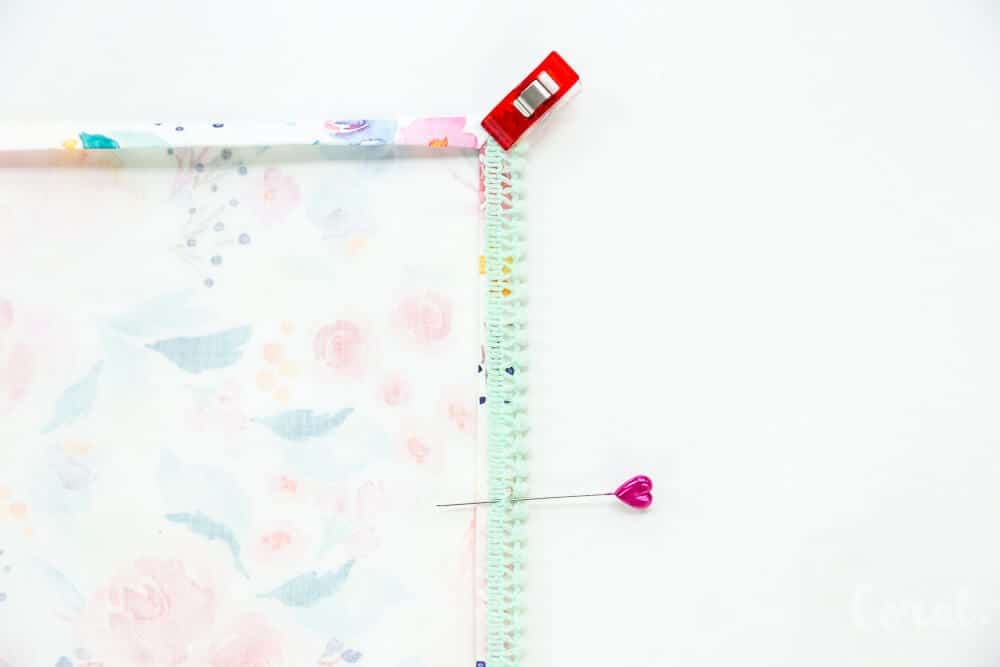
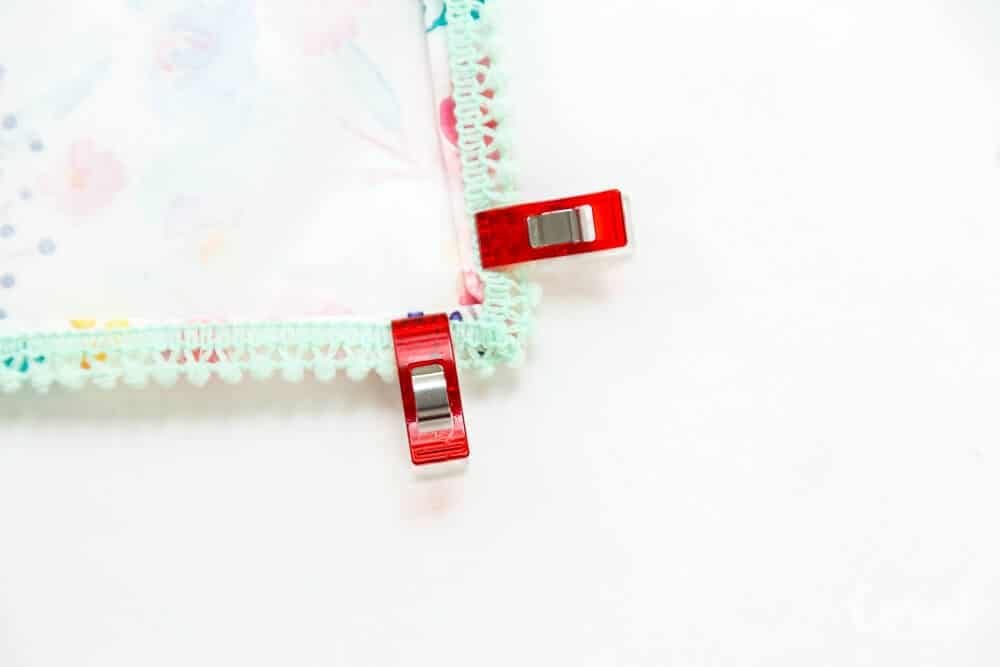
  • Step 11 – Starting at the top corner pin or clip the pom pom trim on the bottom side of the napkin so the pom poms are facing outward.how-to-sew-cloth-napkins
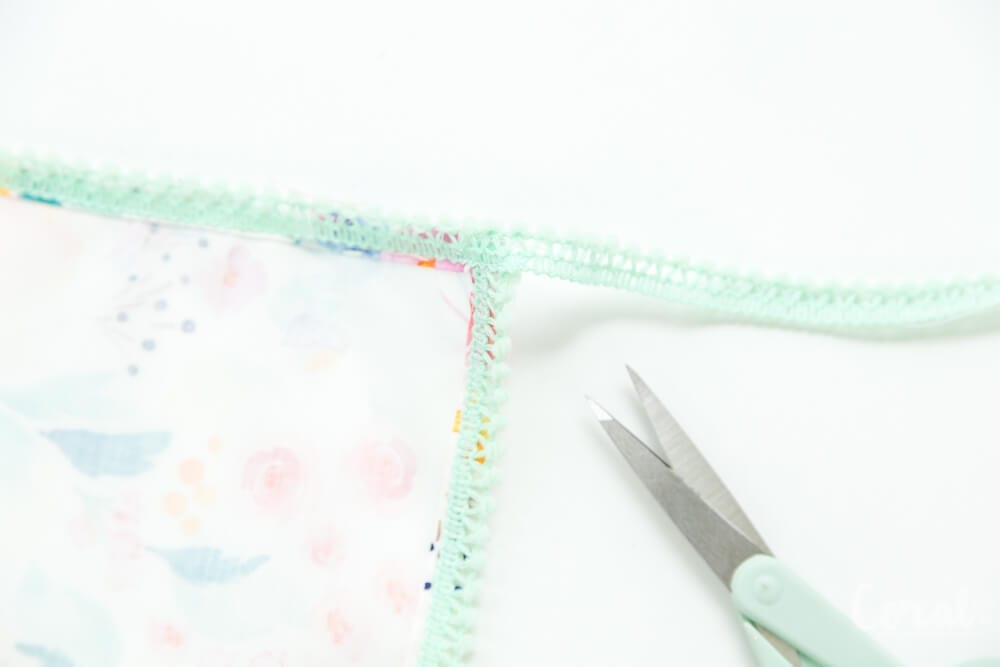
  • Step 12 – Be sure to give a little extra wiggle room on the corners so the trim does not pull too tight.  You can watch the video for how I did this.diy-pom-pom-trim-cloth-napkins
diy-pom-pom-napkin-sewing
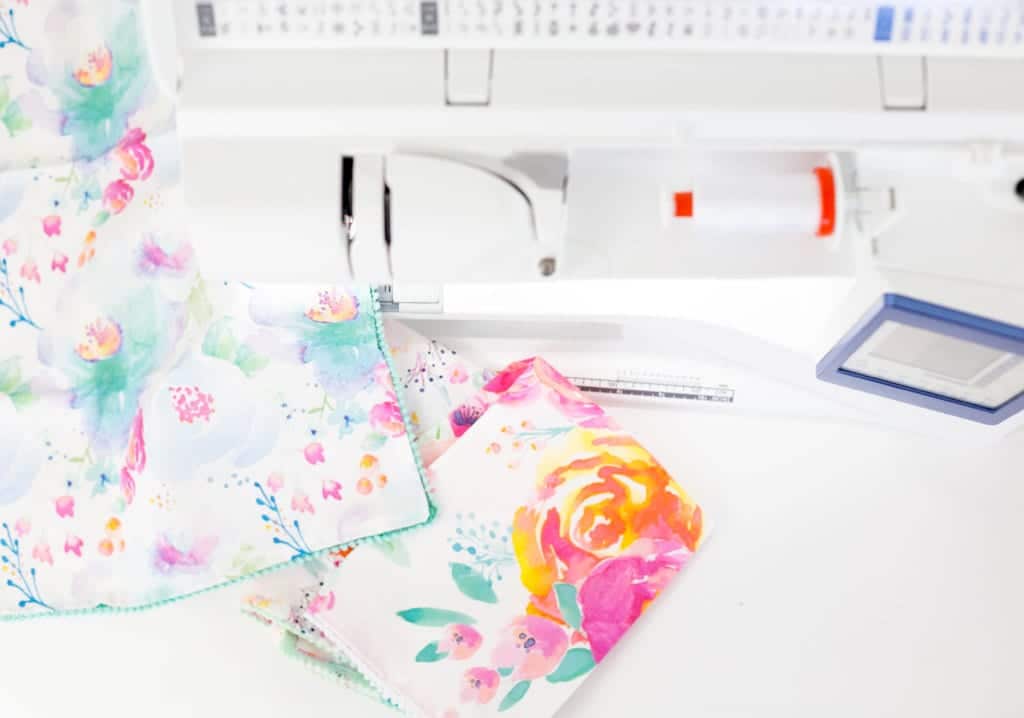
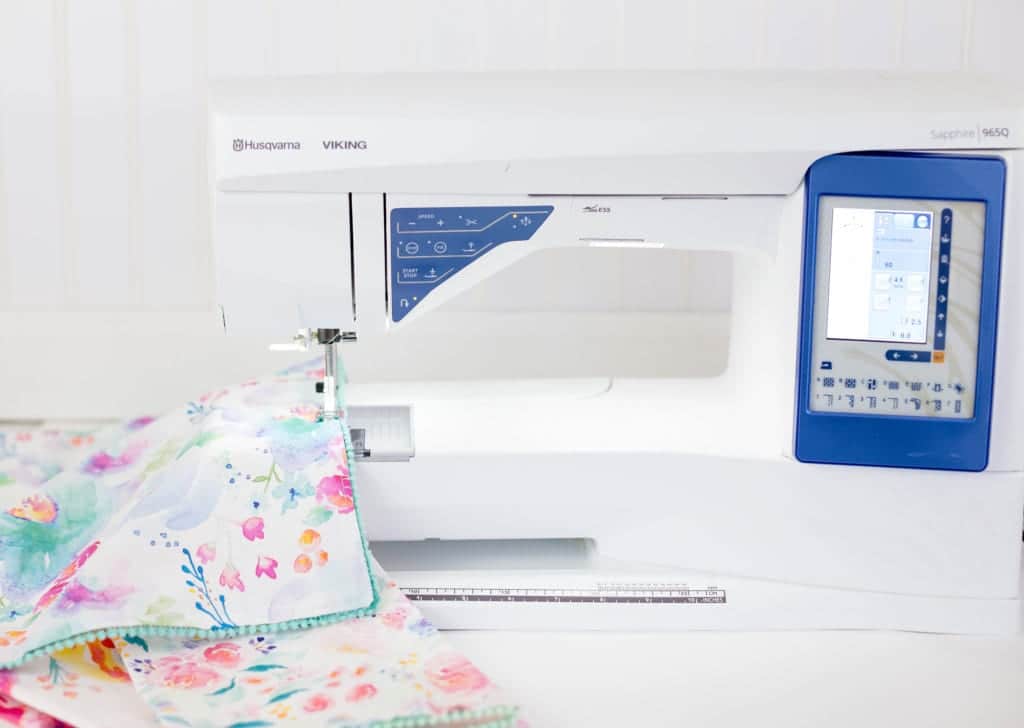
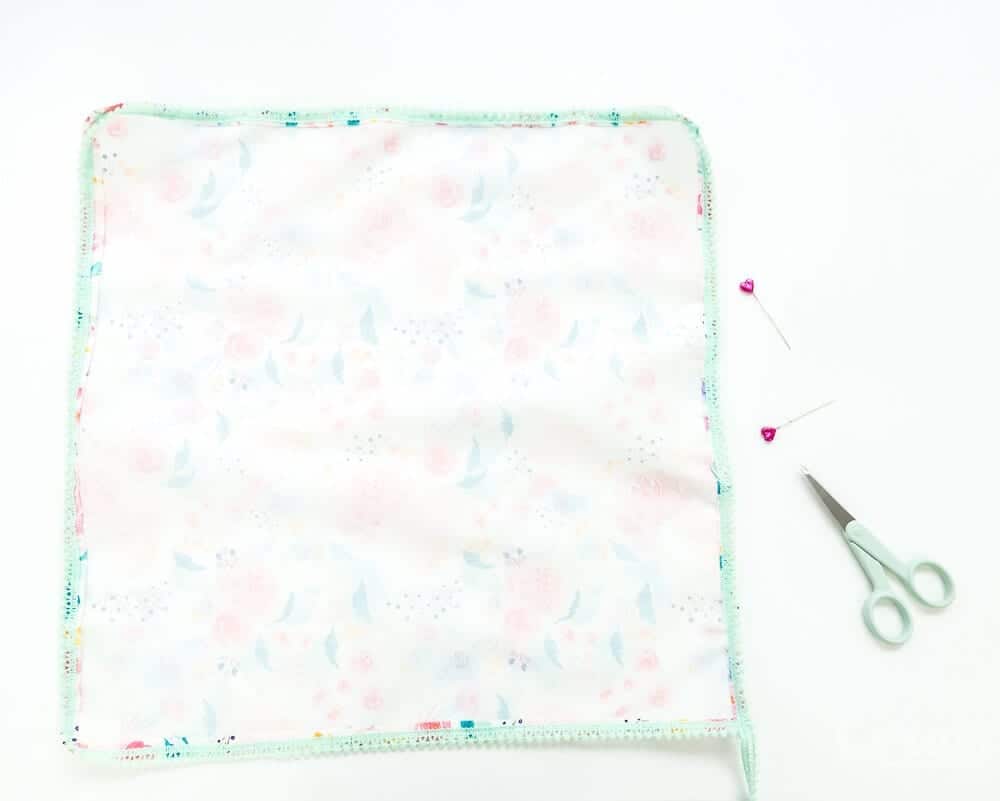
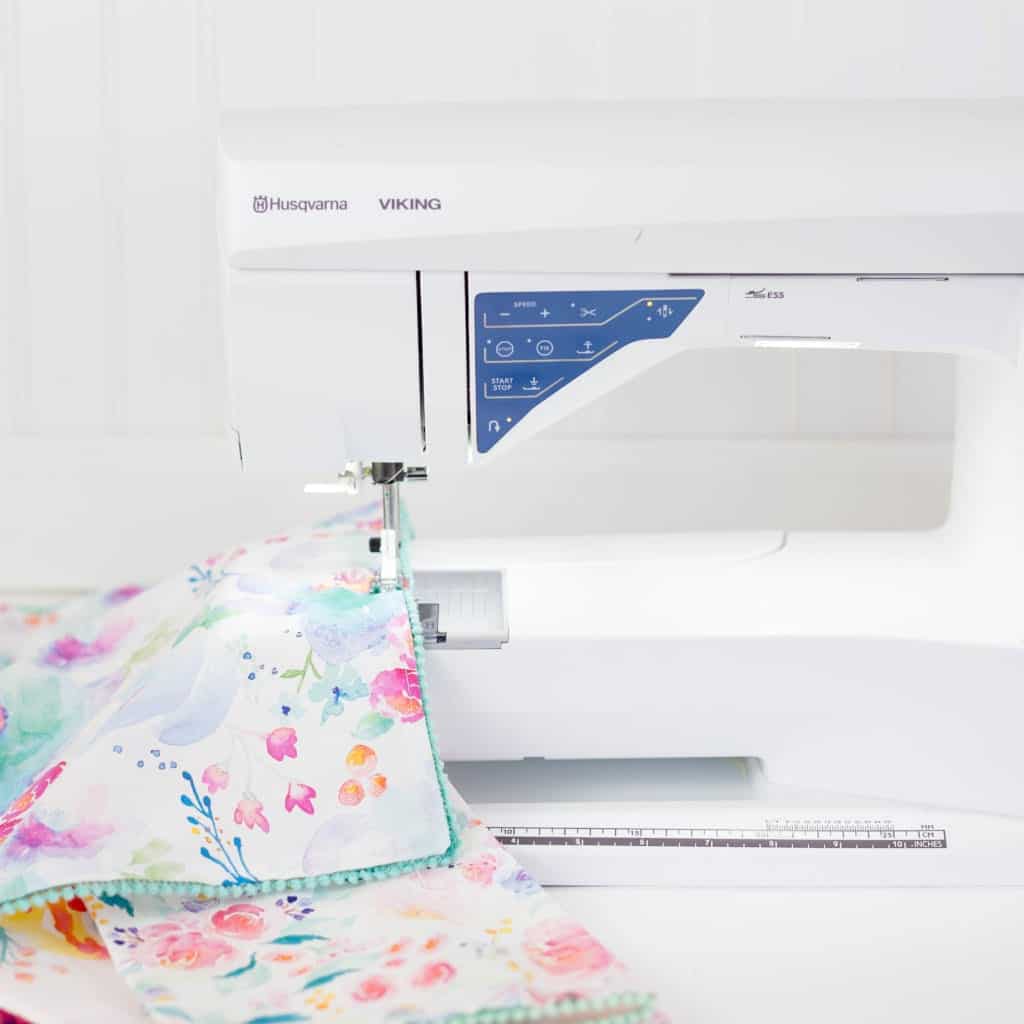
  • Step 13 – Sew all the way around the edge of the napkin about 1/8in to 1/4in from the edge.  You can see in my video how I was able to select the Exclusive Sewing Advisor to automatically tell me what settings my machine should be on based on the fabric and stitch type.  For this project, I choose a straight stitch on medium weight fabric.  You can read more about this features and all my other favorites of the Sapphire 965Q here.diy-pom-pom-napkin-tutorial-with-mitered-corners
  • Step 14 – Trim the remaining pom pom trim from the last corner.how-to-make-pom-pom-trim-napkins
  • ****Tip – I prefer to sew with the pom pom trim side on the bottom of my Husqvarna Viking Sapphire 965Q sewing machine because the feed dogs (those funny things that move the fabric while you sew) tend to gather more of whichever fabric is next to them.  Which in this case works better with the slightly stretchy pom pom trim.  And having the top of the napkin on the presser foot side makes it is easier to sew nice even topstitching lines.viking-sapphire-965q-reviewdiy-pom-pom-napkin-tutorial

Pin the DIY Pom Pom Napkins with No Sew Mitered Corners for Later

how-to-make-diy-pom-pom-dinner-napkins-tutorial

Easter, Free Tutorials, Holiday, Home Sewing, Sewing, Spring easter, HUSQVARNA Viking, kitchen, spring

Button Up Baby Heart Quilt Pattern

Jan 23, 2024 · Leave a Comment

heart-quilt-pattern-button-shape

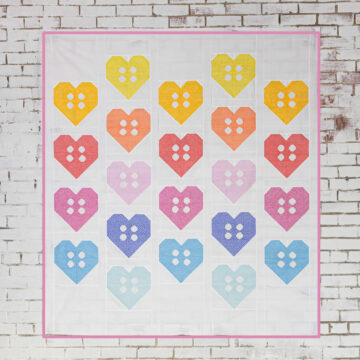
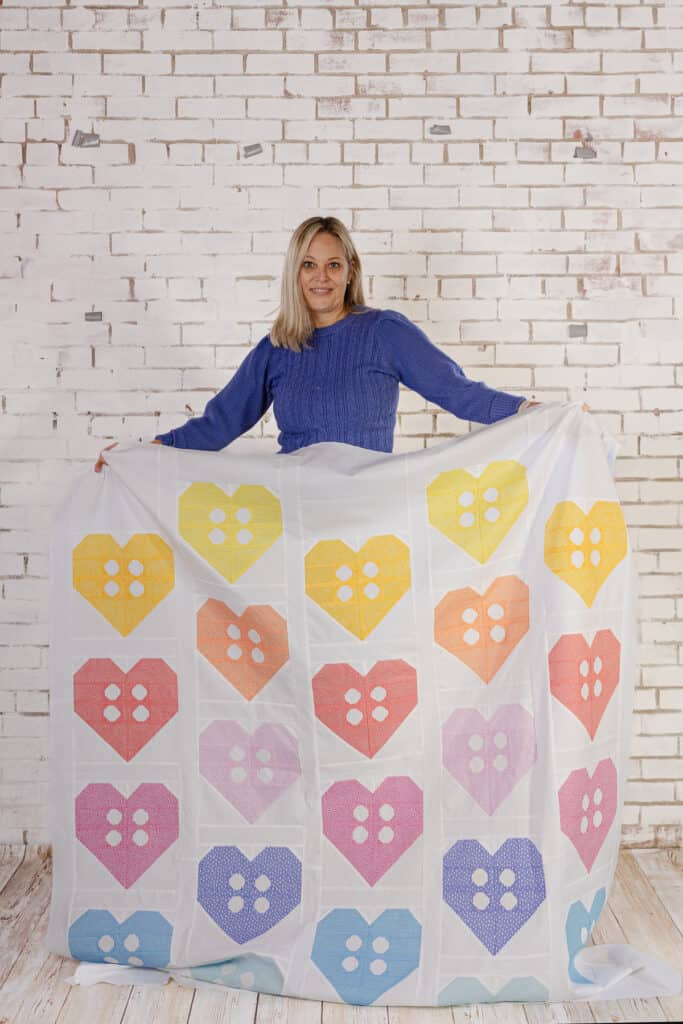
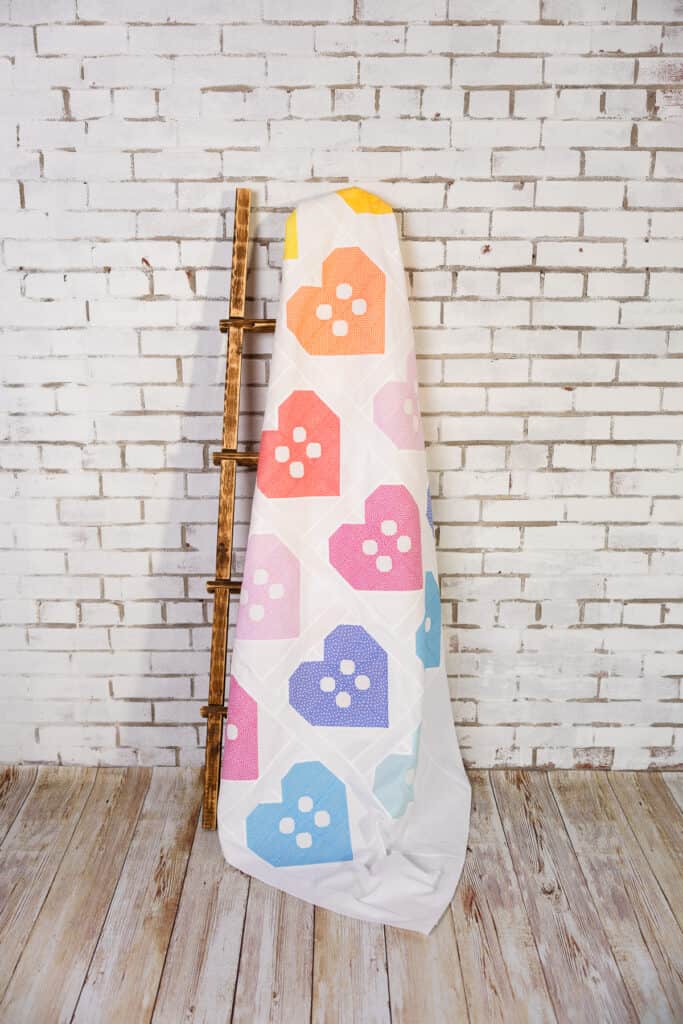
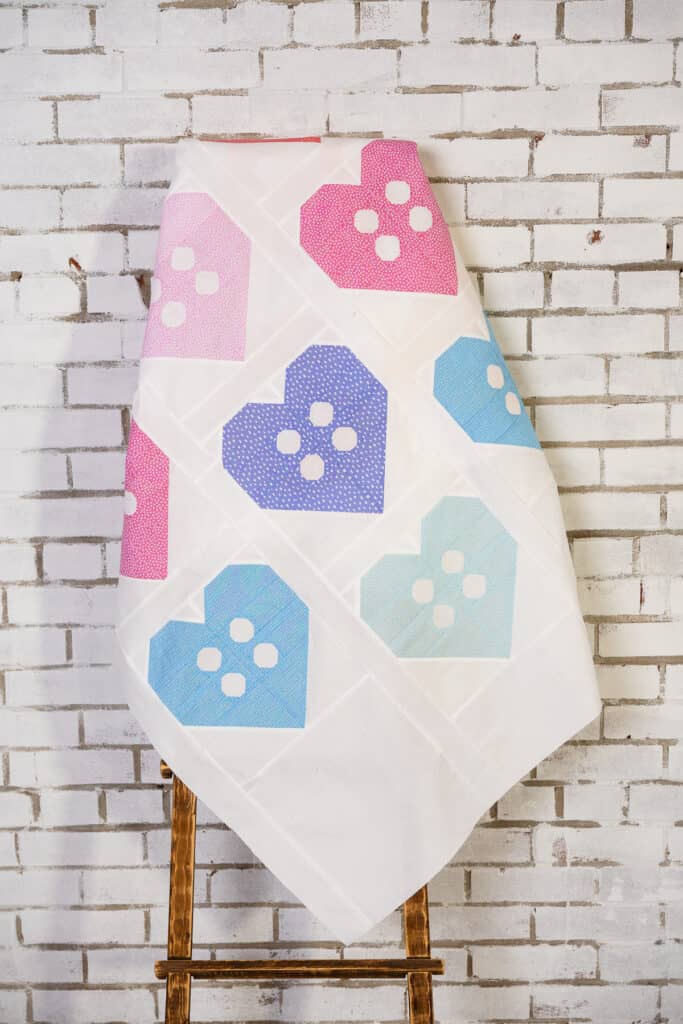
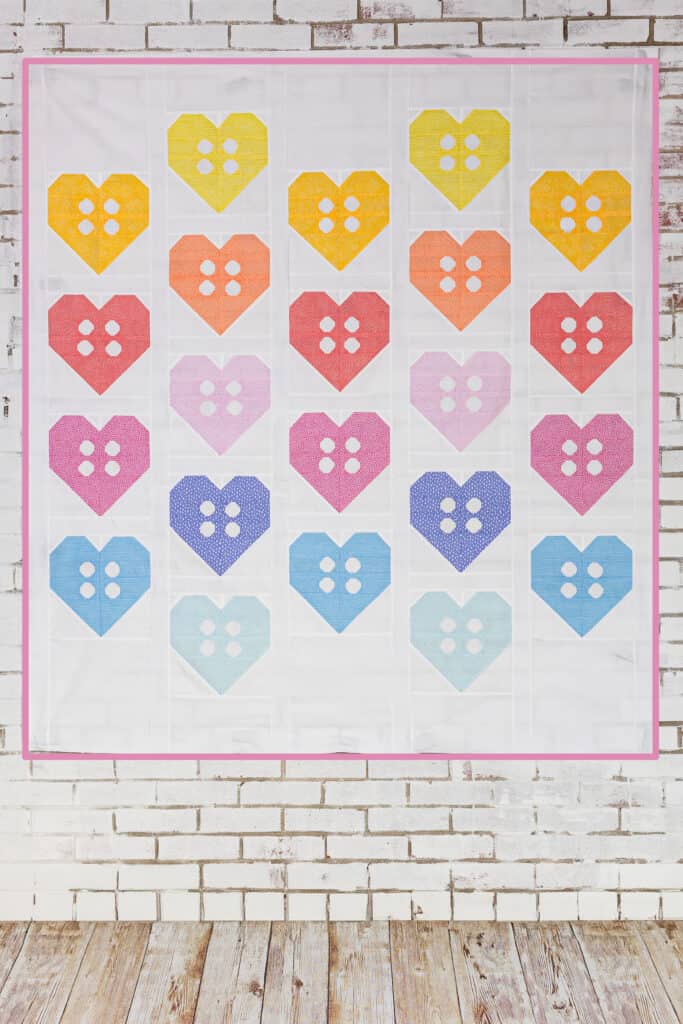
The Button Up Baby Heart Quilt Pattern is here! Looking for a fresh take on the classic heart quilt? The advanced beginner-friendly Button Up Baby Heart Quilt Pattern is a fun pop of color in an ombre pattern that’s sure to wow. Perfect for those who love traditional piecing, this pattern is perfect for embracing your love of hearts. I mean, who isn’t obsessed with all things hearts??? Create your heart quilt rainbow delight, and Get the pattern now!

Shop the Button Up Baby Pattern

Get the Pattern Now

Table of Contents

  1. Shop the Button Up Baby Pattern
  2. Button Up Baby Heart Quilt Pattern Details
  3. Heart Button Quilt Fabric Requirements
  4. More Heart Sewing Projects, Quilt Patterns, and Quilt Blocks
  5. Button Up Baby Quilt Pattern Mock Ups
    1. So Many color ways to make the Button Up Baby Heart Quilt Pattern
  6. Mockup Recipes
  7. Pin the Button Up Baby Valentine’s Day Quilt Pattern to Make Later

It’s been a few years since I released a quilt pattern. Funny thing, the last pattern I released was a Valentine’s Day Quilt for Quilter’s Candy Subscription Box. I have a huge thing for hearts and Valentine’s Day in general. I might have more heart/Valentine’s Day posts than Christmas posts.

So to say that I was excited to design and make this pattern is an understatement. I designed these button heart quilt blocks about a year ago and didn’t get the pattern released in time for Valentine’s Day, so I decided to wait until Valentine’s Day came back around. And here we are!

Button Up Baby Heart Quilt Pattern Details

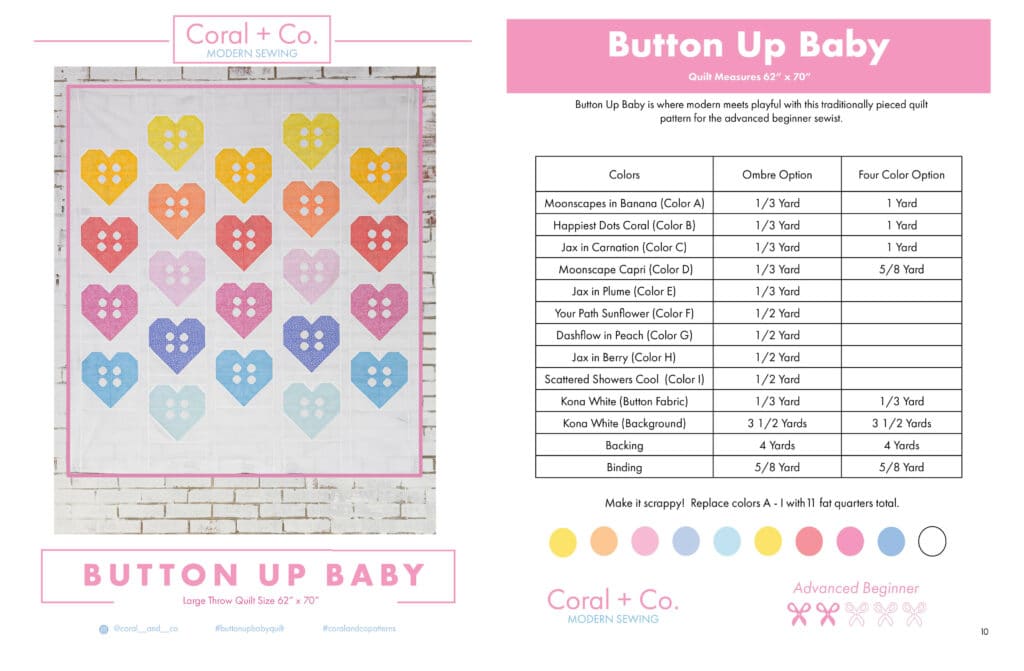
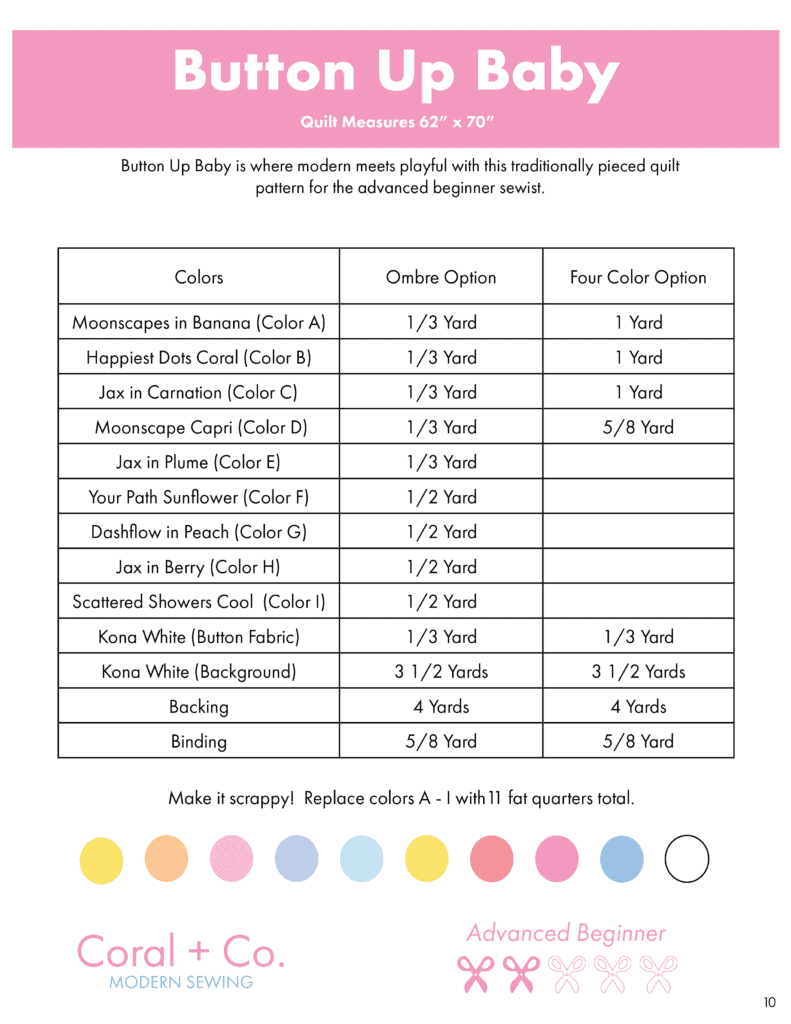
The pattern uses traditional piecing and is a fat quarter and half-yard friendly. There are two versions, which consist of four colors or nine colors. The nine-color version is my favorite as I like to use an ombre effect in my quilts, and the more colors I add, the easier it is to achieve the ombre effect.

Heart Button Quilt Fabric Requirements

The table below lists the specific fabrics I used in the cover quilt with the yardage required. The fabrics were a mix of basics from Art Gallery Fabrics and Dear Stella Fabrics.

More Heart Sewing Projects, Quilt Patterns, and Quilt Blocks

  • 50+ Valentine’s Day Sewing Projects
  • Heart Quilt Block Pillow Pattern
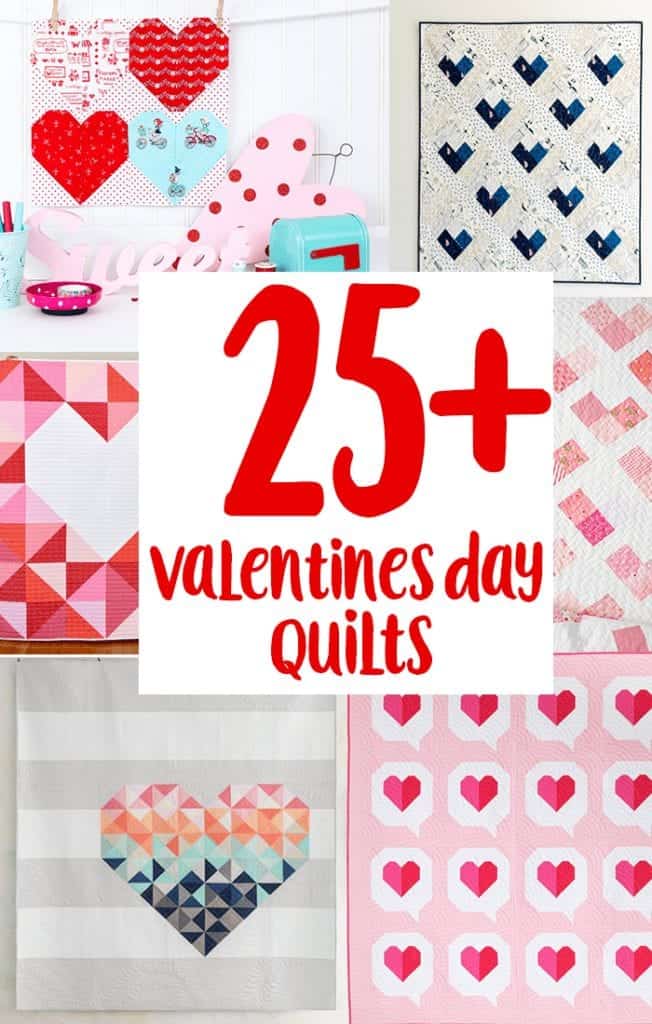
  • 25+ Valentine’s Day Quilt Patterns
  • Candy Heart SVG Files
  • Valentine’s Day Mini Heart Quilt Pattern with Circuit SVG Cut Files
  • Free Heart Mini Quilt Pattern
  • Valentine’s Day Embroidery Hoop Art

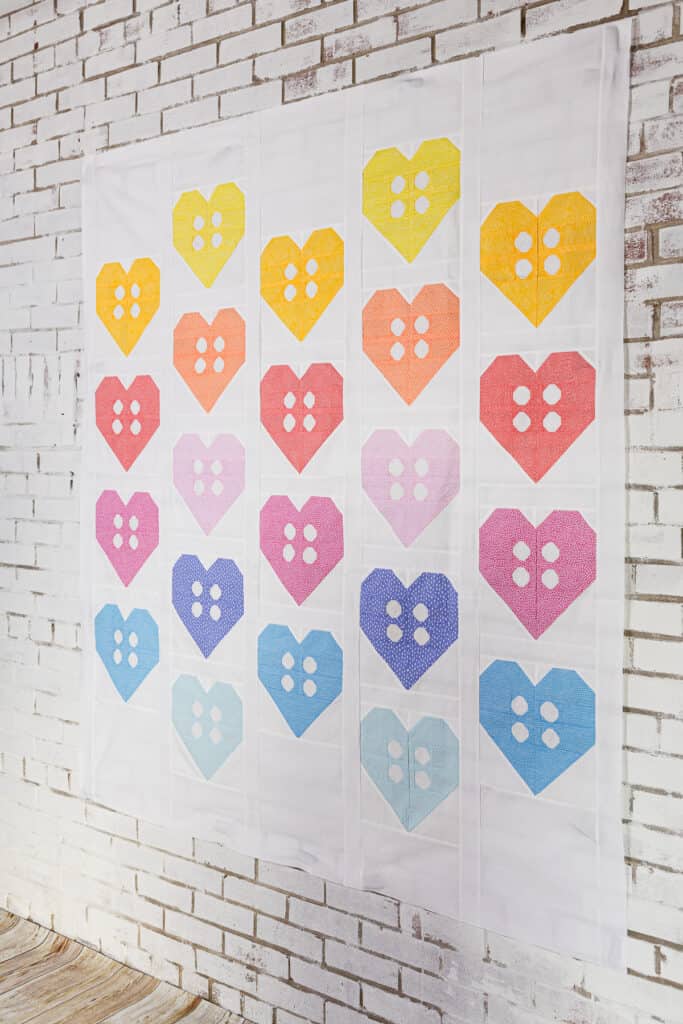
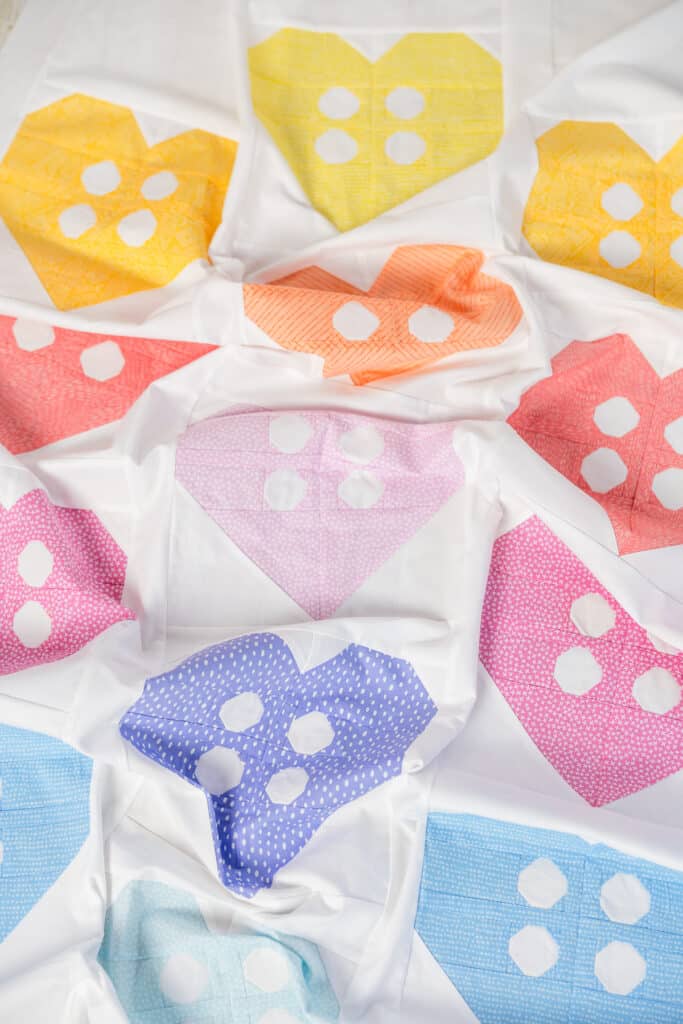
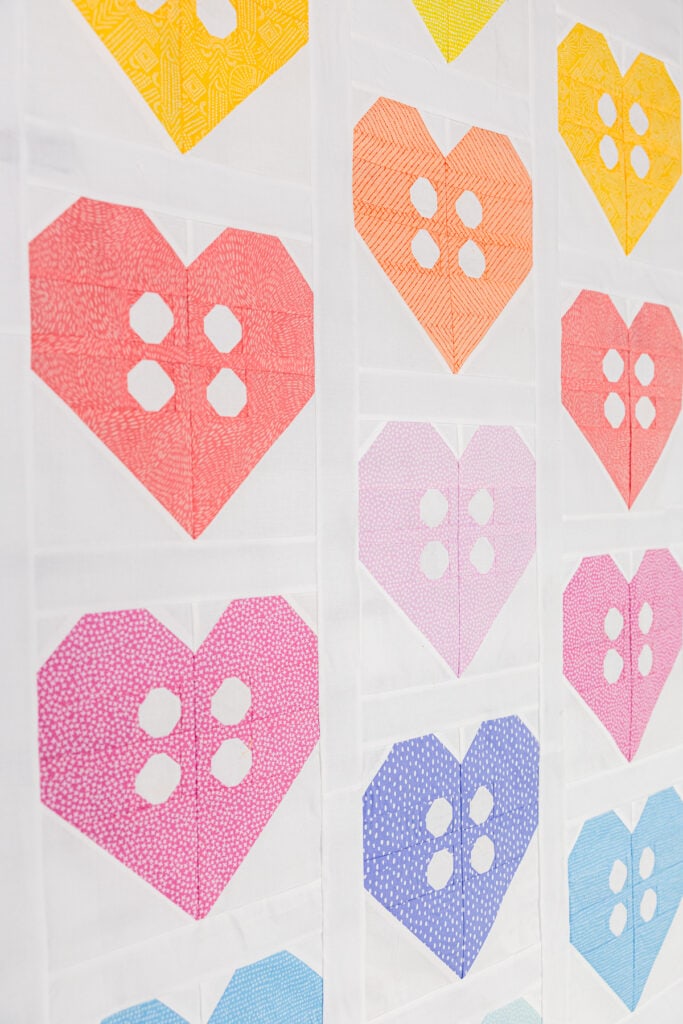
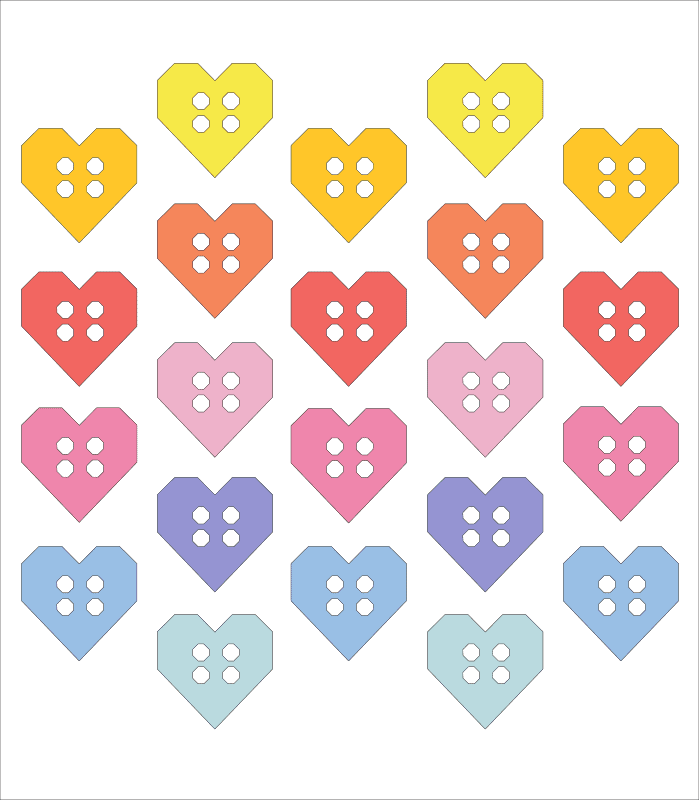
The funnest part of making these heart quilt blocks is picking out the fabrics for the ombre color design. In the cover quilt I chose to use a rainbow palette and pastels and bright spring colors, the color values go from a light yellow to a bright yellow, through the oranges and pinks, and on down to the purple and blue hues that make your eyes travel from color to color in a pleasing pattern.

I was totally inspired to make this from the cute little heart buttons I used to sew on my children’s Valentine’s Day dresses I made years ago. I have always just adored those cute little heart buttons and when the idea hit me to make a quilt with heart buttons I knew it would be such a cuteness overload.

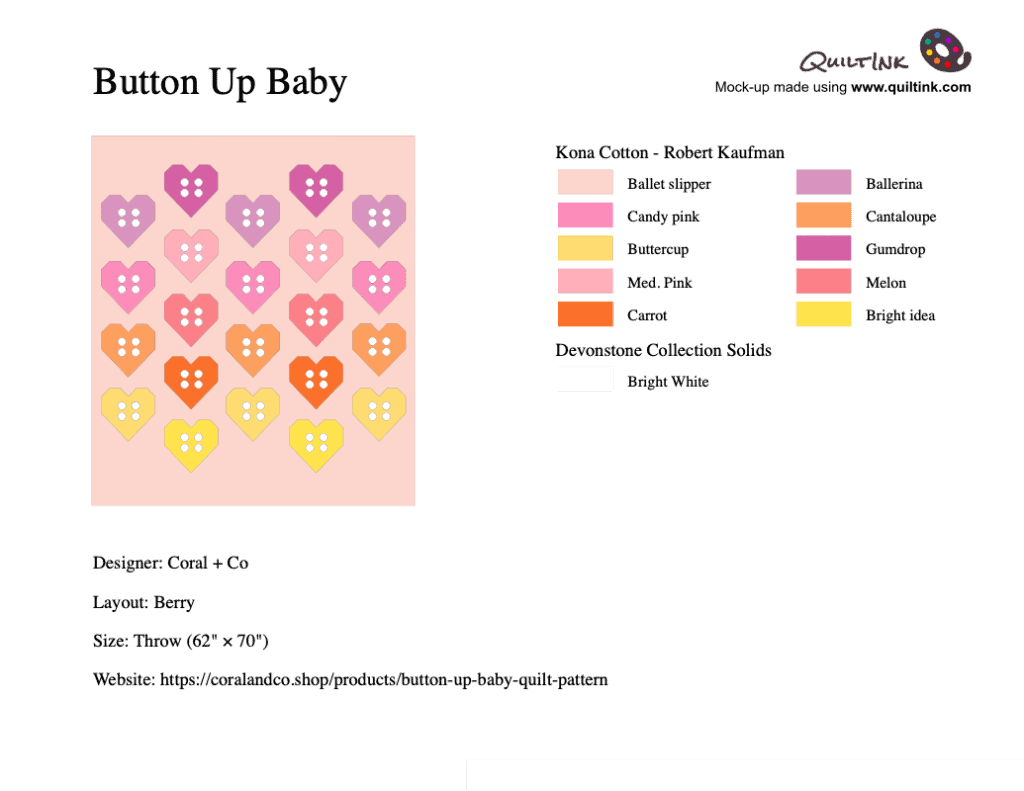
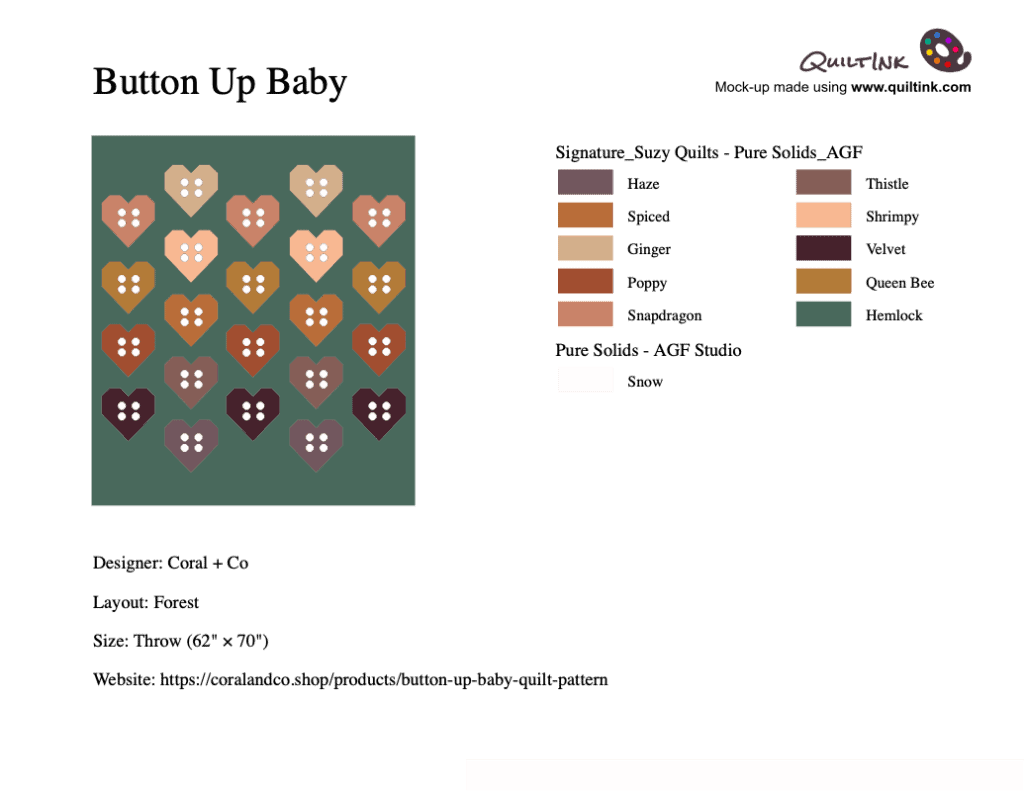
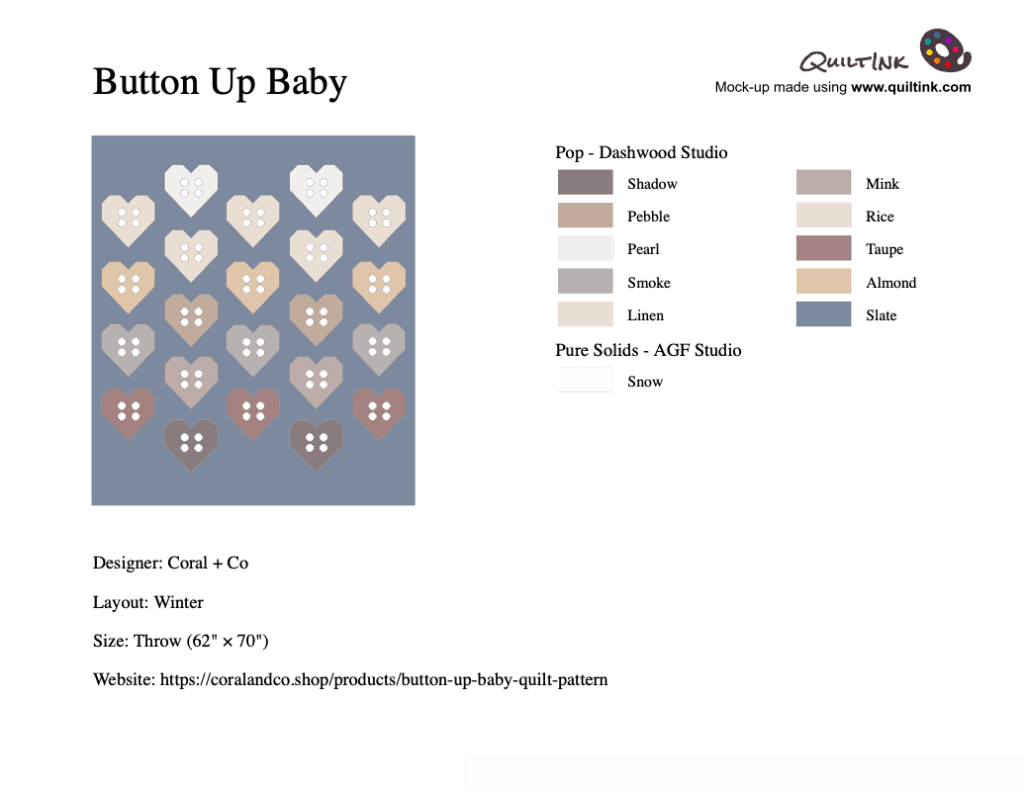
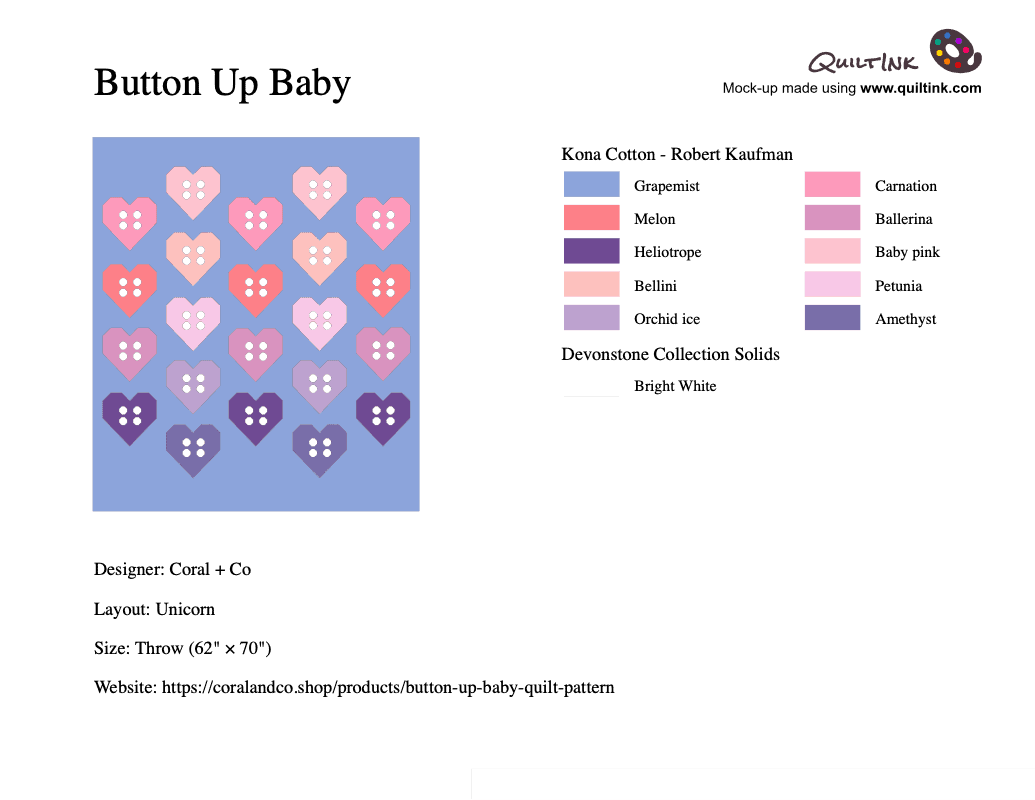
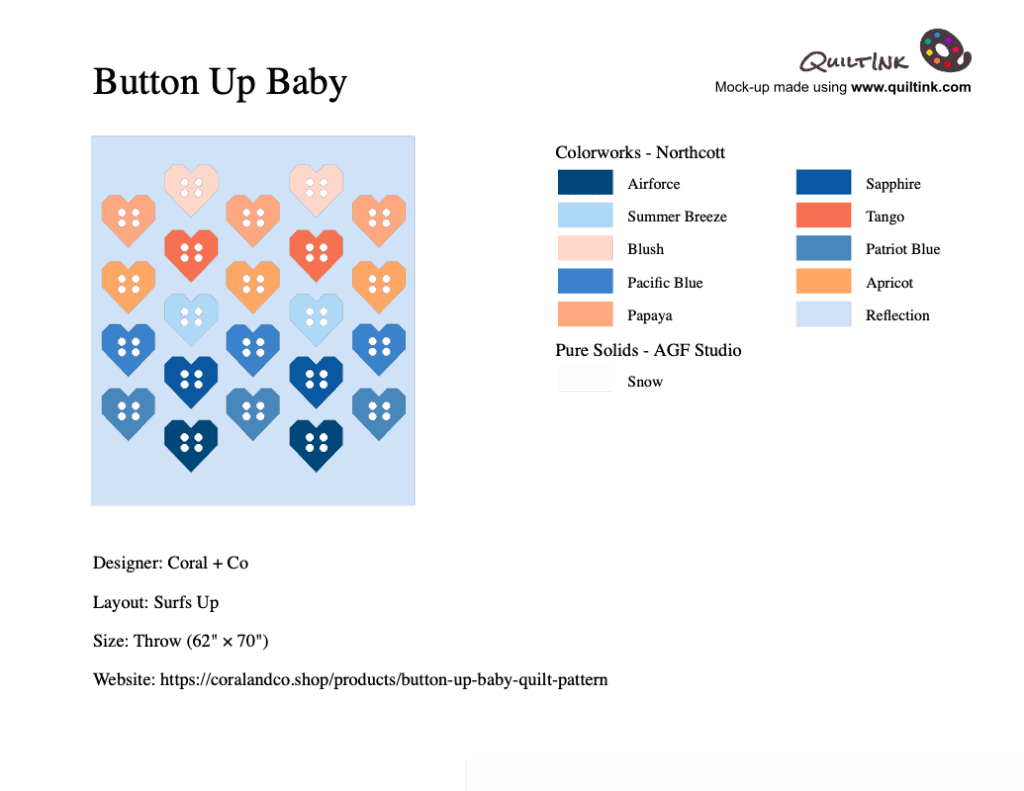
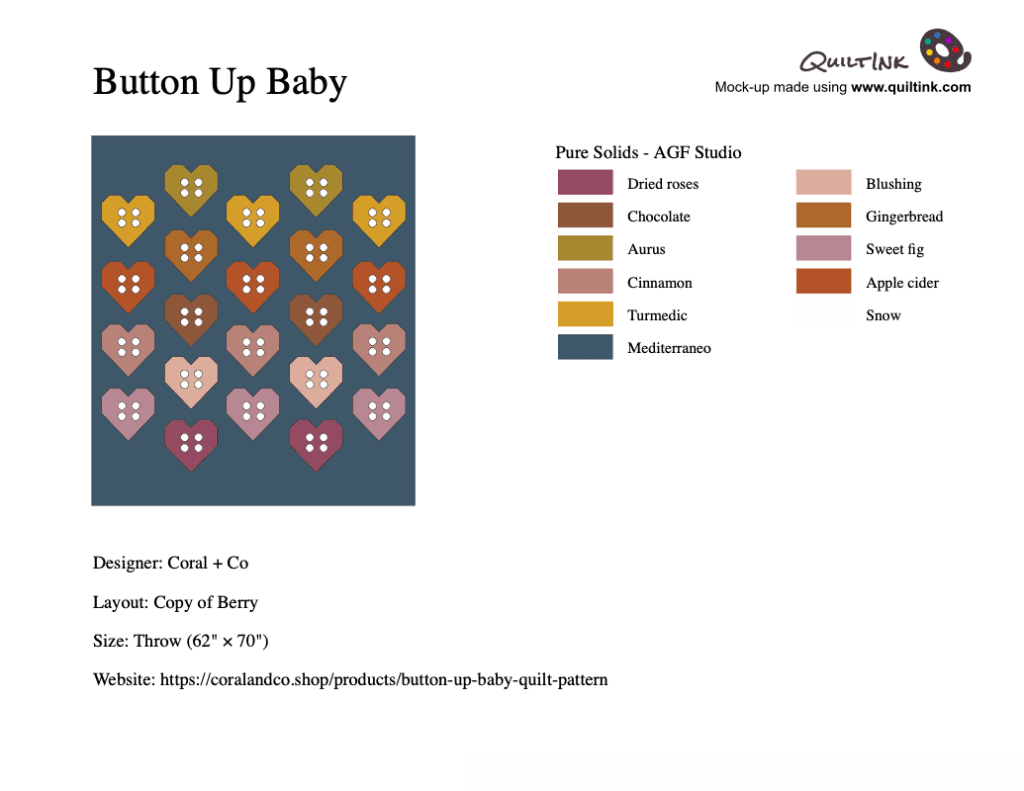
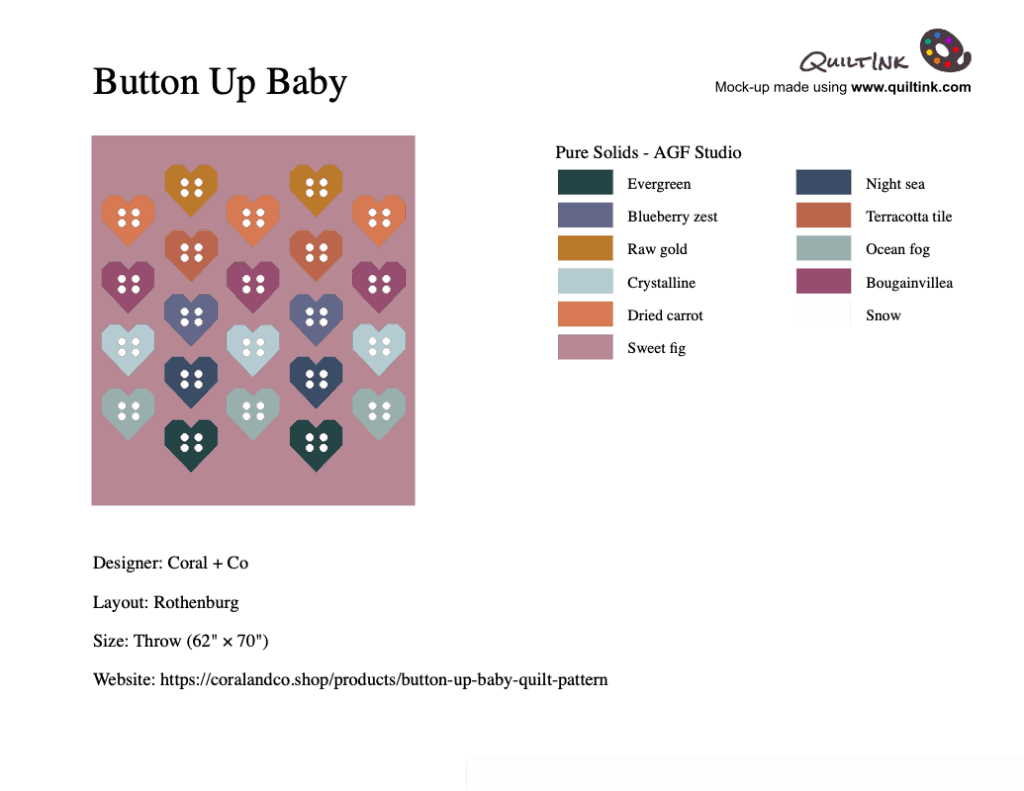
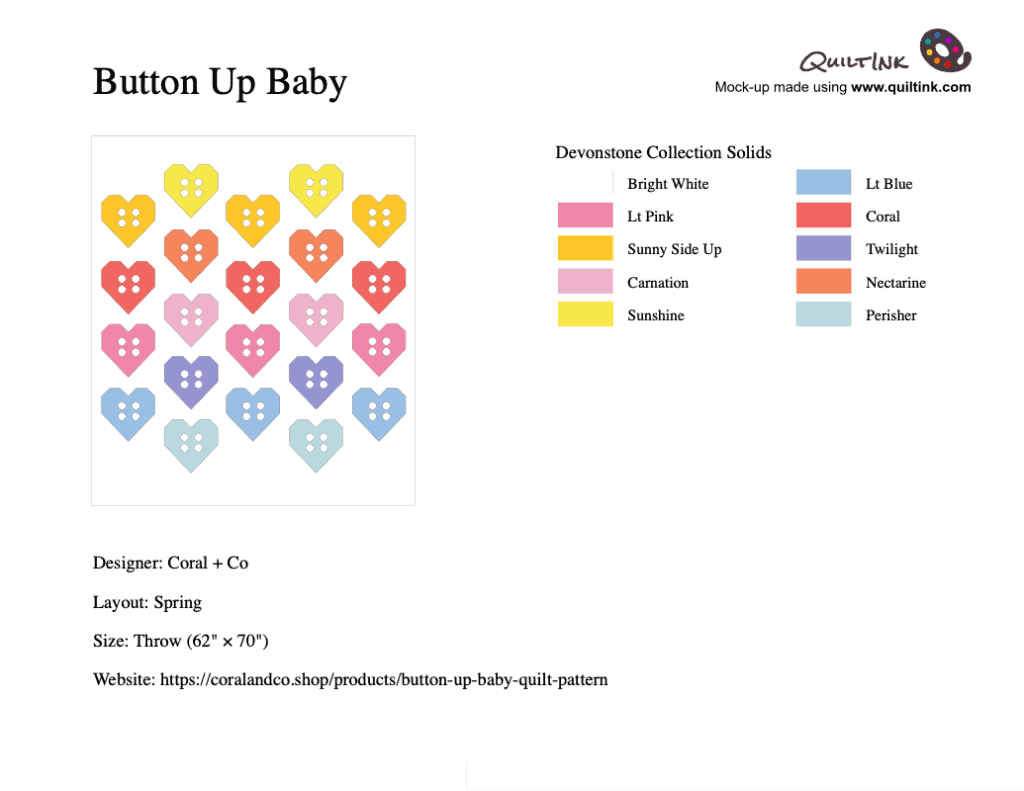
Button Up Baby Quilt Pattern Mock Ups

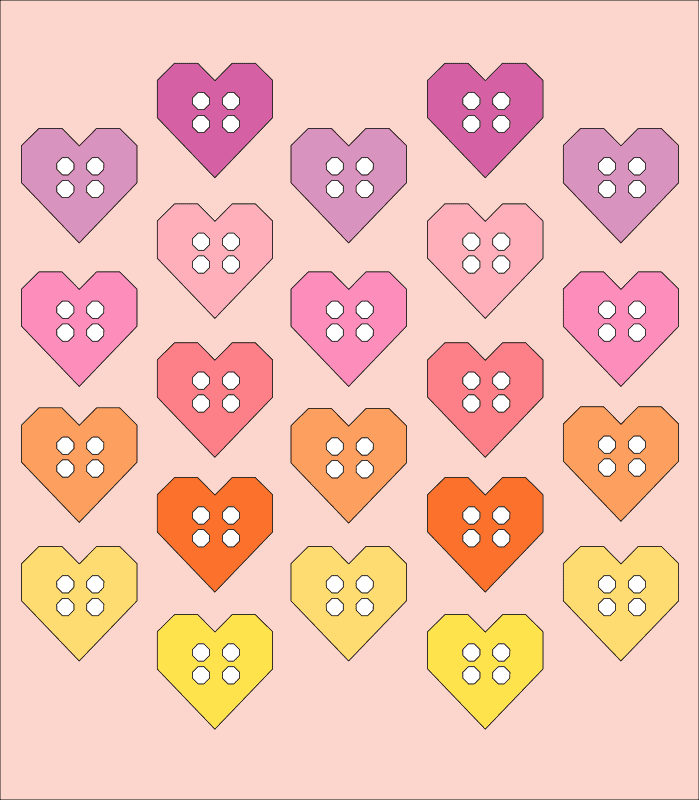
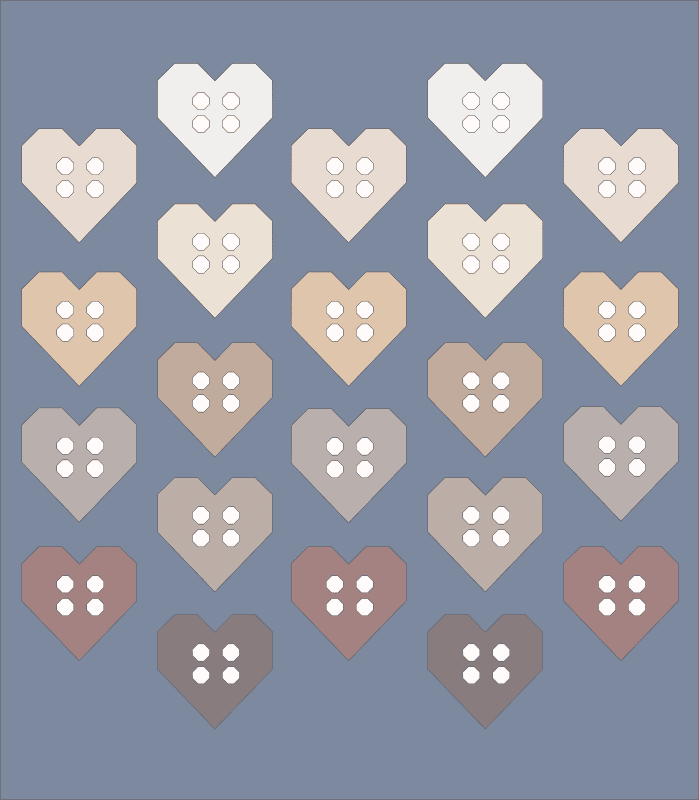
I went over to QuiltInk and made some really fun mockups with some playful colorways. If you want to make your head over to QuiltInk to play with colors and swatches. I honestly can’t decide on my favorite, they are all so fun. I don’t usually think of dark and moody colors for hearts and Valentine’s Day but I really love how the dark blues and greens look.

So Many color ways to make the Button Up Baby Heart Quilt Pattern

Mockup Recipes

You can click any of the mockup recipes below to download a pdf of the color key to make shopping for fabrics easier.

Pin the Button Up Baby Valentine’s Day Quilt Pattern to Make Later

button-heart-quilt-pattern-rainbow

Free Tutorials, Holiday, Quilt Patterns, Valentines Day, Winter

Sewing Room Ideas for Small Spaces: Creative Space-Saving Solutions

Jan 19, 2024 · 3 Comments

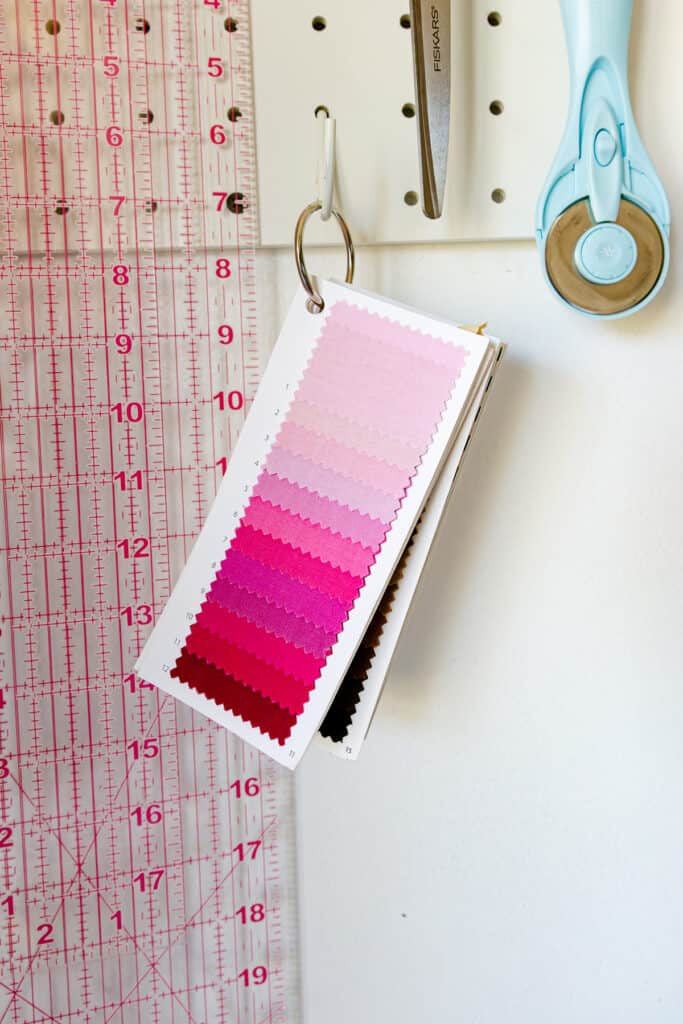
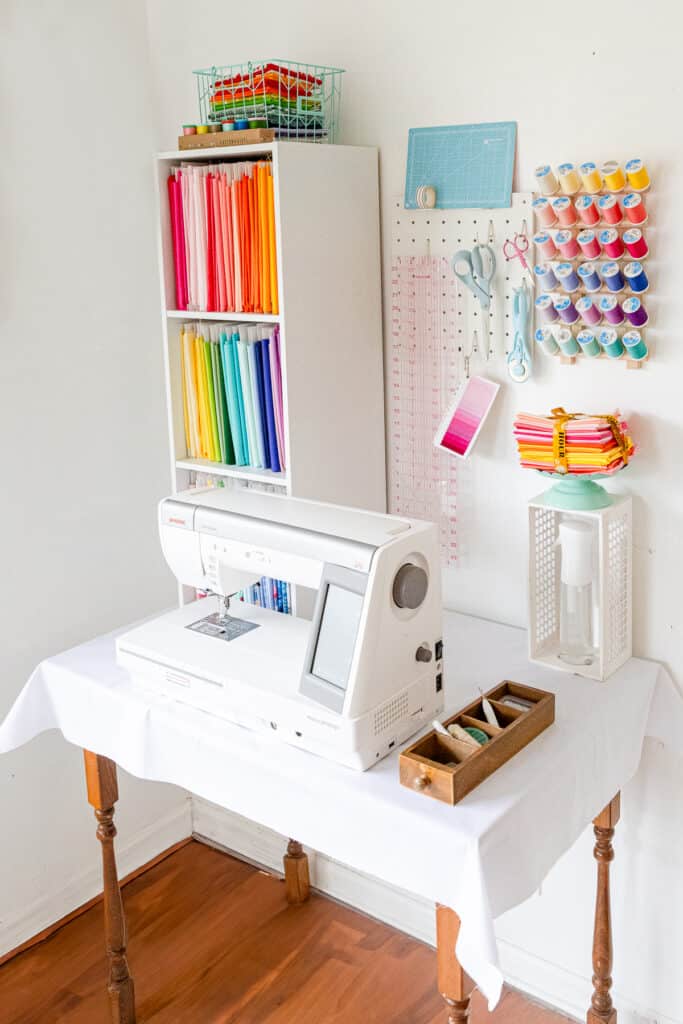
small-sewing-space-machine-on-table-with-pegboard

Creative Small Sewing Room Ideas

In today’s modern living environments, designing a sewing room within tight quarters can be both a challenge and a rewarding endeavor. With the surge of interest in DIY crafts and sewing, there’s a need for efficient sewing room ideas for small spaces. This article delves deep into simple and practical strategies and innovative approaches to help you craft a cozy yet functional sewing sanctuary, even within limited dimensions.

sewing-room-ideas-for-small-spaces-organization-hacks-sewing-machine-on-table-fabric-shelf-behind-notion-pegboard-and-threadrack

Table of Contents

  1. Creative Small Sewing Room Ideas
    1. Where I Sew: My Kitchen Table Small Sewing Space
  2. Watch The Video on Youtube
  3. More Sewing and Quilting Posts You Might Like
    1. You Might like: Beginner Quilting Supplies to Get Started Quilting
    2. 1. Assess Your Available Space
    3. 2. Prioritize Essential Equipment
    4. 3. Invest in Multi-Functional Furniture
    5. 4. Utilize Vertical Space Effectively
    6. 5. Clear Storage Containers for Organization
      1. More Container Organization Tips:
    7. 6. Maximize Natural and Task Lighting
    8. Task Lighting Ideas
    9. 7. Craft a Portable Sewing Kit
      1. Organization Ideas:
    10. 8. Prioritize Comfort and Ergonomics
      1. Sewing Chair Ideas:
    11. 9. Personalize and Decorate
    12. Other Small Sewing Space Organization Tips
    13. Conclusion

Where I Sew: My Kitchen Table Small Sewing Space

Before we moved to our current house I had my sewing room, where I kept several sewing machines, my cutting table, ironing board, and my fabric stash, as well as my camera and lighting equipment. I liked being able to walk in and just start sewing, but I honestly missed being away from the action of the rest of the family. I also tended to walk away and leave the room in its current state during the middle of a project, and that messy state often stayed for far too long.

Watch The Video on Youtube

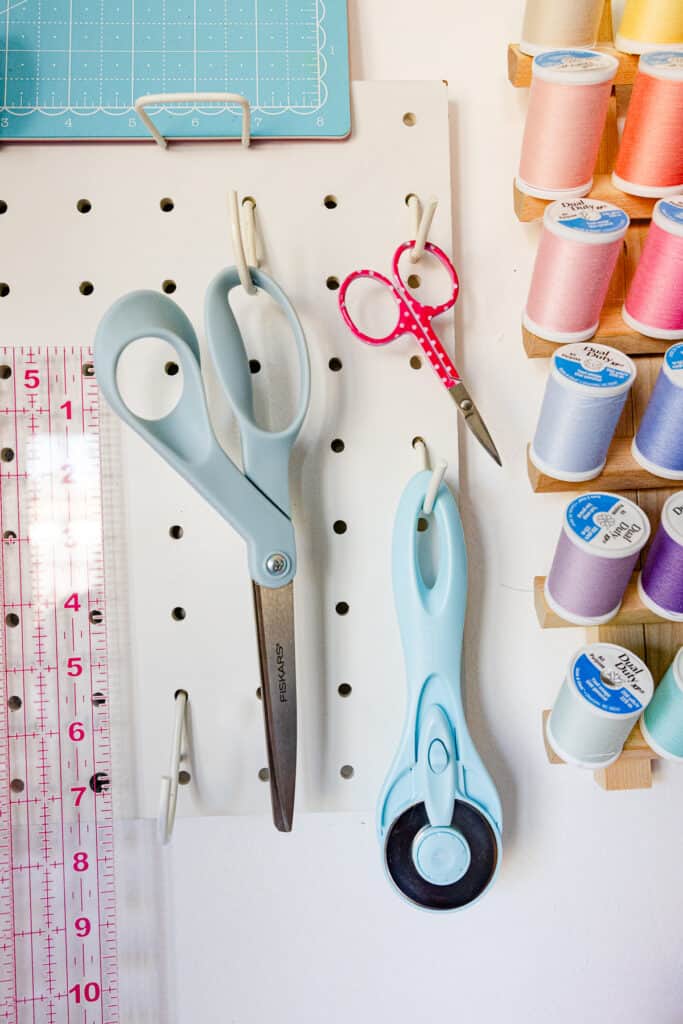
When we moved to our current house I gave up my sewing room. I gained a ton of space in the garage to keep all my sewing and craft supplies, along with all my camera and lighting equipment for filming tutorials. I also gained a large kitchen island, which is the perfect place to spread out my cutting mat and wool pressing mat.

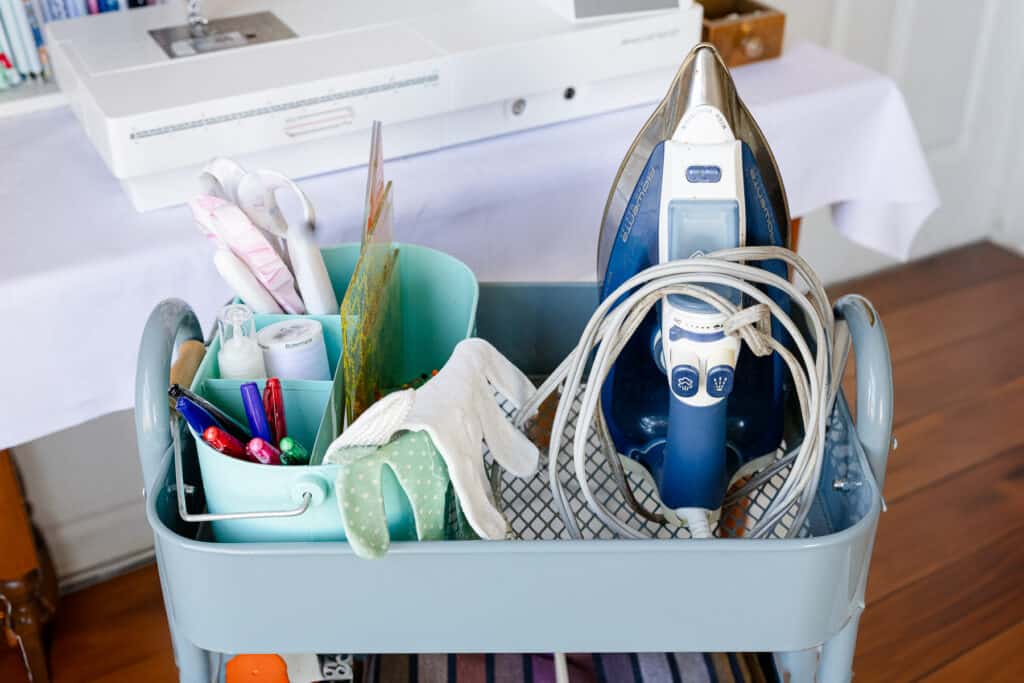
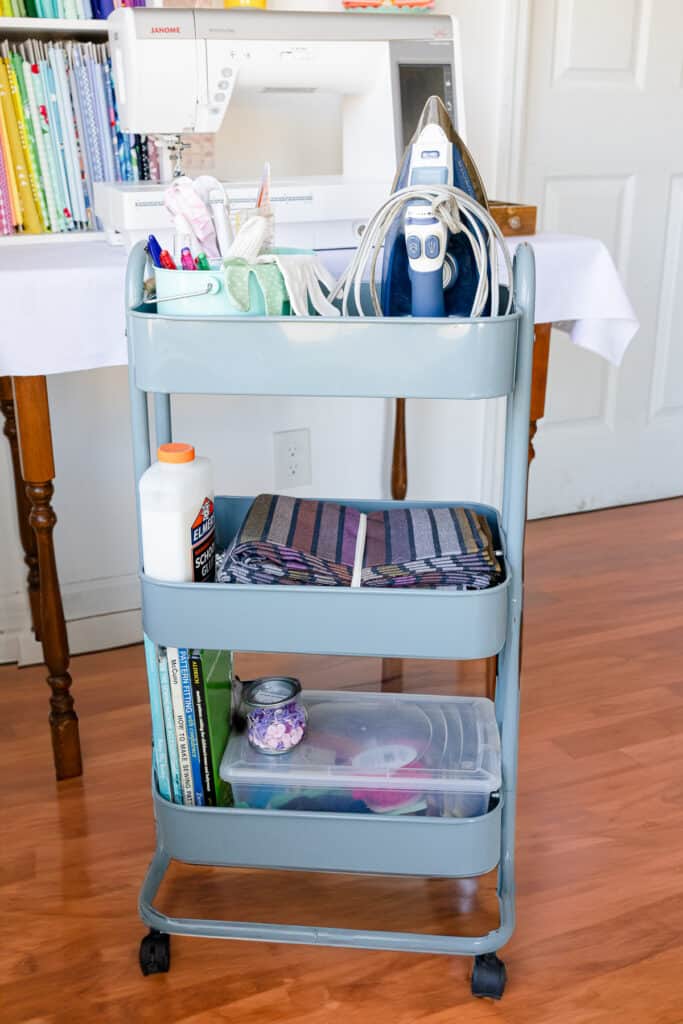
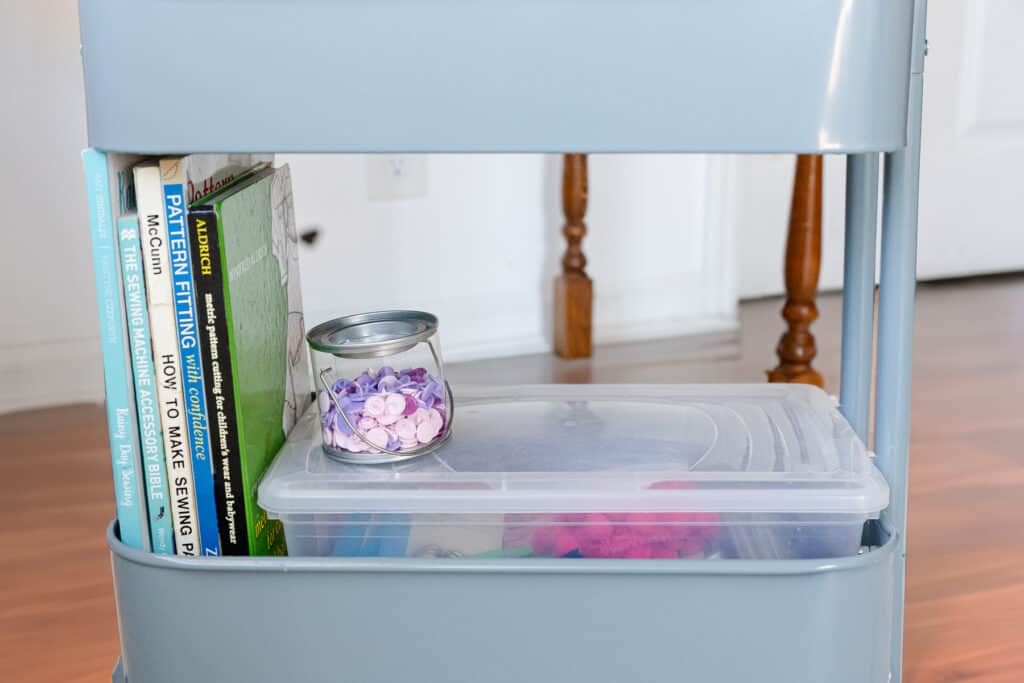
I now use the kitchen table to sew and I love it. I am in the thick of the action, surrounded by kids and dogs. I keep my sewing machine in a cabinet in my living room, and all my sewing supplies on a rolling cart that easily rolls into the garage, or can stay in the corner of the kitchen/dining room if I am lazy. I store my cutting and pressing mats behind a shelf. If I am in the middle of a project and need to use the kitchen, I usually pile everything onto the cutting mat and move it somewhere temporarily.

Is my system perfect? No. Is it super convenient? No. It would be easier to have a sewing room set up. But counterintuitively, I prefer this setup. I like to be around people when I sew. I feel too far away from everyone when I have a sewing room, so this setup works for me.

I know most people don’t have the luxury of having a full room to dedicate to sewing and crafts, so I have come up with some of my favorite ways to sew in a small or temporary space.

More Sewing and Quilting Posts You Might Like

  •  5 Must Have Beginner Sewing Supplies
  • How to Thread A Sewing Machine
  • Quilting Supplies for Beginners
  • How to Choose the Right Needle for Quilting
  • 10 Favorite Features of the Viking Sapphire 965Q

You can use a small corner to create your perfect small room sewing space.

You Might like: Beginner Quilting Supplies to Get Started Quilting

1. Assess Your Available Space

Begin by gauging the dimensions and layout of your designated area. Whether it’s a corner in the bedroom or a partitioned section of the living room, understanding your space’s limitations will lay the groundwork for implementing sewing room ideas for small spaces effectively.

If you don’t have additional room for a sewing table for your machine, you can easily use your Kitchen table with a few minor adjustments.

  • Portable Sewing Setup:
    • Invest in a portable sewing machine and accessories, so you can easily set up and put away your sewing equipment on the kitchen table as needed.
  • Use a Cutting Mat:
    • Lay a self-healing cutting mat on the kitchen table to protect the table’s surface when cutting fabric. You can hide it behind a bookshelf and store it when not in use.
  • Storage Bins or Caddies:
    • Use storage bins or caddies to keep your sewing supplies organized and easily transportable from your sewing storage area to the kitchen table.

2. Prioritize Essential Equipment

When square footage is at a premium, prioritize the most essential sewing tools and equipment. Your sewing machine, cutting mat, and perhaps a compact ironing board should take precedence. These core items form the backbone of your workspace, aligning with the overarching sewing room ideas for small spaces theme.

  1. Keep Essentials Nearby:
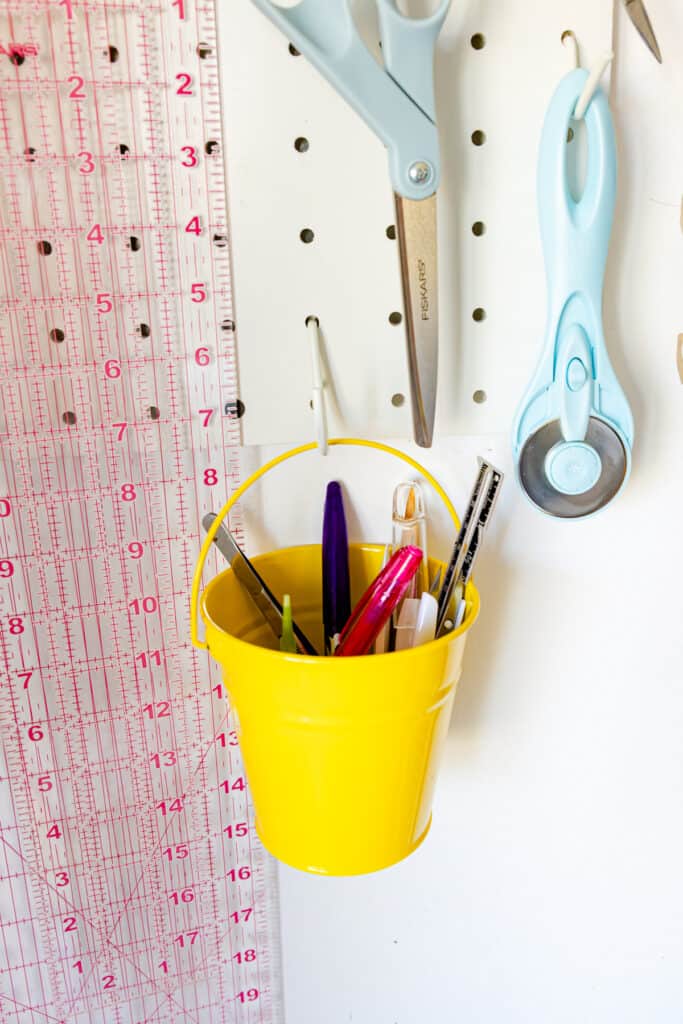
    • Store your most frequently used items, such as scissors, pins, and measuring tape, in a container or basket on your sewing table so they’re always within arm’s reach.
  2. Wool Pressing Mat:
    • Invest in a wool pressing mat that can be placed on your sewing table or any flat surface. These mats provide excellent heat retention and even heat distribution, making your pressing more efficient.

3. Invest in Multi-Functional Furniture

One of the paramount sewing room ideas for small spaces is the integration of multi-purpose furniture. Seek sewing tables with built-in storage or folding mechanisms. This way, you can maintain a sleek appearance while optimizing every square inch.

Specific Sewing Furniture Organization Ideas:

  1. Foldable Cutting Table:
    • Consider a foldable cutting table that you can set up when needed and fold away when not in use. This can save a lot of space in your sewing area.
  2. Sewing Cabinet:
    • If you have the budget and space, invest in a sewing cabinet with built-in storage for your machine and supplies. These cabinets are designed to optimize sewing organization in a compact space.
  3. Compact Sewing Machine Table:
    • Invest in a sewing machine table that can be folded down when not in use. These are designed to maximize space while providing a stable sewing surface.
  4. Designate a Sewing Basket or Tote Bag:
    • Have a designated sewing basket or tote bag that contains essential sewing tools like scissors, pins, measuring tape, and thread spools. This makes it convenient to carry your tools to the kitchen table.

4. Utilize Vertical Space Effectively

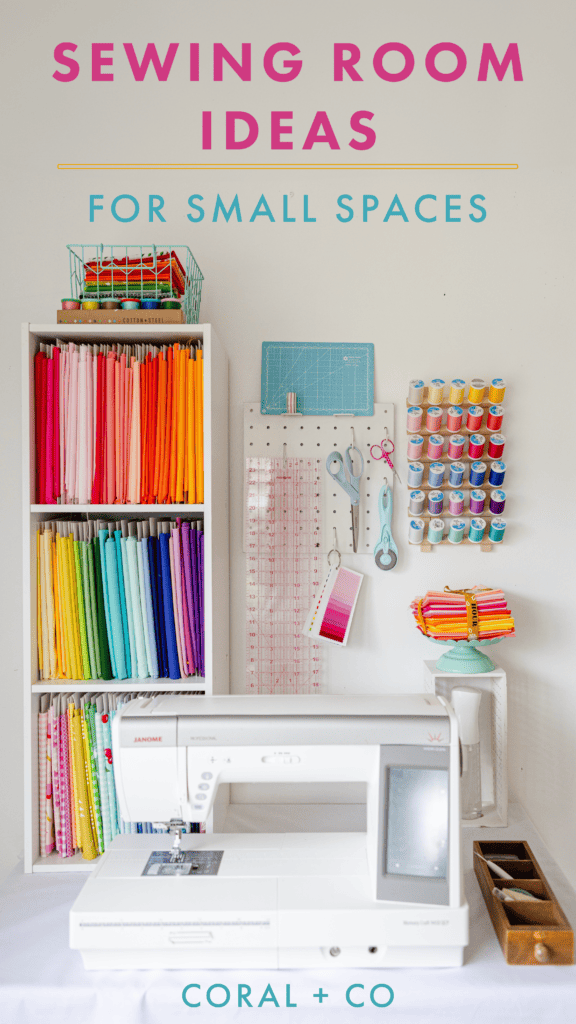
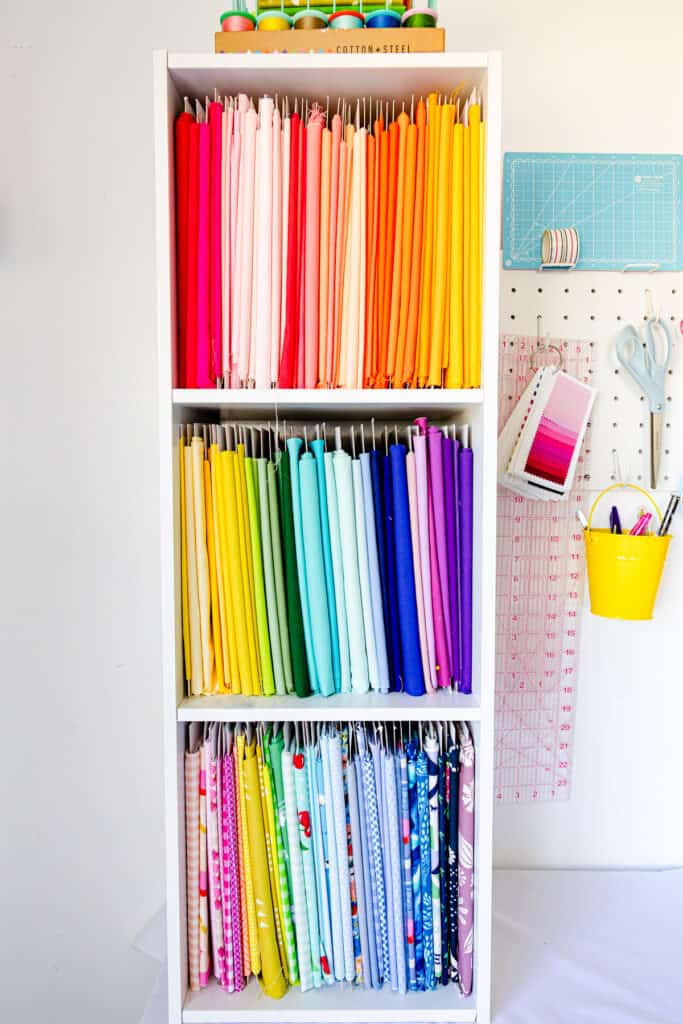
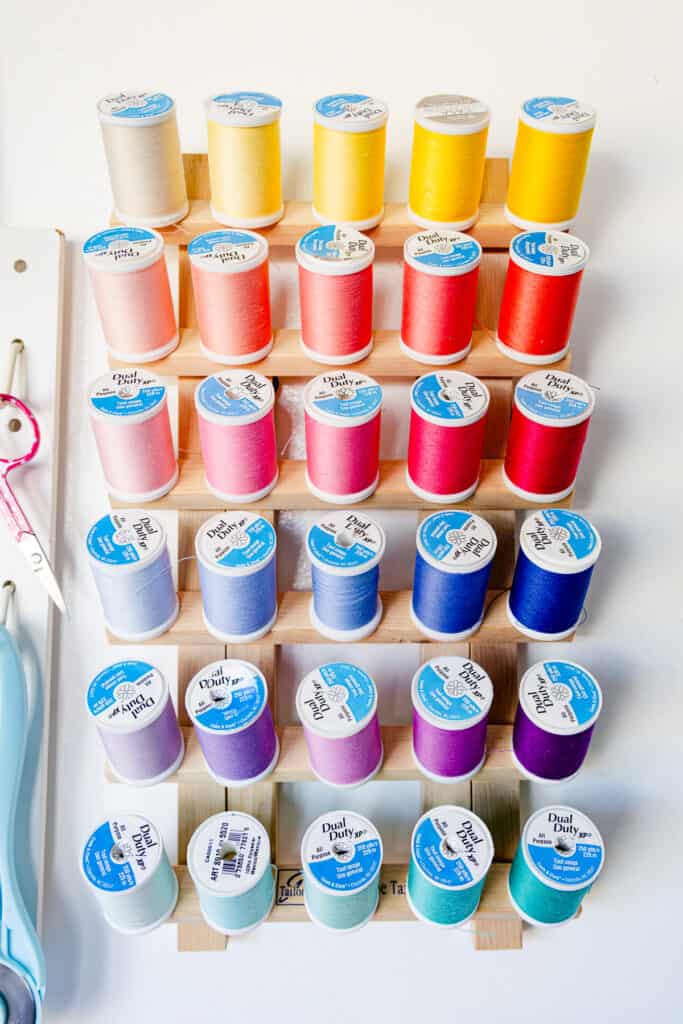
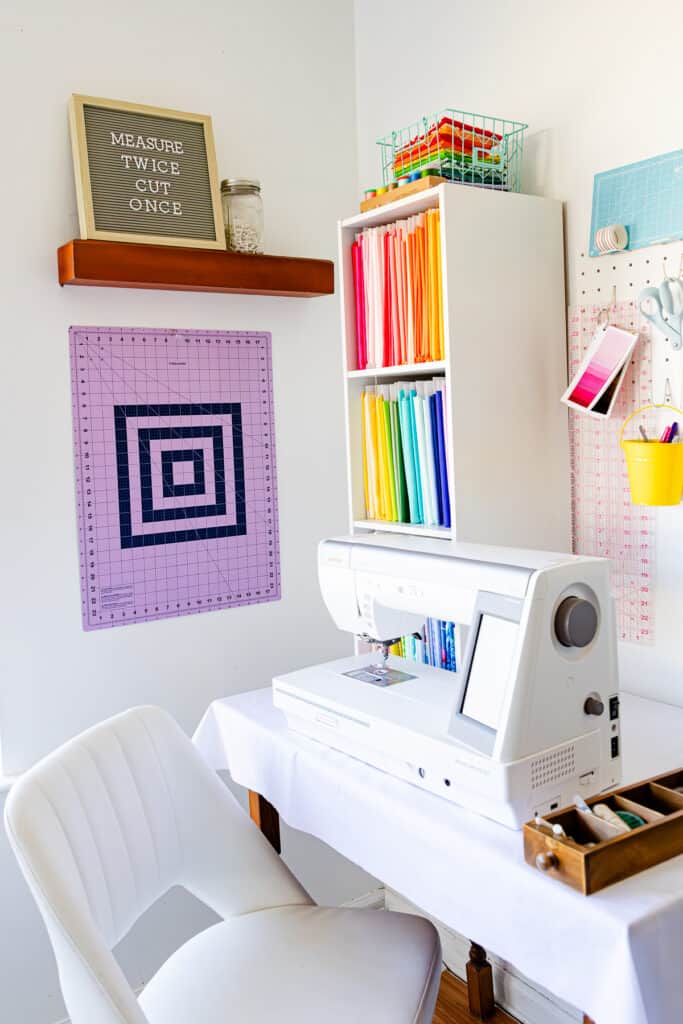
Vertical storage stands out prominently in sewing room ideas for small spaces. Implement wall-mounted shelves, pegboards, or hanging organizers to store fabrics, threads, and notions. This upward approach minimizes floor clutter, paving the way for more workspace.

Specific Vertical Space Organization Ideas:

  • Use Vertical Storage:
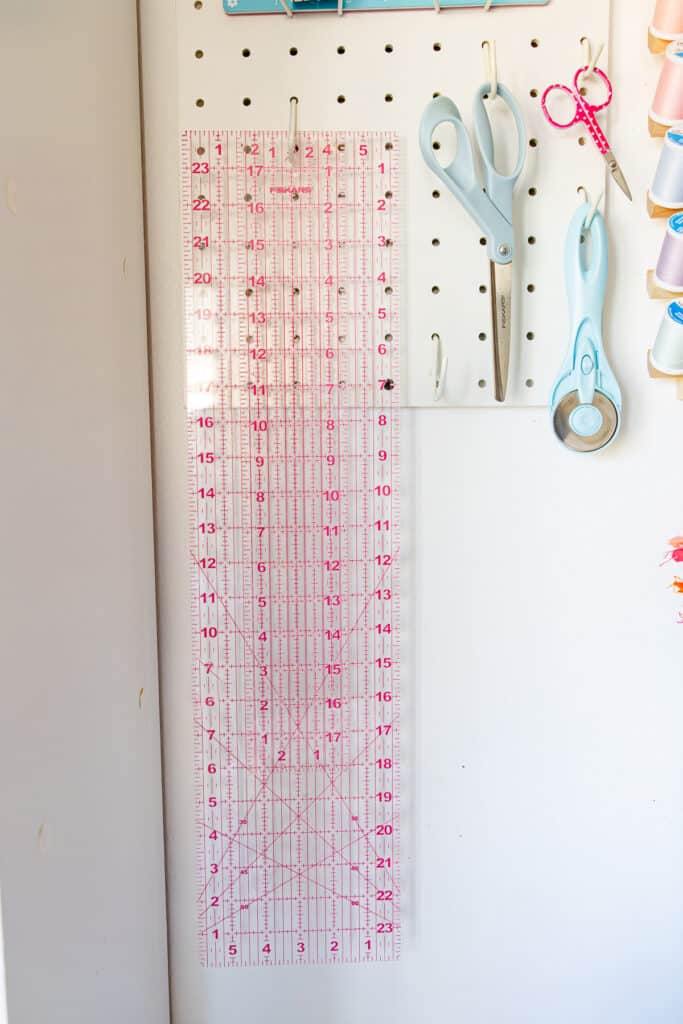
    • Install shelves or pegboards on the walls to keep your sewing supplies off the floor and tabletops.
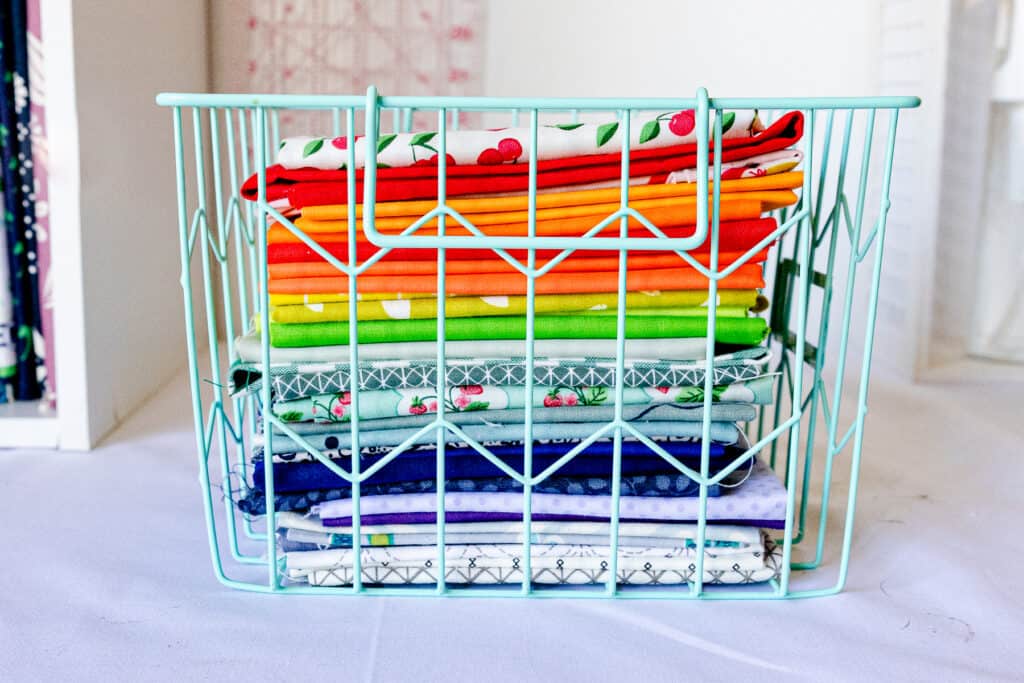
    • Use a 3-tier cubed shelf for fabric storage. Comic book boards are the perfect size to wrap your fabric around to make mini bolts and display it where you can see it.
    • Hang small baskets or containers on the pegboard to store scissors, rulers, and other small items.
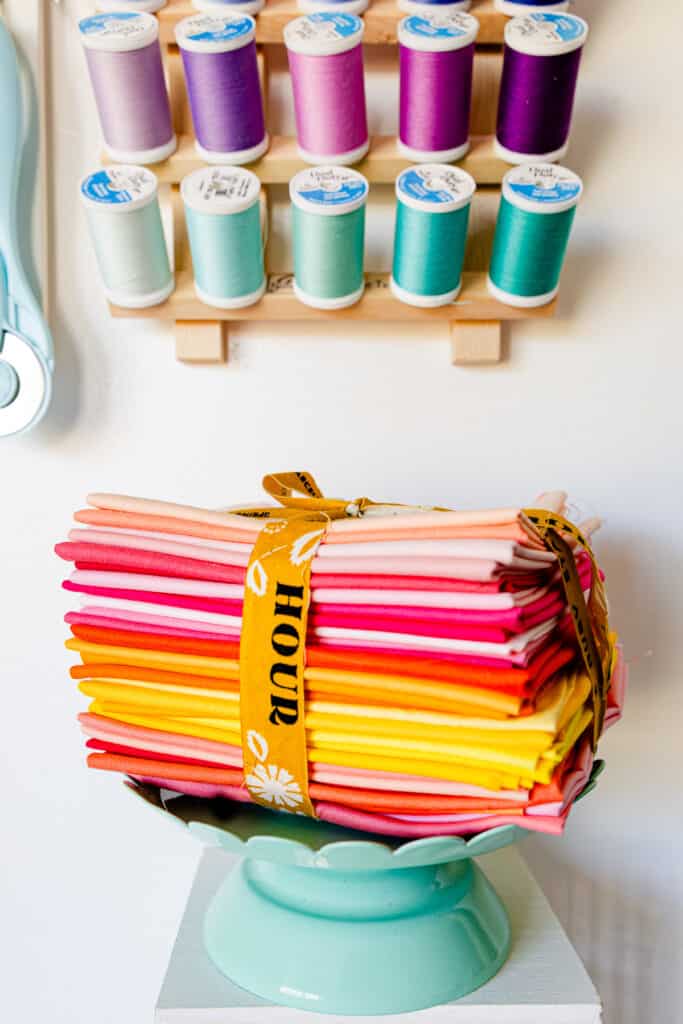
  • Wall-Mounted Thread Rack:
    • Install a wall-mounted thread rack to display and organize your thread spools. This not only keeps them easily accessible but also adds a decorative touch to your sewing area.
  • Hanging or Foldable Storage for the Mats:
    • Consider hanging the cutting and wool pressing mats on a hook or using a foldable storage solution to easily store it when not in use. This ensures it doesn’t take up valuable workspace when not pressing fabric.

5. Clear Storage Containers for Organization

Clear containers epitomize efficient sewing room ideas for small spaces. Opt for transparent bins, jars, or organizers. These not only maintain a clutter-free ambiance but also offer visual harmony, enabling you to locate supplies with ease.

More Container Organization Tips:

  • Label Everything:
    • Label your storage containers, drawers, and shelves to make it easy to find what you need quickly.
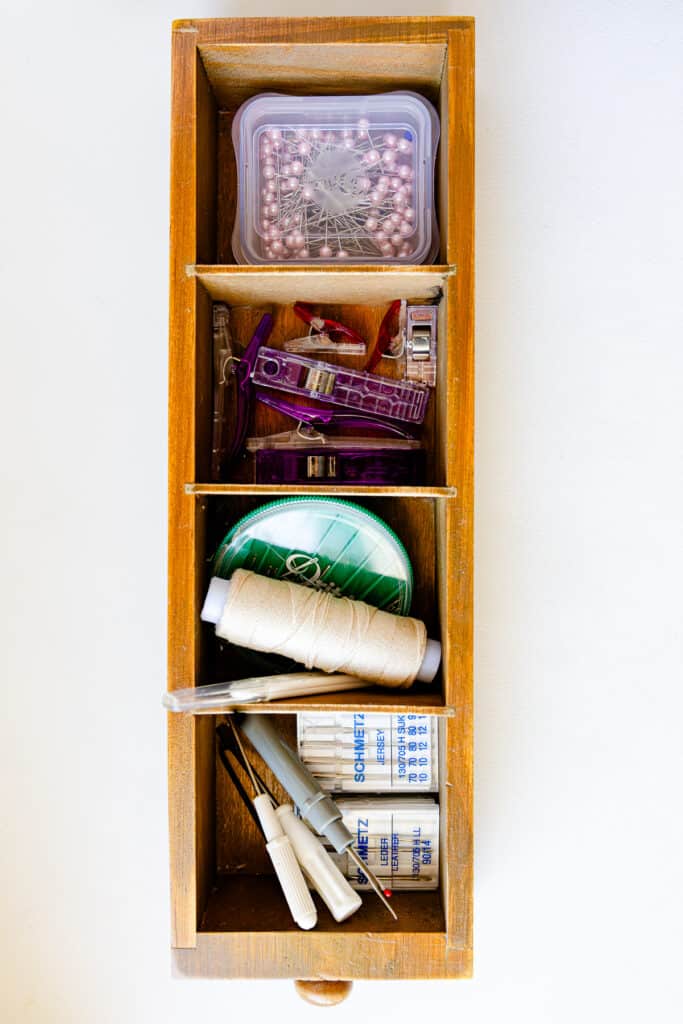
  • Drawer Dividers:
    • Use drawer dividers to keep your sewing tools and notions organized within drawers. This prevents items from getting mixed up and makes it easy to find what you need.

6. Maximize Natural and Task Lighting

Lighting plays a pivotal role in small sewing sanctuaries. Position your workspace near windows for natural illumination. Complement this with task lighting, such as adjustable desk lamps, to enhance visibility—a cornerstone in sewing room ideas for small spaces.

Task Lighting Ideas

  • Ott Light or Task Lighting:
    • Invest in an Ott light or a task lamp with adjustable brightness and color temperature settings. Position it in a way that it illuminates your sewing machine or cutting area effectively.
  • Wall-Mounted Ott Light:
    • In extremely tight spaces, consider a wall-mounted Ott light with a flexible arm. This can be positioned above your sewing area and folded away when not in use.

7. Craft a Portable Sewing Kit

For versatility, embrace the concept of a portable sewing kit. Curate essential tools and accessories in a compact organizer, aligning with mobile sewing room ideas for small spaces. This way, your crafting endeavors aren’t confined to one location.

Organization Ideas:

  1. Sewing Supply Caddy:
    • Invest in a sewing supply caddy with compartments for various notions like pins, needles, and buttons. You can easily carry it to your sewing machine and put it away when you’re done.
    • Use a small tray with divided spaces to organize small notions like needles, clips, pins, and sewing machine tools
  2. Rolling Carts:
    • Use rolling carts or storage units with drawers to keep your fabric, threads, and notions organized. These can be easily moved around and tucked away when not in use.
  3. Mobile Pressing Station:
    • If space is extremely limited, create a mobile pressing station by placing the wool pressing mat on a rolling cart or a foldable TV tray. This allows you to move the pressing area wherever you need it and tuck it away when done.

8. Prioritize Comfort and Ergonomics

Even within limited spaces, comfort remains paramount. Invest in ergonomic furniture and tools to ensure a comfortable sewing experience. This aligns with health-centric sewing room ideas for small spaces, emphasizing well-being alongside functionality.

Sewing Chair Ideas:

  • Ergonomic Sewing Chair:
    • Invest in an ergonomic sewing chair that provides proper support and comfort during long sewing sessions. Look for a chair with adjustable height and lumbar support to reduce strain on your back.
    1. Space-Saving Design:
      1. Choose a sewing chair with a compact and space-saving design, especially if your sewing area is limited. Look for chairs with no arms or slim profiles that can easily fit under your sewing table.
  • Storage Features:
    • Some sewing chairs come with built-in storage compartments or pockets where you can keep frequently used sewing tools, notions, or patterns. This can help keep your small space organized.

9. Personalize and Decorate

Lastly, infuse your unique flair into the space. While emphasizing practicality, introduce decorative accents that resonate with your style. Whether it’s showcasing cherished projects or integrating inspirational decor, personalization remains a pivotal aspect of sewing room ideas for small spaces.

  • Display Favorites:
    • Reserve a portion of your vertical shelf space to display your favorite or most inspiring fabrics. This adds a decorative touch to your sewing area.
  • Wall Decor:
    • Hang mini quilts, decorative wall art, such as framed sewing-themed prints, inspirational quotes, or handmade artwork related to sewing and crafting.
  • Wall Decals or Stickers:
    • Consider using wall decals or stickers with sewing motifs to add a creative touch to your sewing space without taking up much room.

Other Small Sewing Space Organization Tips

By implementing these sewing organization ideas for small spaces, you can create a functional and efficient sewing area that allows you to pursue your passion without feeling cramped or disorganized.

  1. Rotate Seasonal Fabrics:
    • If you have a lot of seasonal fabrics, consider rotating them in and out of your sewing space based on the time of year to save space.
  2. Declutter Regularly:
    • Periodically go through your sewing supplies and equipment to declutter and get rid of items you no longer need. This will help free up space and keep your sewing area tidy.
  3. Under-Bed Storage:
    • Use under-bed storage containers to store fabric and larger sewing supplies. This is a great way to make use of otherwise wasted space.

Conclusion

Crafting a sewing room within confined areas necessitates creativity, innovation, and a keen eye for detail. By adopting these sewing room ideas for small spaces, you’ll seamlessly merge functionality with aesthetics, transforming even the coziest corner into a vibrant sewing sanctuary. Embrace the challenge, optimize your resources, and relish the joy of sewing within your uniquely tailored space.

Free Tutorials, Learn How To Quilt, Sewing

FREE Top Knot Baby Hat Sewing Pattern and Tutorial

Jan 7, 2024 · 9 Comments

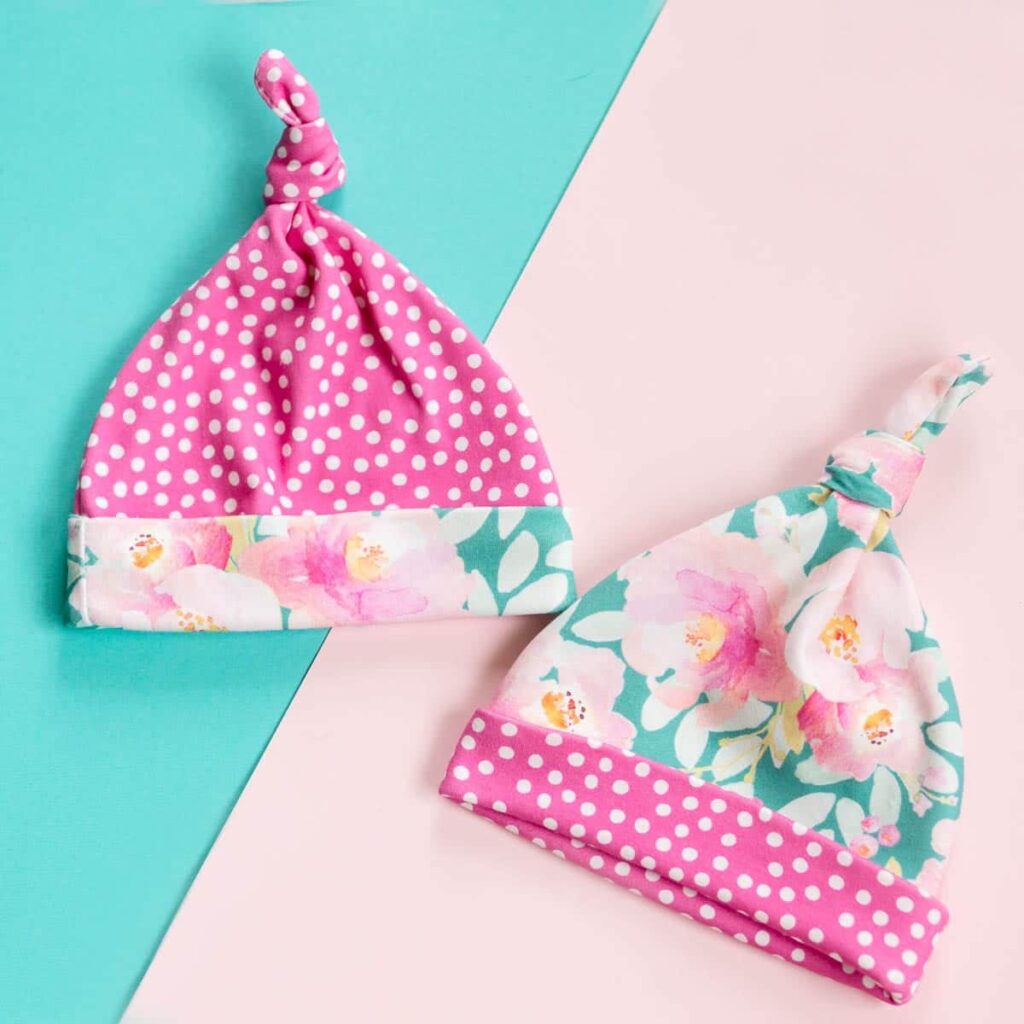
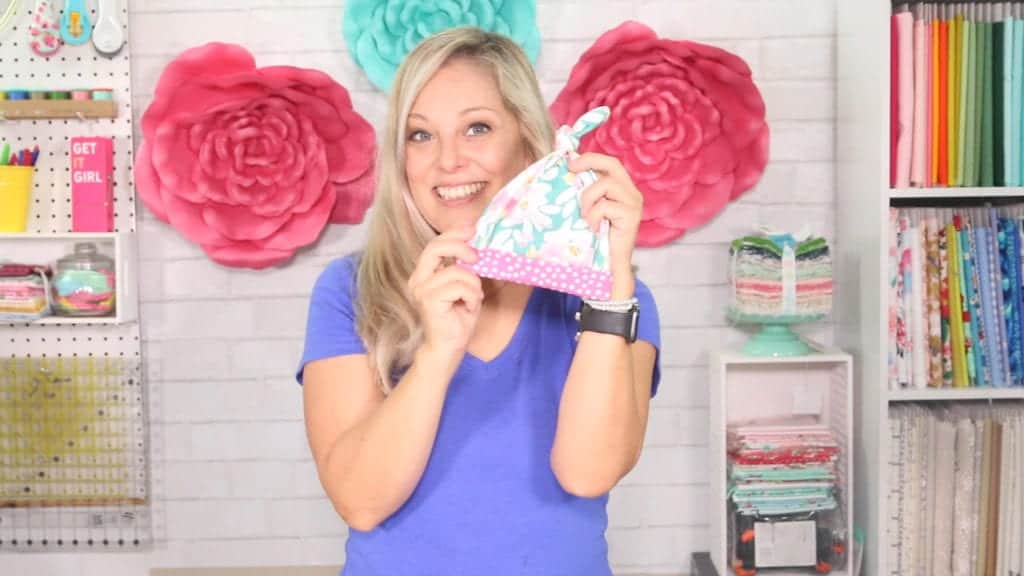
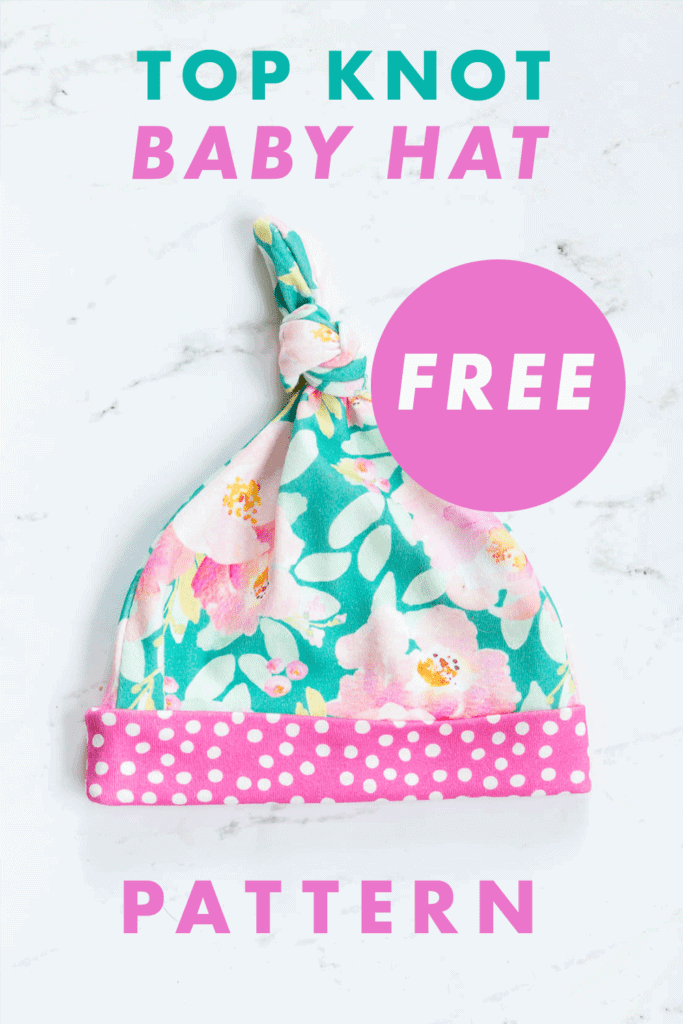
Learn to sew the CUTEST FREE Top Knot Baby Hat Sewing Pattern! Make this your goto newborn top knot hat for all your favorite little babies.

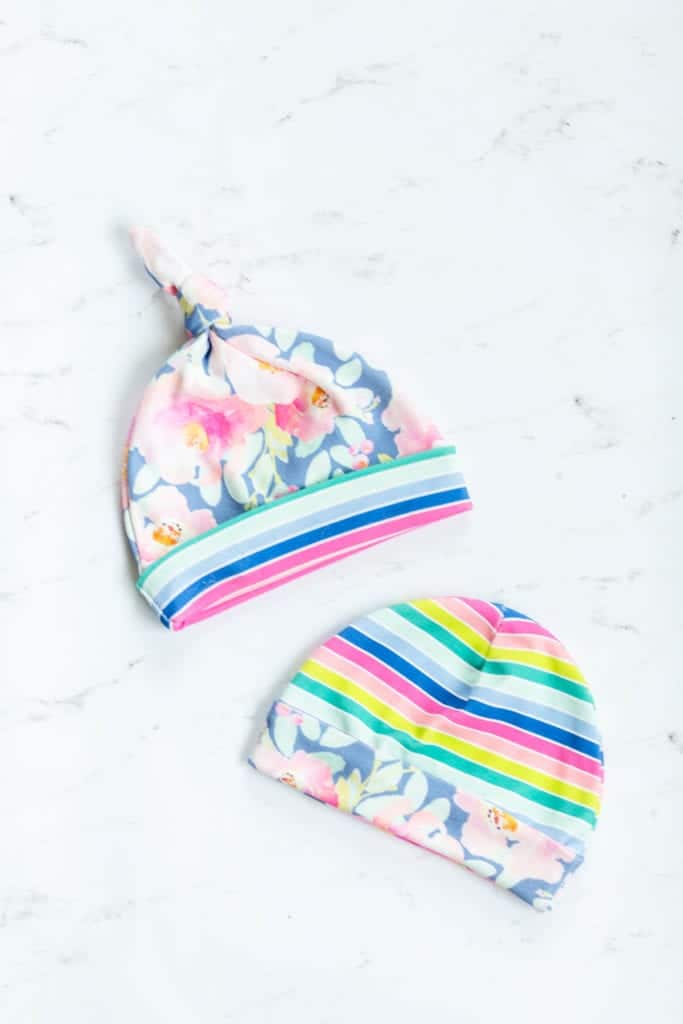
two-top-knot-baby-hats-pink-and-teal

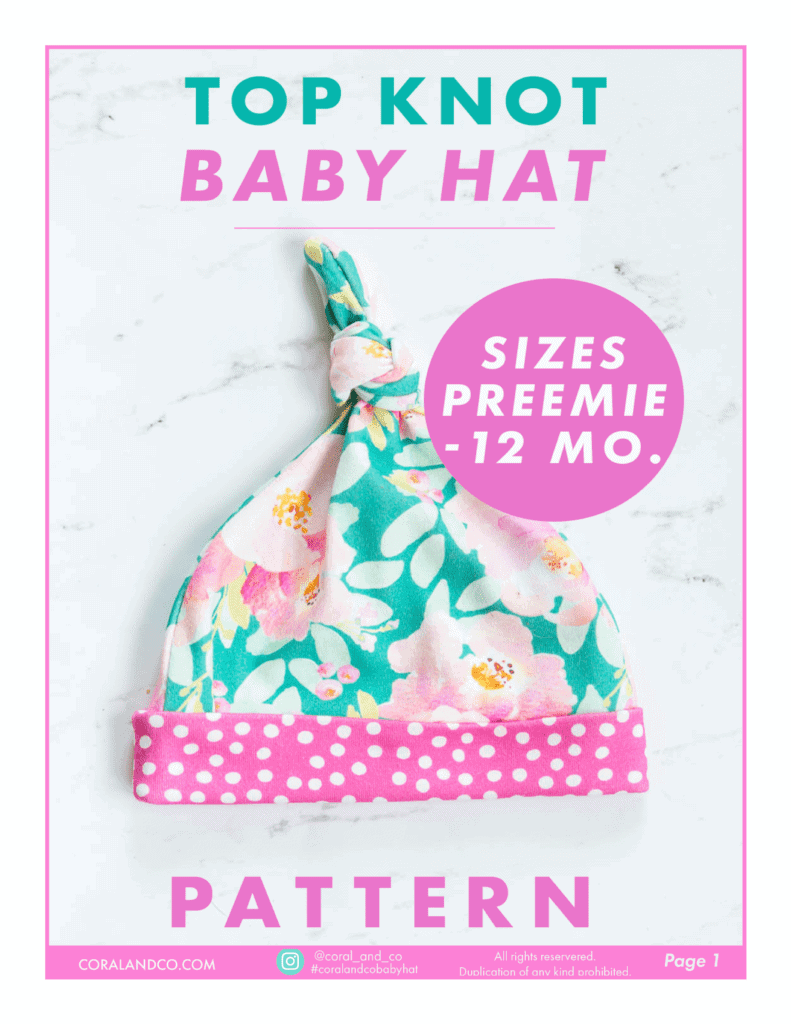
The FREE Top Knot Baby Hat Sewing Pattern comes with a PDF download including the tutorial!  The newborn top knot pattern comes in sizes preemie – 24 months.

The Top Baby Hat would make the perfect baby shower gift and can coordinate with Knot Bow Headband Pattern and the Knit Swaddle Blanket.

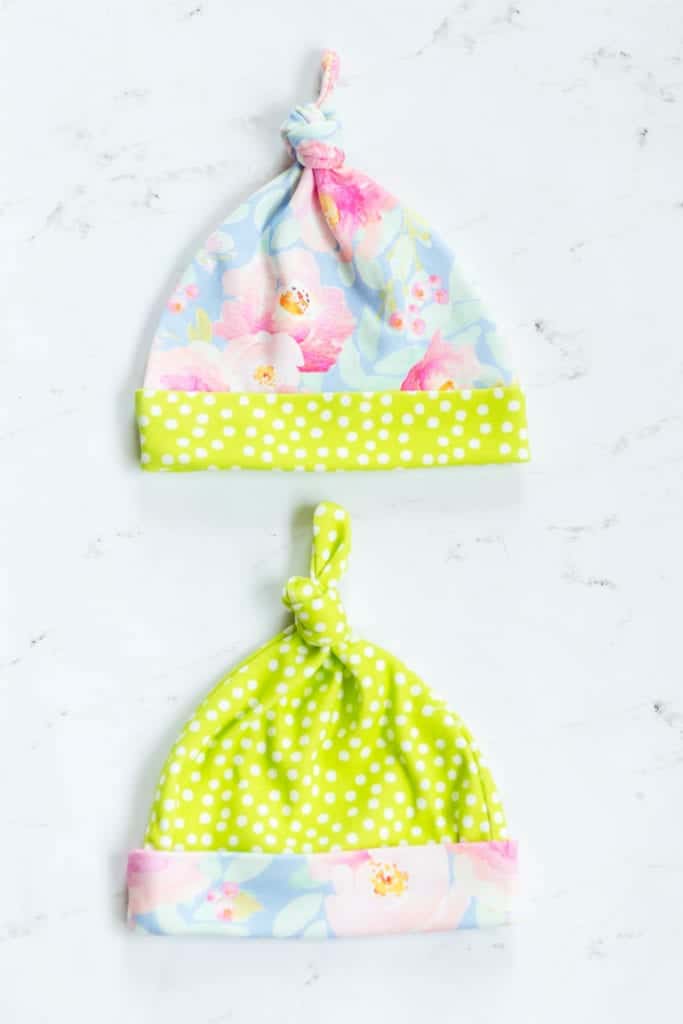
rainbow-stripe-and-floral-baby-hats

Table of contents

  • Baby Hat Pattern Supplies Needed
  • Download the Pattern
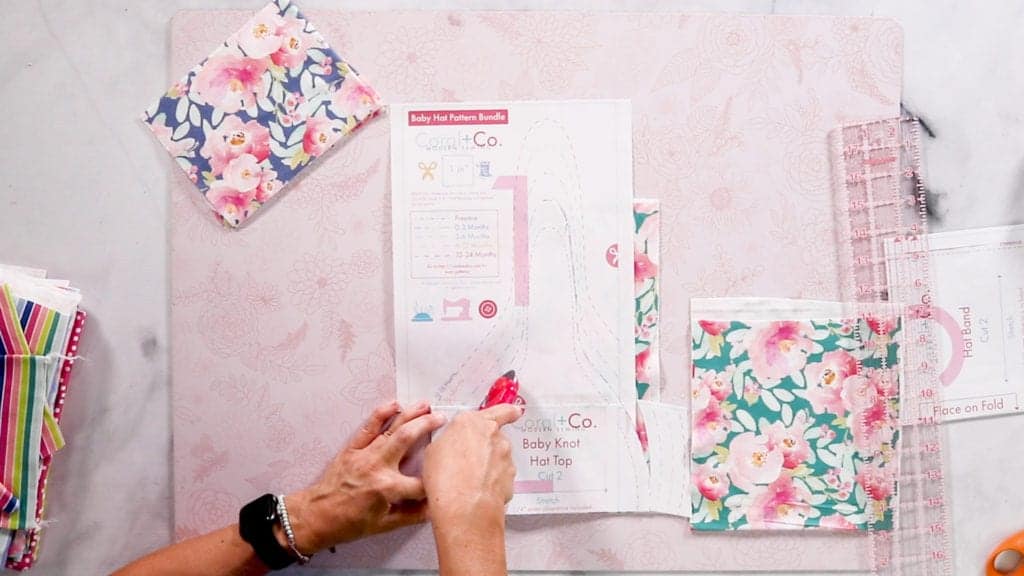
  • Assemble the Pattern
  • Sewing Instructions
  • Top Knot Baby Hat Pattern Tutorial Instructions
    • Watch the Video Tutorial on Youtube:
  • Pin Top Knot Baby Hat Sewing Pattern for later:

Other projects you might like:

  • Basic Baby Hat Sewing Pattern
  • Scrappy Patchwork Baby Bib Pattern
  • Sherpa Fleece Baby Blanket Tutorial
  • Minky Fitted Crib Sheet Tutorial
  • DIY Baby Leggings
  • Free Baby Bib Pattern
  • Knot Bow Headband

The baby hat can be sewn with either a sewing machine or overlock serger. 

 If you are new to sewing knits I have included some helpful notions listed below.  The Top Knot Baby Hat Sewing Pattern PDF comes in several sizes and options:

  • Top Knot Baby Hat Sewing Pattern and Basic Baby Hat Sewing Pattern
  • Preemie
  • 0 – 3 Months
  • 3 – 6 Months
  • 6 – 12 Months
  • 12 – 24 Months

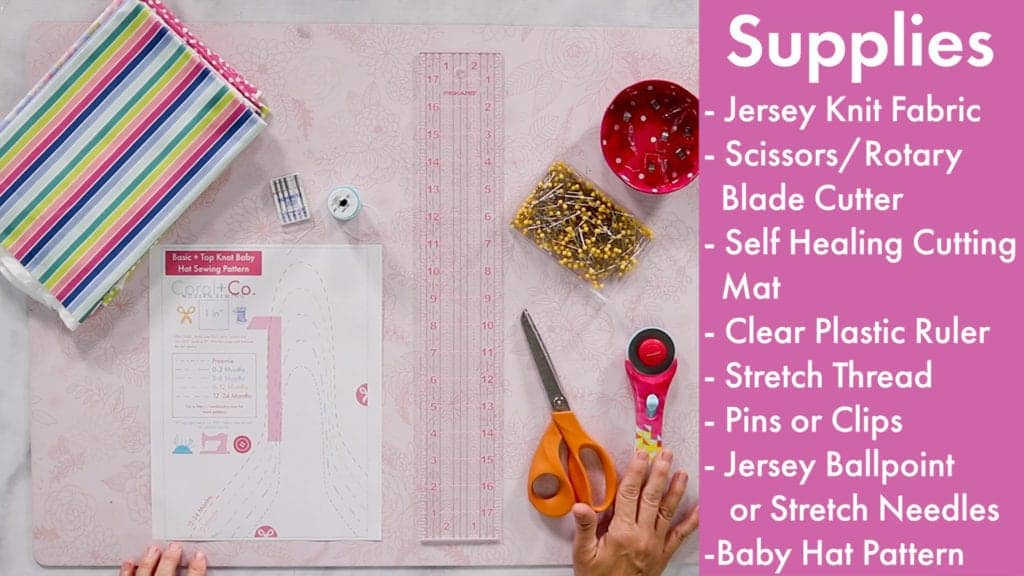
Baby Hat Pattern Supplies Needed

  • Jersey Knit Fabric with at least 50% stretch
  • Clear Plastic Ruler
  • Rotary Cutter
  • Self Healing Mat
  • Walking Foot (* Optional but very helpful)
  • Pins or Clips
  • Stretch Thread
  • Jersey Ball Point Needle
  • FREE Top Knot Baby Hat Pattern

OR YOU CAN SHOP THE TOP KNOT PDF PATTERN that includes this entire post in a PDF Printable version for only 1.99

Download the Pattern

2020-Top-Knot-Baby-Hat-Pattern-Coral-Co.Download

Find the fabrics used for the Top Knot Hat:

The Fabrics used in this tutorial and video: Peony Paradise fabric line designed by Indy Bloom Design available at Hawthorne Supply Co.

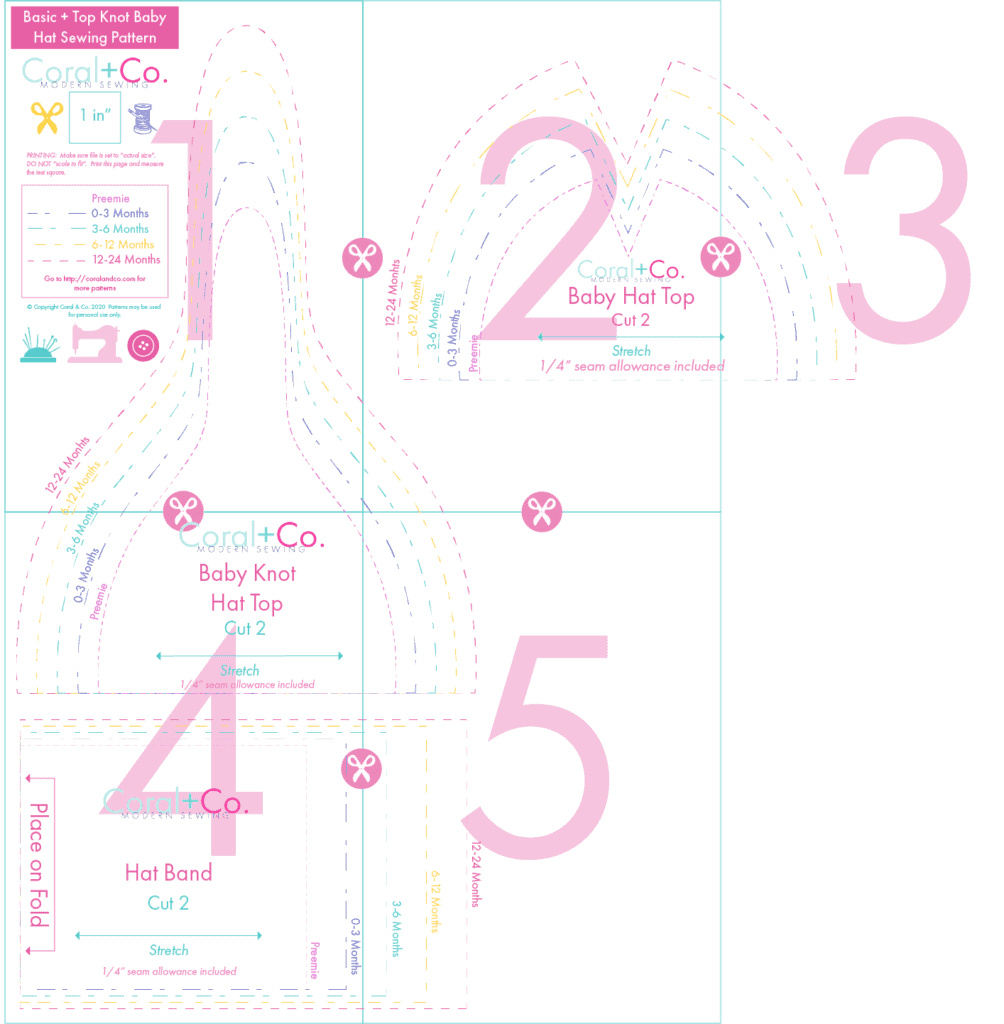
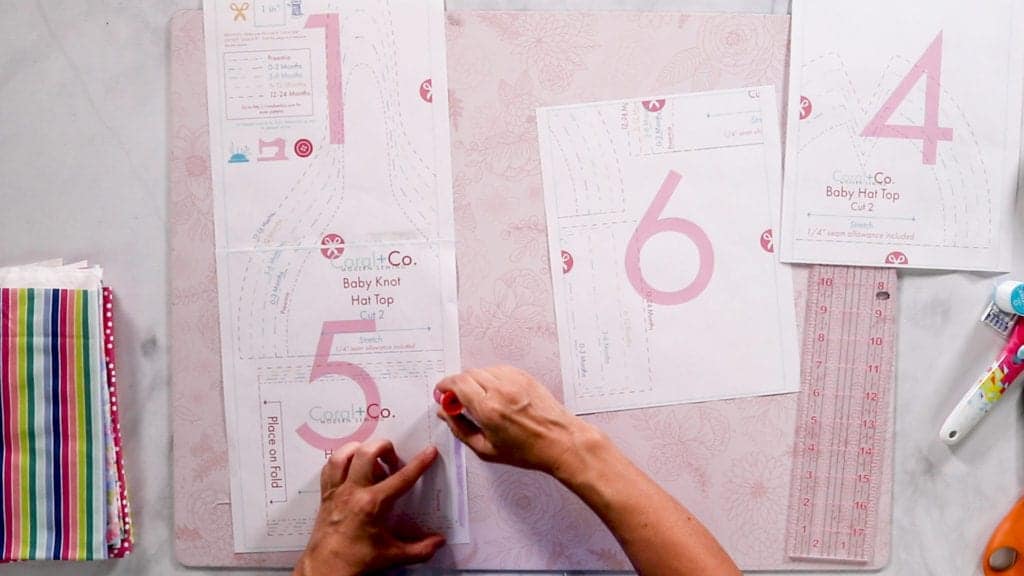
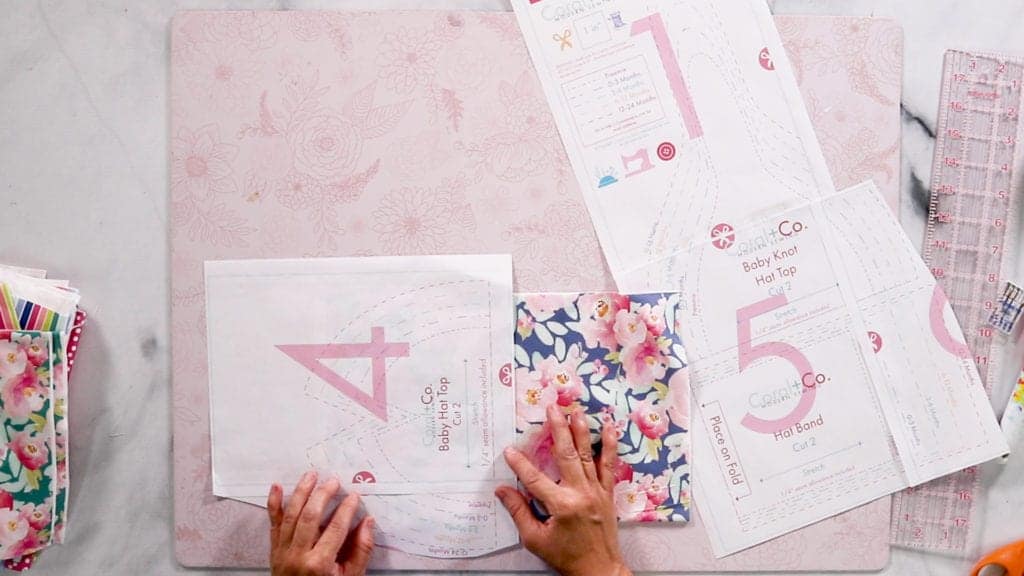
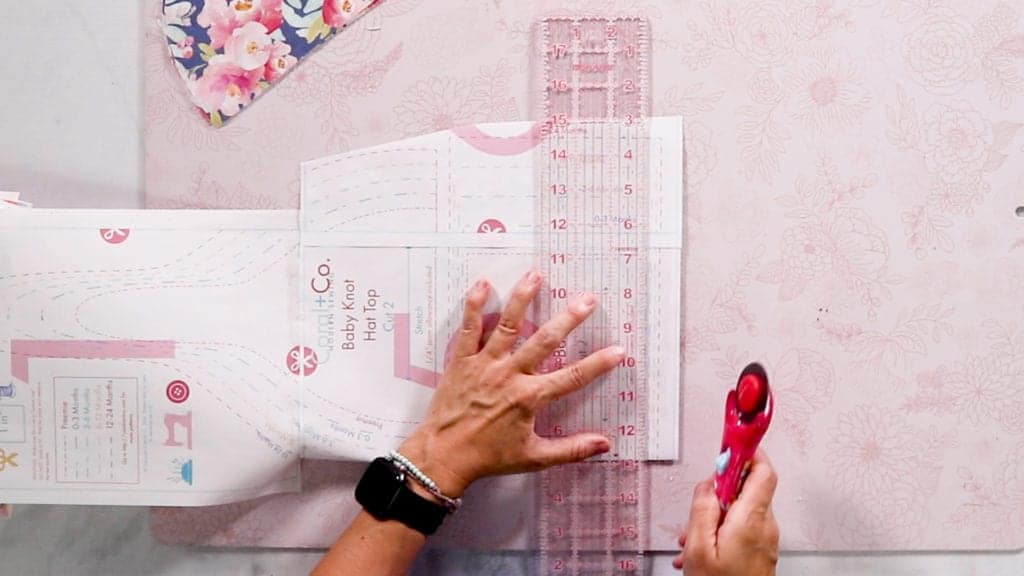
Assemble the Pattern

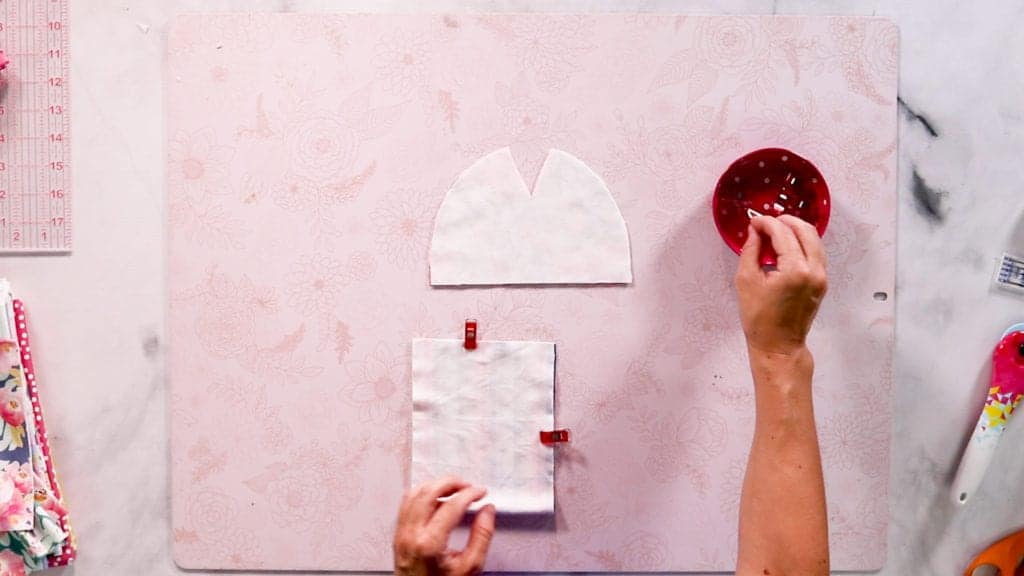
baby-hat-sewing-pattern

Or watch the video below for more tips.

******Be sure to make sure that patterns line up before you sew if sewing with directional prints.

***Tips for Sewing with Knit Fabric

Sewing Instructions

  • A Walking Foot will help feed the fabric evenly when sewing with knits
  • Stretch Thread will keep the seams from breaking.
  • Using a Ball Point Needle will help prevent skipped stitches.
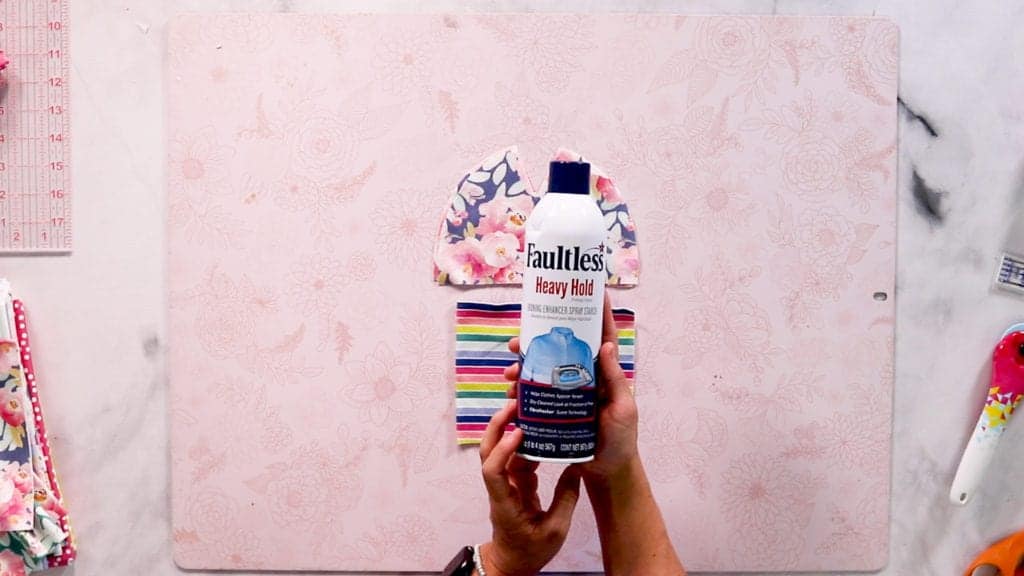
  • Spray jersey fabric with starch to and press to stabilize and prevent the edges from rolling.
top-knot-baby-hat-pattern-video

Top Knot Baby Hat Pattern Tutorial Instructions

  1. Assemble the Top Knot Baby Hat PDF Pattern, being sure to measure the 1″ square.
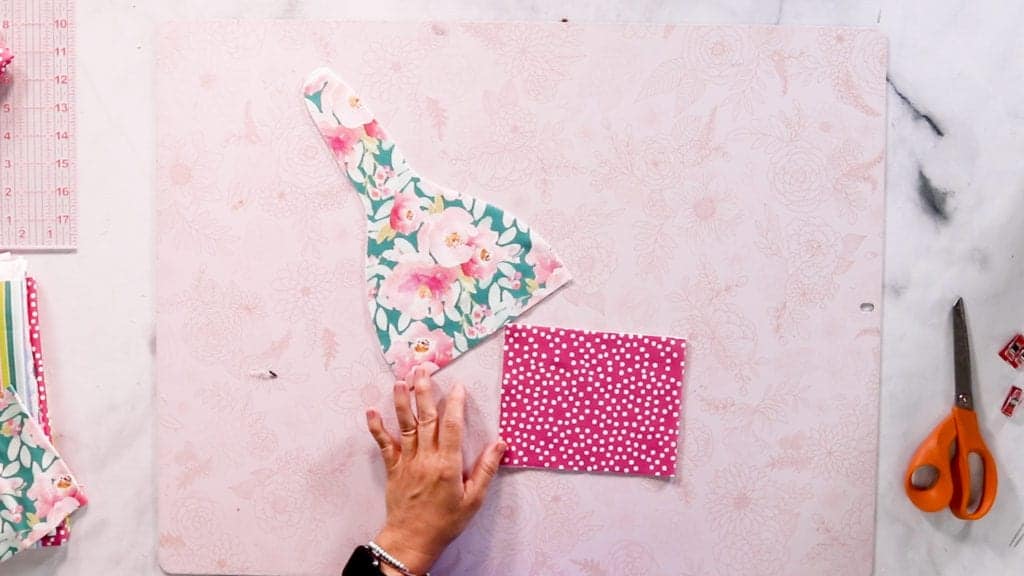
  2. Place the top knot baby hat top piece parallel to the stretch of the fabric and cut two (2) from the top piece.
  3. Place the hatband pattern on the fabric fold and cut one (1) hatband piece from the pattern.
  4. Pin or clip the short side of the baby hatband.
  5. Place the top knot hat pieces right sides together and pin or clip in place
  6. Sew 1/4″ seam allowance along the short side of the baby hatband piece to form one round (connected) piece.
  7. Press the seam allowance of the hatband piece open. Fold the hat band in half along the long side Wrong Sides Together with the raw edges together and press.
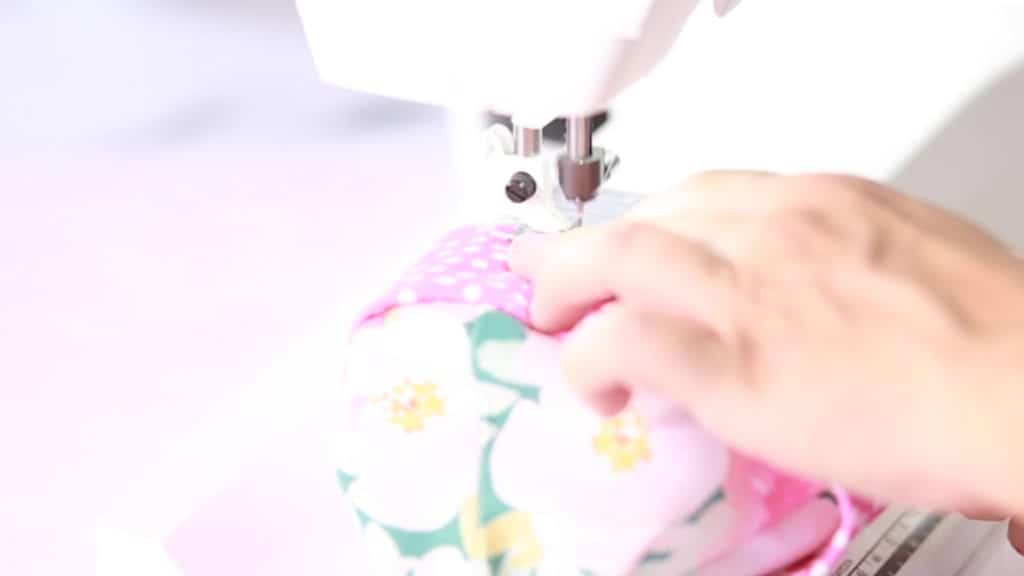
  8. Sew 1/4″ seam allowance around the perimeter of the top knot hat piece from one side to another leaving the bottom open.
  9. Turn top knot hat piece right side out being sure to roll the seam allowance out so it lays flat, use a pencil or pointed object to push the top knot out all the way.
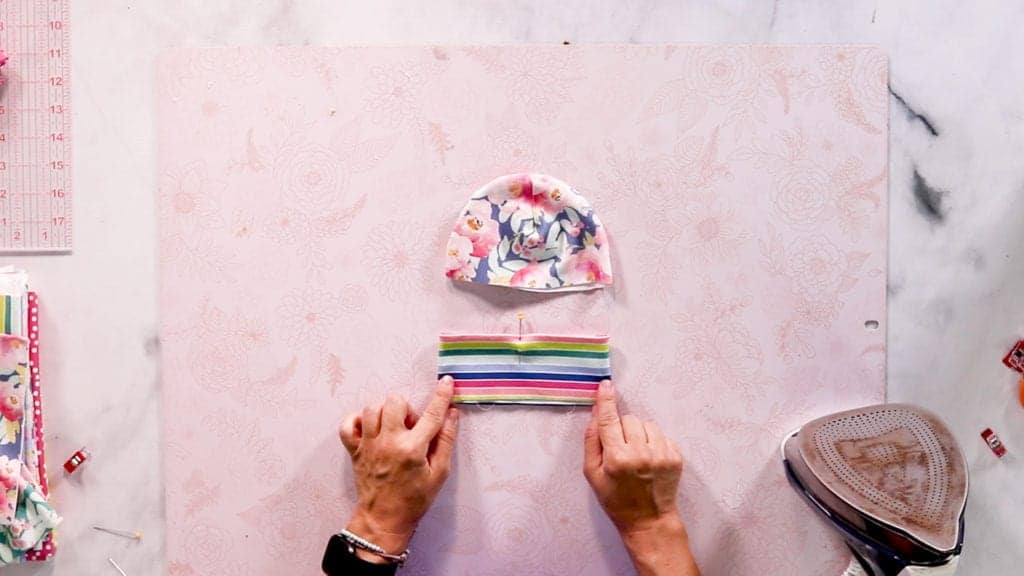
  10. Divide both the hat top and the cuff of the hatband piece into four even quarters and mark with pins.
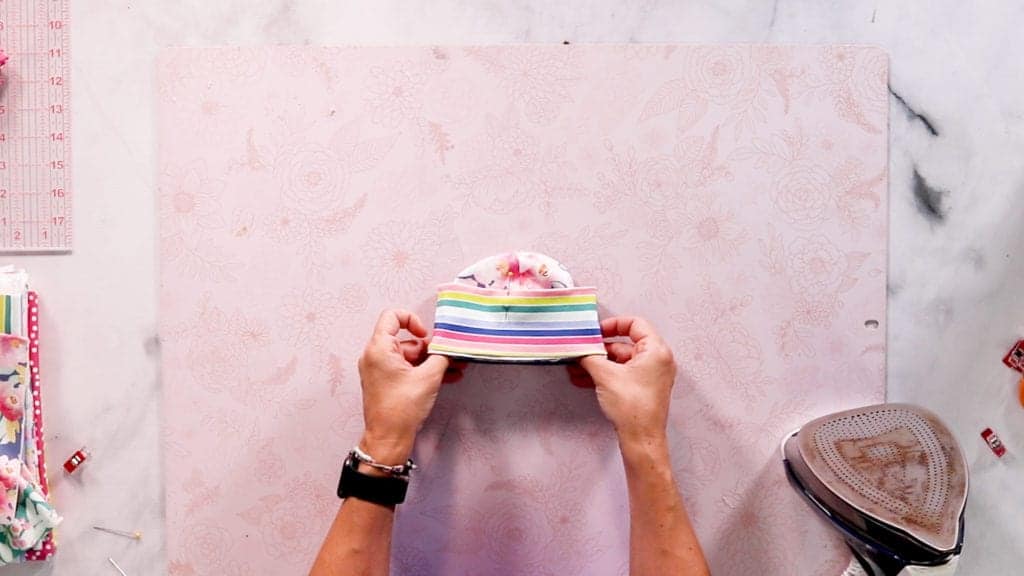
  11. With the Right Sides of the hatband cuff and hat facing each other place the cuff around the Right Side of the hat.  The folded edge will be on top with the raw edges on the bottom meeting with the raw edges of the hat.
  12. Line up the four even pin markings and pin the hat and hatband so they are evenly distributed.
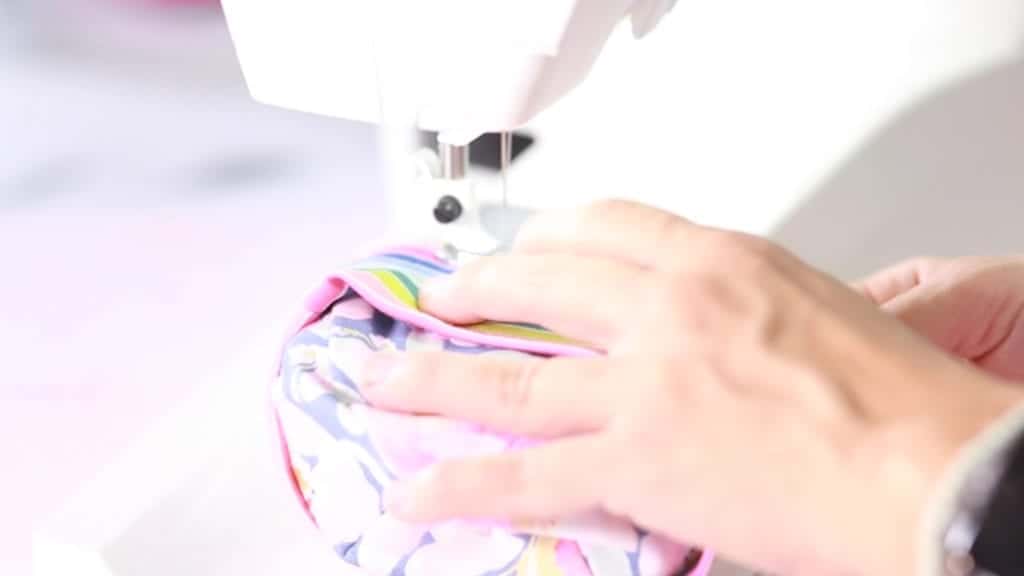
  13. Sew the cuff to the hat using a 1/4in seam.
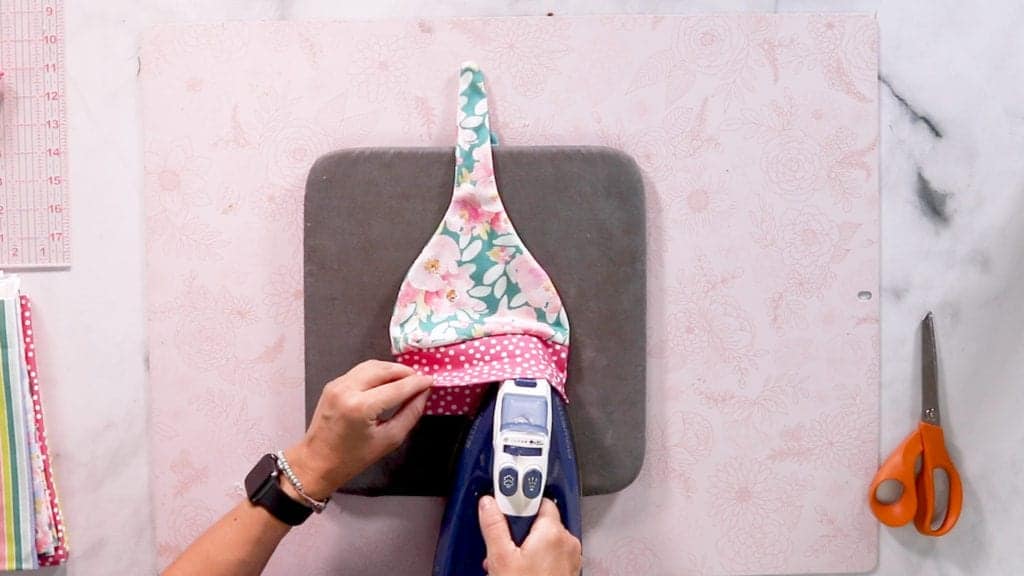
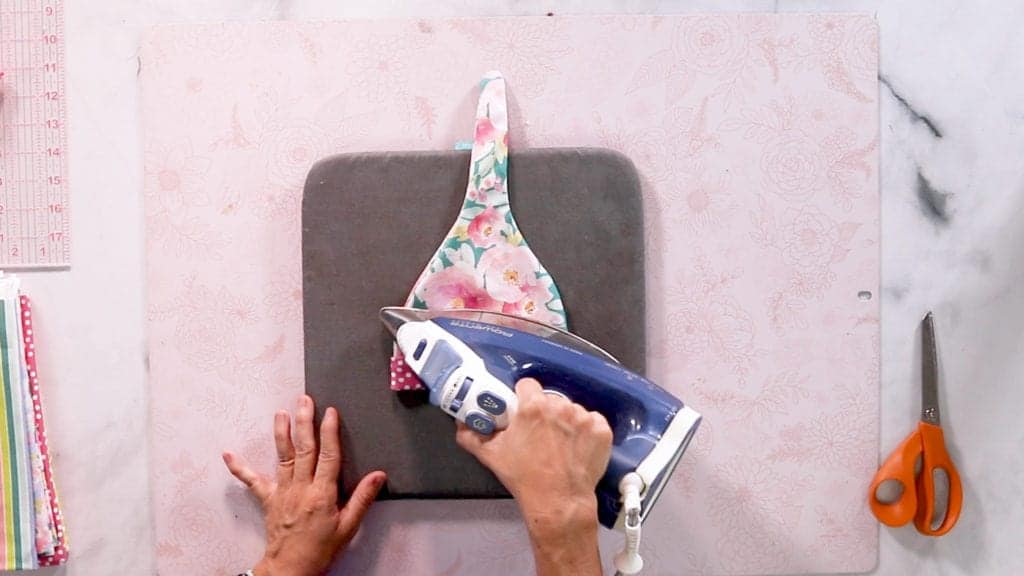
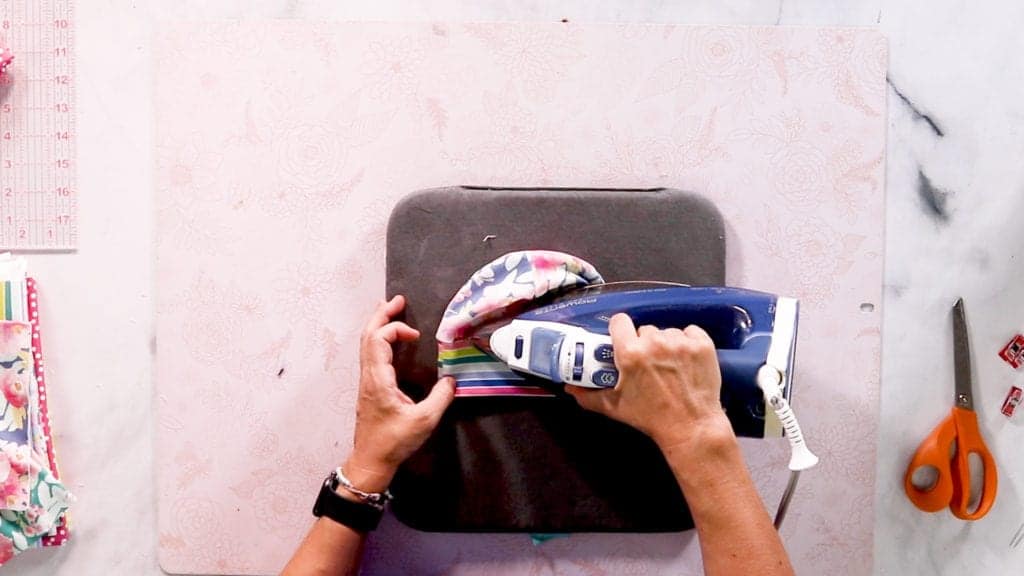
  14. Press the seam allowance of the of the cuff upward and press flat.
  15. Fold the cuff upward and press the whole hat for a nice finish.
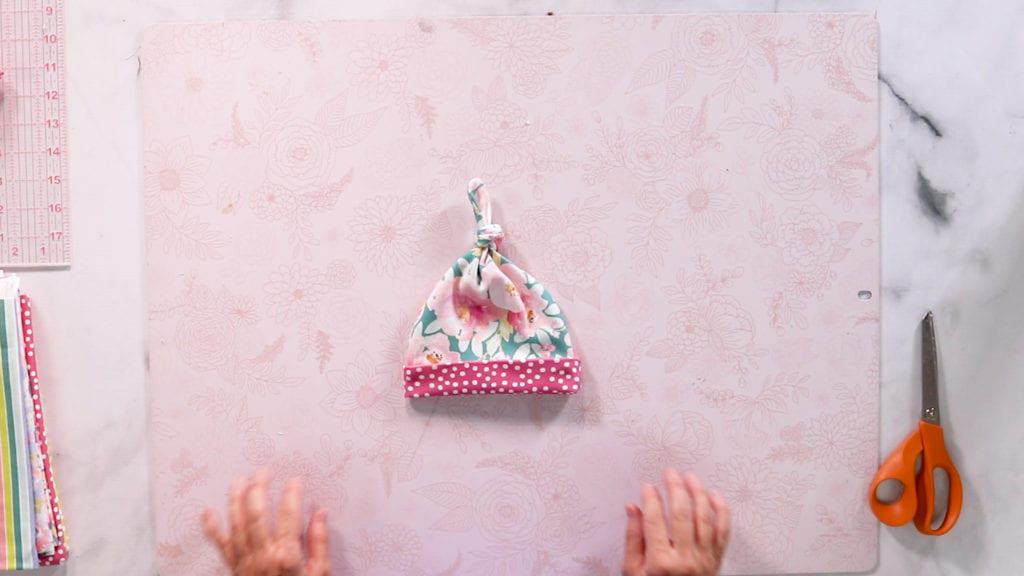
  16. Tie the top knot of the baby hat and you are finished!

Watch the Video Tutorial on Youtube:

***** You can find the Baby Hat Sewing Pattern in the Resource Library.

You also might like: 15+ FREE Baby Hat Patterns and Tutorials

Pin Top Knot Baby Hat Sewing Pattern for later:

floral-top-knot-baby-hat

Baby Sewing, Beginner, FREE Baby Sewing Projects, Free Patterns, Sewing, Videos baby

Free Quilted Potholder Pattern – An Easy Pot Holder Pattern and Tutorial

Jan 6, 2024 · 11 Comments

Easy Potholders – Free Quilted Potholder Pattern

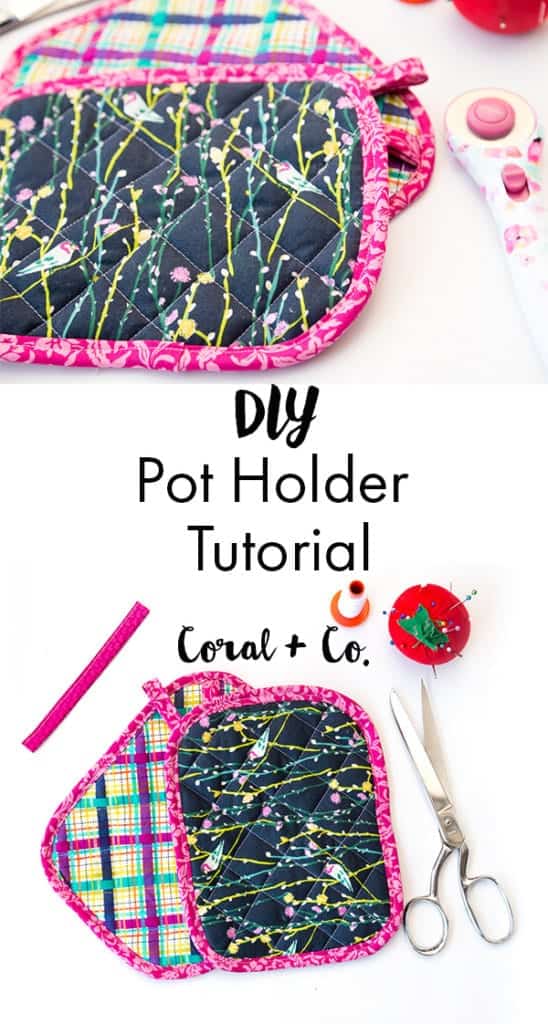
DIY-Pot-holder-pattern-and-tutorial-coral-and-co
diy-pot-holders

Heat Up Your Kitchen Style with Our FREE Quilted Potholder Pattern!

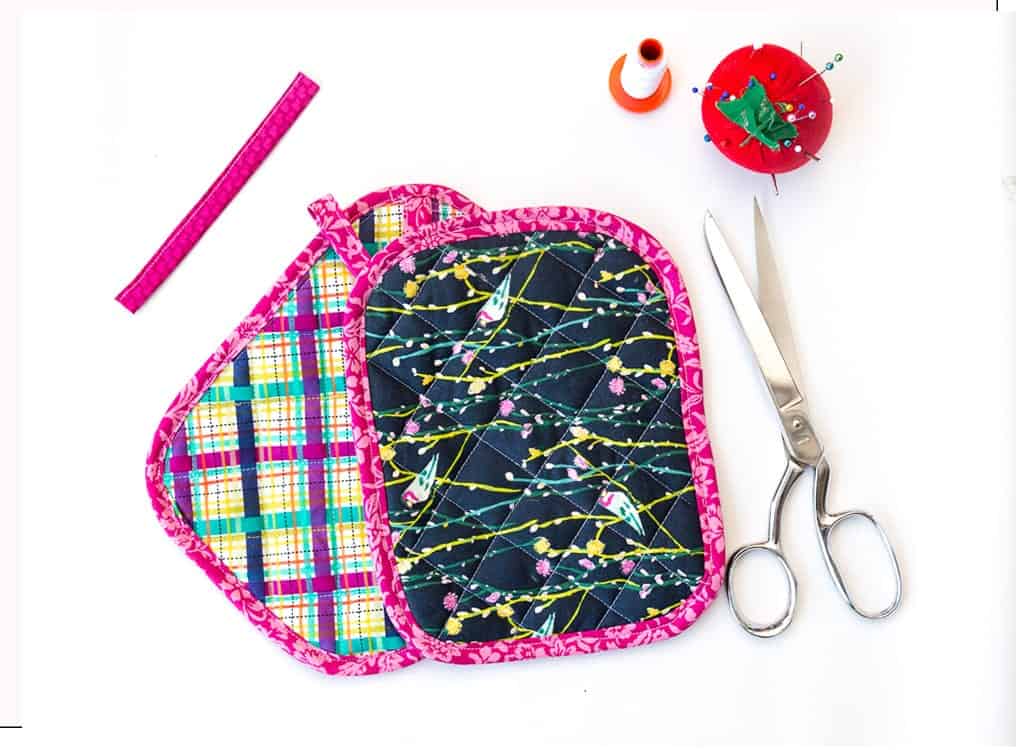
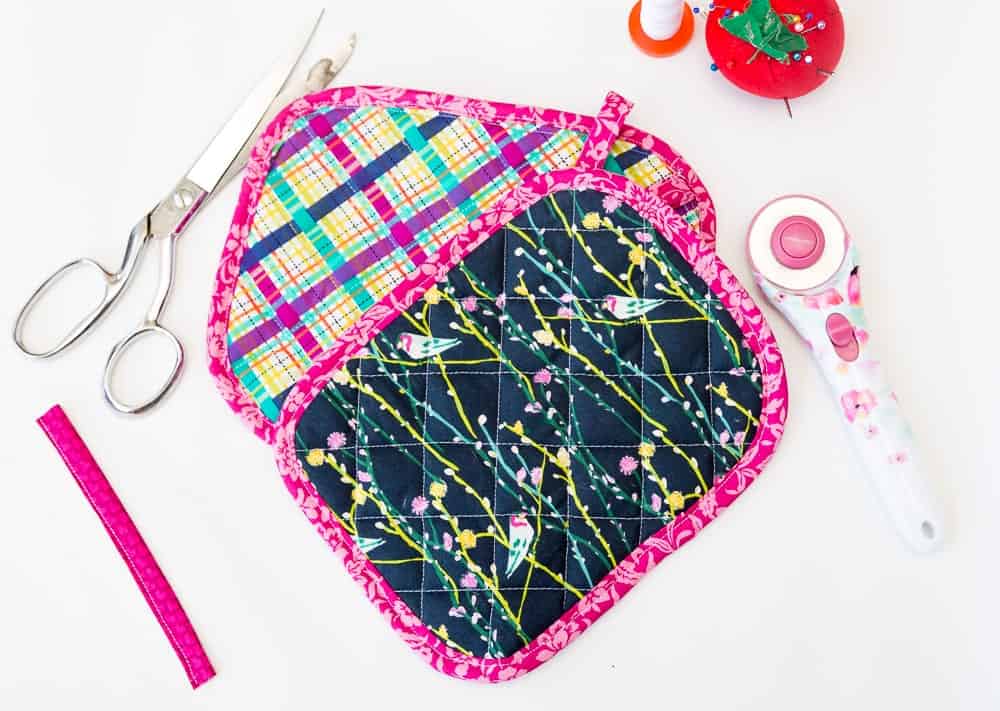
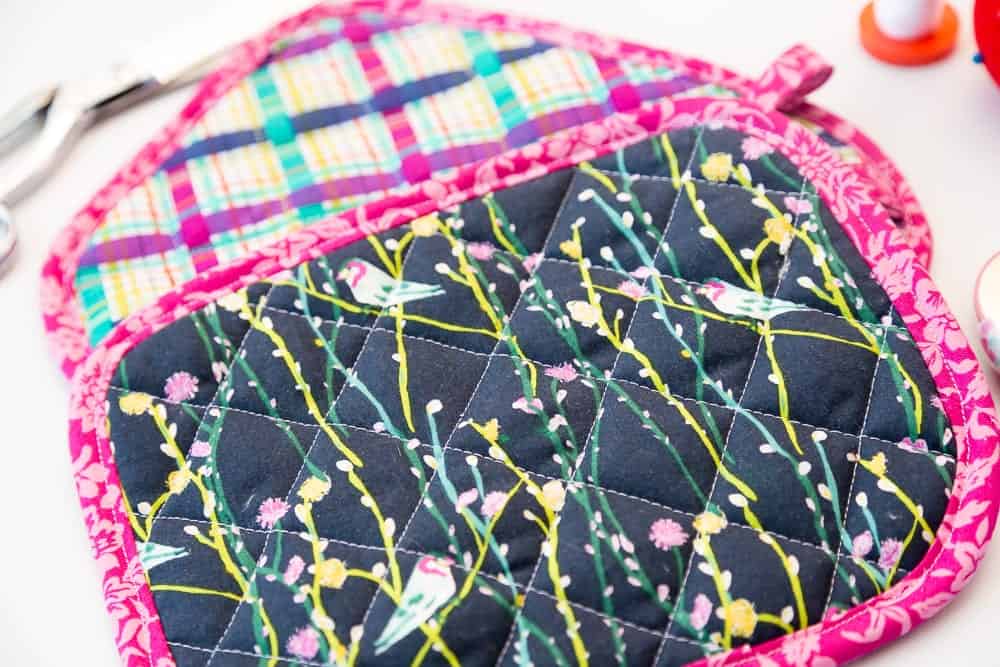
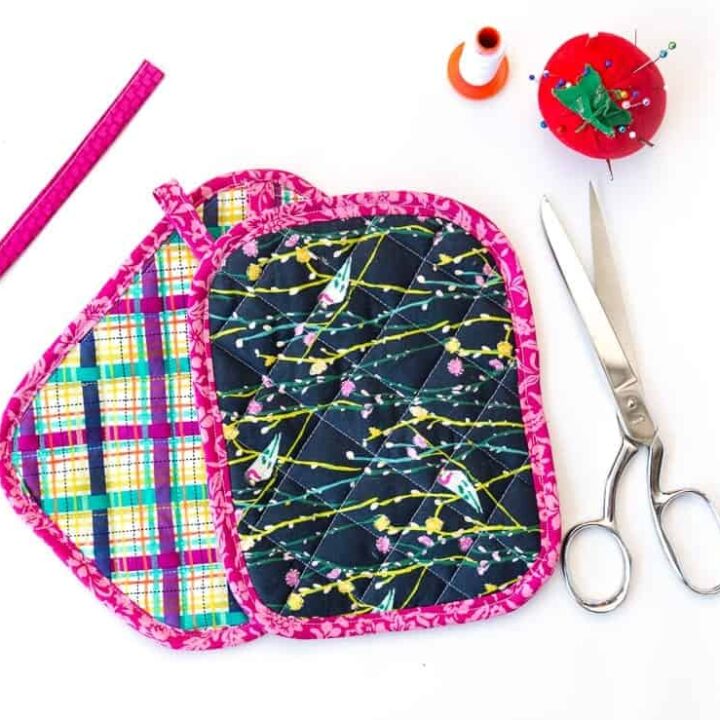
Here is a Free Quilted Potholder Pattern for all you kitchen champs and DIY lovers! Who says practical can’t be pretty? Today, we’re diving into a super fun project that’s all about adding a touch of charm to your kitchen – a FREE quilted potholder pattern. Let’s spice up your culinary space in style! This is a quick and simple sew and can be used with your favorite scrap fabrics.   Even better, you can quilt it or not quilt it.  

Table of Contents

  1. Easy Potholders – Free Quilted Potholder Pattern
  2. Heat Up Your Kitchen Style with Our FREE Quilted Potholder Pattern!
    1. Why Choose to Quilt Potholders?
    2. The Marvelous FREE Quilted Potholder Pattern
    3. A Splash of DIY Charm
  3. More Potholder Patterns You Might Like
  4. Supplies Needed
  5. Watch the Potholder Video
  6. Easy Quilted Potholder Tutorial
    1. You can find the Pot Holder Template in the Resource Library.
  7. Pin the FREE Quilted Potholder Pattern for Later

Why Choose to Quilt Potholders?

First things first, why bother with quilted potholders when you can easily buy plain ones? Well, picture this: You’re whipping up a sizzling masterpiece in the kitchen, and you reach for a homemade, quilted potholder. Not only does it save your fingers from sizzling surprises, but it also adds a pop of personality to your cooking routine.

The Marvelous FREE Quilted Potholder Pattern

Our free quilted potholder pattern is your golden ticket to crafting kitchen essentials that are as cute as they are practical. Whether you’re a seasoned pro with a sewing machine or a newbie looking for a fun project, this pattern has got you covered.

A Splash of DIY Charm

One of the best things about this project is that it’s incredibly beginner-friendly. You don’t need a ton of sewing experience to dive in, which makes it a perfect starter project for those looking to hone their crafty skills.

quilted-sewing-pattern-free

More Potholder Patterns You Might Like

  • 15+ Free Pot Holder Patterns
  • DIY Pumpkin Pot Holder Tutorial,
  • Quilted Christmas Pot Holders
  • Halloween Pumpkin Pot Holder Tutorial
  • Free Coaster Sewing Pattern and Tutorial

Supplies Needed

Gather your materials: a few fat quarters that speaks to your soul, matching thread, a sewing machine, and batting for that extra heat protection. Oh, and don’t forget your imagination! This is your chance to pick fabrics that match your kitchen’s color scheme or go wild with patterns that reflect your personality.

  • 2 Fat Quarters
  • 1 Package 1/2″ Double Fold Bias Tape or 1/2 Yard Contrasting Fabric to Make Your Own
  • Heat Resistant Batting

Watch the Potholder Video

Easy Quilted Potholder Tutorial

Let the Sewing Begin

With your FREE quilted potholder pattern and materials ready, it’s time to get down to business. The pattern comes with step-by-step instructions that are as easy as pie. You’ll be amazed at how quickly you can whip up a set of charming potholders.

FREE Quilted Potholder Pattern

FREE Quilted Potholder Pattern

Yield: 2 Potholders
Prep Time: 10 minutes
Active Time: 30 minutes
Total Time: 40 minutes
Difficulty: beginner

Ready to add a touch of homemade charm to your kitchen? Quilting a potholder with our free pattern is a delightful DIY project that combines both style and practicality. With our easy-to-follow instructions, even beginners can create beautiful quilted potholders.

Materials

  • 2 Fat Quarters
  • 1 Package 1/2" Bias Tape
  • Cotton Batting Scraps
  • Heat Resistant Batting

Tools

  • Sewing Machine
  • Polyester Thread
  • Sewing Machine Needle
  • Pins or Clips

Instructions

  1. Using the pattern piece, cut out 2 front pieces and two back pieces and 2 of heat resistant batting.  Sandwich the batting in between front and back pieces.  Alternatively, if you are going to quilt the potholder, you can cut out only the front piece and sandwich it with squares of batting and the backing that are slightly larger than the front piece and trim the edges after you are done quilting.quilted-pot-holder-pattern-and-tutorial
  2. You will also need 48 inches of bias tape.  You can either make it or buy it.  There are some really cute trims by Vintage Door on etsy.potholder-sewing-pattern
  3. Pin the raw edge of the bias tape RST on the raw edge of the potholder sandwich.  Fold the lead edge over so the raw edge is not exposed like the picture shown above.easy-quilted-potholder-pattern
  4. Sew the bias tape 1/2 inch from the raw edges of the tape and potholder.free-easy-quilted-potholder-pattern
  5. Overlap the end of the tape about an inch or so as shown above free-quilted-oven-mitt-pattern
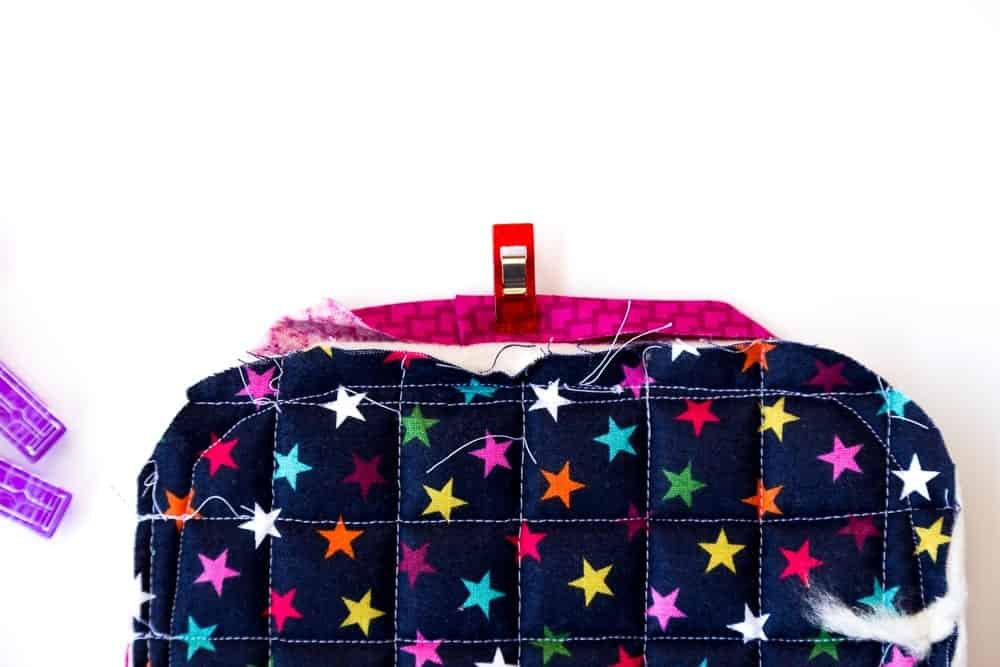
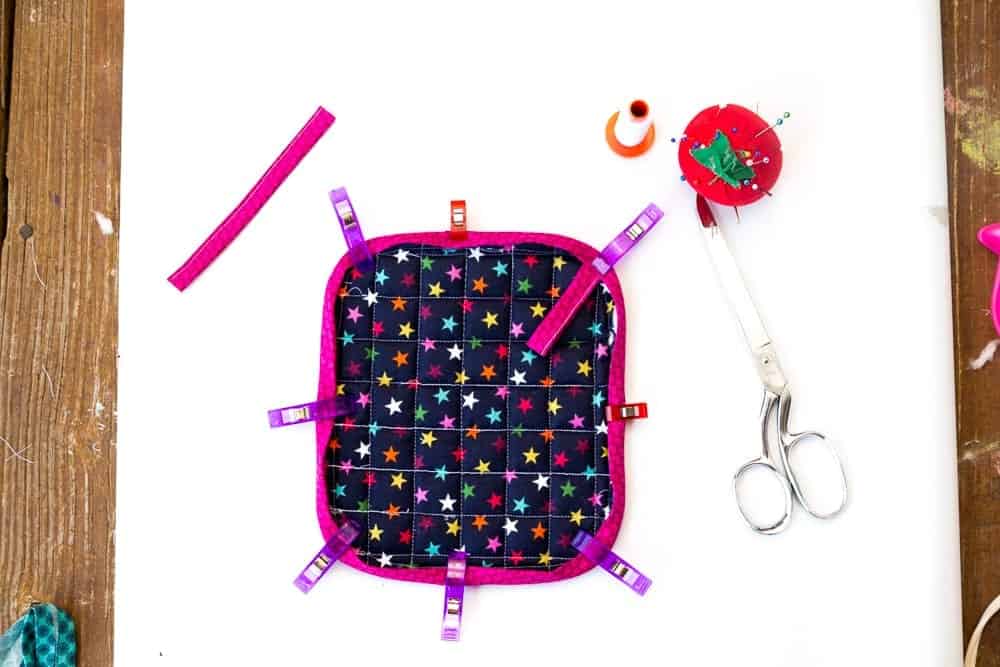
  6. Using the remaining bias tape stitch the tape closed by sewing 1/8 inch from the raw edge.  Cut into 2 strips of 4 inches.potholder-sewing-pattern-loop
  7. Pin or clip the overlapped edges of the binding closed so it forms one continuous piece.sew-bias-binding-to-potholder-pattern
  8. Fold over the back edge of the potholder and pin or clip to hold in place.  Fold the 4-inch
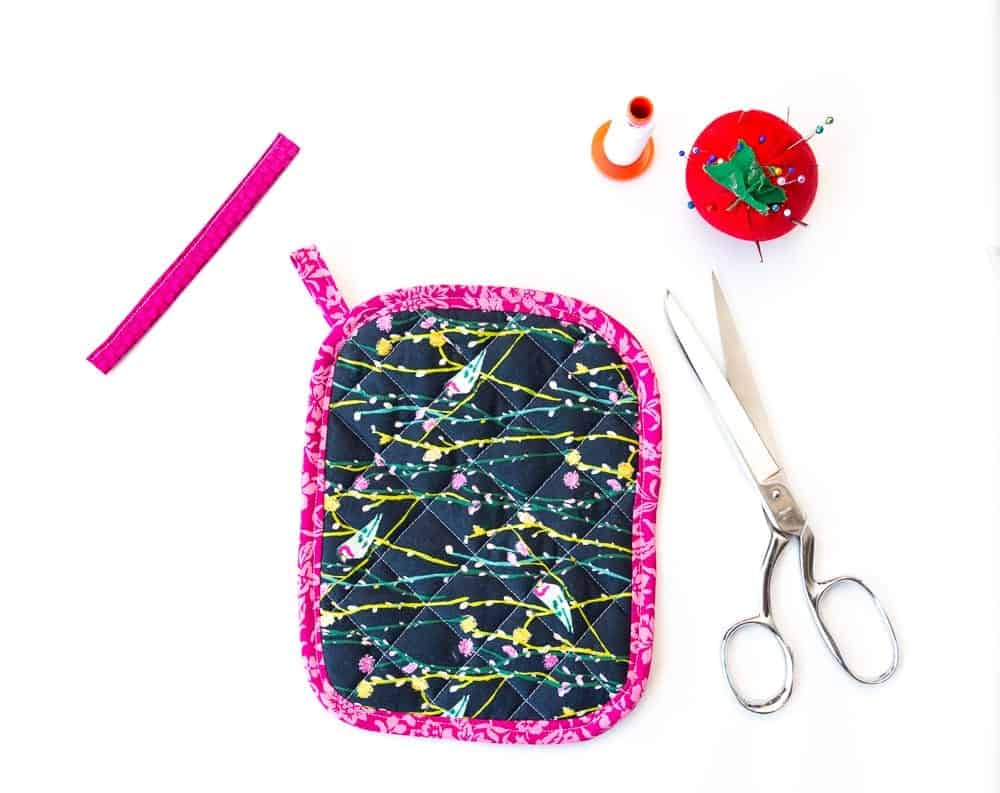
    fabric strip of bias tape in half and insert under the binding on the corner.  oven-mitt-pattern-pdf
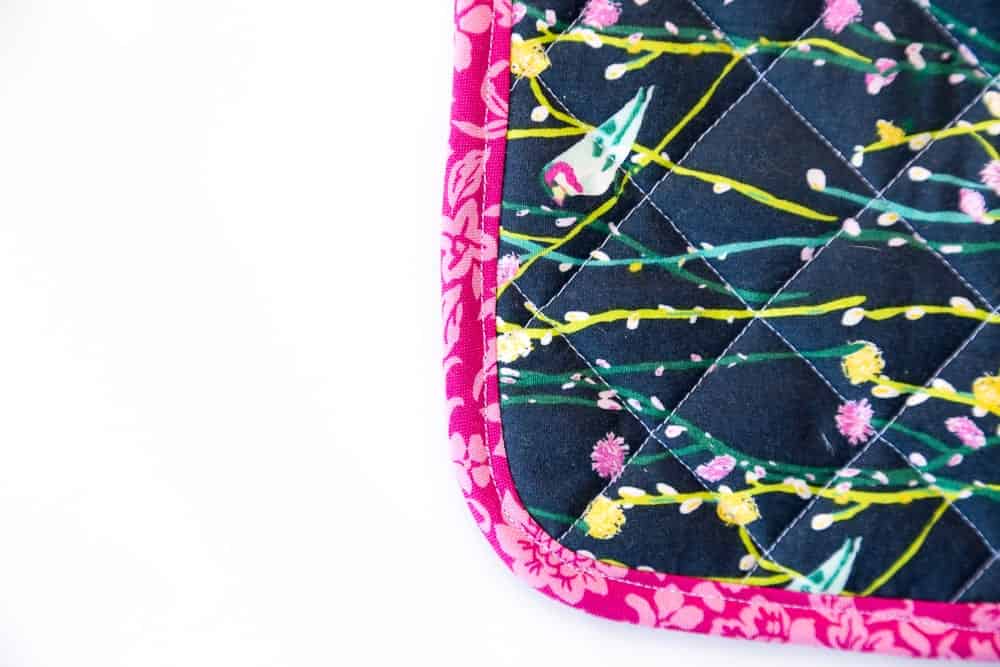
  9. Pin in place. Sew around the tape 1/8 inch on the inside edge of the tape.  Backstitch to secure. Repeat for the other pot holder.  You are all finished!  And now you have the perfect DIY gift for any occasion.

Did you make this project?

Please leave a comment on the blog or share a photo on Pinterest

© Shelly
Project Type: sewing / Category: Accessories

Cooking with Flair

Remember, it’s not just about protecting your hands; it’s about infusing your kitchen with your unique style. These quilted potholders will not only make your culinary adventures safer but also more delightful.

So, whether you’re a seasoned pro or a newbie eager to learn, this FREE quilted potholder pattern is the perfect project to take on. Download it today, and let’s add a pinch of DIY charm to your kitchen! Happy crafting, and bon appétit!

free-potholder-sewing-pattern-quilted

You can see the Quilted Christmas Potholders I made for last minute gifts using this pattern.

You can find the Pot Holder Template in the Resource Library.

Pin the FREE Quilted Potholder Pattern for Later

free-quilted-potholder-pattern

Accessories, Beginner, Free Patterns, Free Tutorials, Home Sewing, Sewing home

Crafty Kitchen: Free Oven Mitt Pattern

Oct 13, 2023 · Leave a Comment

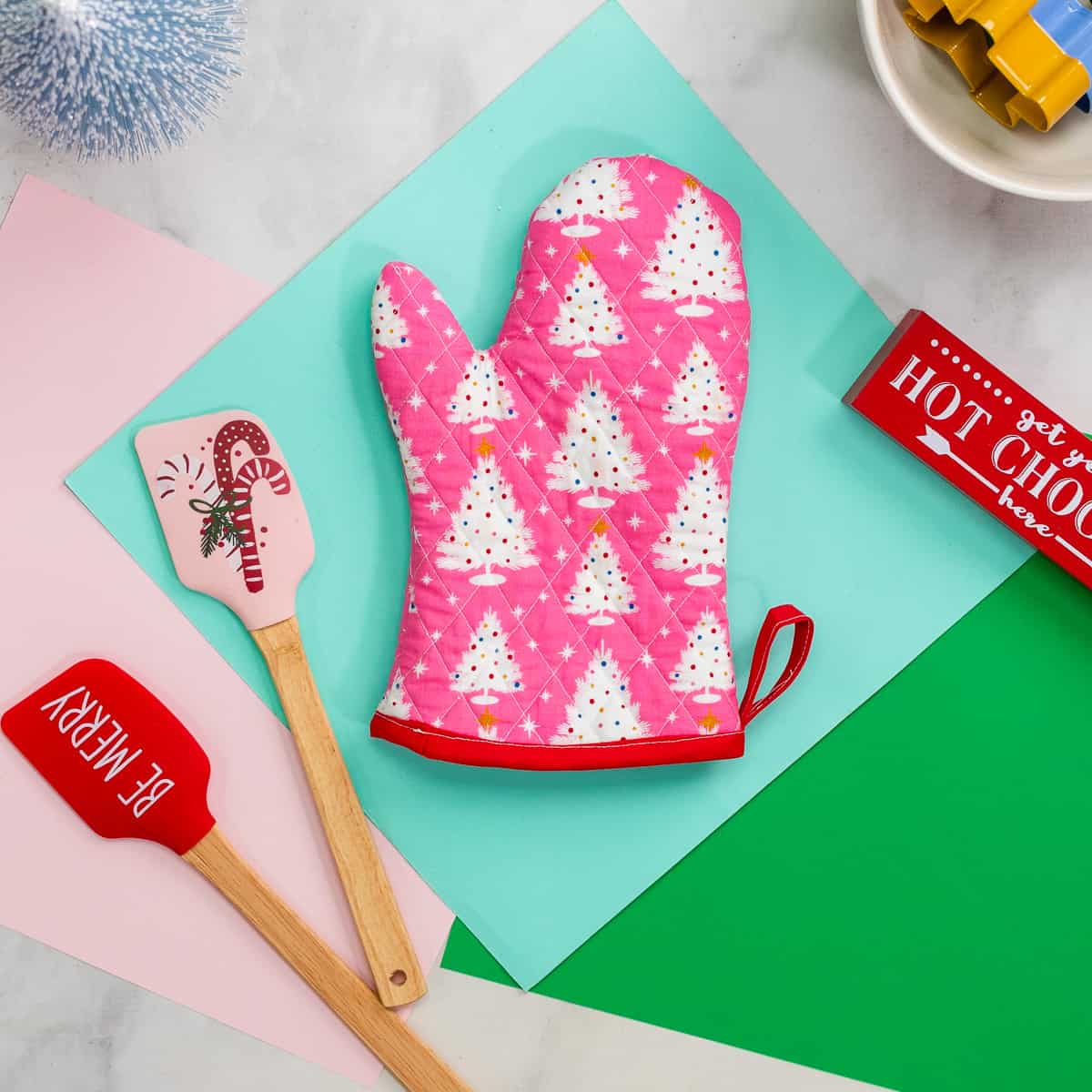
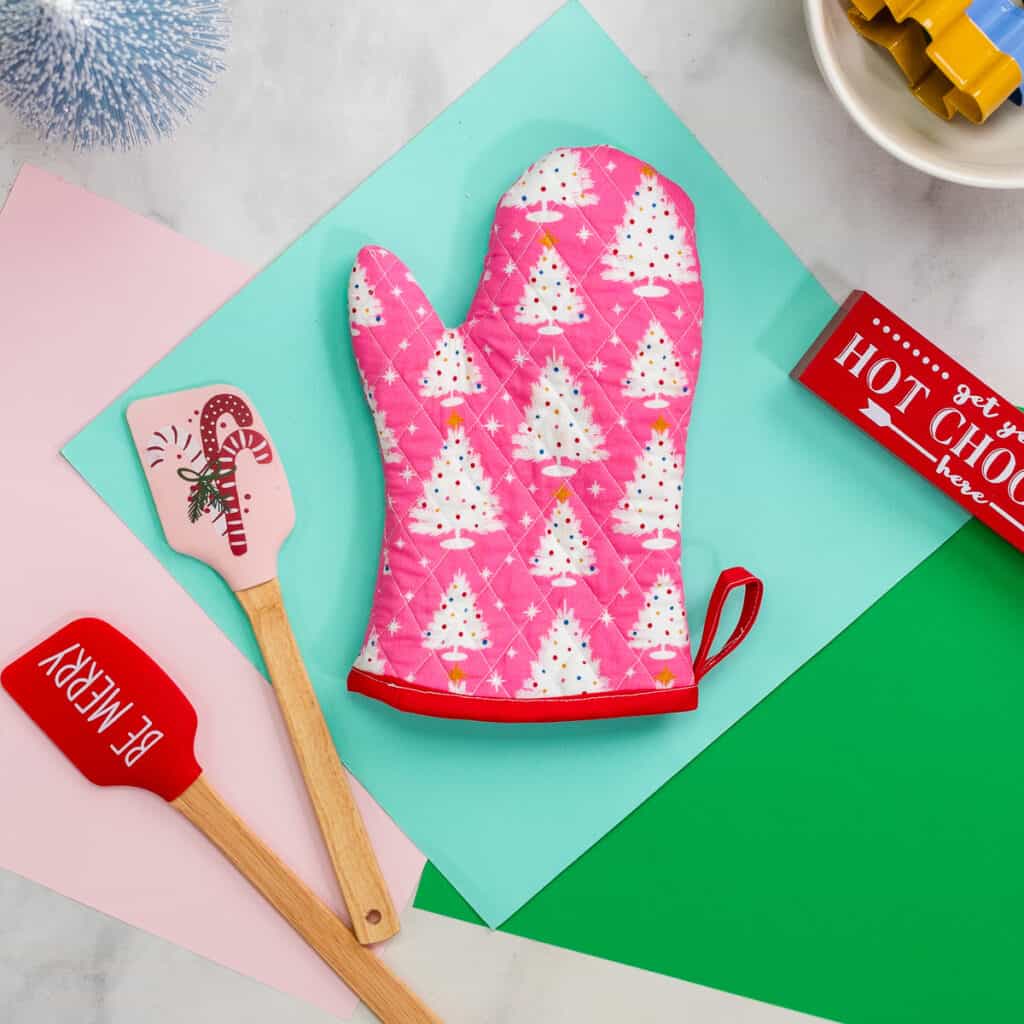
pink-oven-mitt-pattern

Spice Up Your Kitchen with a Free Oven Mitt Pattern!

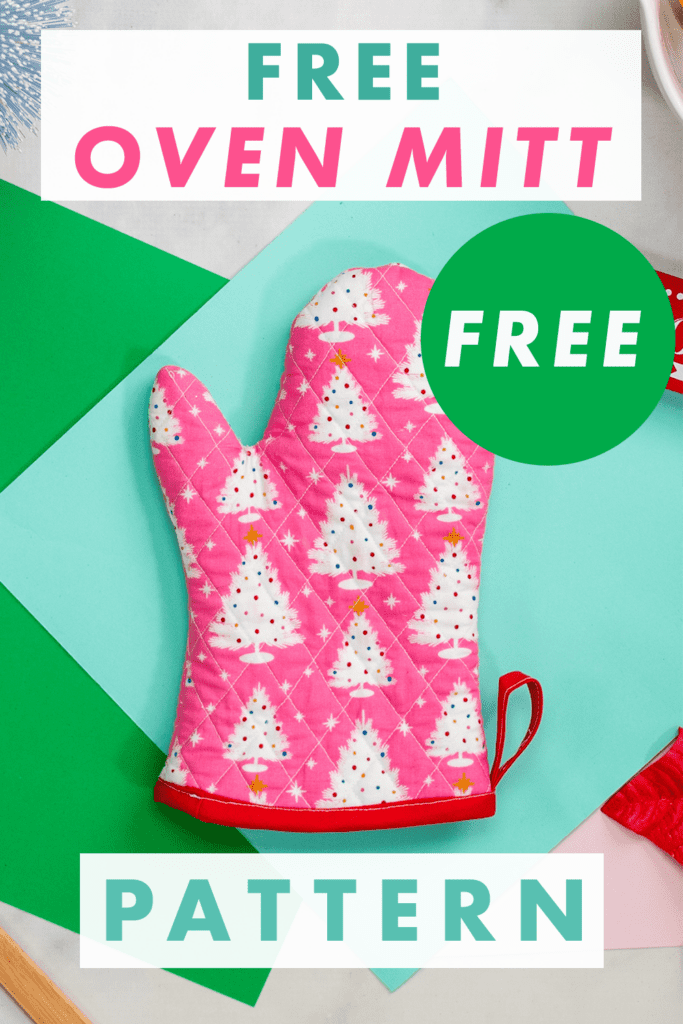
Hey there, fellow kitchen enthusiasts! Today, I’ve got something special for you that will add a dash of creativity to your cooking routine. We’re talking about a fantastic and oh-so-handy free oven mitt pattern that you can use to create your very own oven mitts. No need to settle for ordinary kitchen gear when you can make your own, right?

Table of Contents

  1. Spice Up Your Kitchen with a Free Oven Mitt Pattern!
  2. Why Make Your Own Oven Mitts?
  3. More Patterns You Might Like:
  4. The Free Oven Mitt Pattern Details
  5. Supply List
  6. Download the Oven Mitt Pattern
  7. Instructions
  8. Pin the Oven Mitt Pattern for Later

Why Make Your Own Oven Mitts?

First things first, you might wonder why you should bother making your own oven mitts when you can easily buy them. Well, let me tell you – making your own mitts is not just about functionality; it’s about adding a personal touch to your kitchen.

Imagine pulling a homemade oven mitt out of the oven to grab that delicious batch of cookies you just baked. It’s not just about protection; it’s about the warmth of knowing you crafted it yourself. Plus, you can choose fabrics and designs that match your kitchen’s decor or showcase your unique style.

More Patterns You Might Like:

  • Easy Quilted Potholder Pattern
  • 15 Quilted Potholder Patterns to Sew
  • Quilted Christmas Potholder Pattern
  • Halloween Pumpkin Potholder Pattern
  • Easy Coaster Sewing Pattern

The Free Oven Mitt Pattern Details

Now, let’s get to the good stuff – the free oven mitt pattern. We’ve got your back! With this pattern, you’ll have all the guidance you need to create mitts that fit your hands perfectly. Say goodbye to those loose-fitting, store-bought mitts that slip and slide.

Our pattern comes with step-by-step instructions that are perfect for beginners. Even if you’re new to sewing, you can tackle this project with confidence. It’s a great way to learn some basic sewing skills while crafting something useful.

To get started, you’ll need some basic materials: fabric, batting, thread, and of course, your trusty sewing machine. You can choose fun, colorful fabrics that match your kitchen’s color scheme or go wild with patterns that showcase your personality. The choice is yours!

Supply List

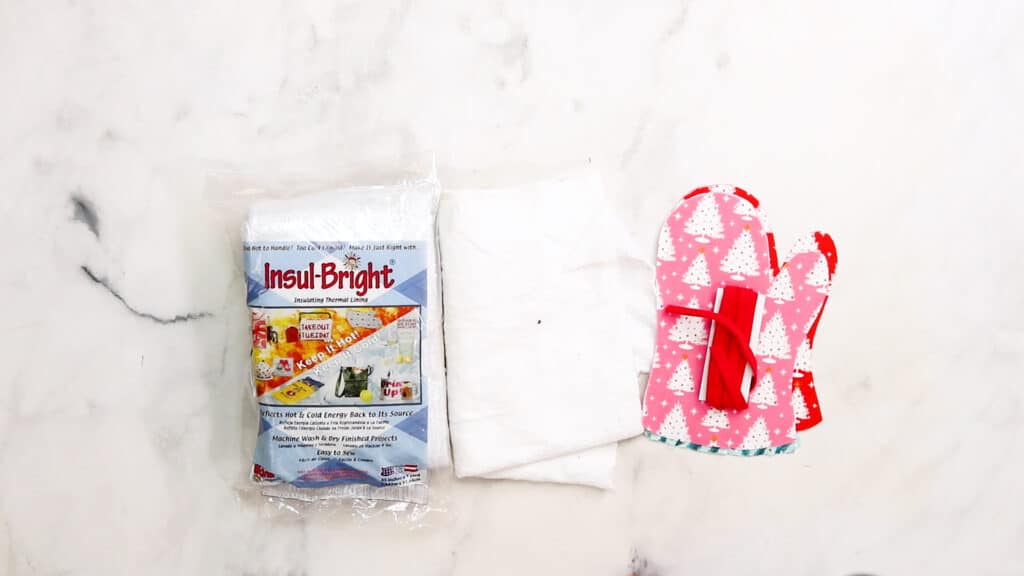
  • Insulbrite
  • Cotton Batting
  • 2 fat quarters of the fabric (I used the Peppermint Fabric Collection designed by Dana Made for Figo Fabrics).
  • Wrights 1/2″ Double Fold Bias Tape
  • Oven Mitt Pattern (Download Below)

Download the Oven Mitt Pattern

oven mitt patternDownload

Instructions

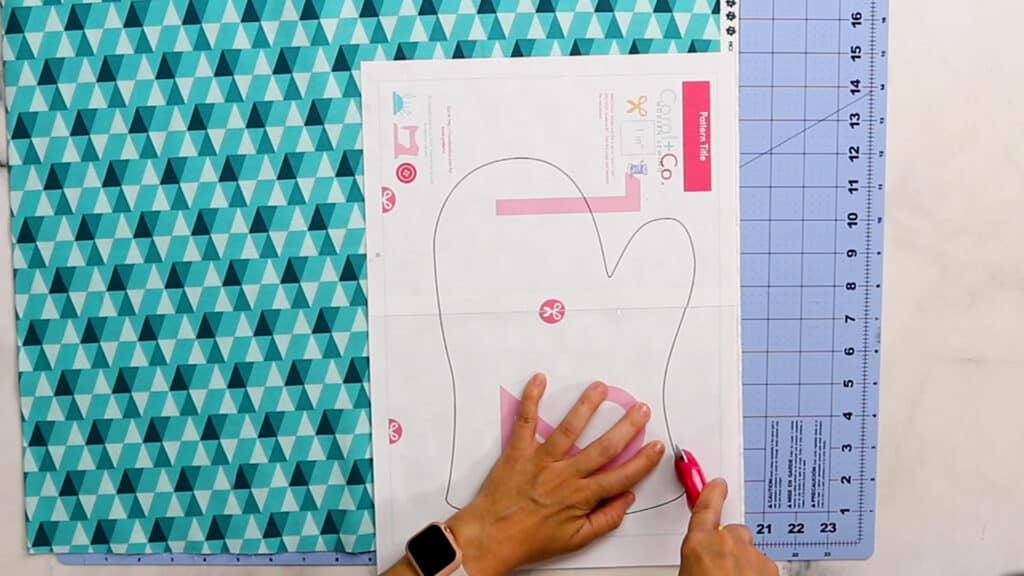
Step 1 – Cut the pattern out of the fabric:

  • Cut 2 outer fabric
  • Cut 2 lining fabric
  • Cut 2 large squares of insulbrite 
  • Cut 2 large squares of batting 

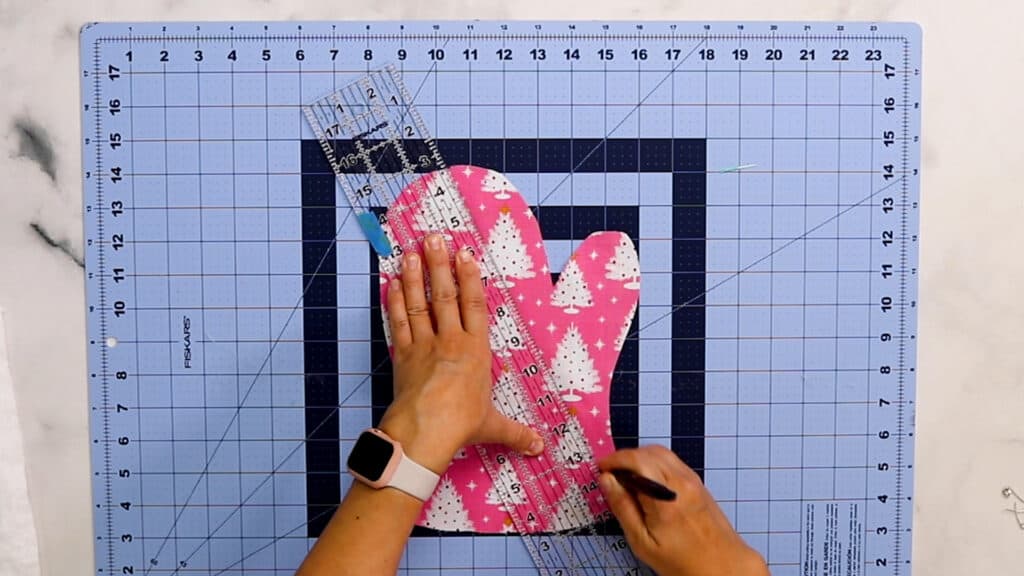
Step 2- Using a marking tool, draw diagonal crosshatch lines in both directions on the fabric for quilting.

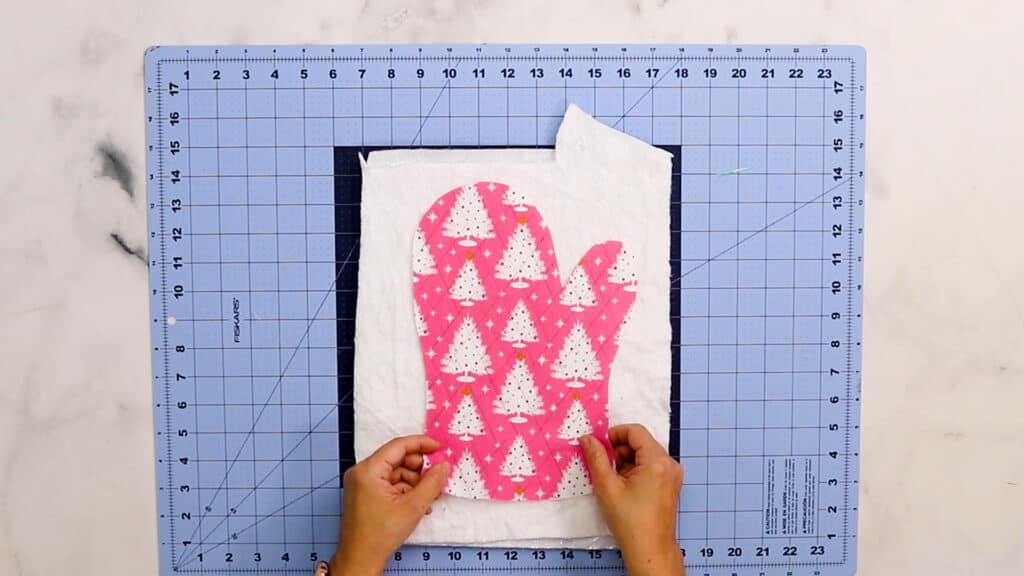
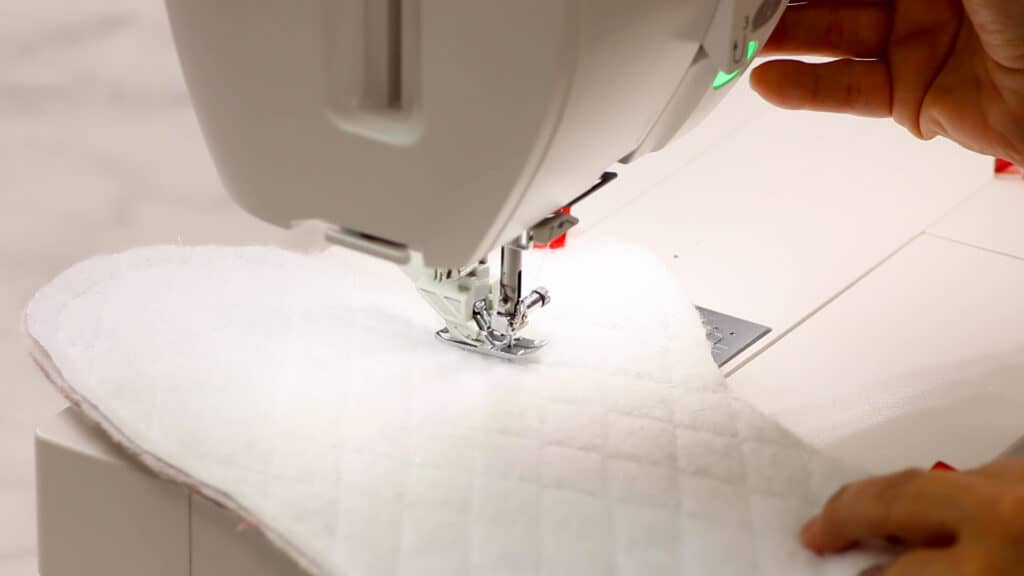
Step 3 – Make a quilt sandwich by placing a layer of batting, then a layer insulbrite, and finally the fabric oven mitt pattern piece on top. Baste with basting pins to hold it in place.

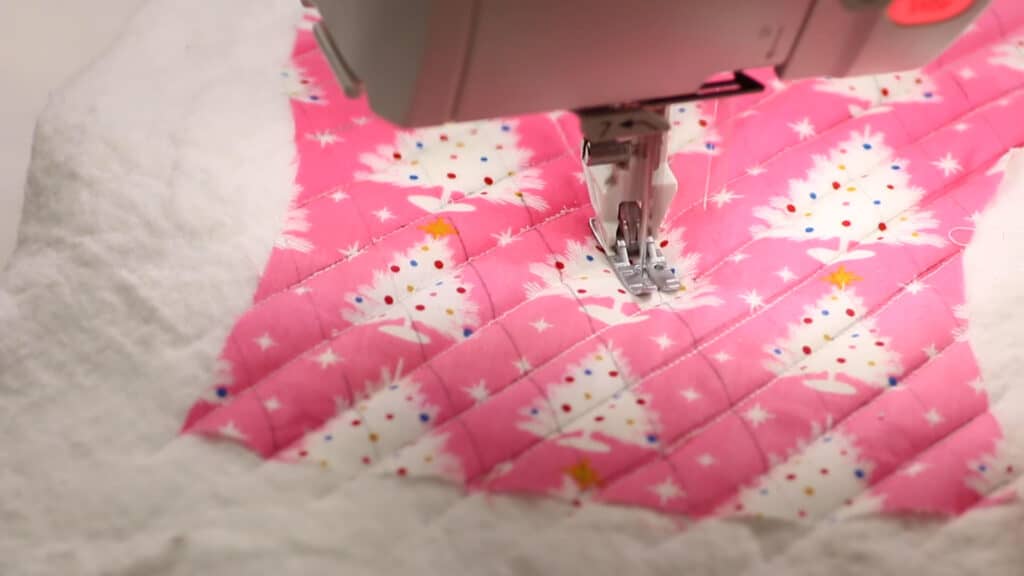
Step 4 – Quilt both sides of the oven mitt by sewing down the diagonal lines you previously marked.

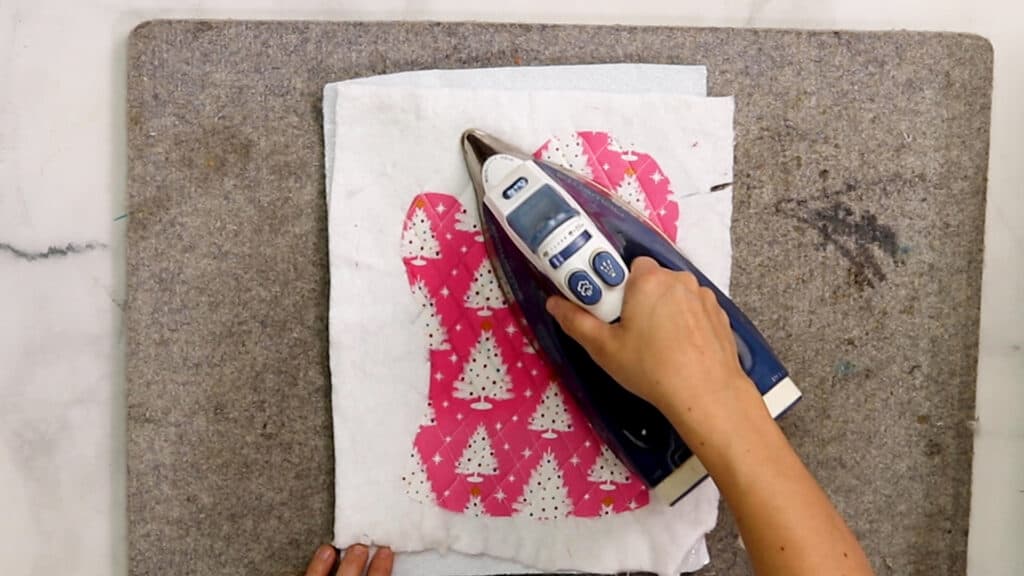
Step 5 – If using a frixon pen for marking, iron to erase the lines.

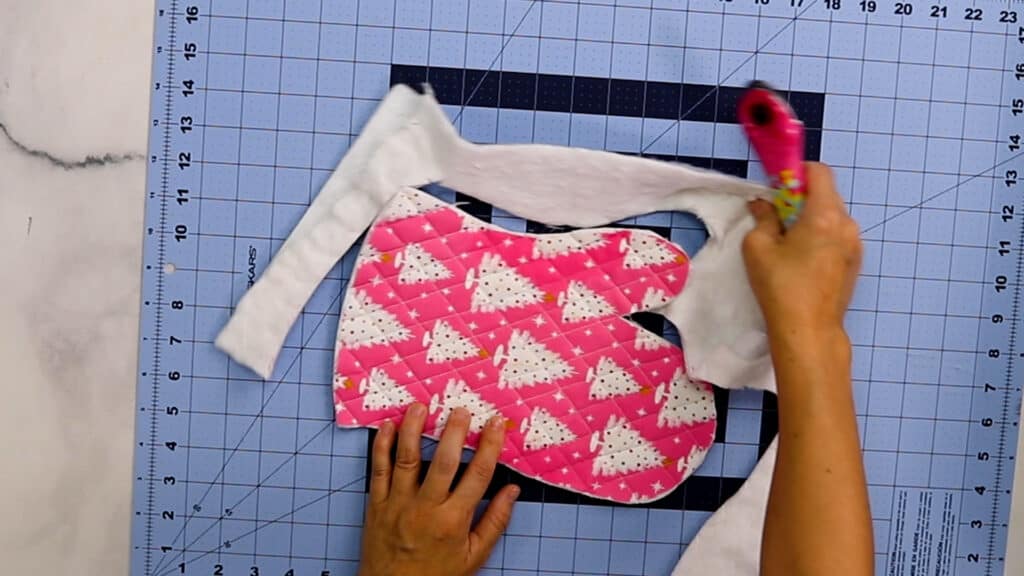
Step 6 – Trim away the layers of batting from around the oven mitt.

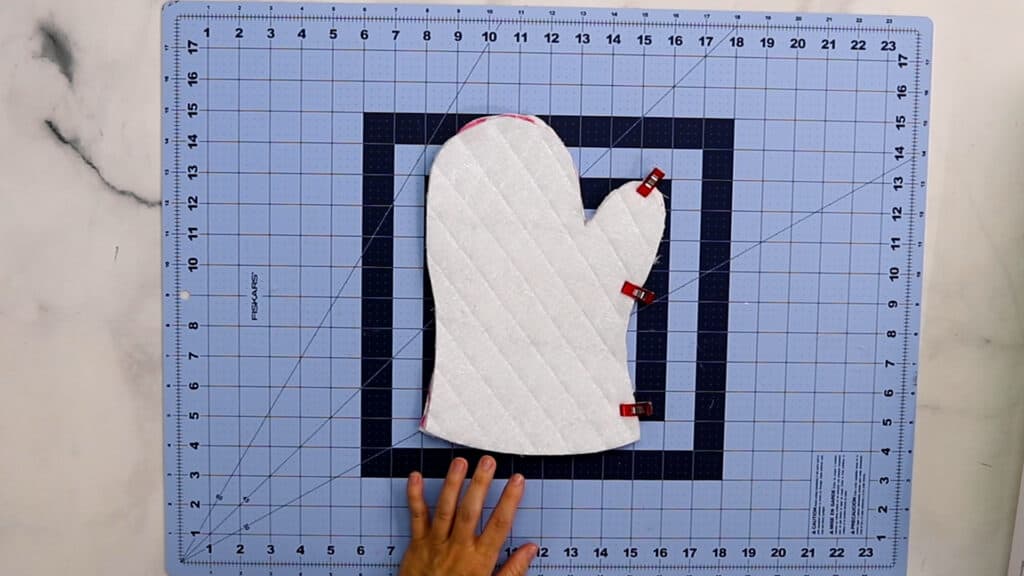
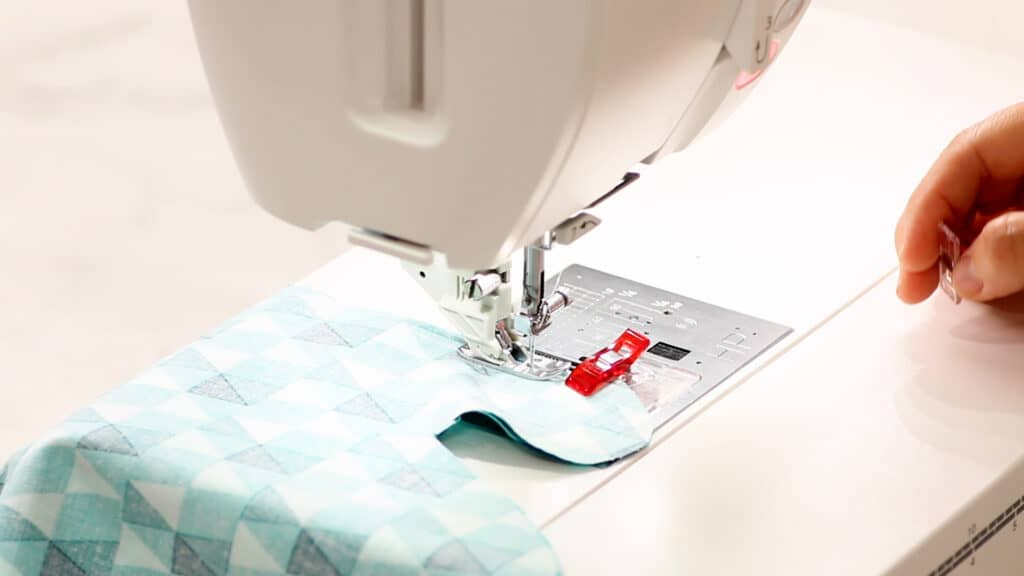
Step 7 – Place the quilted oven mitt top and bottom outside pieces right sides together and pin or clip in place.

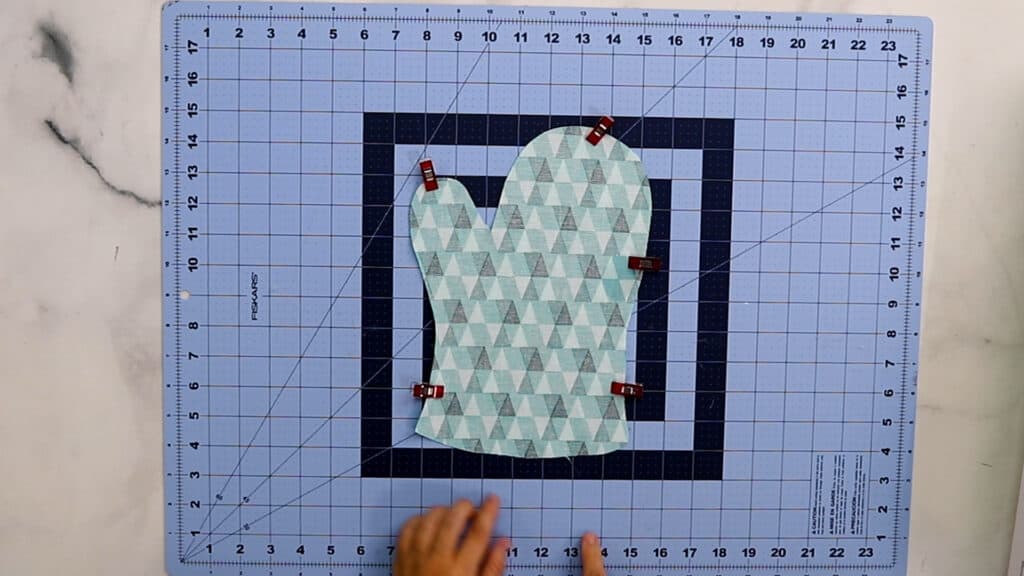
Step 8 – Place the oven mitt top and bottom lining pieces right sides together and pin or clip in place.

Step 9 – Sew together outside layers using ¼ seam allowance leaving the bottom open. Remember to backstitch in place at the beginning and the end.

Step 10 – Sew around the edge of the lining pieces using 1/4 in seam allowance, leaving the bottom open.

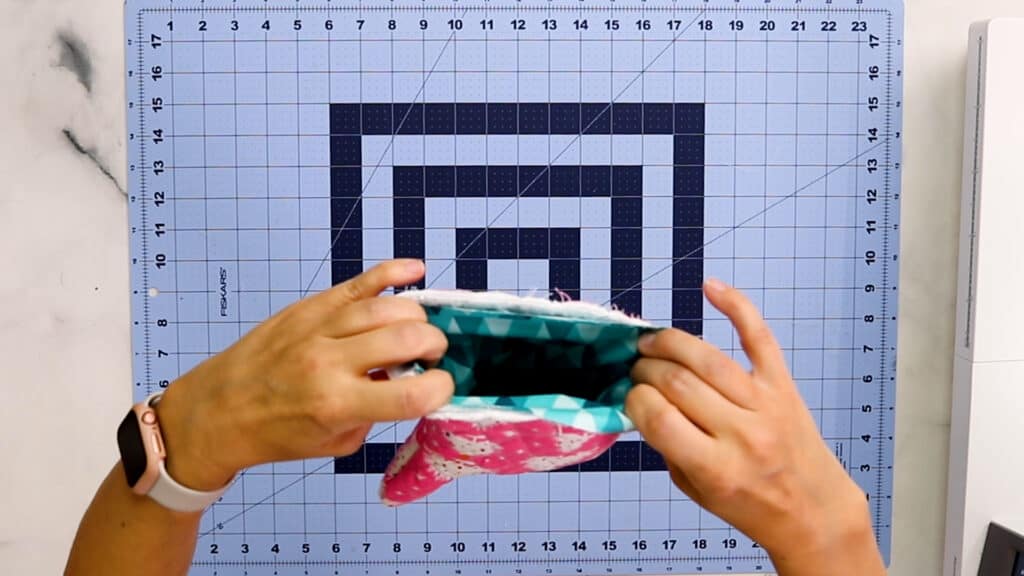
Step 11 – Turn the outside layer of the oven mitt right side out. Place the lining piece inside the oven mitt outside layer.

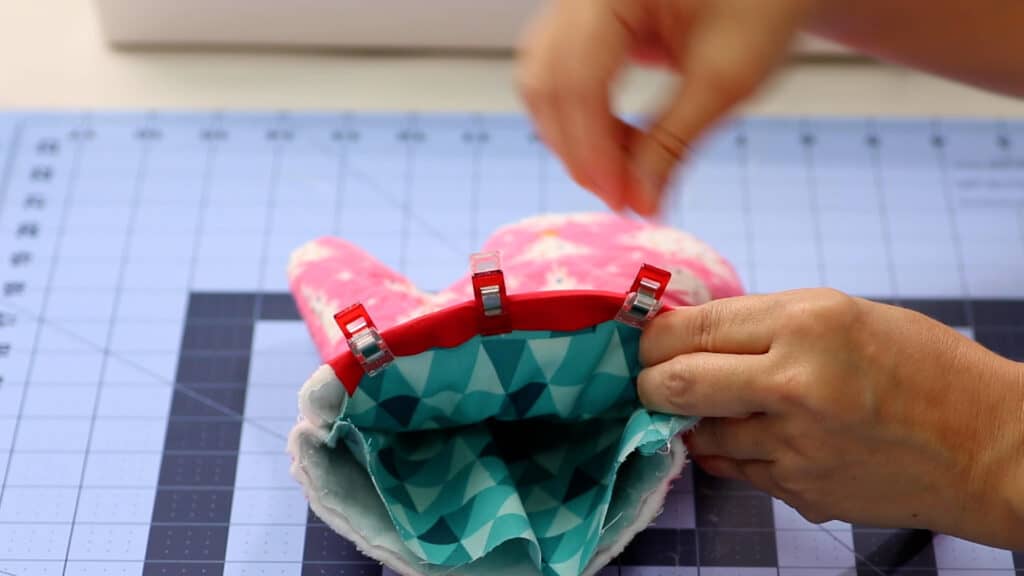
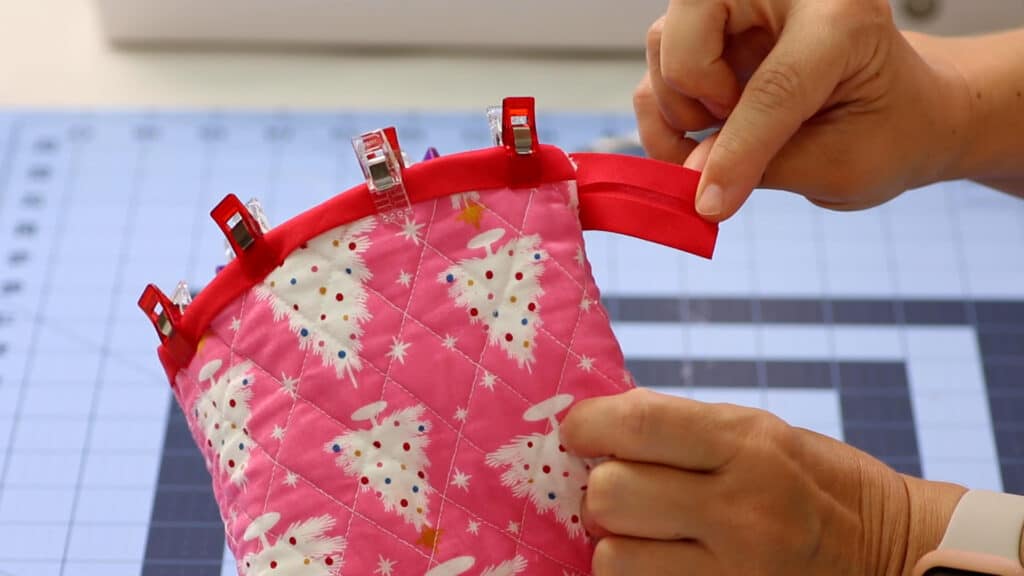
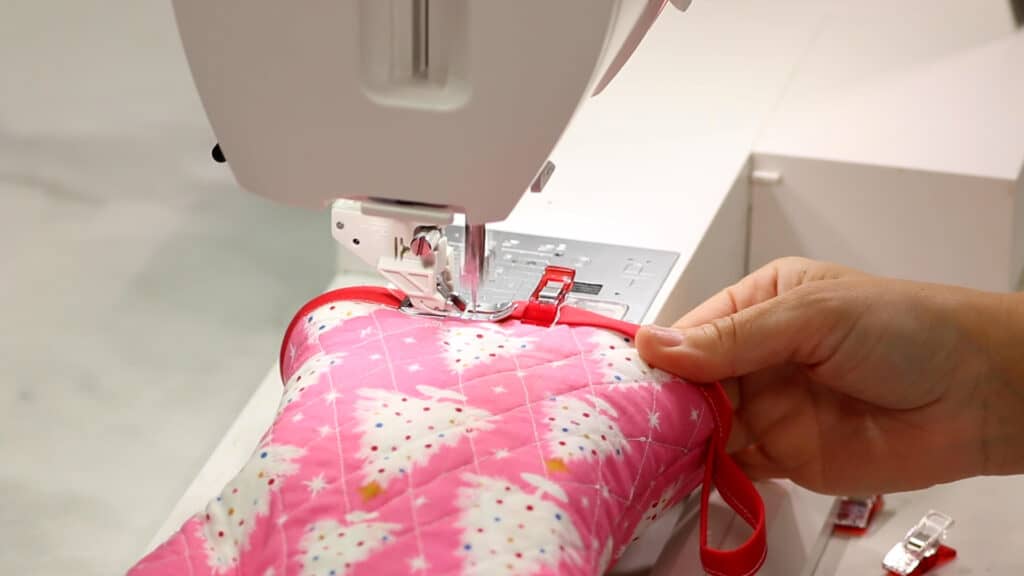
Step 12 – Open the bias binding up and fold it around the raw edges of the opening of the oven mitt. Both the raw edges of the inside lining and outside layers will be inside the binding fold.

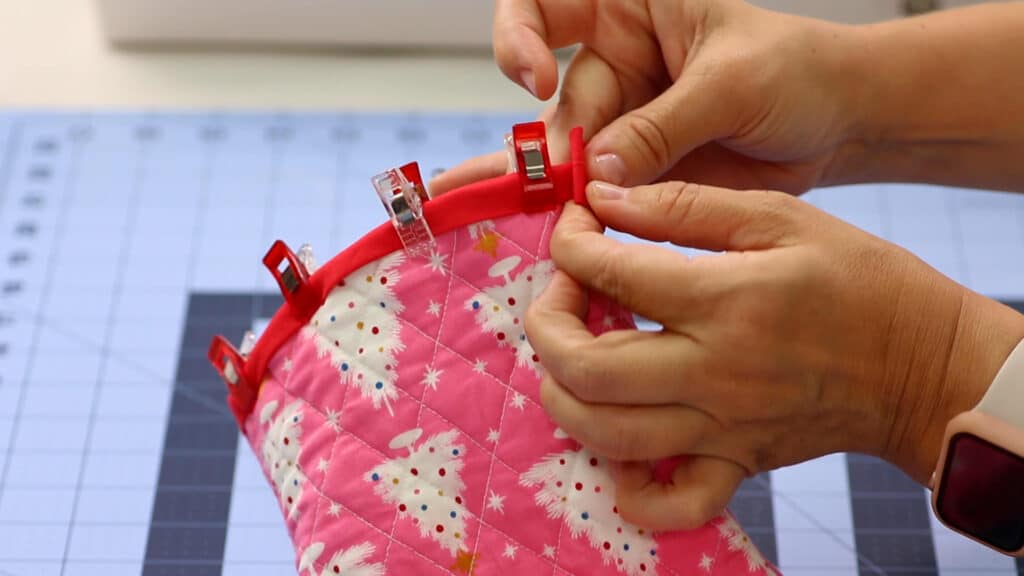
Step 13 – Overlap the ends by an inch. Fold the raw edge of the overlapping edge of the bias binding over to contain the raw edge and pin it in place.

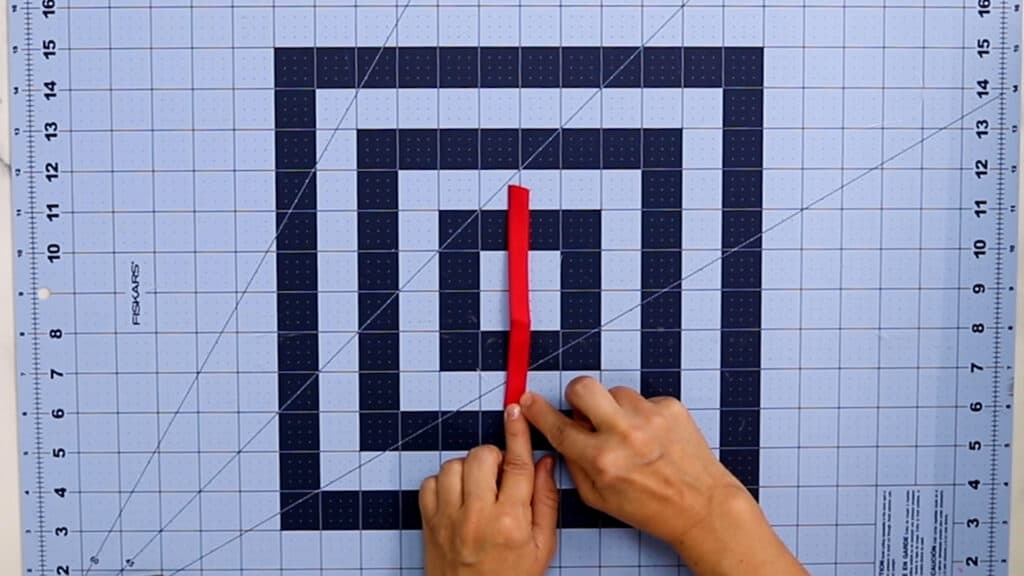
Step 14 – Cut a binding strip 6 inches long. Topstitch along the edge to close the fold. 

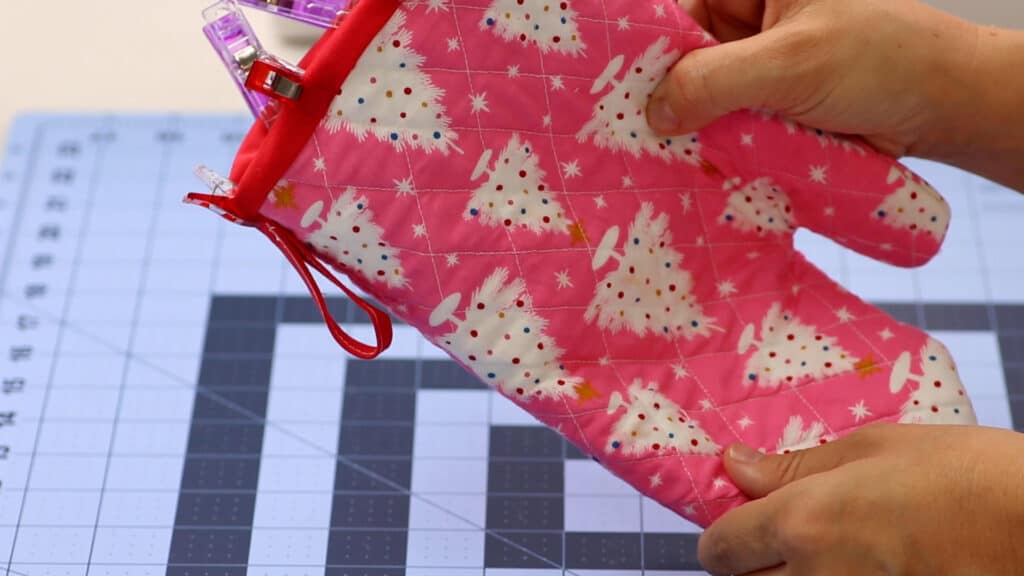
Step 15 – Fold the strip in half and insert it under the back edge of the binding. Pin or clip in place.

Step 16 – Topstitch along the bottom edge of the binding to sew the binding in place around the raw edges of the oven mitt.  And you are all done.  

Get Creative in the Kitchen

Once you’ve created your own oven mitts using our free pattern, you’ll find yourself feeling more connected to your kitchen. It’s like adding your personal signature to every dish you make. Cooking and baking become even more enjoyable when you’re using something you’ve crafted yourself.

So, what are you waiting for? Download the free oven mitt pattern today and embark on this fun DIY journey. Spice up your kitchen, add a pinch of creativity, and enjoy the warmth of handmade cooking essentials. Happy crafting and happy cooking!

Pin the Oven Mitt Pattern for Later

pink-oven-mitt-pattern

Free Tutorials

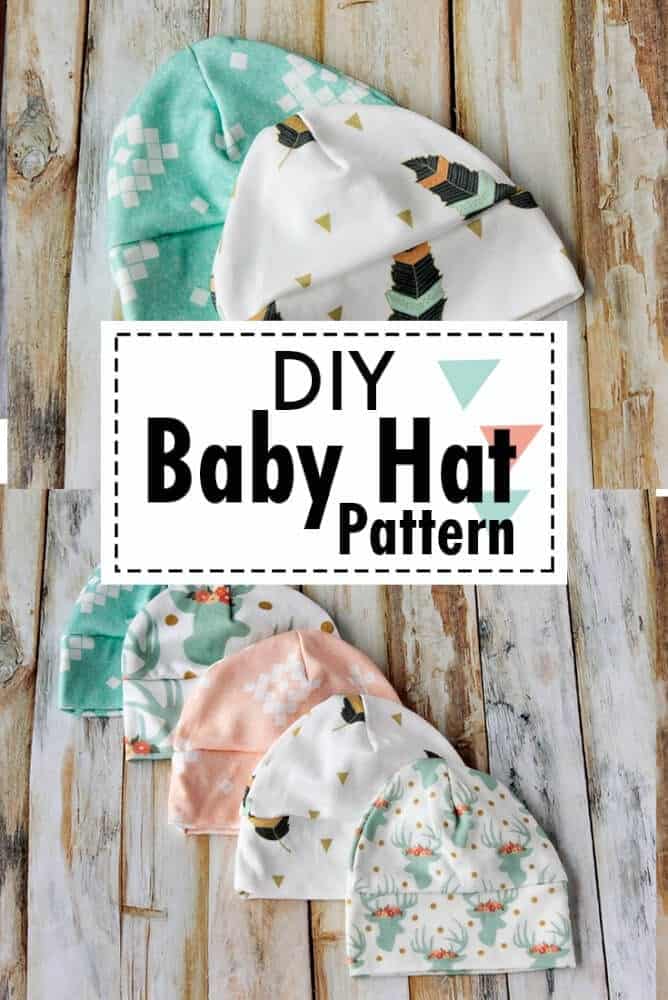
FREE Baby Hat Sewing Pattern in sizes Preemie – 24 Months

May 31, 2023 · 89 Comments

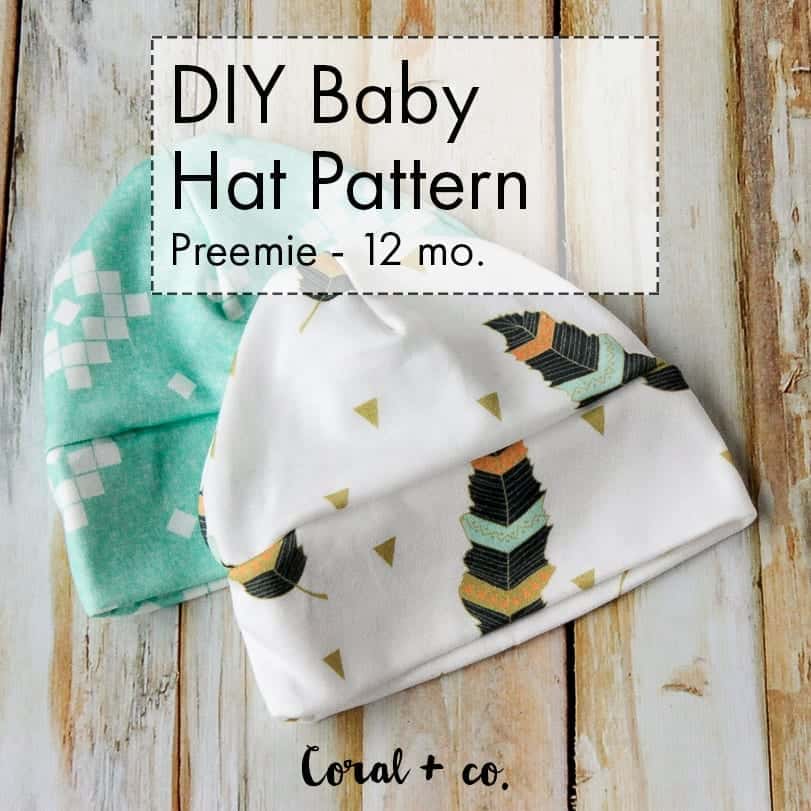
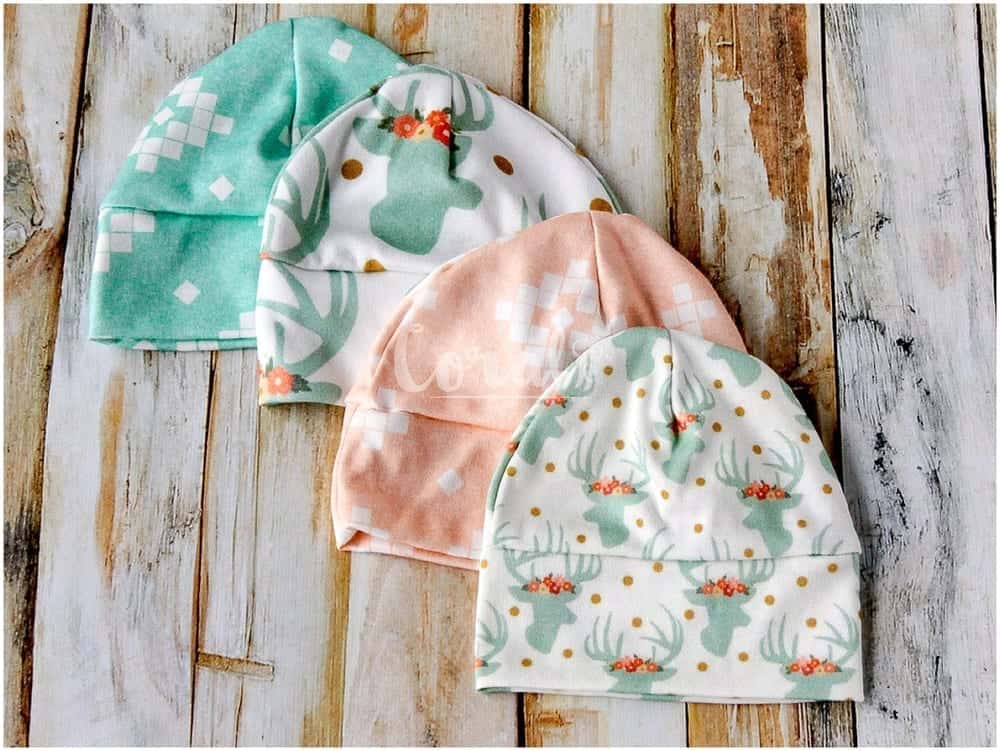
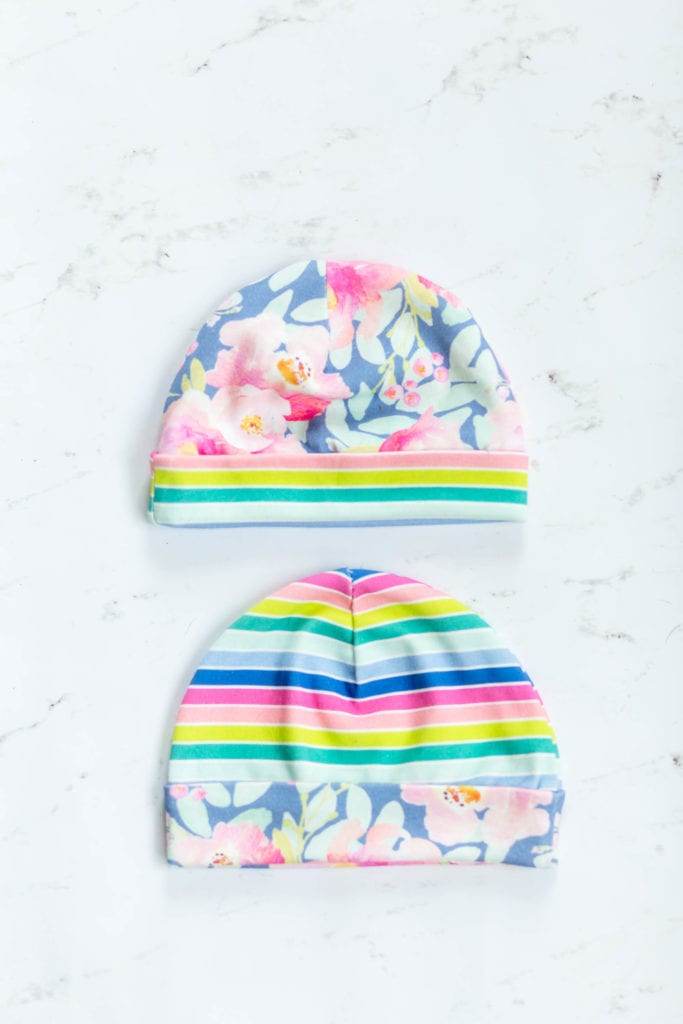
This is the baby hat sewing pattern that you need to make! Choose the basic baby hat or a top knot baby hat pattern for your little newborn bundle of joy.

Crafty Cuties: Sew Adorable Baby Hats with the FREE Pattern!

Hey there, crafty pals and baby enthusiasts! Get ready for a super fun project that’s bound to make you smile. Today, we’re diving into the world of baby hat sewing, and we’ve got a treat for you – a FREE baby hat sewing pattern that covers sizes from preemie to 24 months. Let’s get started on this sewing adventure together!

Why Sew Baby Hats?

Let’s talk about why sewing baby hats is a blast! It’s not just about making a hat; it’s about creating a little piece of warmth and love for the sweet baby in your life.. Handmade baby hats are like a snugly hug for your tiny tot and make the sweetest keepsakes.

The Fantastic FREE Baby Hat Sewing Pattern

Our free baby hat sewing pattern is your golden ticket to creating the most adorable little headgear. Whether you’re a sewing pro or just getting started, this pattern is your new BFF on this crafting journey.

baby-hat-sewing-pattern-and-tutorial-coral-and-co

Let the Fun Begin!

With your free baby hat sewing pattern and materials ready, it’s time to start the real fun. Follow the easy-peasy step-by-step instructions, and let your creative juices flow. Pick fabrics that make you smile and add cute little details that make each hat unique.

how-to-sew-a-baby-hat

The FREE Baby Hat Sewing Pattern and Top Knot Baby Hat Sewing Pattern with a PDF download including the tutorial!  Baby Cap Pattern in sizes preemie through 12 months so it is perfect for infants and big babies. 

The baby hat pattern can be made with interlock knit, jersey knit, or even rib knit (I would size down for this option).  I used an organic interlock knit for the batch that I made.  Some of my favorite knits are Fabricworm’s organic interlock knits and jersey knits by Art Gallery (so many pretty colors and designs!)

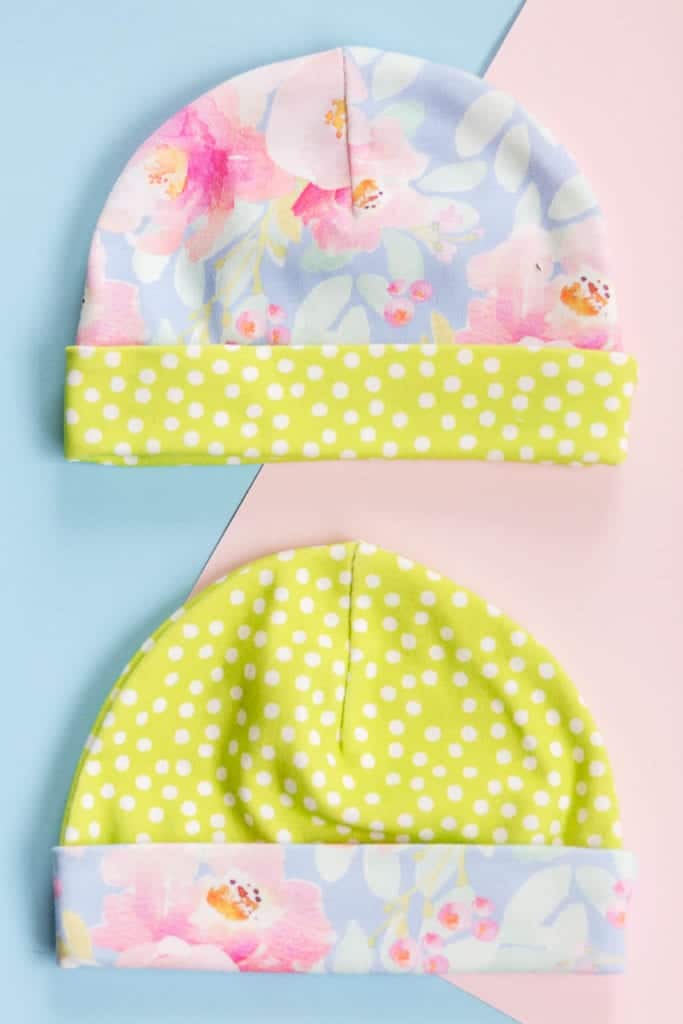
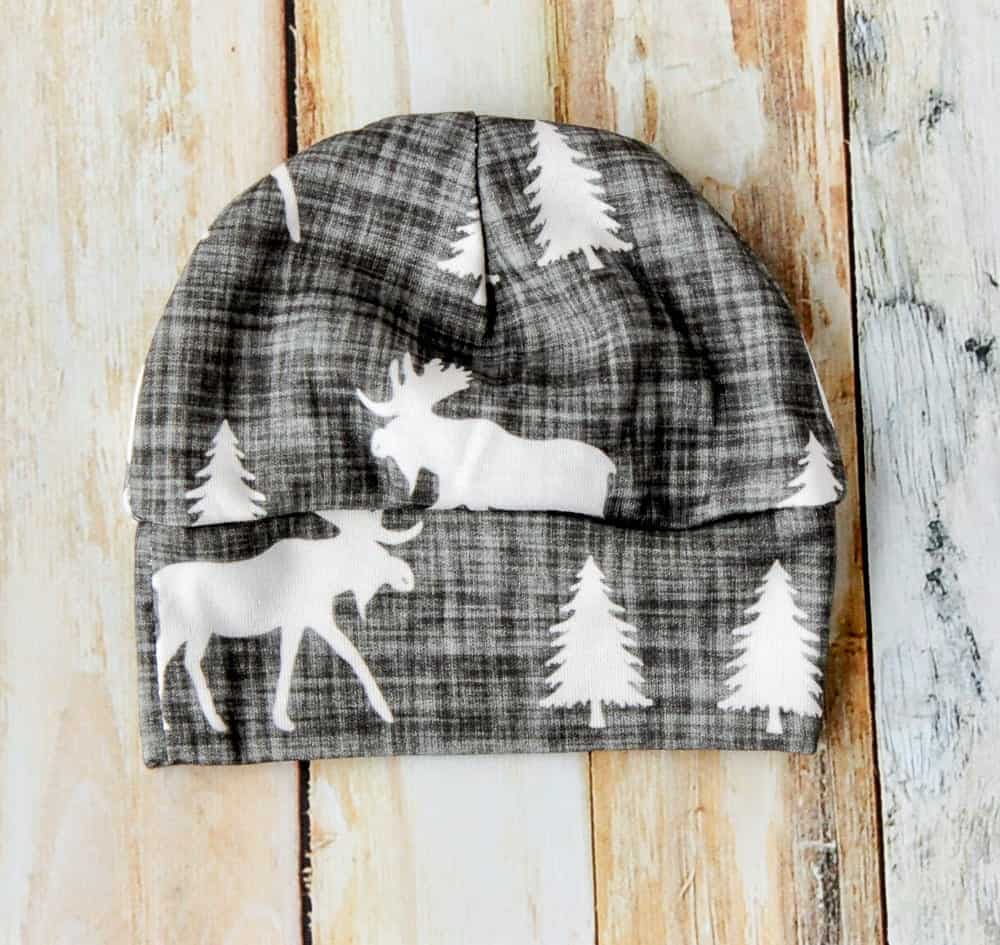
 This cute little baby cap is made out of soft knit fabric and comes with a fitted top and a cuff that can be rolled up for more cuteness, and can be made with a top knot as well too.

Table of Contents

  1. Other Baby Sewing projects you might like:
  2. Baby Hat Pattern Supplies Needed
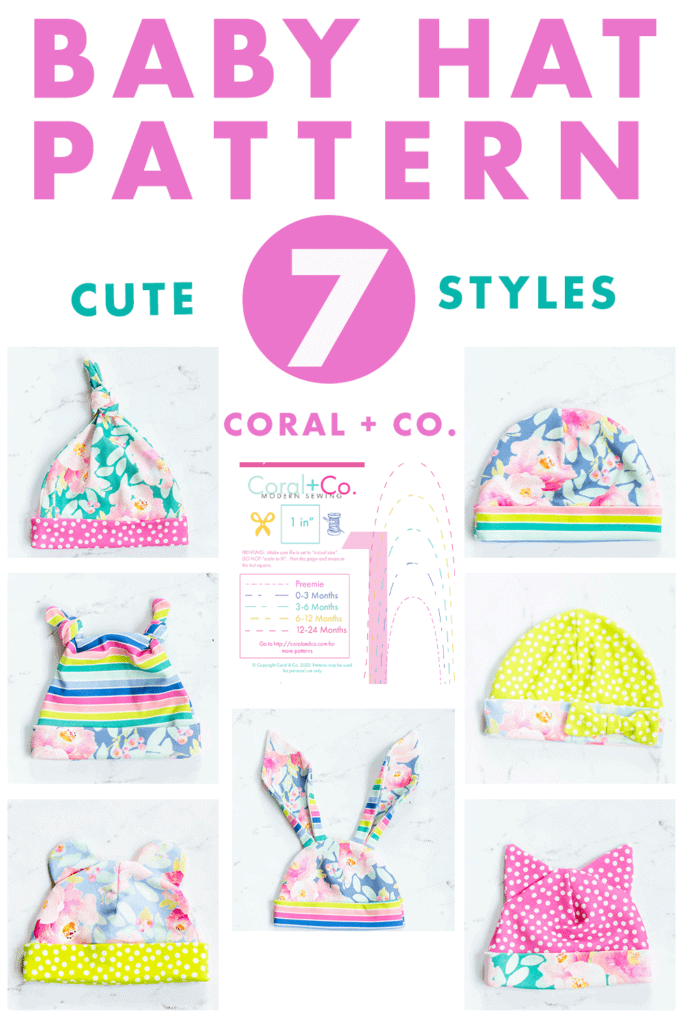
    1. Or you can shop the BABY HAT MEGA BUNDLE with 7 adorable options including the cutest animal ears!
  3. Find the fabrics used for in the Baby Hat Sewing Pattern:
  4. Download the Pattern
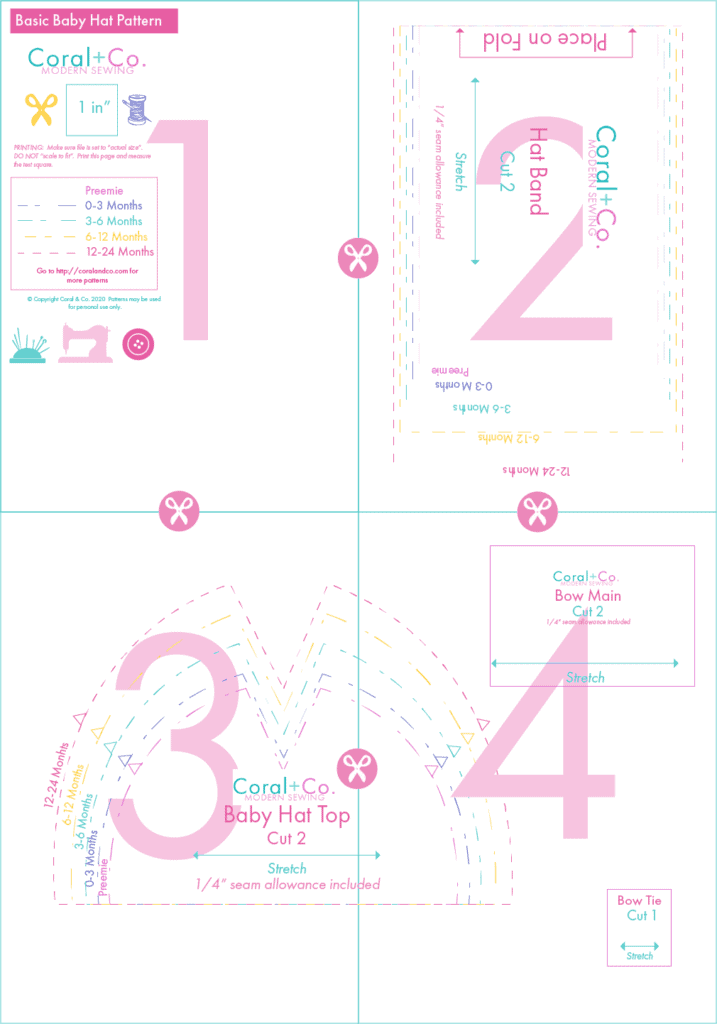
  5. How to Assemble the Baby Hat Pattern
  6. How To Sew A Baby Hat Quick Instructions
  7. Follow Along The Step by Step Photo Instructions
    1. ***Tips for Sewing with Knit Fabric
  8. Watch the Full Video Tutorial Here:
    1. ***** You can find the Baby Hat Sewing Pattern and More Projects in the Resource Library.
  9. Pin Free Baby Hat Sewing Pattern for later:

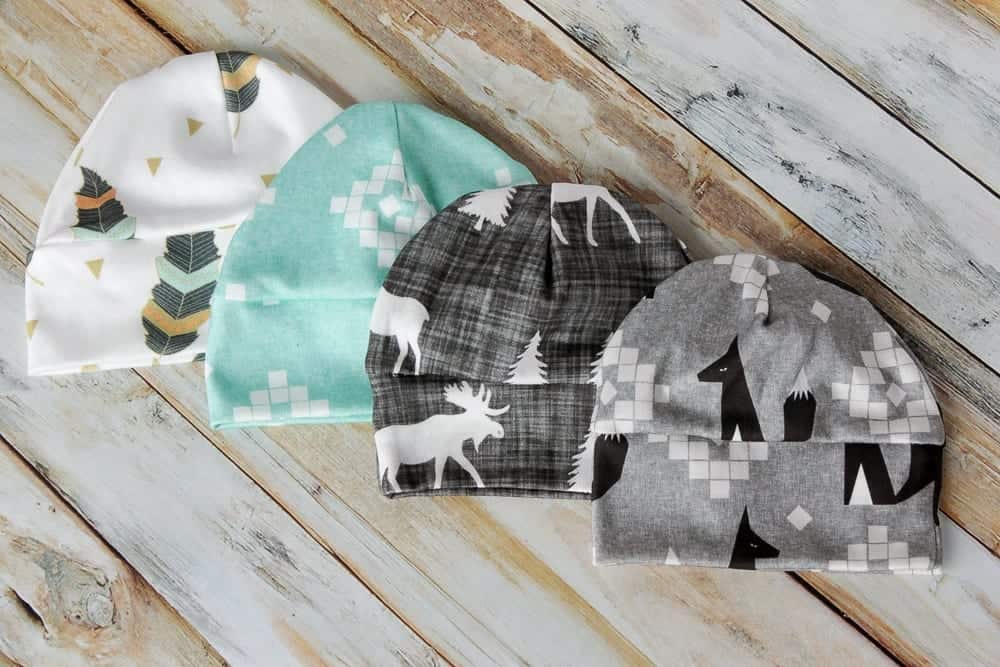
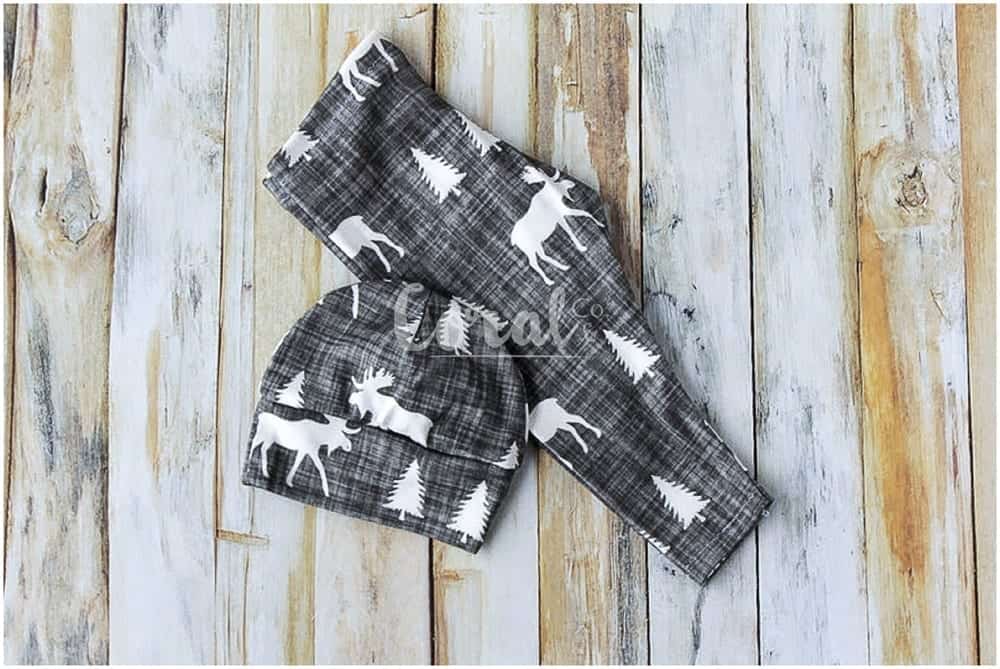
As you can see I had a lot of fun making them in a ton of different fabrics and can coordinate with the Knot Bow Headband Pattern and the Knit Swaddle Blanket for the perfect baby shower gift.

Other Baby Sewing projects you might like:

  • 50+ Cutest Baby Sewing Projects
  • Top Knot Baby Hat Pattern
  • Scrappy Patchwork Baby Bib Pattern
  • Sherpa Fleece Baby Blanket Tutorial
  • Minky Fitted Crib Sheet Tutorial
  • DIY Baby Leggings
  • Free Baby Bib Pattern

The baby hat can be sewn with either a sewing machine or serger. 

how-to-make-a-cap-for-newborn-baby-at-home

Sizes for Every Tiny Noggin

One of the coolest things about this pattern? It’s got sizes for all those cute little craniums, from preemie perfection to toddler terrific! That means your little one can stay stylish and cozy from day one.

 If you are new to sewing knits I have included some helpful tools below.  The Baby Hat Sewing Pattern PDF comes in several sizes and options:

  • Basic Baby Hat Sewing Pattern and Top Knot Baby Hat Sewing Pattern
  • Preemie
  • 0 – 3 Months
  • 3 – 6 Months
  • 6 – 12 Months
  • 12 – 24 Months
baby-hat-sewing-pattern-pdf

Have you wondered how to make a cap for a newborn baby at home?  The steps are incredibly easy and you will be making them by the dozen!!!

floral-rainbow-newborn-hats

Baby Hat Pattern Supplies Needed

Gather Your Sewing Supplies

Let’s round up your supplies! You’ll need soft and snuggly fabric that makes your heart melt, thread in matching colors, some sewing pins, trusty scissors, and, of course, your sewing machine. But don’t forget the secret ingredients – a dash of creativity and a whole lot of love!

  • Jersey Knit Fabric with at least 50% stretch
  • Clear Plastic Ruler
  • Rotary Cutter
  • Self Healing Mat
  • Walking Foot (* Optional but very helpful)
  • Pins or Clips
  • Stretch Thread
  • Jersey Ball Point Needle
  • FREE Baby Hat Pattern

Or you can shop the BABY HAT MEGA BUNDLE with 7 adorable options including the cutest animal ears!

Find the fabrics used for in the Baby Hat Sewing Pattern:

Fabrics used in the video: Peony Paradise designed by Indy Bloom Design available at Hawthorne Supply Co.

Spoonflower Fabrics in Photos: Ivie Cloth Company, Mint Peony Designs, Charlotte Winter

Download the Pattern

Basic Baby Hat Pattern Coral + Co.Download

How to Assemble the Baby Hat Pattern

How To Sew A Baby Hat Quick Instructions

Or watch the video below for more tips.

  1. Assemble the Basic Baby Hat PDF Pattern, being sure to measure the 1″ square.
  2. Place the baby hat top piece parallel to the stretch of the fabric and cut 2 from the top piece.
  3. Place the hatband pattern on the fabric fold and cut 1 hatband piece from the pattern.
  4. Pin or clip the short side of the baby hatband.
  5. Fold the baby hat top piece in half aligning the raw edges of the V shape created by the dart.
  6. Sew 1/4″ seam allowance along the short side of the baby hatband piece to form one round (connected) piece.
  7. Sew 1/4″ seam allowance along the raw edge of the dart (angled edge). Repeat for the other hat top piece.
  8. Press the dart open or to one side.
  9. Press the seam allowance of the hatband piece open. Fold the hat band in half along the long side Wrong Sides Together with the raw edges together and press.
  10. Once angled edges are sewn, place hat pieces Right Sides Together lining up the darts and clip or pin in place to secure.
  11. Sew 1/4″ seam allowance around the curved edge from one side to another.
  12. Turn hat top piece right side out being sure to roll the seam allowance out so it lays flat.
  13. Divide both the hat top and the cuff of the hatband piece into four even quarters and mark with pins.
  14. With the Right Sides of the hatband cuff and hat facing each other place the cuff around the Right Side of the hat.  The folded edge will be on top with the raw edges on the bottom meeting with the raw edges of the hat.
  15. Line up the four even pin markings and pin the hat and hatband so they are evenly distributed.
  16. Sew the cuff to the hat using a 1/4in seam.
  17. Press the seam allowance of the cuff upward and press flat.
  18. Fold the hat band in half and press. Press the whole baby hat for a nice finish.

Follow Along The Step by Step Photo Instructions

Step 1 – Assemble the Basic Baby Hat PDF Pattern, being sure to measure the 1″ square.

Step 2 – Place the baby hat top piece parallel to the stretch of the fabric and cut 2 from the top piece.

Step 3 – Place the hatband pattern on the fabric fold and cut 1 hatband piece from the pattern.

Step 4 – Pin or clip the short side of the baby hatband.

Step 5 – Sew 1/4″ seam allowance along the short side of the baby hatband piece to form one round (connected) piece.

Press the seam allowance of the hatband piece open. Fold the hat band in half along the long side Wrong Sides Together with the raw edges together and press.

Step 6 – Fold the baby hat top piece in half aligning the raw edges of the V shape created by the dart.

Step 7 – Sew 1/4″ seam allowance along the raw edge of the dart (angled edge). Repeat for the other hat top piece.

Step 8 – Press the dart open or to one side.

Step 9 – Once angled edges are sewn, place hat pieces Right Sides Together lining up the darts and clip or pin in place to secure.
Step 10 – Sew 1/4″ seam allowance around the curved edge from one side to another.

Step 11 – Turn hat top piece right side out being sure to roll the seam allowance out so it lays flat.
Step 12 – Divide both the hat top and the cuff of the hatband piece into four even quarters and mark with pins.

Step 13 – With the Right Sides of the hatband cuff and hat facing each other place the cuff around the Right Side of the hat.  The folded edge will be on top with the raw edges on the bottom meeting with the raw edges of the hat.
Step 14 – Line up the four even pin markings and pin the hat and hatband so they are evenly distributed.

Step 15 – Sew the cuff to the hat using a 1/4in seam.

Step 16 – Press the seam allowance of the cuff upward and press flat.
Fold the hat band in half and press. Press the whole baby hat for a nice finish.

******Be sure to make sure that patterns line up before you sew if sewing with directional prints.

***Tips for Sewing with Knit Fabric

  • A Walking Foot will help feed the fabric evenly when sewing with knits
  • Stretch Thread will keep the seams from breaking.
  • Using a Ball Point Needle will help prevent skipped stitches.
  • Spray jersey fabric with starch to and press to stabilize and prevent the edges from rolling.
top-knot-baby-hat-pattern-video

Sewing with Love

Remember, it’s not just about making a hat; it’s about putting your love into every stitch. These handmade baby hats will keep your little one snug and stylish while holding all the love you’ve poured into them.

So, whether you’re a sewing pro or a newbie with a heart full of love, this free baby hat sewing pattern is the perfect project for you. Download it today, and let’s get sewing these adorable little toppers! Happy crafting!

Watch the Full Video Tutorial Here:

***** You can find the Baby Hat Sewing Pattern and More Projects in the Resource Library.

You also might like: 15+ FREE Baby Hat Patterns and Tutorials

Pin Free Baby Hat Sewing Pattern for later:

free-baby-hat-sewing-pattern

Apparel, Baby Sewing, Beginner, FREE Baby Sewing Projects, Free Patterns, Free Tutorials, Popular, Sewing, Videos baby

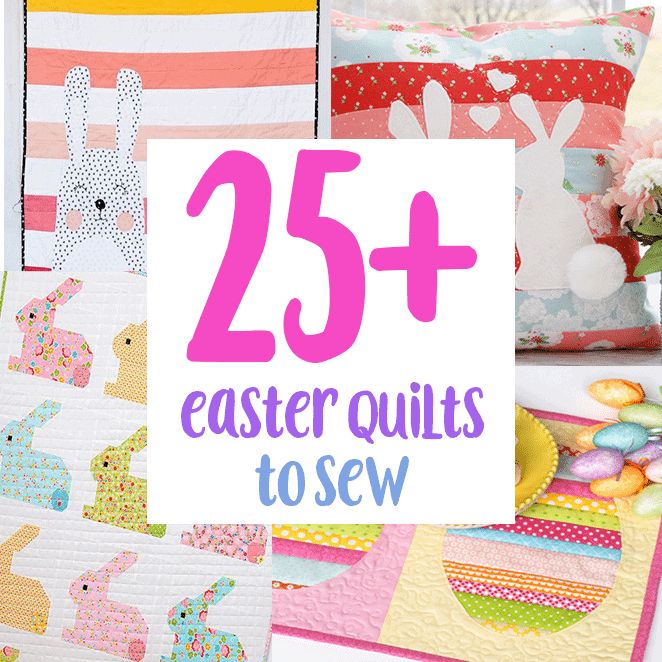
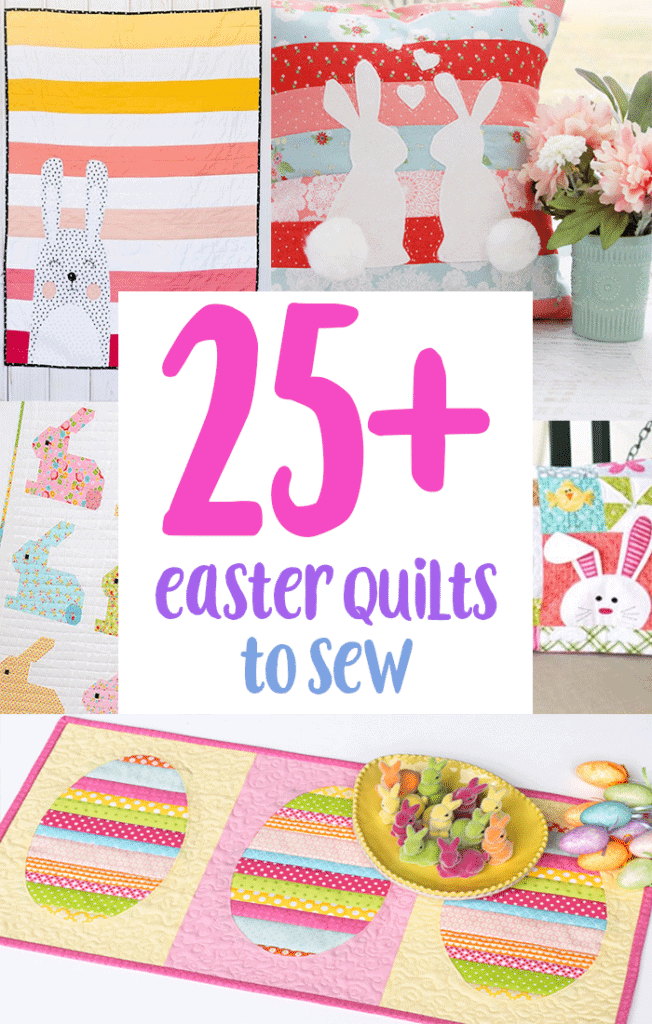
25+ Easter Bunny Quilt Patterns to Sew and More

Mar 27, 2023 · Leave a Comment

25+-Easter-Quilts-to-sew-for-spring

Spring is right around the corner and this list of 25+ Easter Bunny Quilt Patterns to sew will have you seeing everything flowers and bunnies. You will be sure to find an adorable Easter Bunny Quilt or Spring Flower Quilt to sew including free Easter Bunny Quilt Patterns.

Modern-Eastter-Bunny-Quilt-Pattern

1.

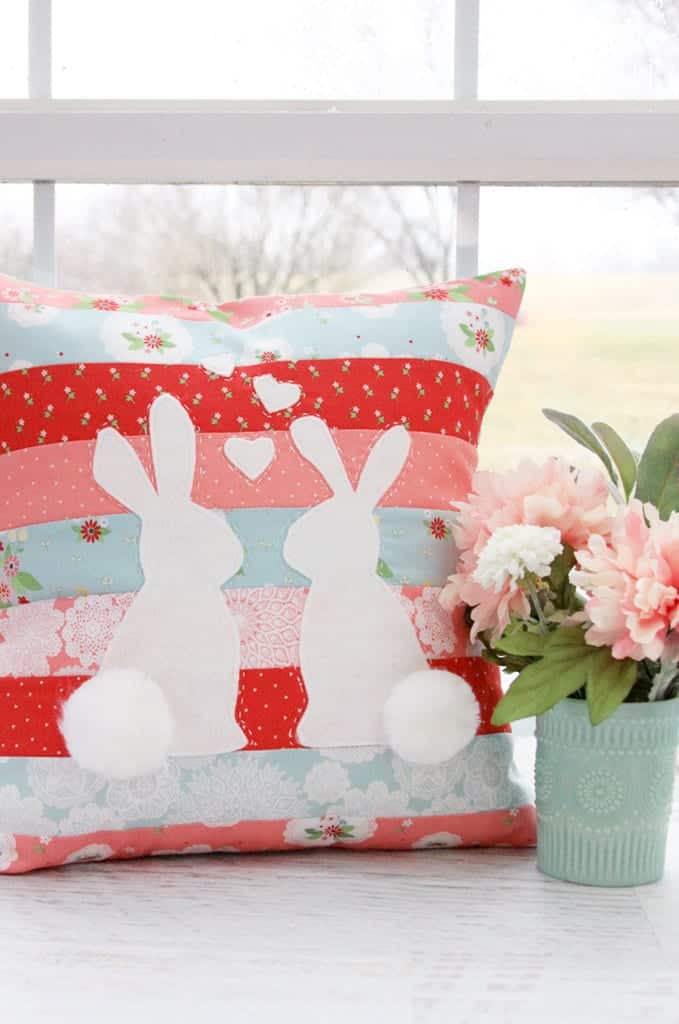
2. Bunnies in Love Pillow – This sweet quilted Easter bunny pillow could double as Valentine’s decor!

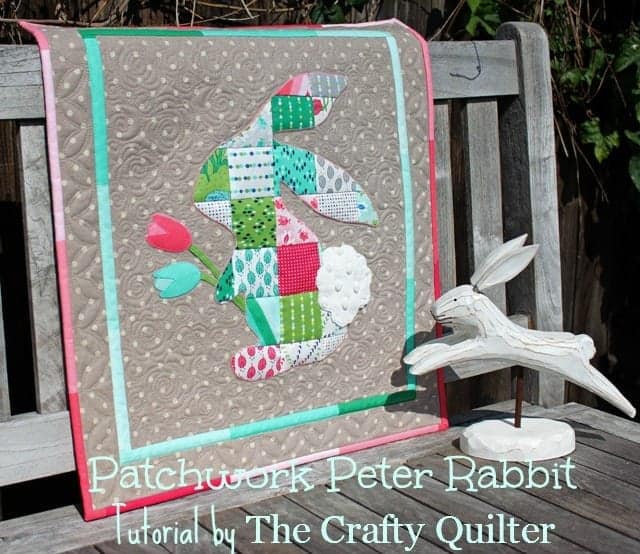
3. Patchwork Peter Rabbit Quilt – Combine patchwork and applique with this Peter Rabbit Easter quilt pattern

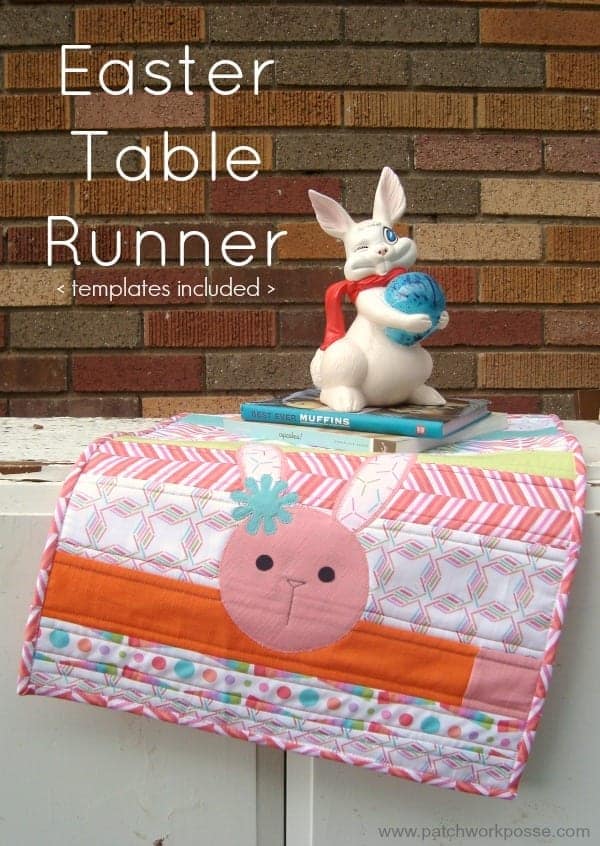
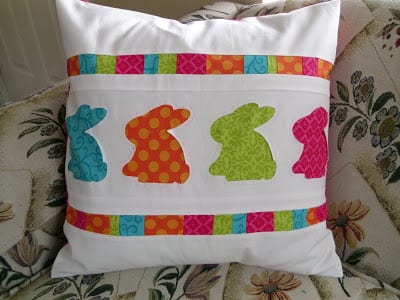
4. Bunny Table Runner – This scrappy quilted Easter table runner shows off an adorable Easter bunny applique.

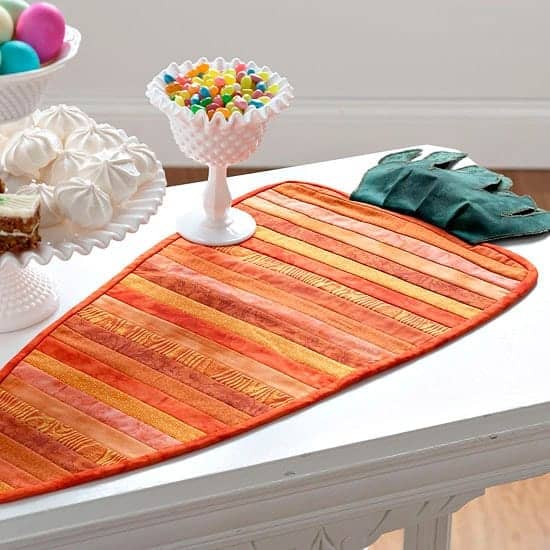
5. Carrot Table Runner – This carrot shaped table runner is the perfect scrap busting project!

6. Bunny Applique Quilt Blocks – Mix and match pieces to make a wall hanging or a whole Easter quilt with these super cute Easter bunny applique quilt blocks.

7. This adorable Easter Egg applique pattern is perfect for sewing up your scrap fabric and is super fast to make.

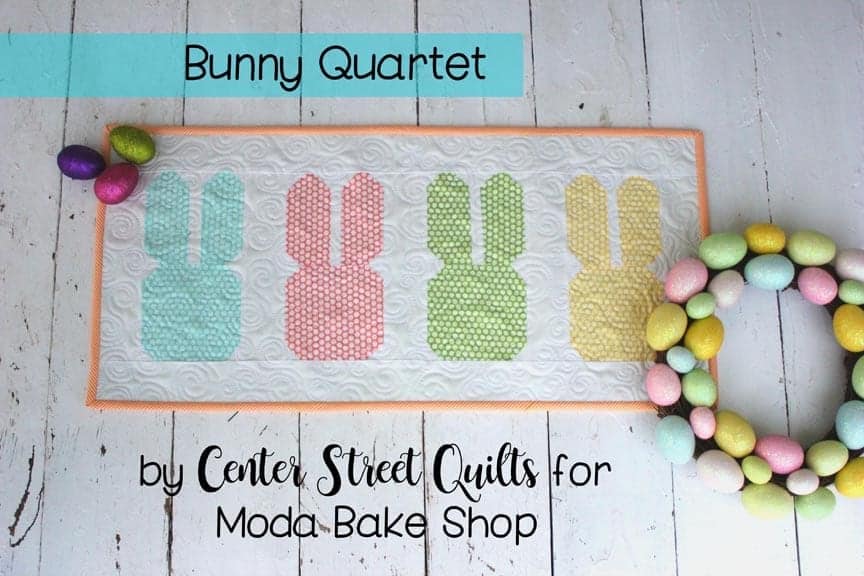
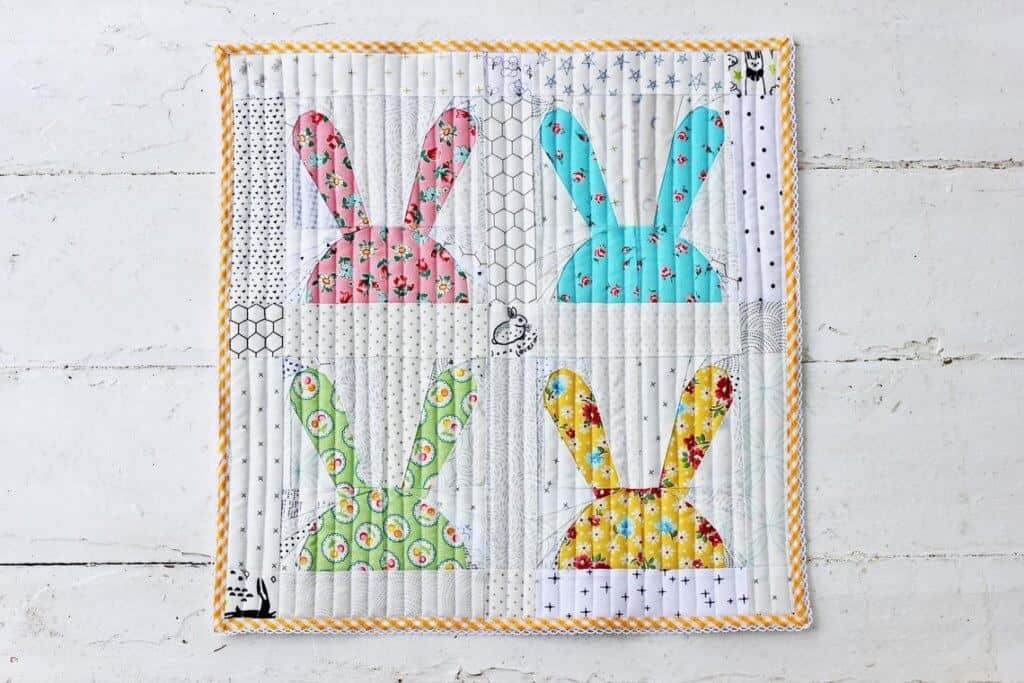
8. Bunny Quartet Mini Quilt – Use some sweet pastel fabrics to make this cute little Easter mini quilt.

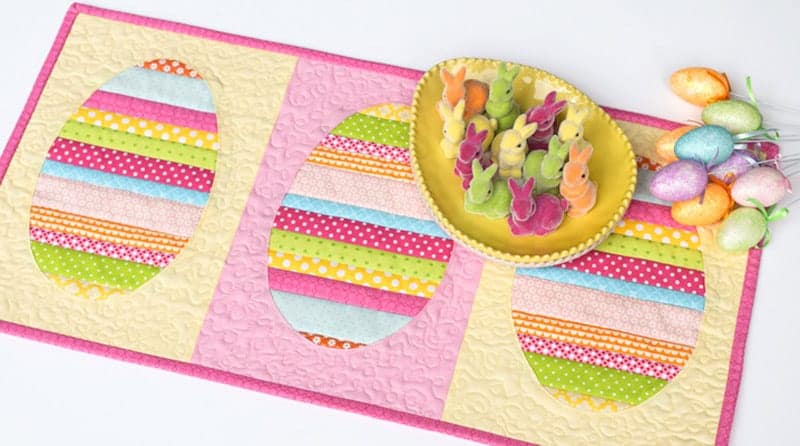
9. Easter Egg Table Runner – This quilted Easter table runner is a great way to use up scraps from other Easter projects while adding a pop of color to your table!

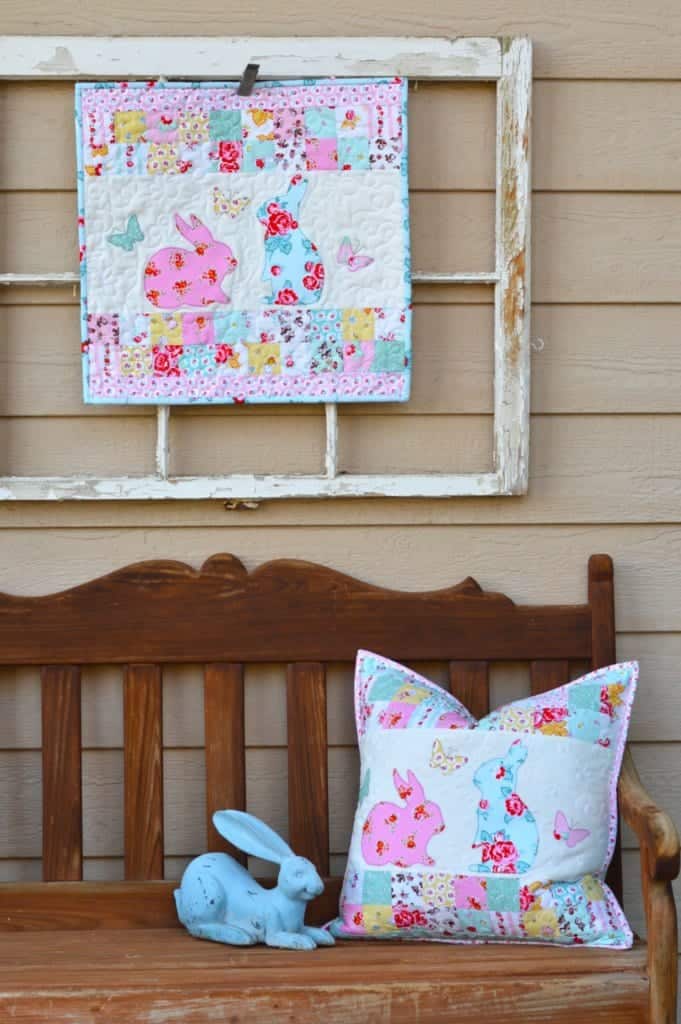
10. Bunny Applique Pillow and Mini Quilt – Sweet little bunnies and butterflies adorn this Easter pillow and mini quilt, combining patchwork and applique in another style.

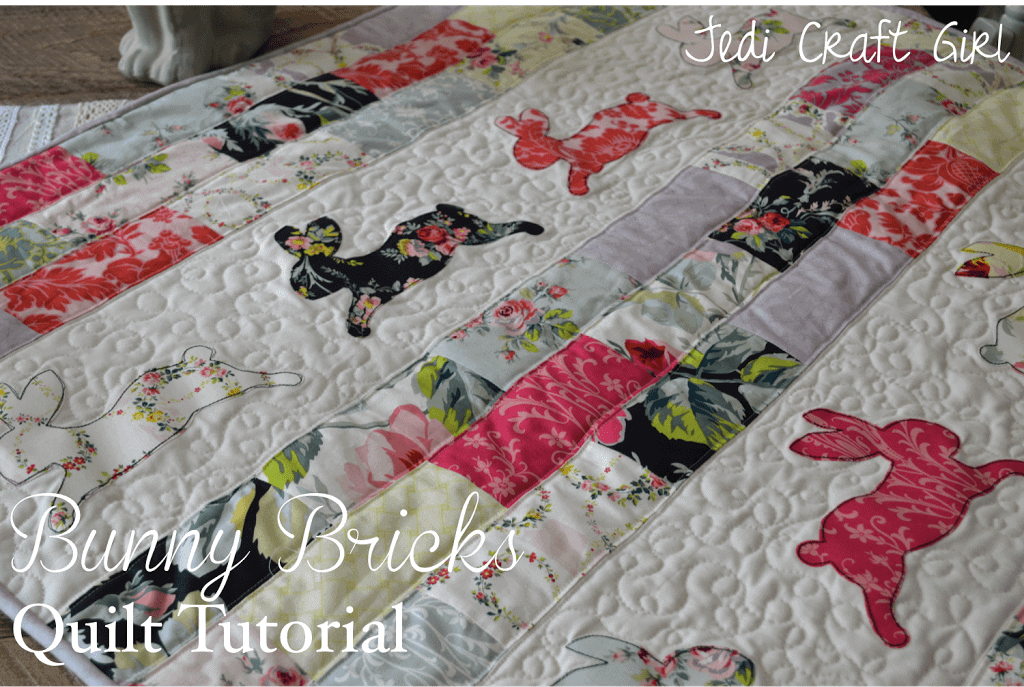
11. Bunny Bricks Quilt – This Easter quilt combines patchwork “bricks” with applique bunnies cut from a Sizzix die.

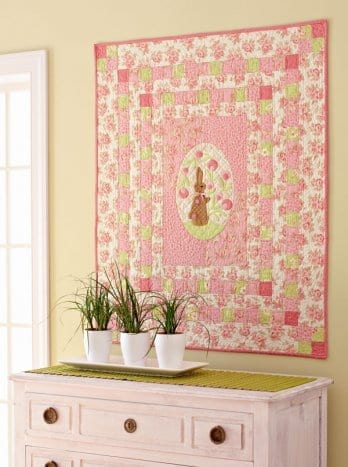
12. Bunny Patch Quilt – This Easter quilt features a framed bunny as it’s center piece. This would be fun in a variety of bright colors too!

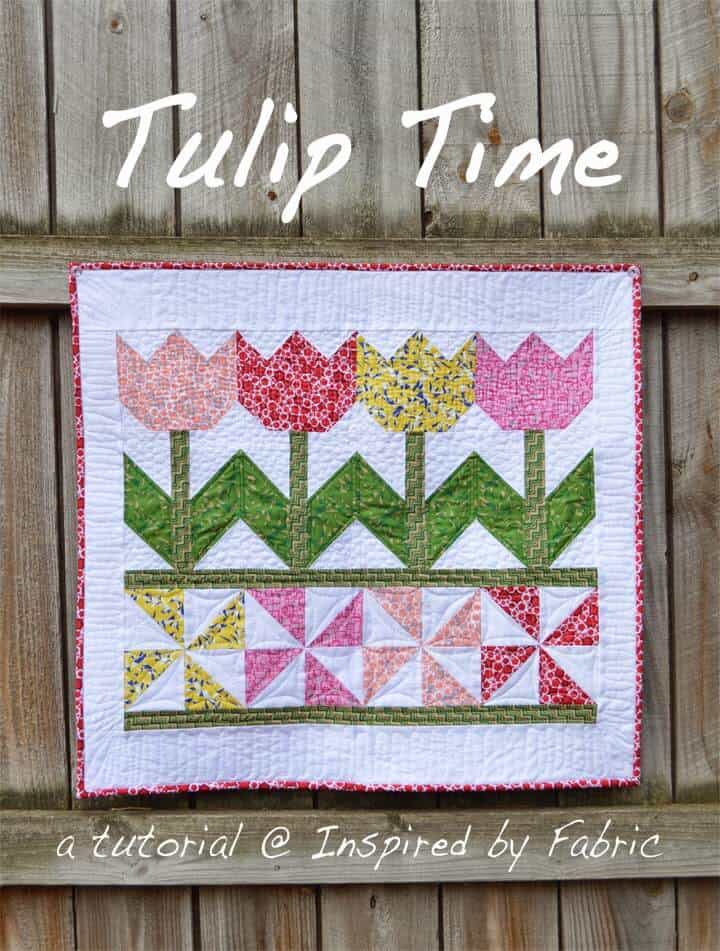
13. Tulip Time – Another Easter quilt featuring tulips! This mini quilt combines pinwheels and tulips for a fun spring quilt.

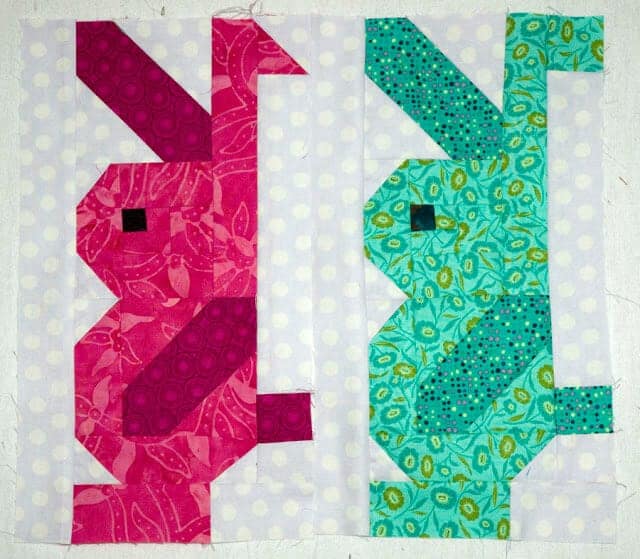
14. Standing Bunny Quilt Block – Use this Standing Bunny Quilt Block to create an Easter quilt with a rainbow of bunnies!

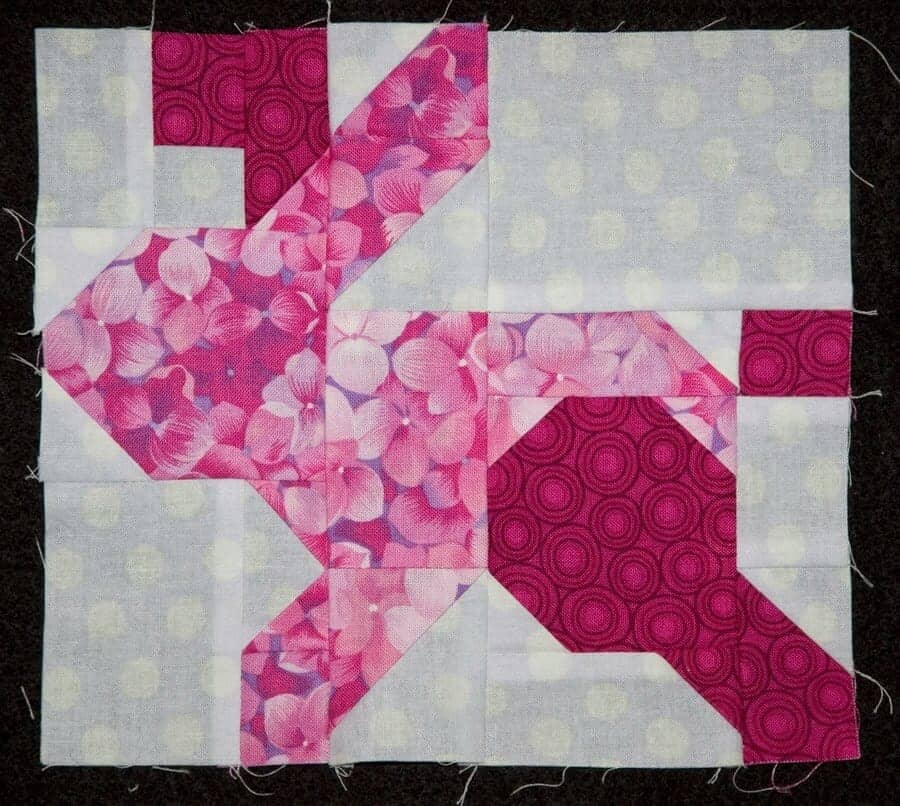
15. Bunny Quilt Block – This more traditional Bunny quilt block can be combined with a carrot or some flower blocks to create a super cute Easter quilt!

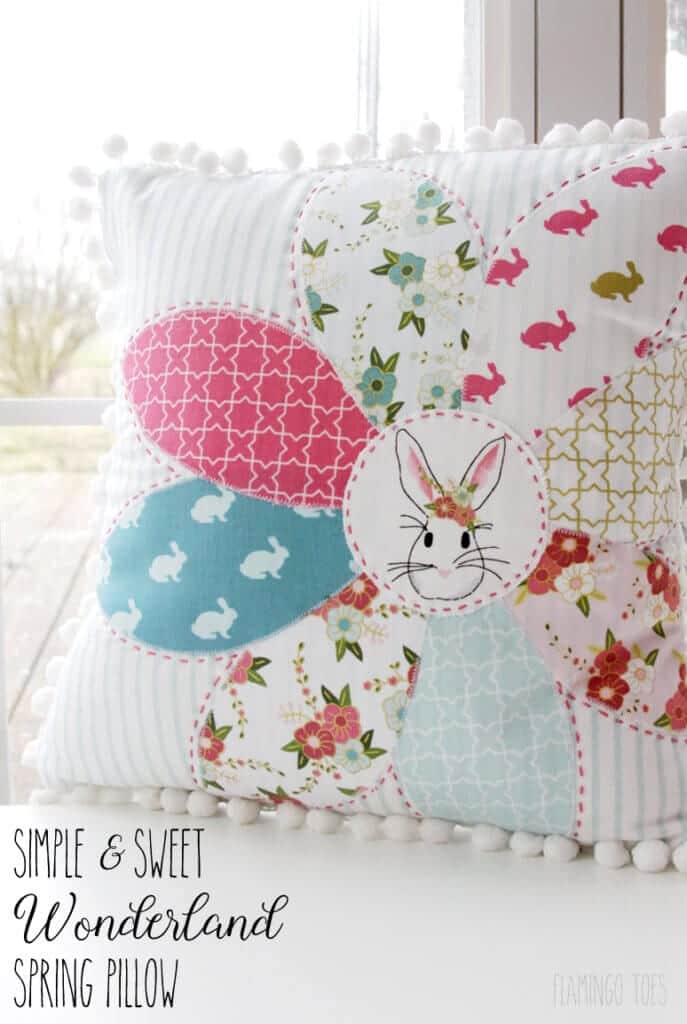
16. Simple Sweet Wonderland Pillow – A fussy cut bunny face makes the center of this quilted pillow. The flower design and hand quilting add the perfect details to this Easter pillow.

17. Bunny Hop Pillow – Bright colors and reverse applique combine for a very festive Easter pillow.

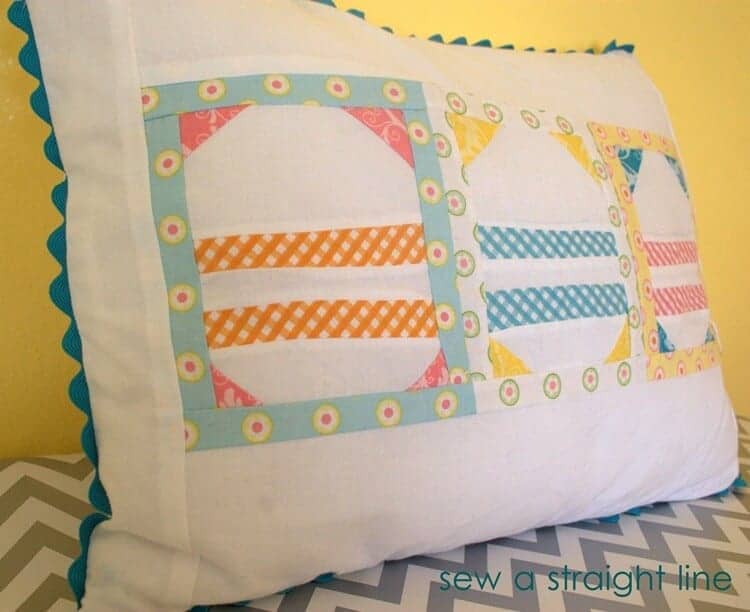
18. Easter Egg Block – Use this Easter egg block and a few Easter fabrics to make an Easter Egg pillow or an Easter Egg mini quilt.

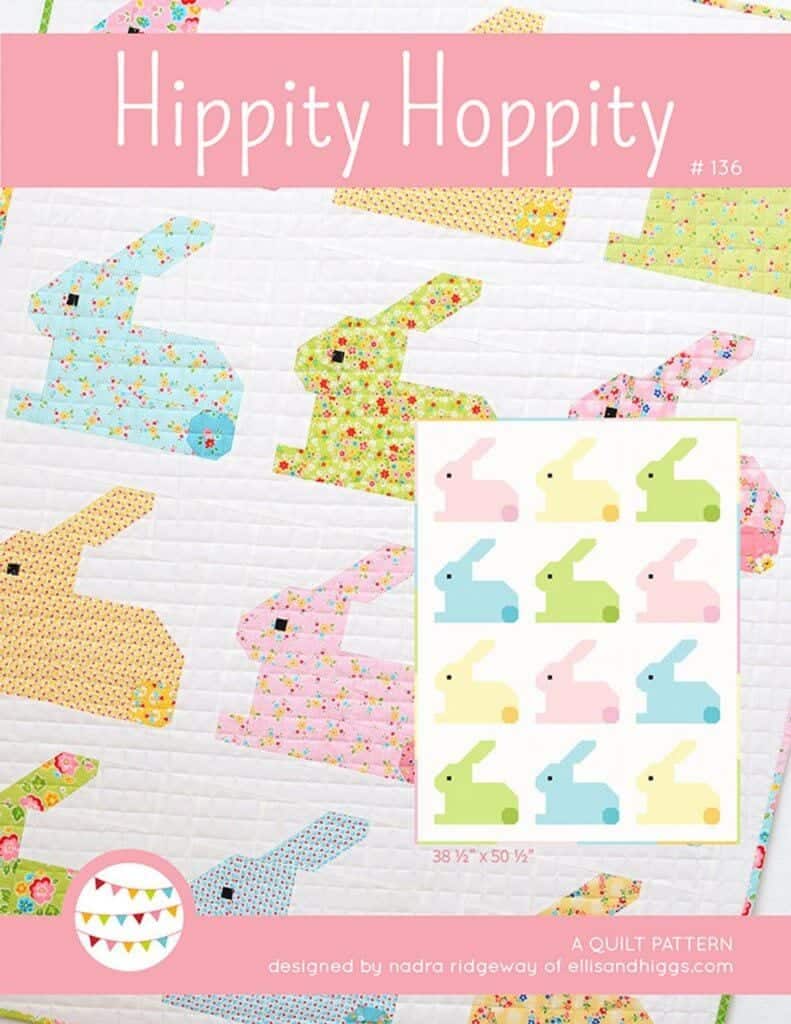
19. Hippity Hoppity Quilt – Make an Easter quilt full of adorable pastel bunnies! I love the little tail detail.

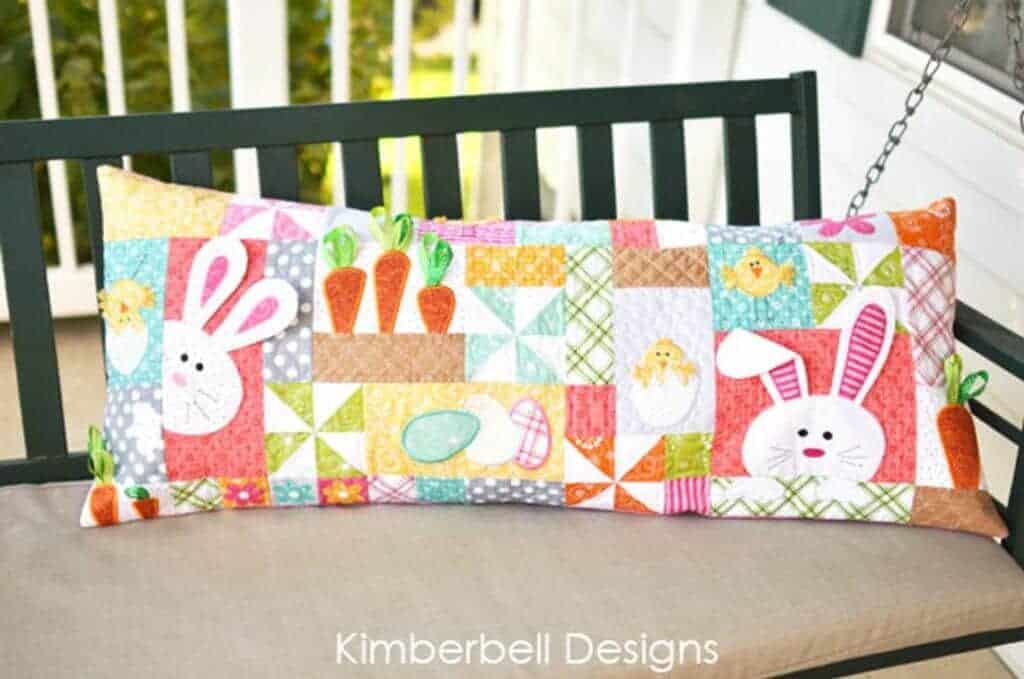
20. Hoppy Easter Bench Pillow – This quilted Easter bench pillow would also make a fun Easter mini quilt with the three dimensional elements.

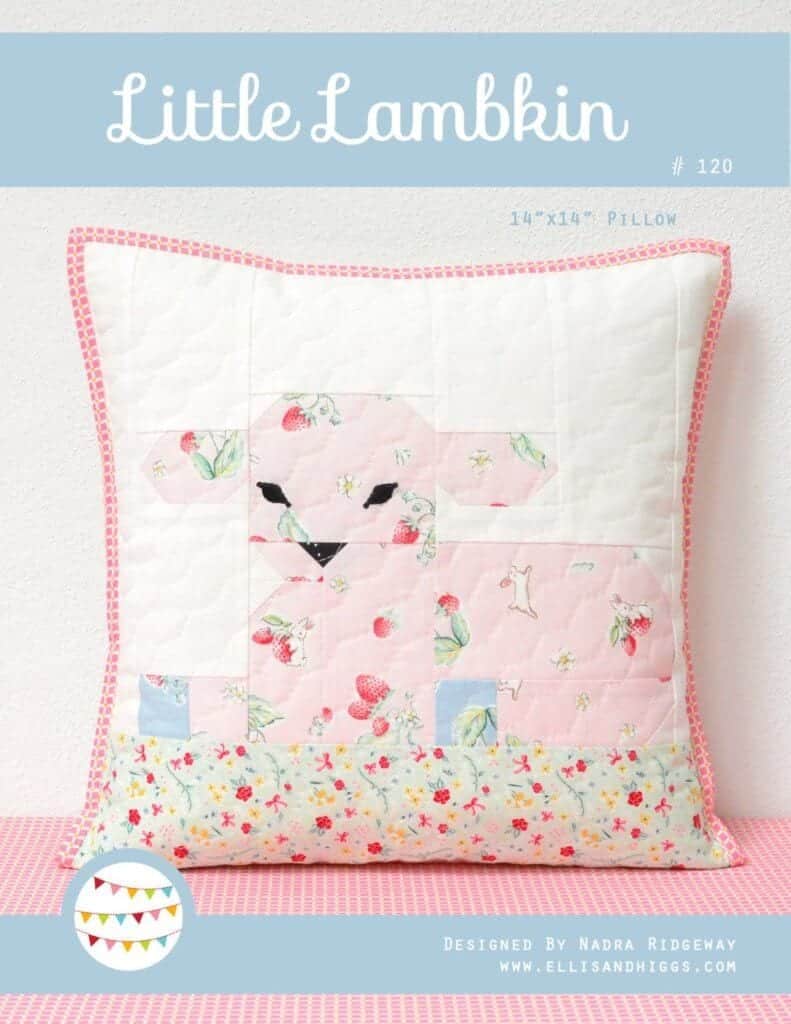
21. Lamb Pillow – Create a cute little Easter pillow with this Spring Lamb pattern.

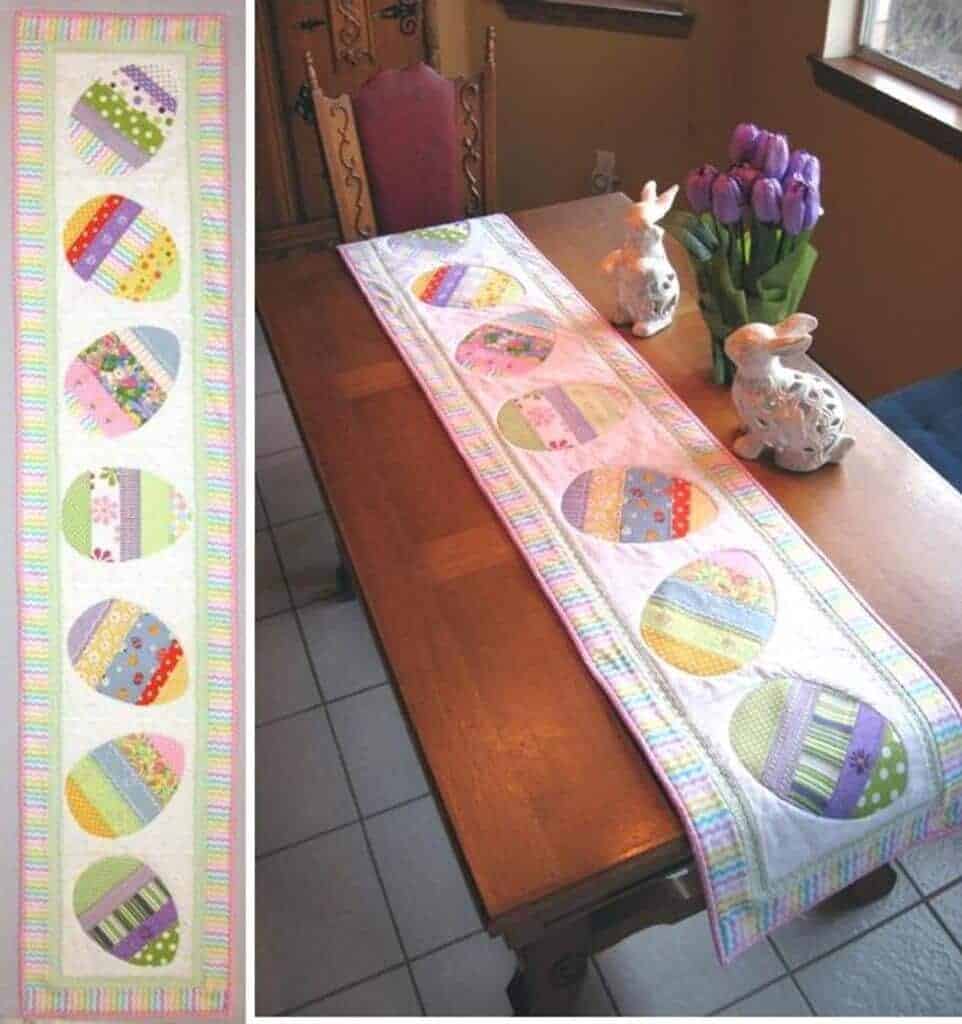
22. Easter Table Runner – Another great scrap busting project! Combine fabrics in different Easter colors to create this quilted Easter Egg Table Runner.

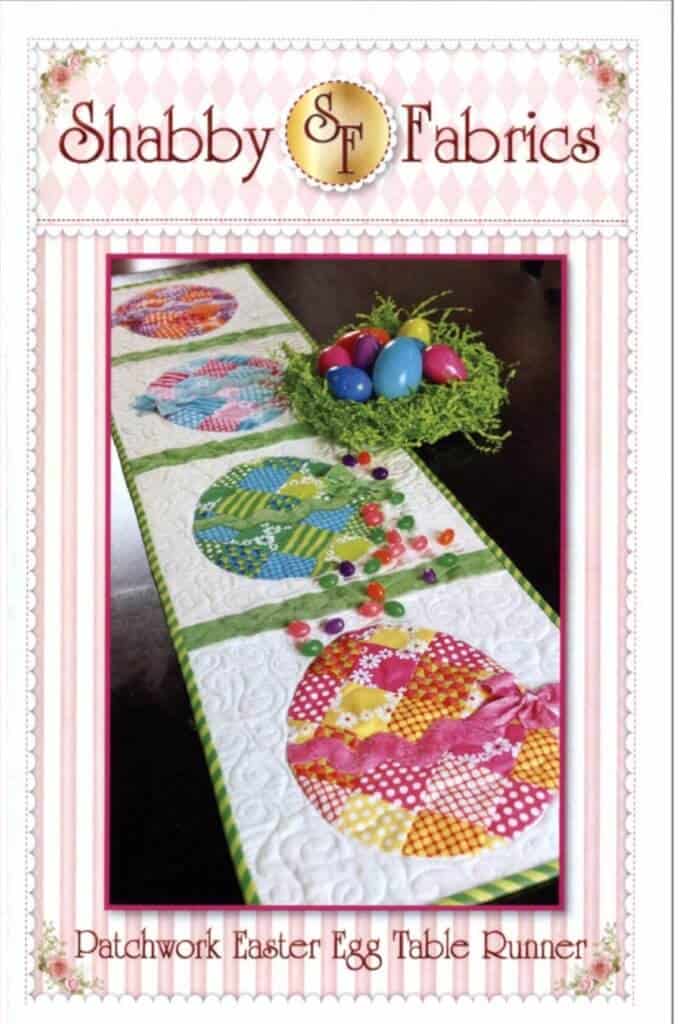
23. Patchwork Easter Egg Table Runner – This Easter table runner made of patchwork Easter eggs is complete with cute little bow details.

24. Peek-a-boo Bunny – Make a mini Easter wall quilt or an Easter pillow with this foundation paper pieced Peek-a-boo Bunny pattern.

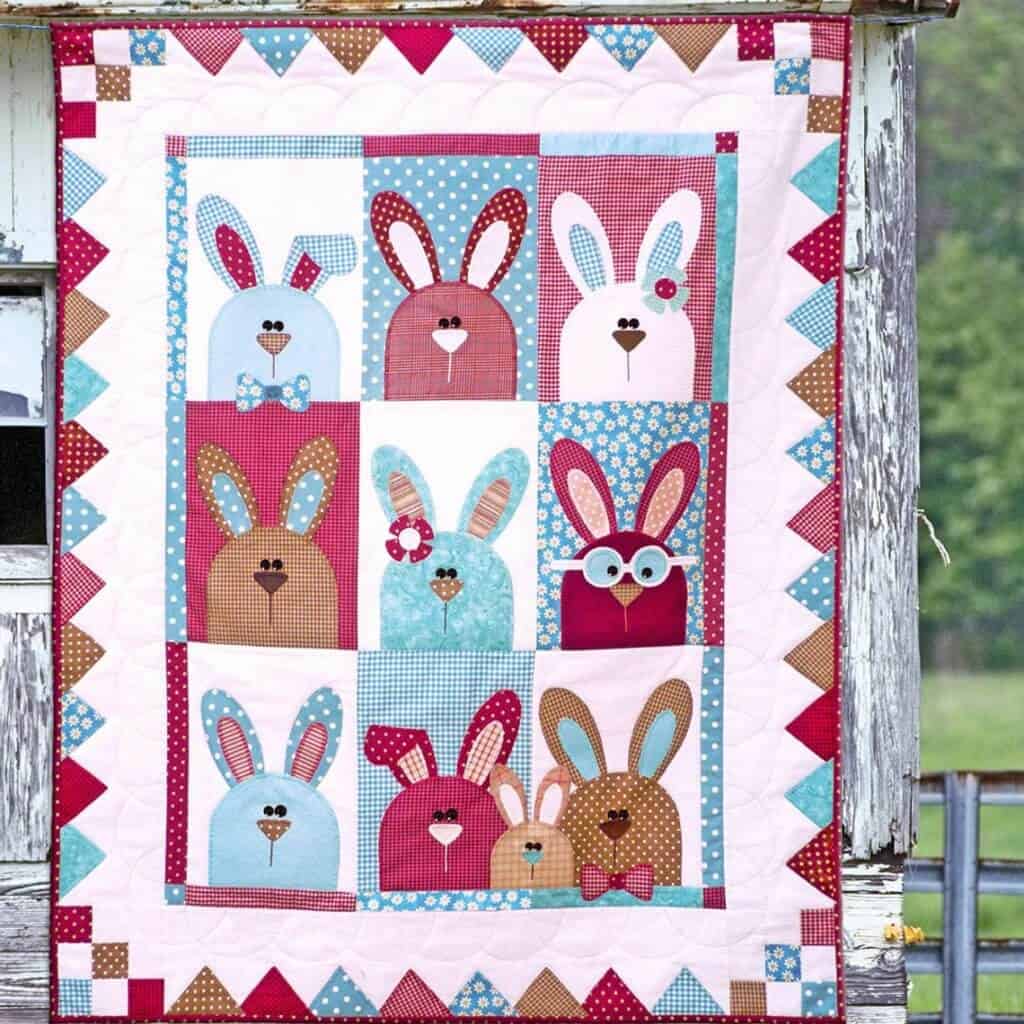
25. The Bunny Bunch – These goofy applique bunnies combine for a super adorable Easter quilt.

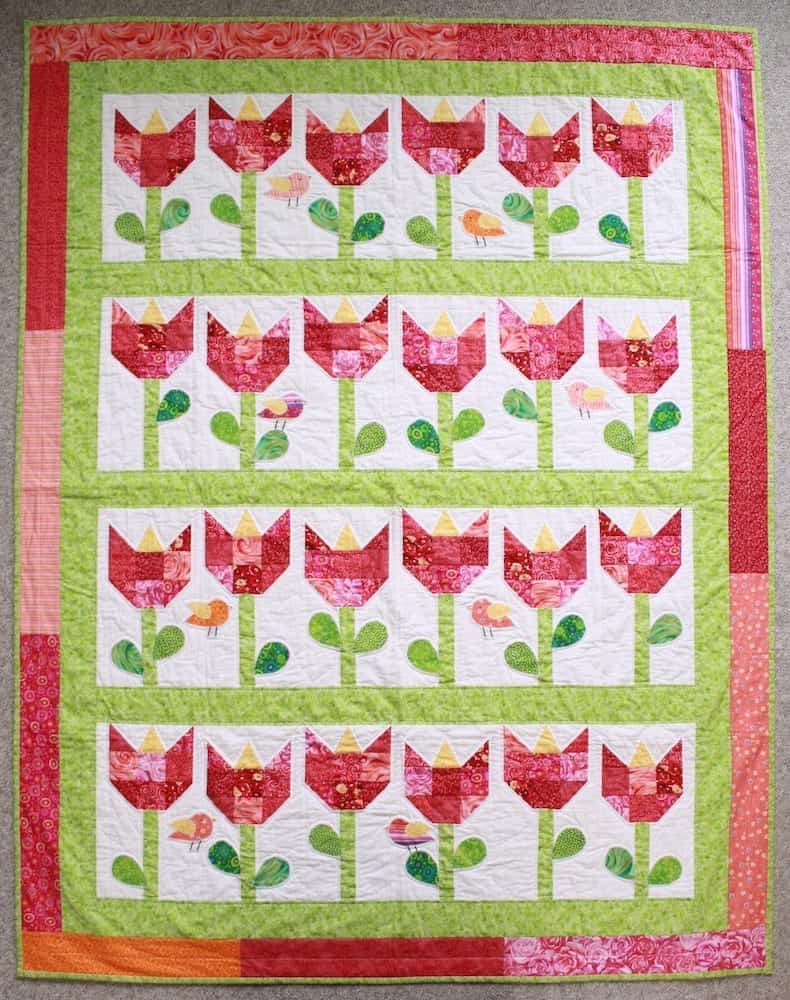
26. Tulip Quilt – Make a garden of tulips with this free Easter quilt pattern.

27. Bunny Applique Mini-Quilt – Hand quilting adds the perfect touch to this fun Easter mini quilt.

28. The Easter Parade Quilt Pattern is simply adorable and can be made as a table runner as well.

If you like these Easter Bunny Quilt Patterns you may also like 50+ Easter Sewing and Craft Projects to Make.

Pin 25+ Easter Bunny Quilt Patterns to Make Later

25+-Easter-Bunny-Quilt-Patterns

Easter, Holiday, Holiday, Quilt Patterns, Quilts, Season, Spring easter, quilt pattern, roundup

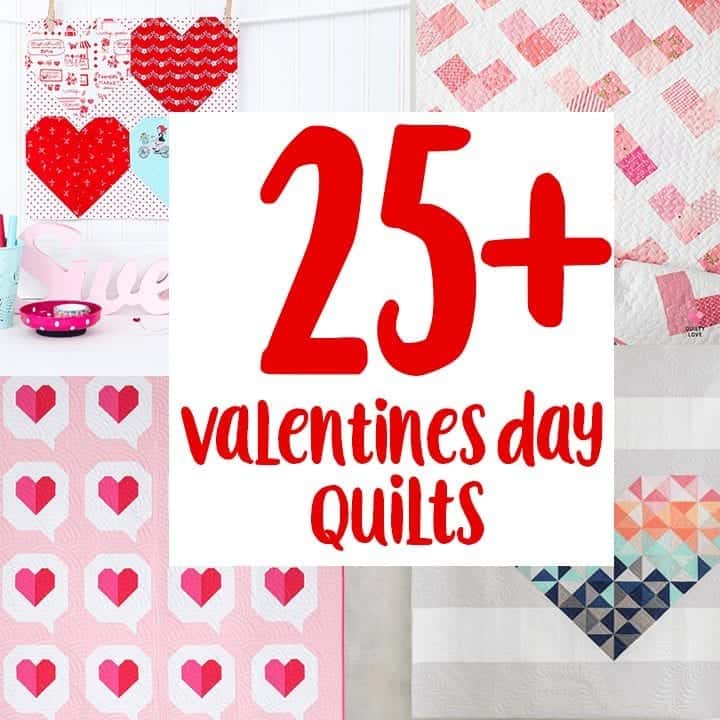
25+ Valentine Quilt Patterns with Hearts to Sew – Create Heartfelt DIY Quilts for Valentine’s Day

Jan 3, 2023 · Leave a Comment

25-valentines-day-quilt-patterns

Valentine’s Day is a time to celebrate love, and what better way to express your affection than through quilting? Whether you’re a seasoned quilter or a beginner looking for a creative project, sewing Valentine’s Day quilt patterns can be a heartwarming and enjoyable experience. In this post, we’re excited to share a curated collection of 25+ beautiful Valentine’s Day Heart Quilt Patterns that you can sew to add a touch of love and warmth to your home or to create heartfelt gifts for your loved ones. Explore these Valentine’s Day quilt patterns, each adorned with charming hearts and designed to infuse your celebrations with romance and creativity.

valentines-quilt-patterns

You might also like this list of 50+ Valentine’s Day Sewing Projects!

Table of Contents

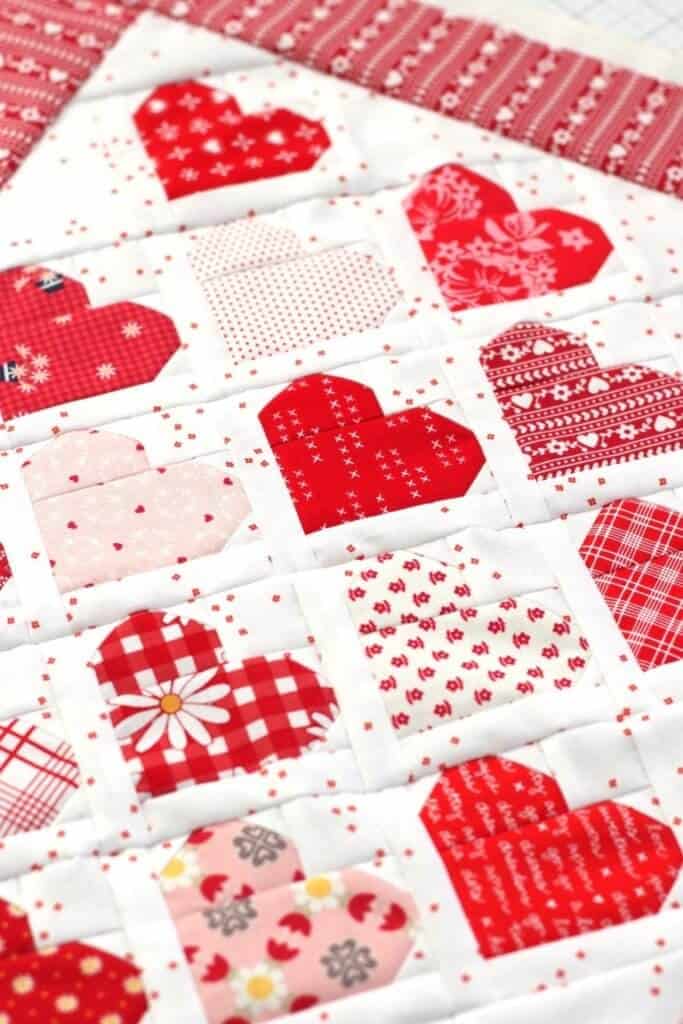
  1. Heart Mini Quilt
  2. Button Up Baby Valentine’s Heart Quilt Pattern
  3. Quilted Heart Block Pillow Pattern
  4. I Heart You Quilt Pattern
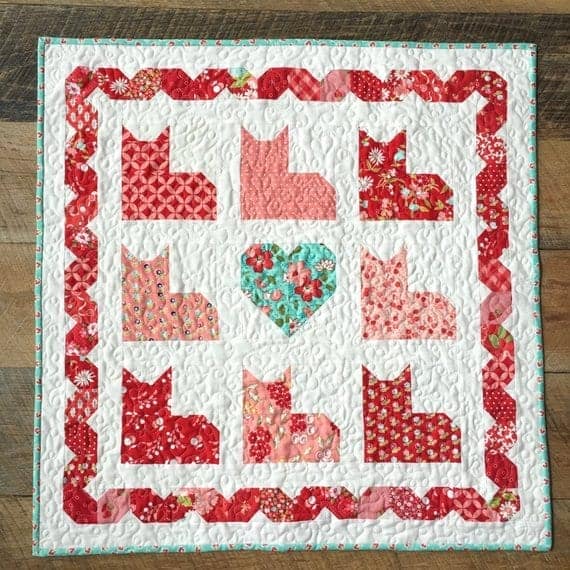
  5. Kitty Love Quilt
  6. Down Memory Lane Hearts Quilt
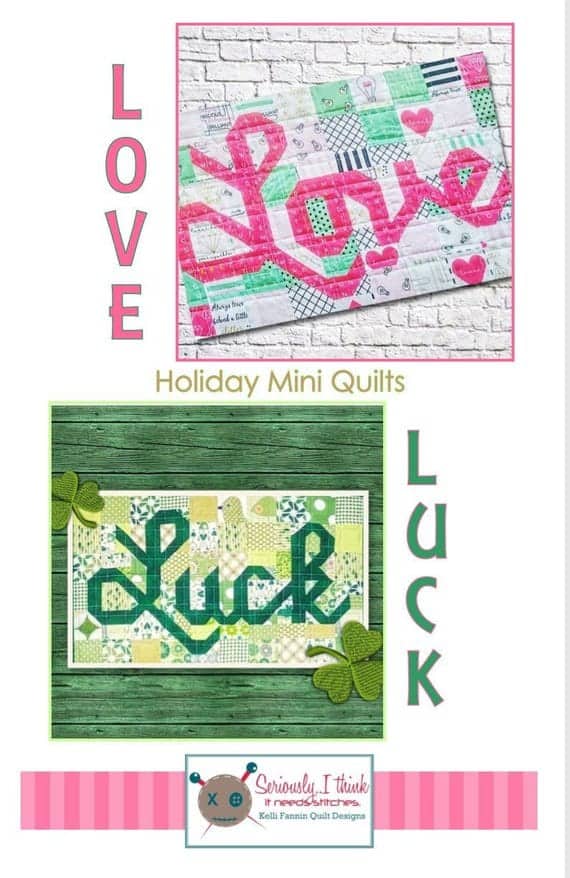
  7. Love Luck Holiday Mini Quilt
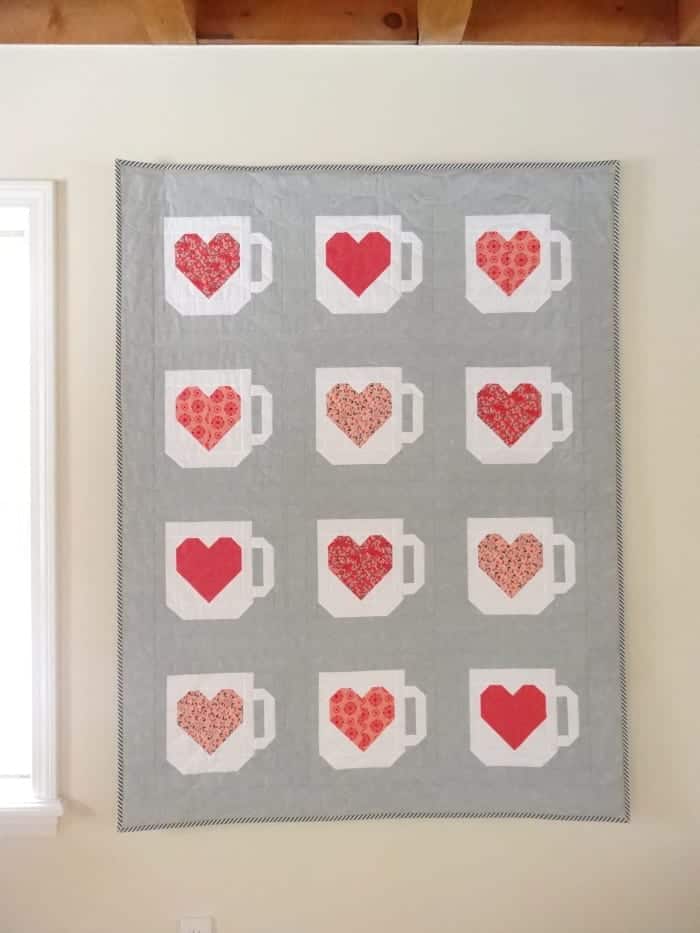
  8. A little Break
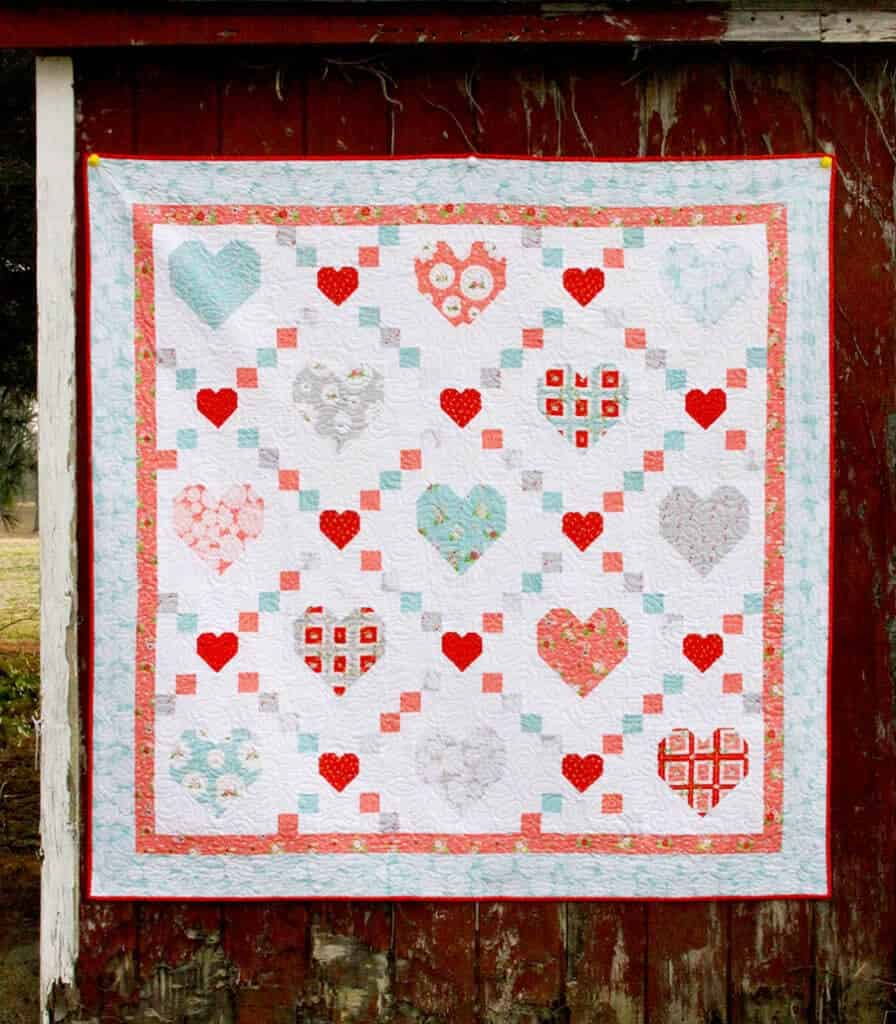
  9. Sweet Heart Quilt
  10. Modern Triangle Heart Quilt
  11. Peace and Love Quilt
  12. Hearts and Kisses Vintage Keepsake Quilt
  13. Quilty Hearts
  14. Sweet Notes Quilt Pattern
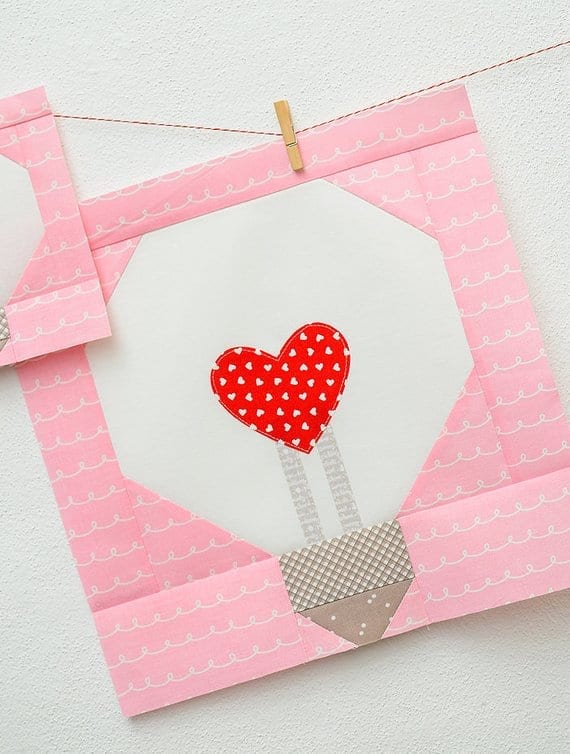
  15. Light of My Life Block
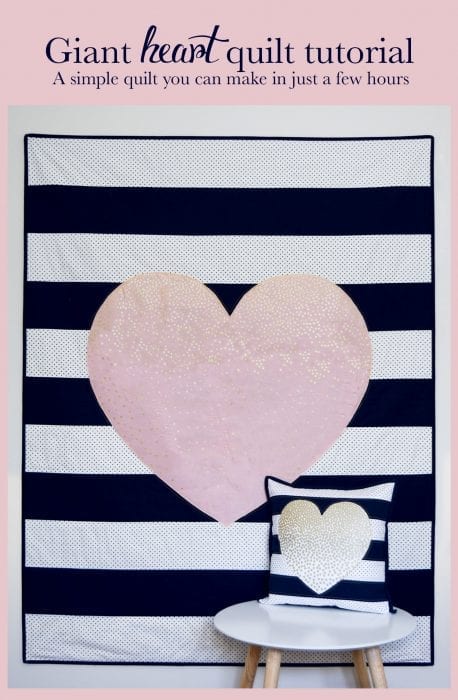
  16. Giant Heart Quilt
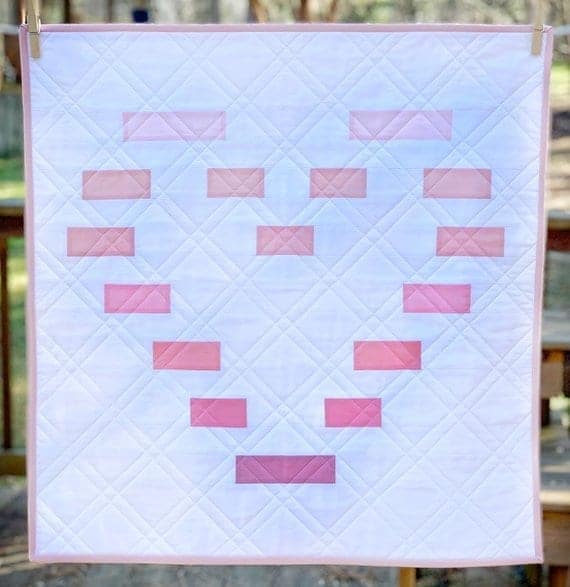
  17. Dashed Heart Mini Quilt
  18. Big Love Quilt
  19. Patchwork Heart Block
  20. Simple Hearts
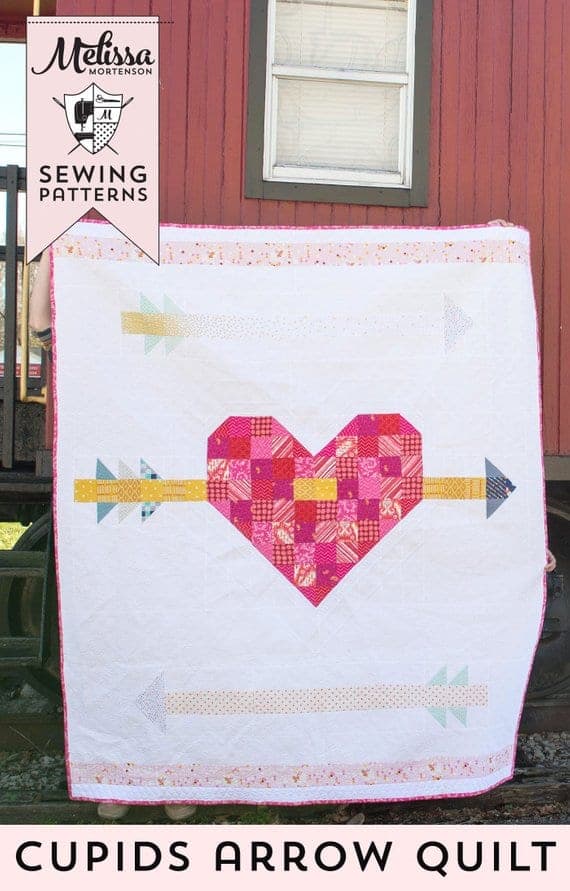
  21. Cupids Arrow
  22. Heartsome
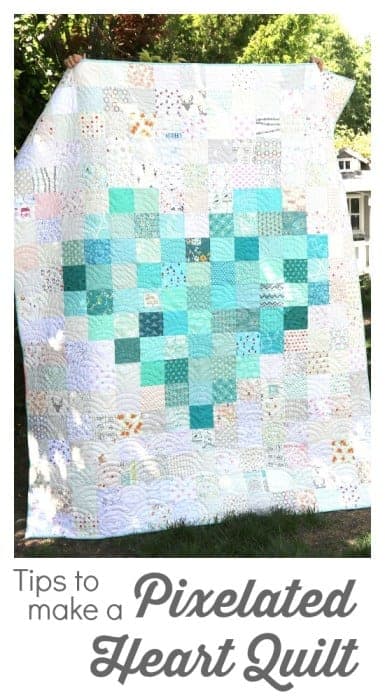
  23. Pixelated Heart Quilt
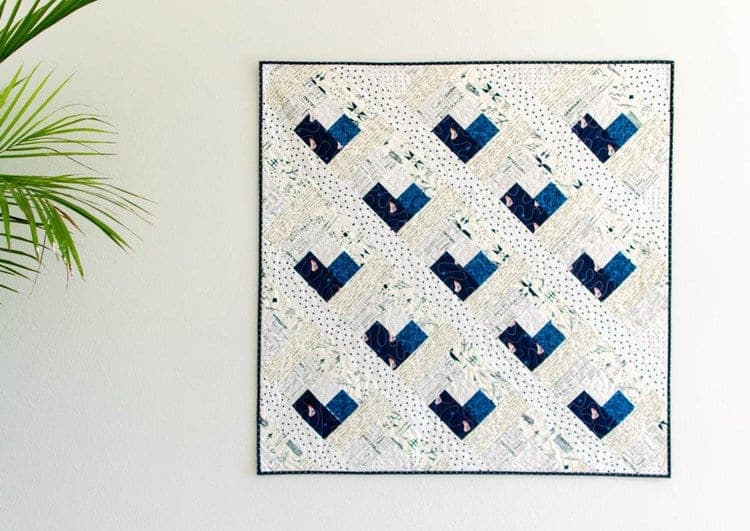
  24. Modern Heart Log Cabin Pattern
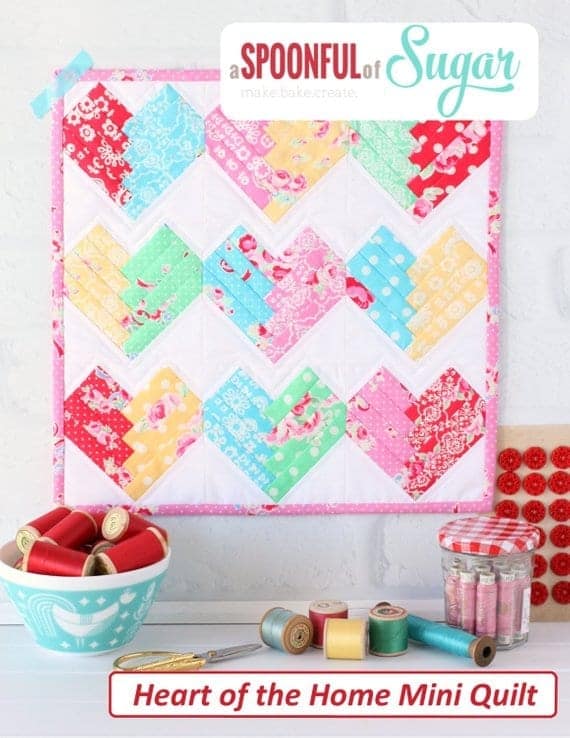
  25. Hearts of the Home Mini Quilt
  26. Giant Heart Quilt
  27. Heart and Home Mug Rug
  28. Cupid’s Arrow Quilt
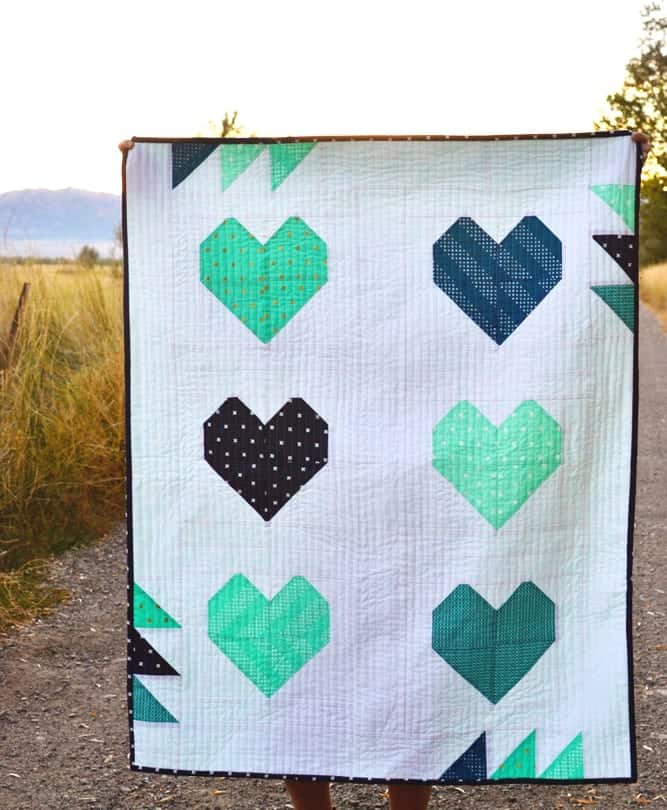
  29. Modern Heart Quilt
  30. You Might Also Like these Valentine’s Day Posts and Projects
valentines-day-mini-quilt-free-cut-files-cricut-maker

Heart Mini Quilt

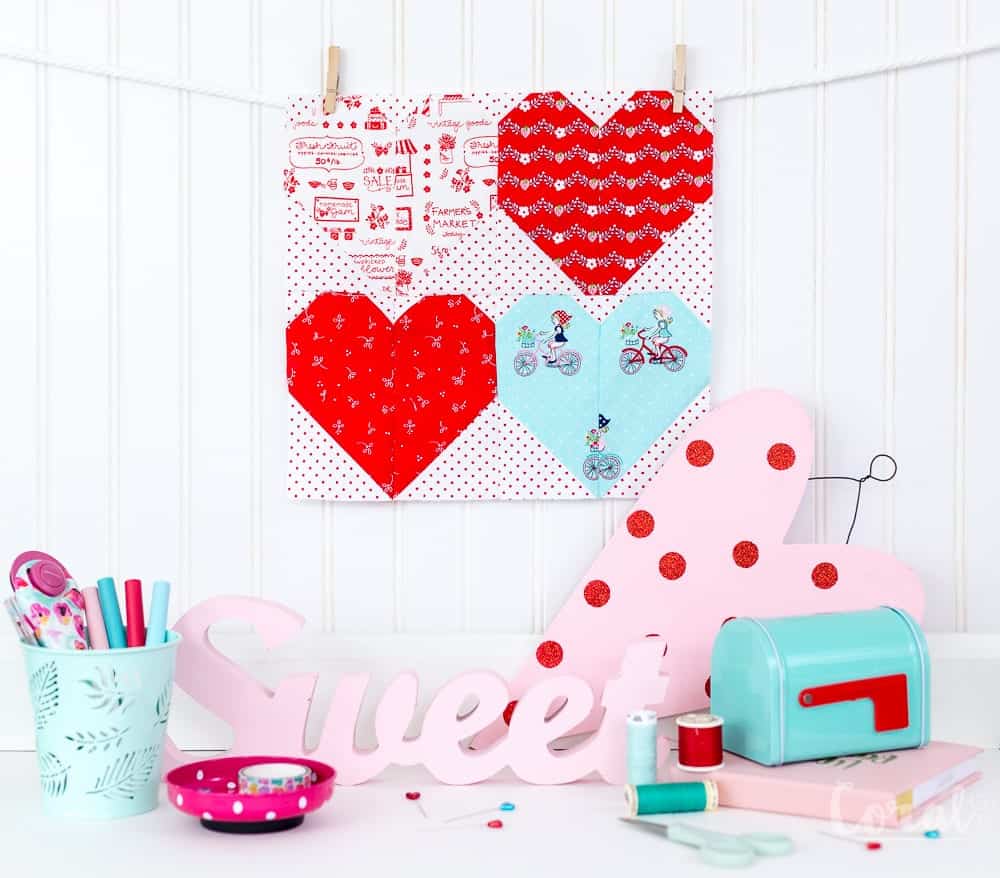
Heart Mini Quilt is the perfect Valentine’s Quilt Pattern to sew if you want a cute mini quilt that you can whip up quickly.

heart-quilt-pattern-rainbow-colors-valentines-day

Button Up Baby Valentine’s Heart Quilt Pattern

Break out the colors and make some adorable heart buttons with the Button Up Baby Valentine’s Heart Quilt Pattern you can also find more color inspiration and cute button heart quilt mockups in the blog post.

heart-block-pillow-pattern

Quilted Heart Block Pillow Pattern

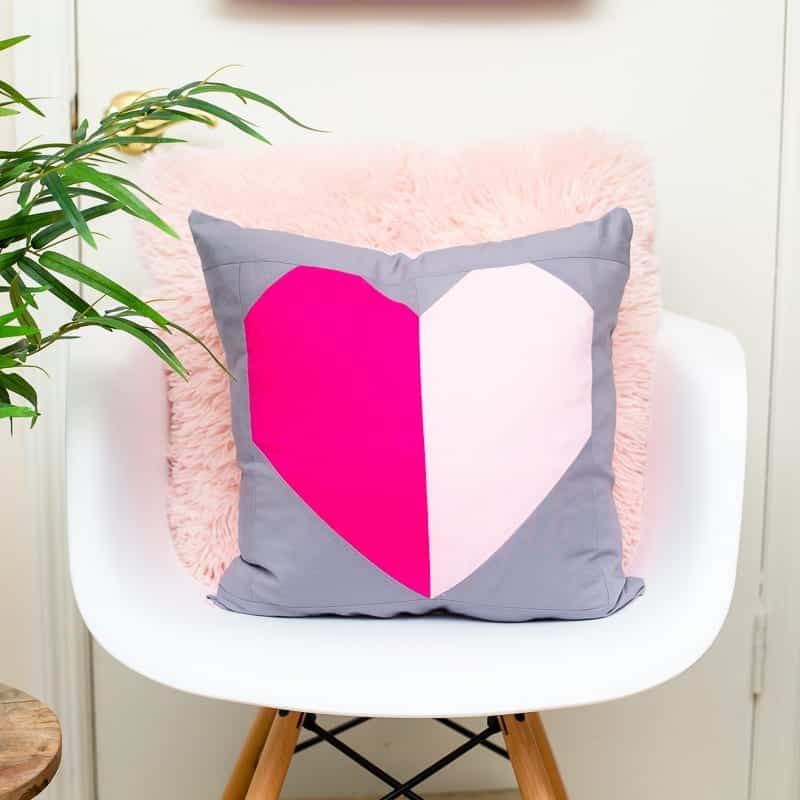
Quilted Heart Block Pillow Pattern. This Big Heart Pattern is a fun way to add a punch of color to your decor.

I-heart-you-quilt

I Heart You Quilt Pattern

I Heart You Quilt Pattern – This Valentine’s Quilt Pattern has taken the internet by storm this year! There are so many gorgeous versions all over the internet.

kitty-love-quilt

Kitty Love Quilt

Kitty Love Quilt-The perfect Valentine Quilt for the cat lady in your life.

down-memory-lane-quilt

Down Memory Lane Hearts Quilt

Down Memory Lane Hearts Quilt– this quilt pattern has such vintage feel to it!

Love Luck Holiday Mini Quilt

Love Luck Holiday Mini Quilt – these adorable mini quilts are perfect for table decor!

A little Break

A little Break from Satomi Quilts. This is one of my favorite new Valentine Quilt Patterns that I spotted this year. The mugs are too cute.

Sweet Heart Quilt

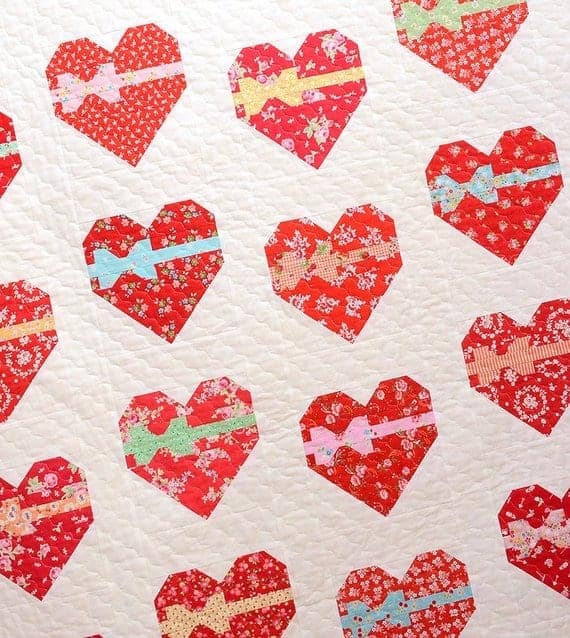
Sweet Heart Quilt – Just like a chocolate heart candy box all wrapped in a bow!

modern-triangle-heart-quilt

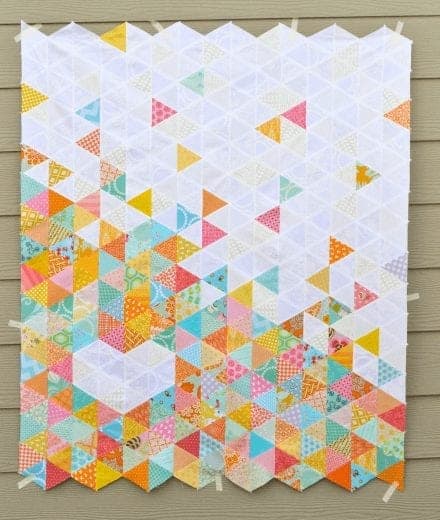
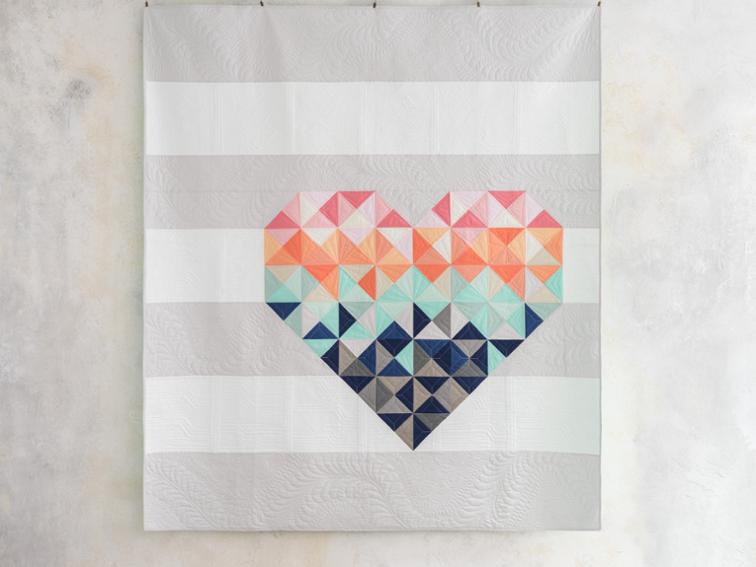
Modern Triangle Heart Quilt

Modern Triangle Heart Quilt from Must Love Quilts. If you like modern quilts, this heart quilt version is totally your thing.

Peace and Love Quilt

Peace and Love Quilt by The Cloth Parcel. This Valentine Heart Quilt even comes as a kit.

Heart-and-Kisses-Quilt

Hearts and Kisses Vintage Keepsake Quilt

Hearts and Kisses Vintage Keepsake Quilt from Bev at Flamingo Toes. Such a beautiful and romantic feel to this heart quilt.

Quilty Hearts

Quilty Hearts – This quilt is perfect for beginners!

Sweet Notes Quilt Pattern

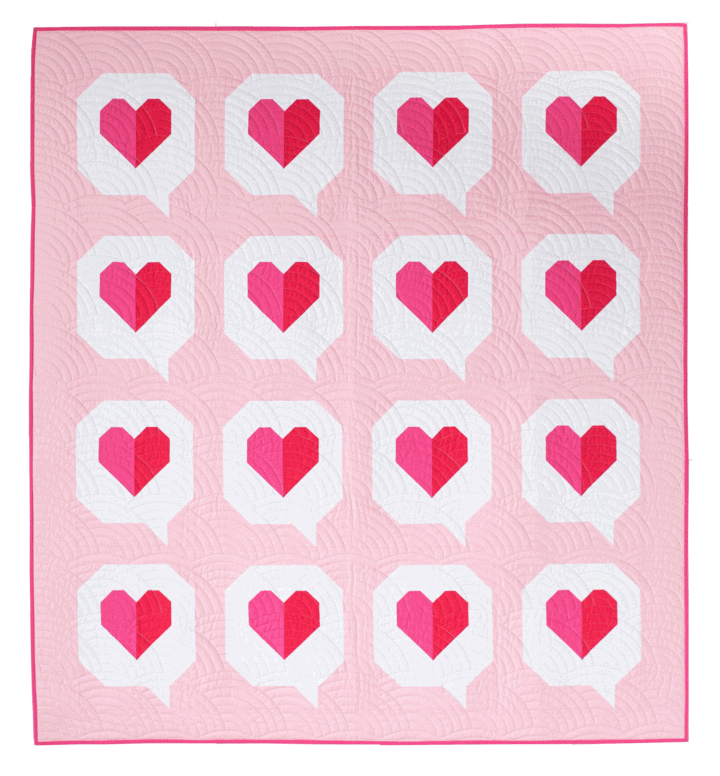
This is a playful take on the classic conversation hearts. The Sweet Notes Quilt blocks are made using Foundation Paper Piecing.

light-of-my-life-quilt-block

Light of My Life Block

Light of My Life Block – Isn’t this quilt block genius?

modern-giant-heart-quilt

Giant Heart Quilt

Giant Heart Quilt – This Valentine Quilt has to be one of the quickest sews out there.

Dashed Heart Mini Quilt

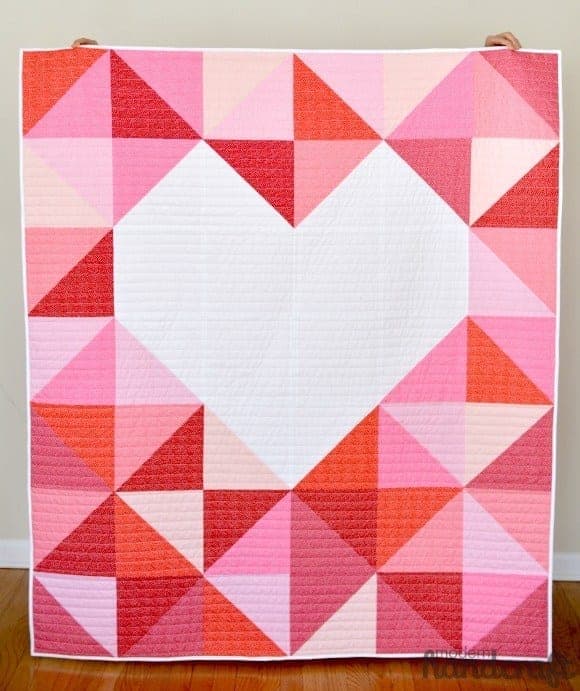
Big Love Quilt

Big Love Quilt by Modern Handcraft

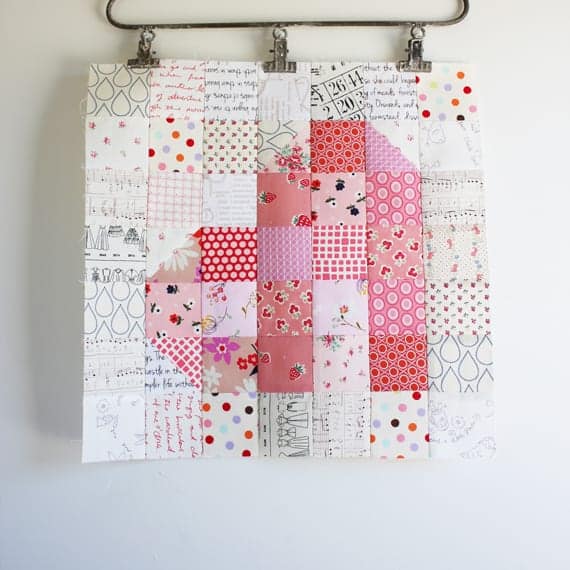
Patchwork Heart Block

Patchwork Heart Block from Nana Company which is perfect for using up scrap fabric.

simple-hearts-quilt

Simple Hearts

Simple Hearts by Cluck Cluck Sew. This is the OG of heart quilt patterns.

Cupids Arrow

Heartsome

Pixelated Heart Quilt

Modern Heart Log Cabin Pattern

Hearts of the Home Mini Quilt

Giant Heart Quilt

Heart and Home Mug Rug

Cupid’s Arrow Quilt

Modern Heart Quilt

You Might Also Like these Valentine’s Day Posts and Projects

  • 50+ Valentine’s Day Sewing Projects
  • Candy Heart SVG Files
  • Valentine’s Day Embroidery Hoop Art with SVG Files

Holiday, Holiday, Quilt Patterns, Quilts, Valentines Day quilt round up, valentines day

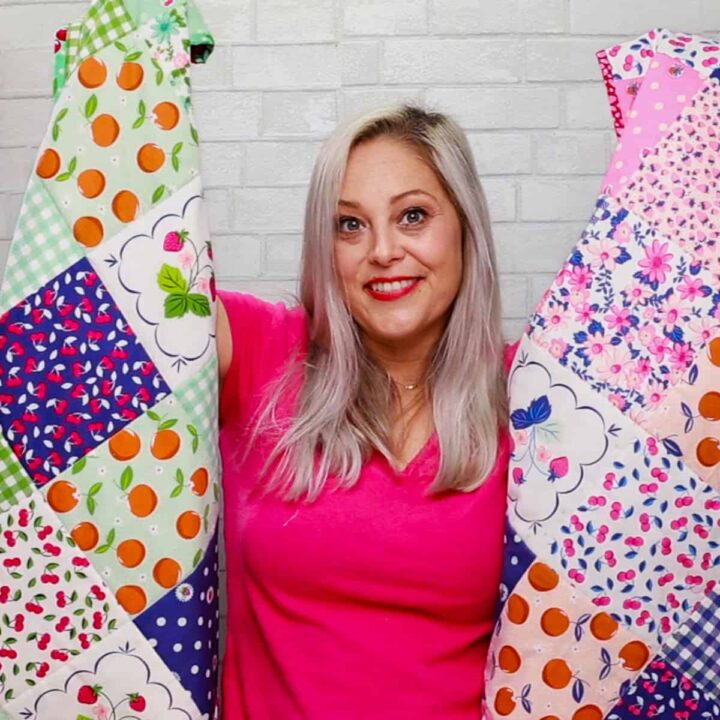
How to Make a Cheater Quilt

Nov 16, 2022 · 1 Comment

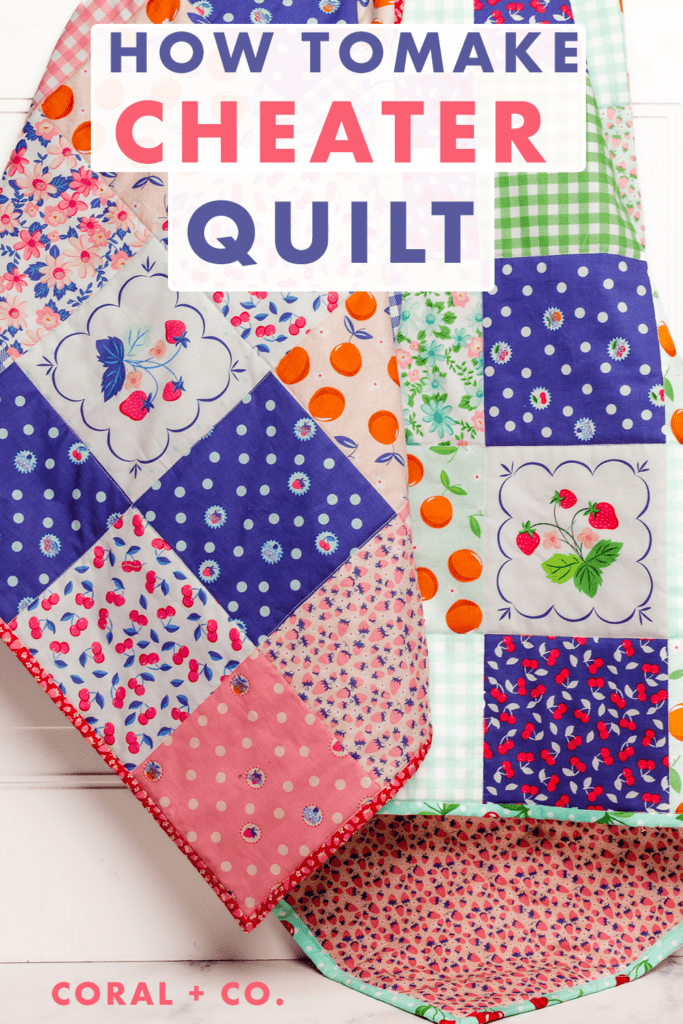
Learn how to make a simple cheater quilt top with a pre-printed fabric panel. Have you ever wanted to make a really really fast quilt? Then the cheater quilt is your answer. It uses a pre-printed fabric panel so you get to skip piecing the quilt top and get right to the quilting.

With the pre-printed fabric panel, all of your fabrics coordinate and you don’t have to work about crooked seams and wonky piecing. It will look perfect! Plus you will learn to steps to making your very own quilt.

I have made a really in-depth tutorial explaining all of the steps to making the cheater quilt. A lot of these steps are assuming that you have never made a quilt before, so this post and video are going to hold your hand and walk you through the entire process. Be warned this is a long post. However I have made a table of contents, so that you can simply click the link to the part you want to go to, and skip the parts you don’t need.

The video will walk you through every step as well, along with some of my favorite tips for quilting. So if this is your first quilt or you are still getting your feet wet in the quilting world, I suggest you check it out.

I have also provided some more easy baby and quilting projects you might like as well some some great beginner quilting information.

More Projects You Might Like

  • Simple Squares Baby Quilt Pattern
  • Sherpa Fleece Baby Blanket Tutorial
  • Swiss Cross Baby Quilt Pattern

Quilting Tips

  • Must Have Beginner Quilt Supplies
  • How to Use a Rotary Blade Cutter
  • How to Choose the Right Sewing Machine Needle for Quilting

Table of contents

  • More Projects You Might Like
  • Quilting Tips
  • What is a Cheater Quilt?
  • Supplies
  • Cheater Quilt Instructions
    • Fabric Tips
    • Make the Quilt Sandwich
    • Pin Baste the Layers
    • Quilt the Top
    • Make the Quilt Binding
    • Attach the Quilt Binding
    • Sew the Ends Together
    • Make a Mitered Corner
    • Fold the Binding to the Back
    • Machine Stitch the Quilt Binding Back
  • Watch the Video on Youtube
  • Print the Instructions
  • Pin to Save for Later

What is a Cheater Quilt?

A cheater quilt is a pre-printed fabric panel that has a design that imitates the look of a pieced quilt top. This allows you to skip the piecing process and skip ahead to make the rest of the quilt. The cheater quilt top can feature any large geometric shapes such as squares, lines, or hectagons, otherwise knows as hexies.

Supplies

  • Cheater Quilt Fabric Panel – 36″ x 36″ (You may need more than one depending on the panel size) – I used the Summer Picnic Panels in this quilt. You can find several different varieties on etsy.
  • Crib Size Batting
  • 40″ x 40″ Backing Fabric
  • 1/2 Yard Fabric for Binding

Cheater Quilt Instructions

Fabric Tips

***Be sure to starch and press all fabrics before getting started. There is no need to pre-wash the fabric. Part of the beauty of a quilt is the crinkle that comes after the fabric and batting shrink during the first wash.

Make the Quilt Sandwich

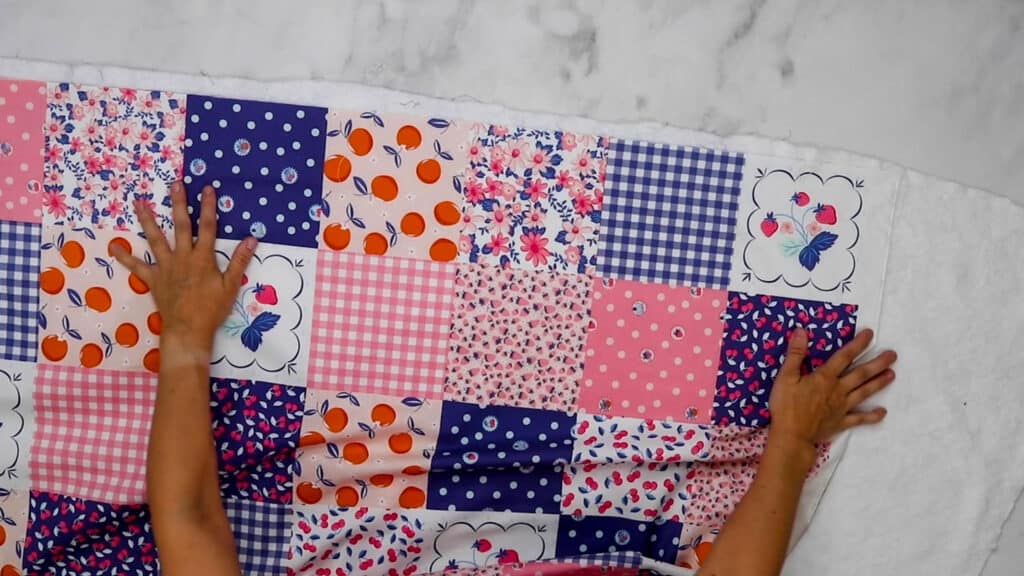
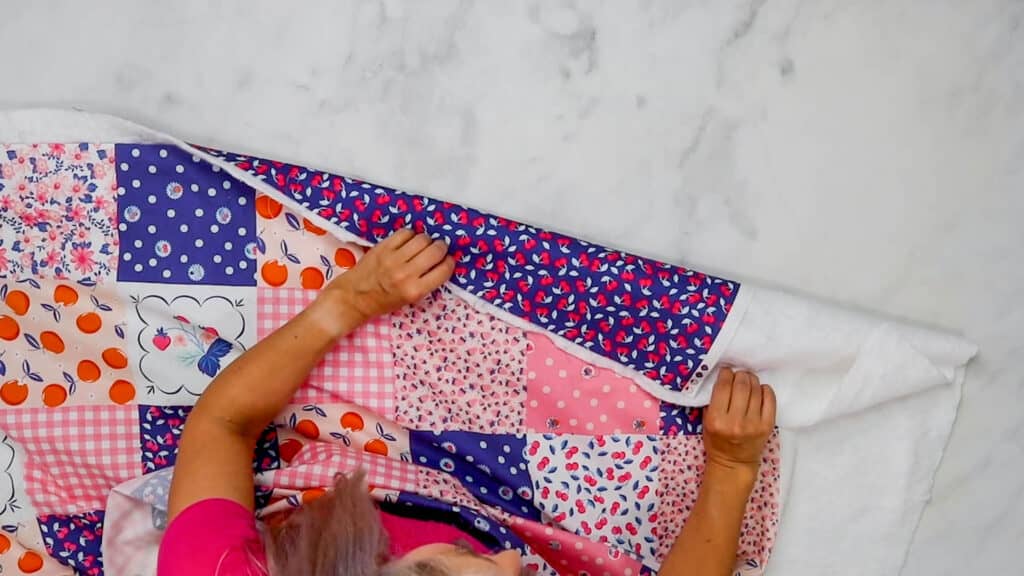
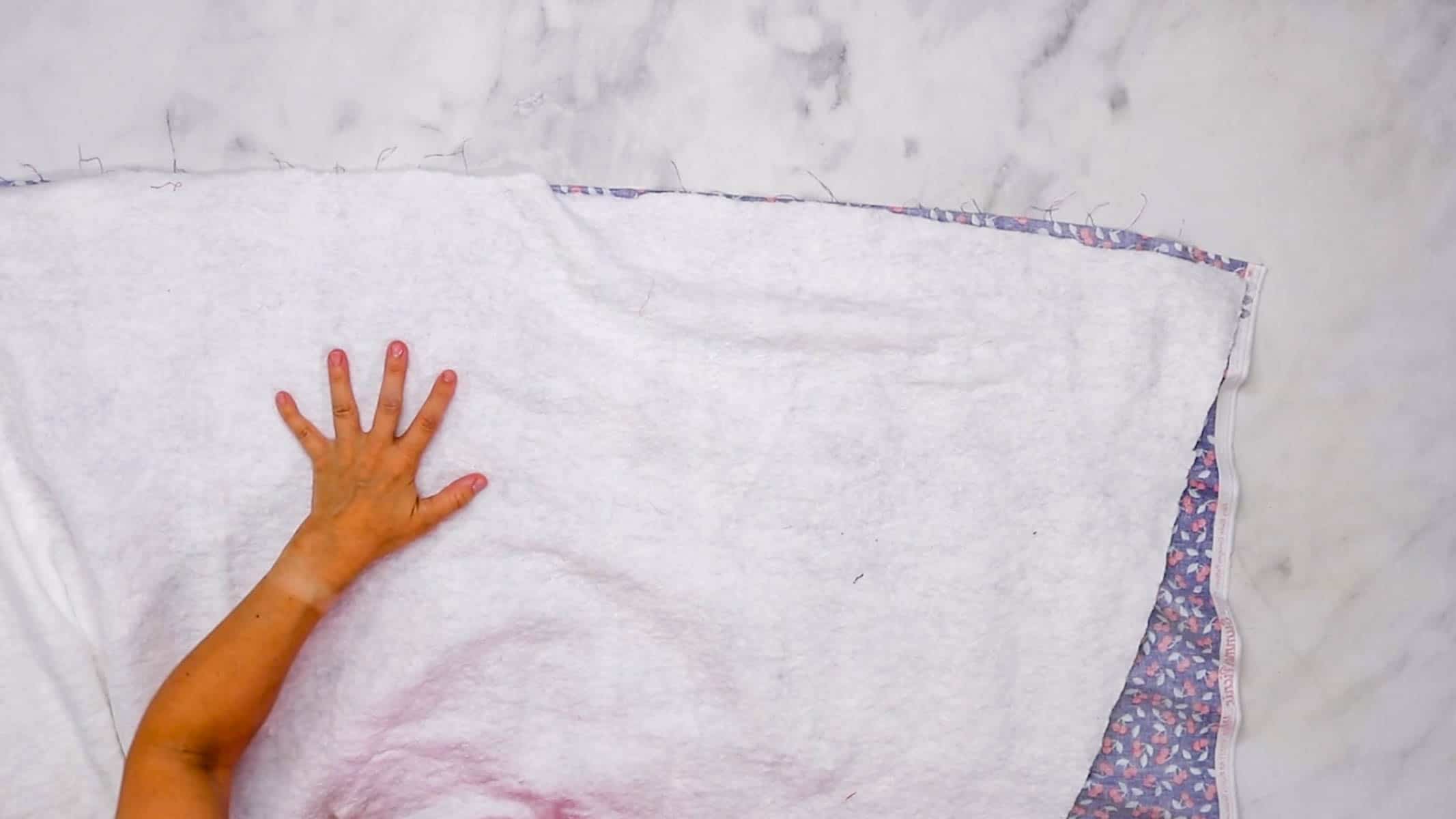
Step 1 – Place the backing fabric wrong side up.

Step 2 – Lay the batting on top of the backing fabric. The backing fabric can extend past the batting or lay even with it. Smooth all of the wrinkles from the batting and the backing fabric.

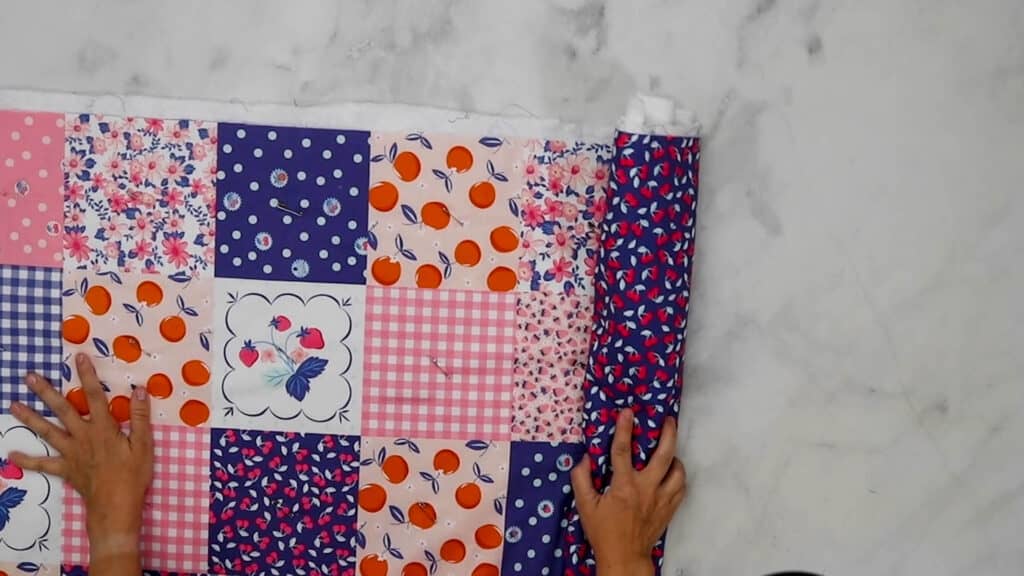
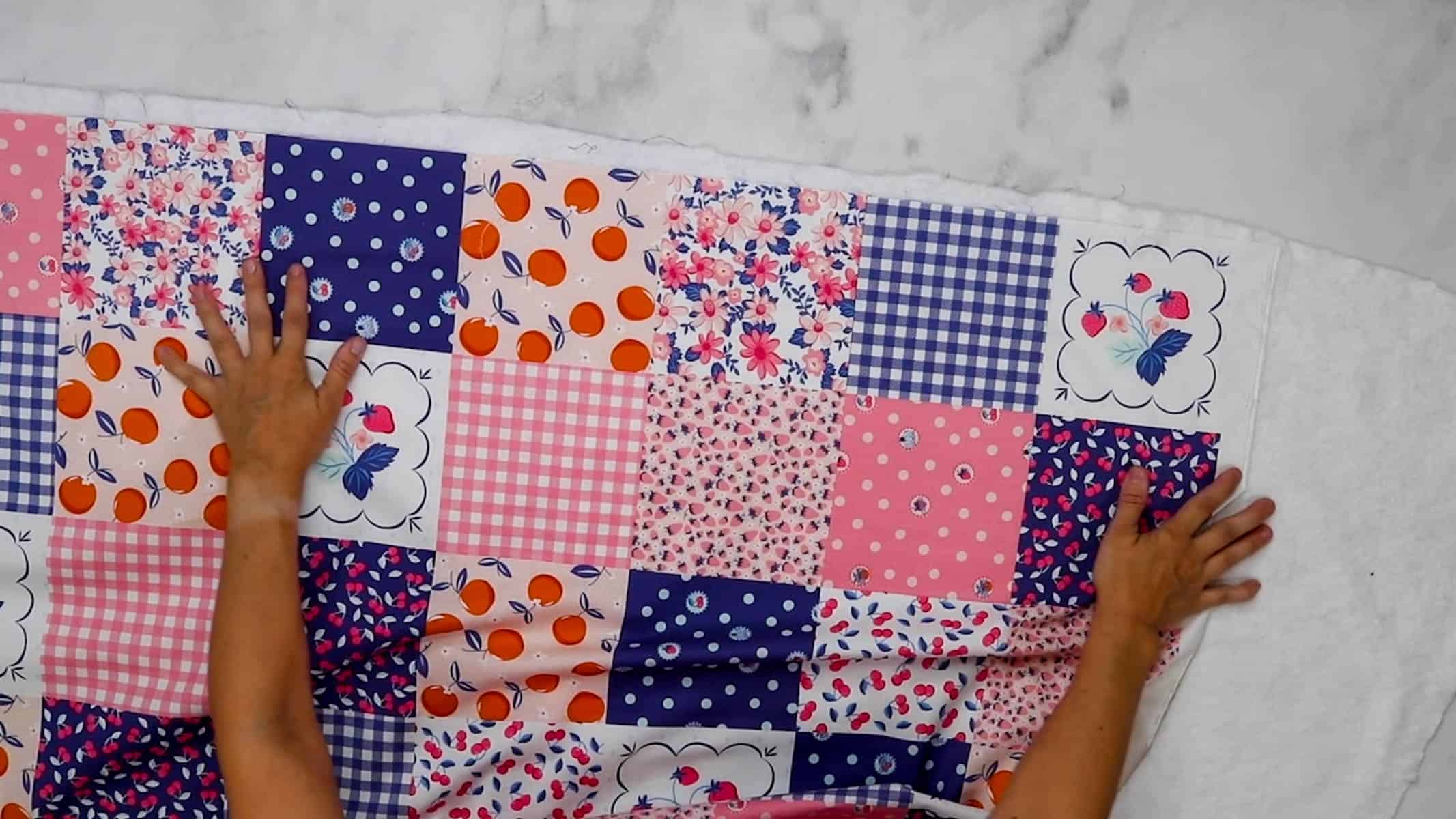
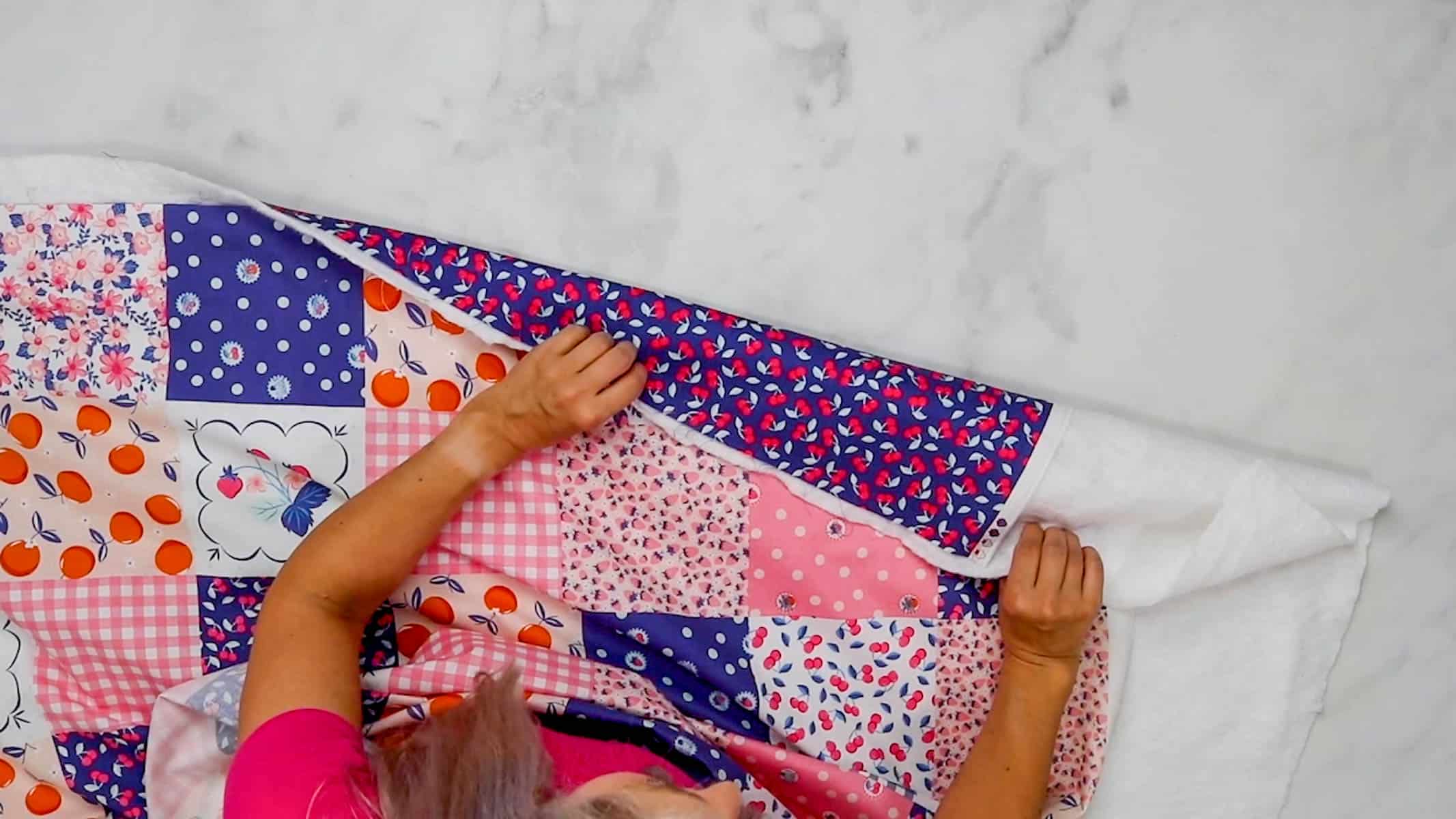
Step 3 – Place the fabric panel on top of the batting right side up. Smooth all the wrinkles from the fabric panel.

Step 4 – Check to make sure the batting and backing are several inches wider than the fabric panel. Just to note – my fabric panel was larger than the quilt size I was making, so it was ok if it did not extend past the fabric panel because I was going to cut off some of the panel.

Pin Baste the Layers

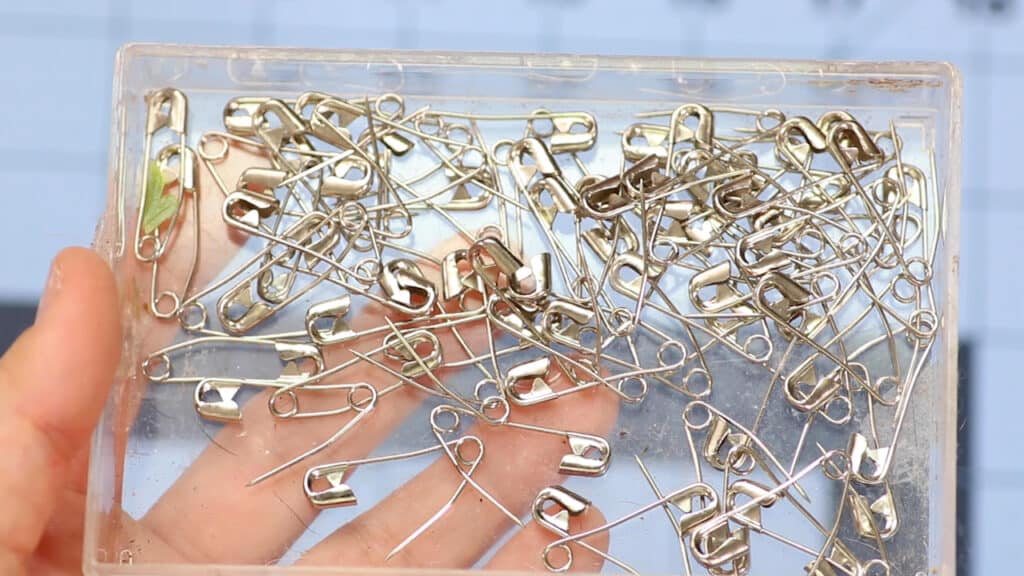
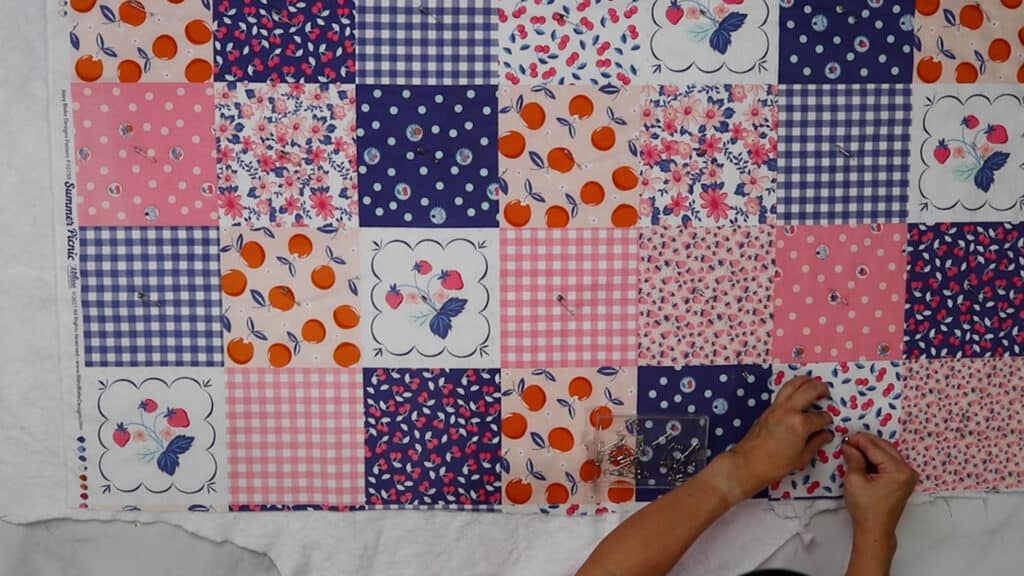
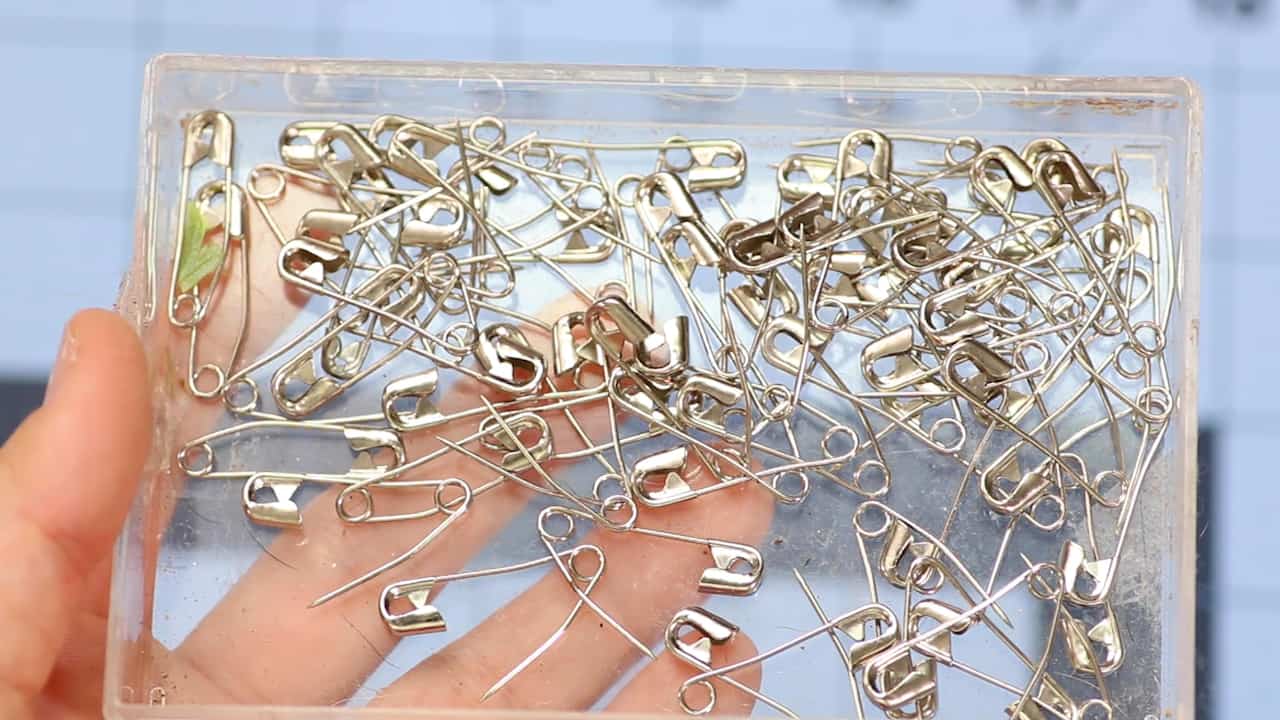
Step 5 – Get out your basting pins. There are several methods to baste a quilt, but the easiest is to use basting pins. These are special quilting pins that have a curve to help you pin and close them without killing your fingers.

Step 6 – Place the pins every 5 to 6 inches of the quilt top through all three layers, both horizontally and vertically. This fabric panel had six inch squares so I put a basting pin in the center of every square.

Quilt the Top

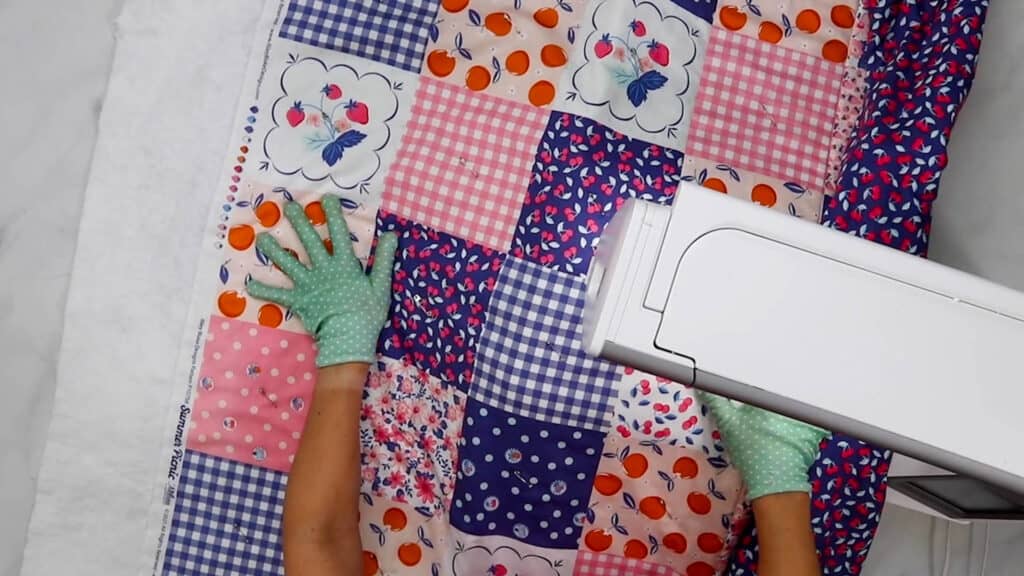
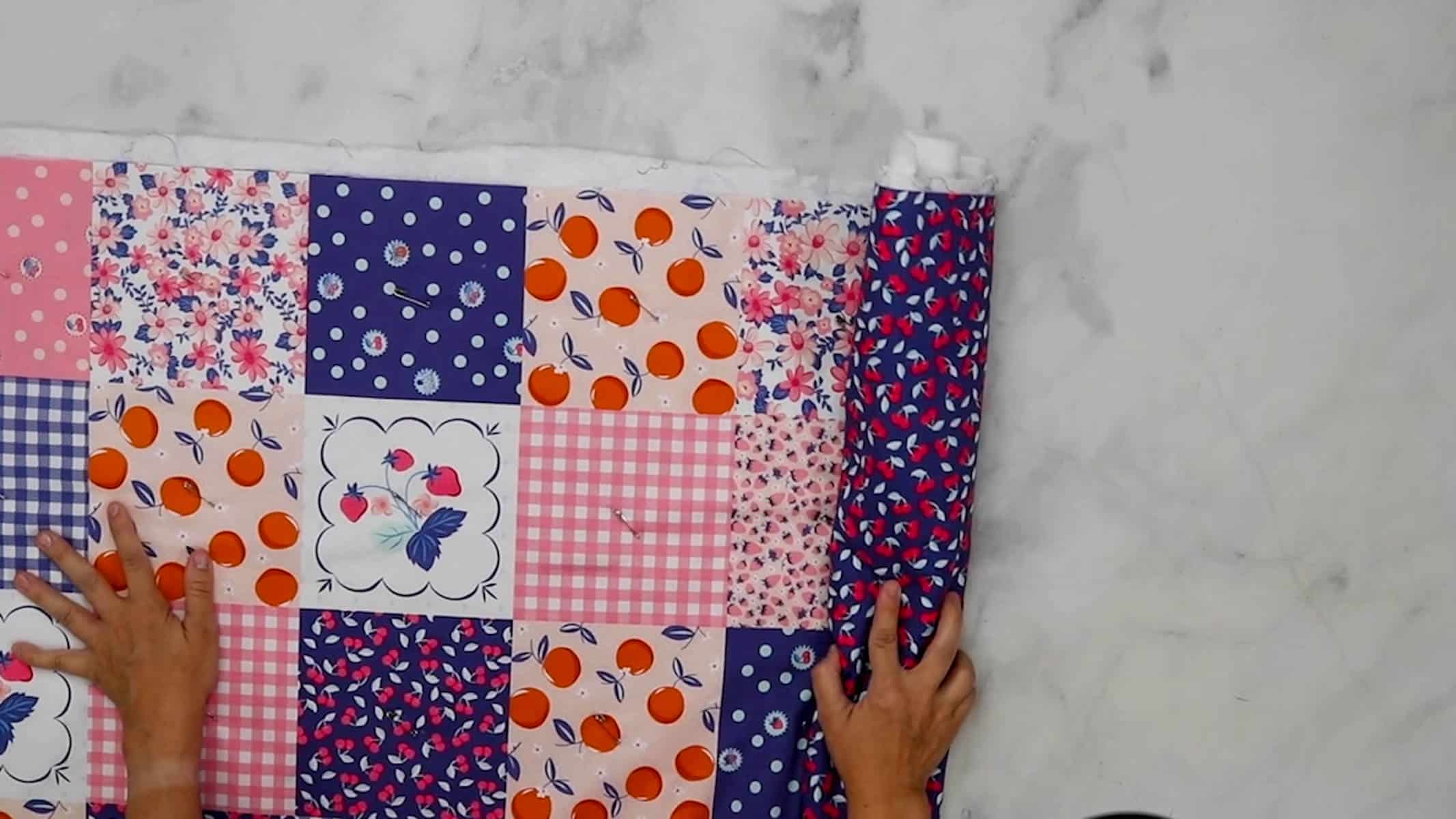
Step 7 – Roll up the edge of the quilt half way so it will neatly fit under the throat of your sewing machine.

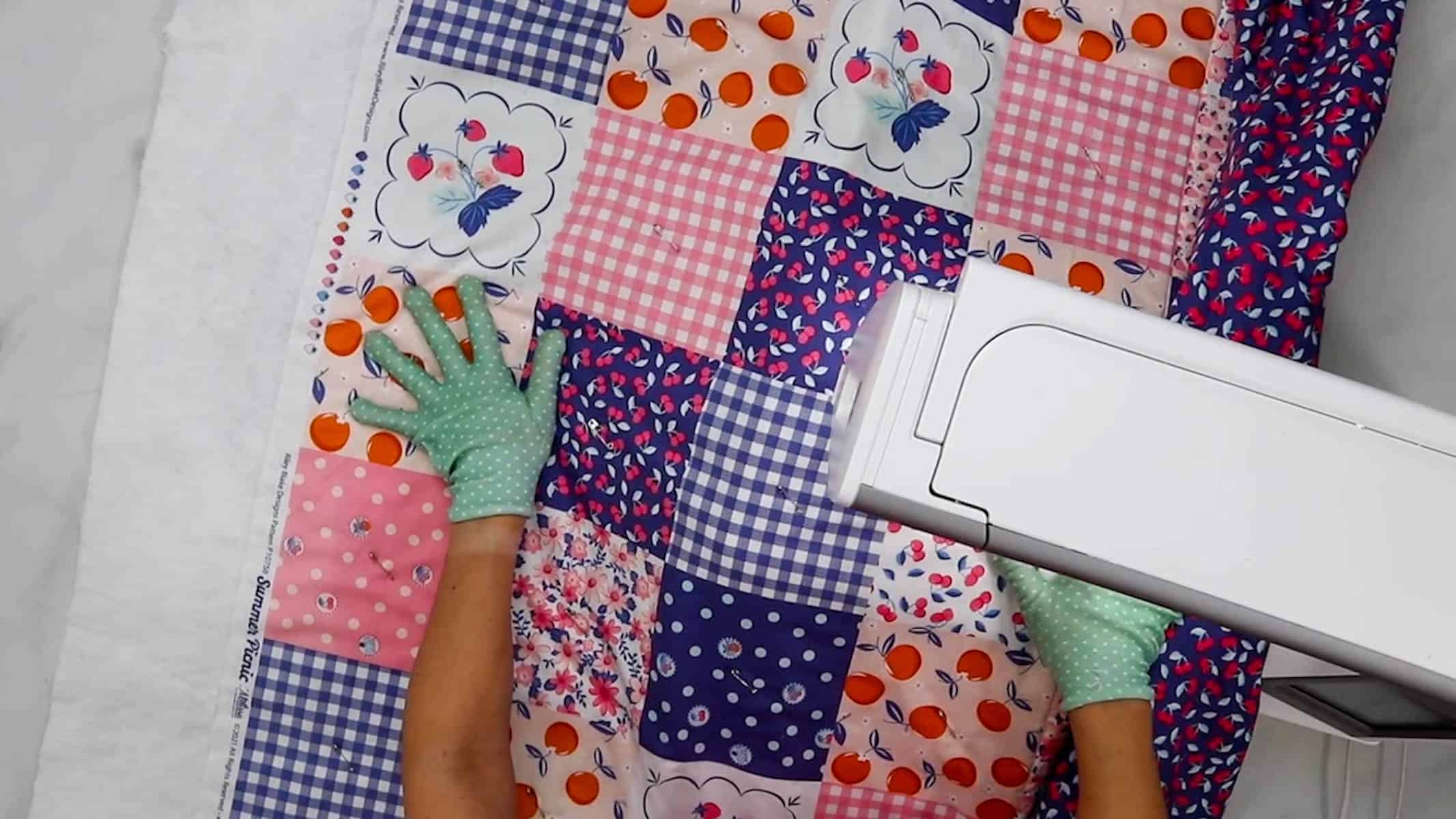
Step 8 – Starting in the middle of the quilt, sew straight lines down the quilt top following the lines of the squares. Start at the top of the quilt and sew down to the bottom. When finished return to the top and start again. Quilt from the middle of the quilt outward to help prevent bunching. When you have finished quilting the vertical lines, repeat the process for the horizontal lines to make quilted squares.

Make the Quilt Binding

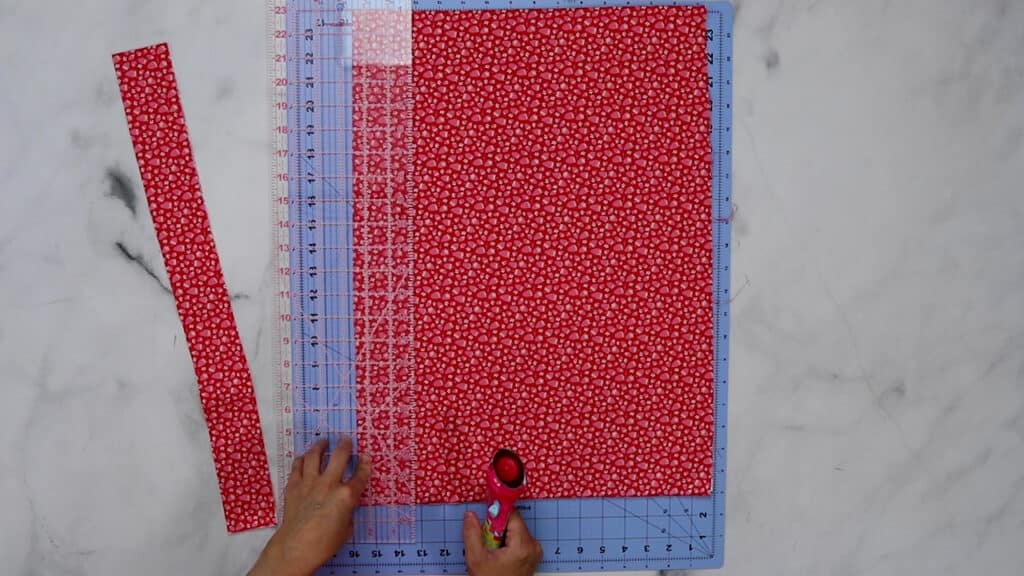
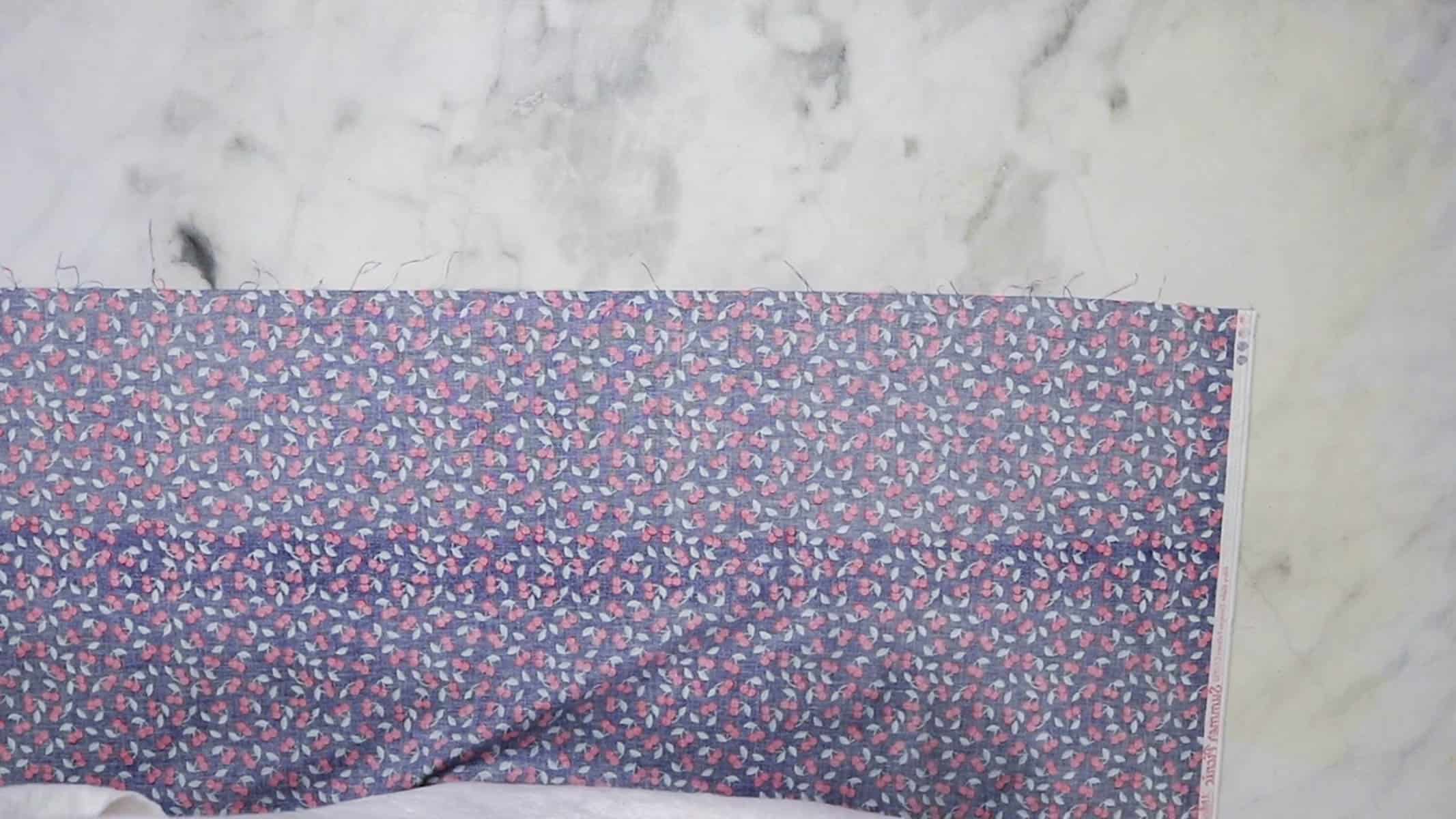
Step 9 – Fold the fabric in half, selvage to selvage. Trim the edge of the fabric before cutting your strips, so you have a straight edge to begin cutting the fabric. Cut three 2.5″ strips across the width of the fabric. Strips will be 42″ long and 2.5″ high.

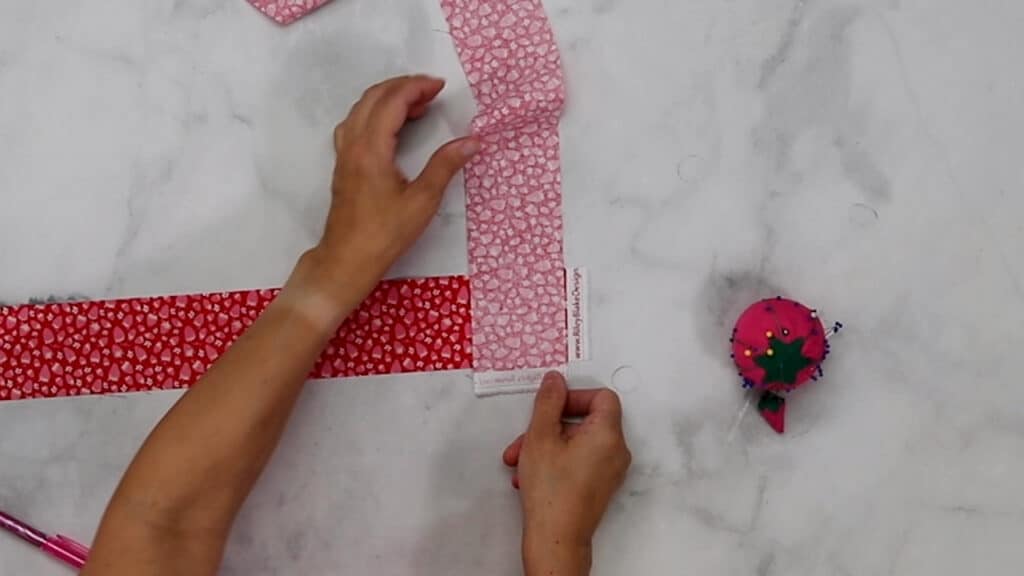
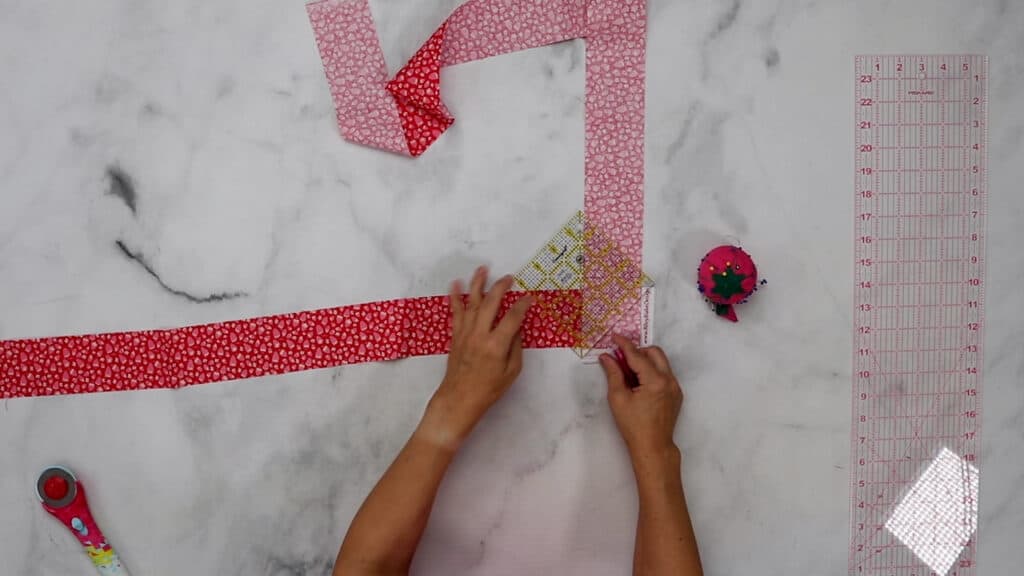
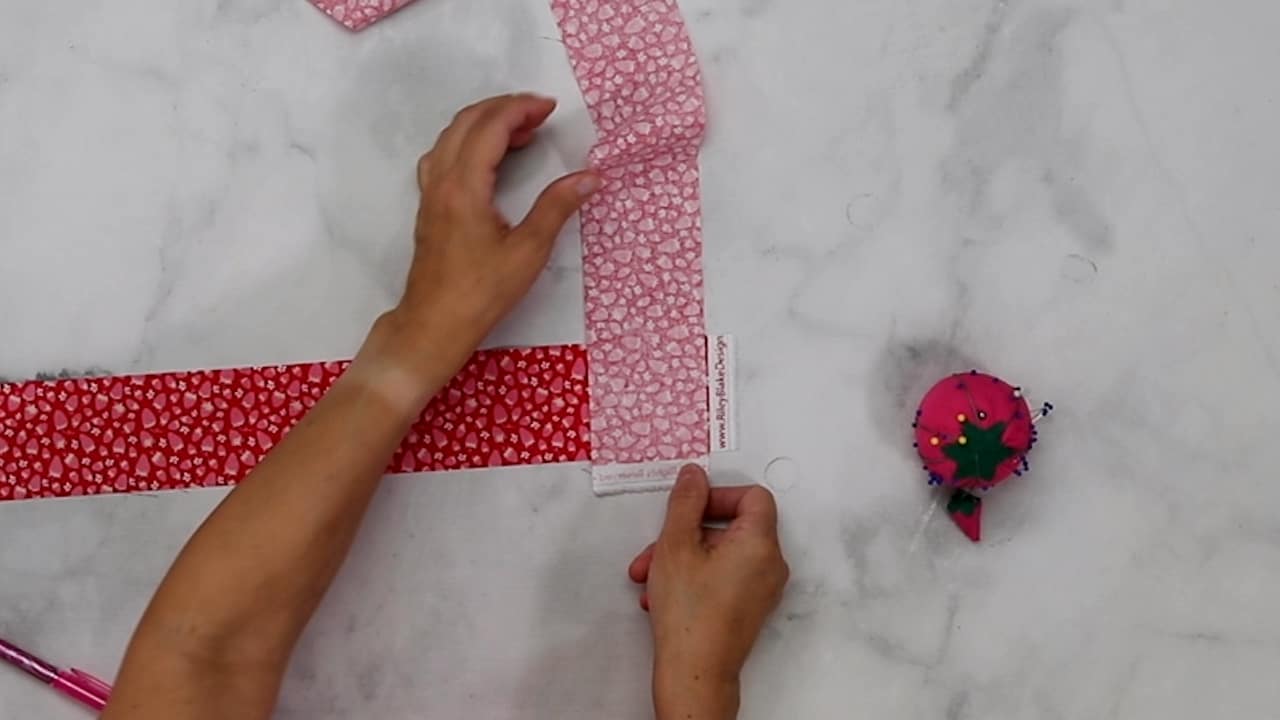
Step 10 – Place one of the strips horizontally, right side up. Place the second strip vertically, the wrong side up at the end of the right side of the first strip. Overlap the strips, so the selvages hang over the edges of the opposite strip.

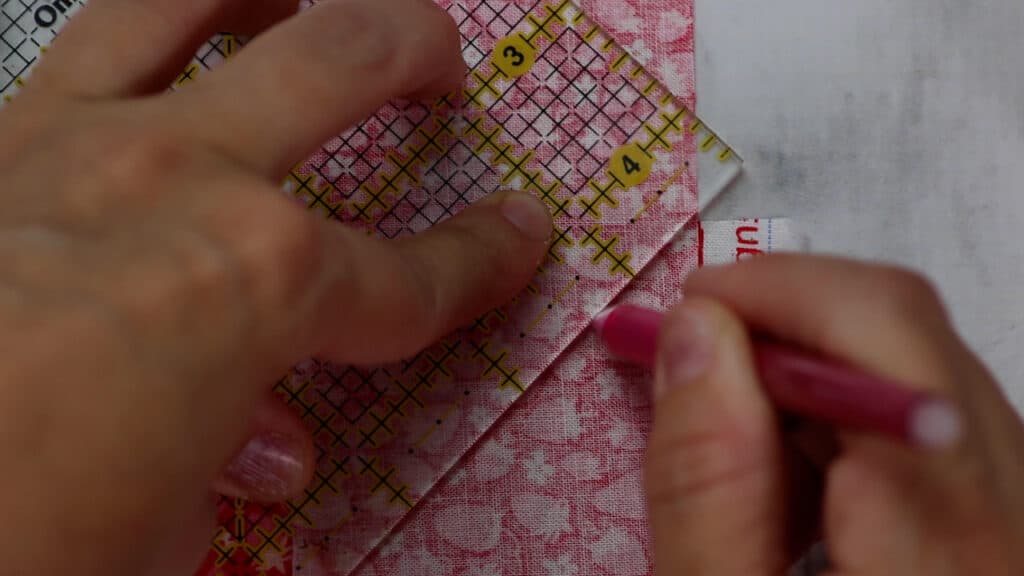
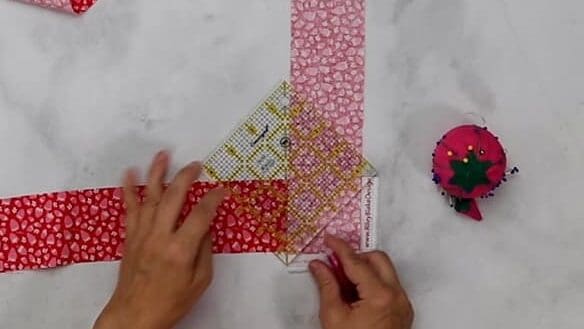
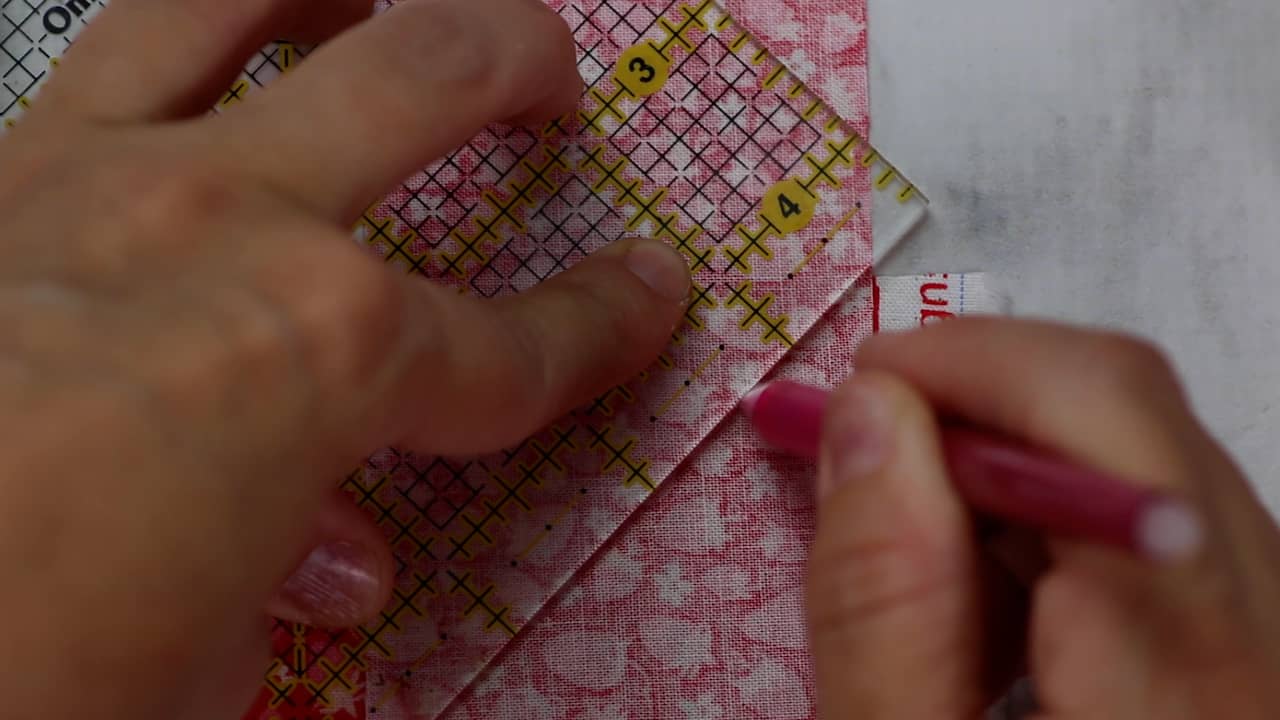
Step 11 – Place your ruler over the binding strips so the 45 degree line is vertical and perpendicular to the vertical strip. The edge of the ruler will be going diagonally from the upper right hand corner to the lower left hand corner.

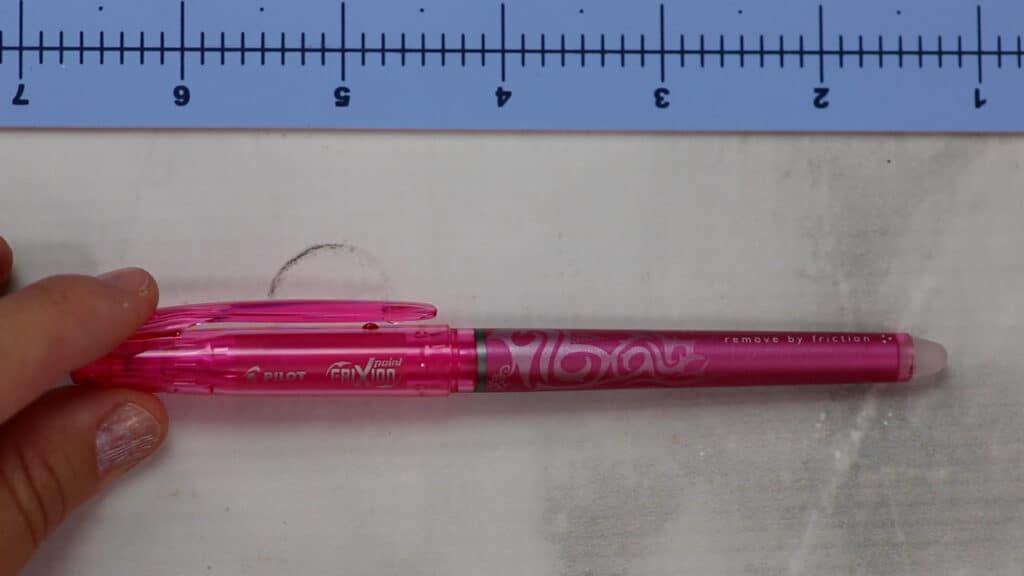
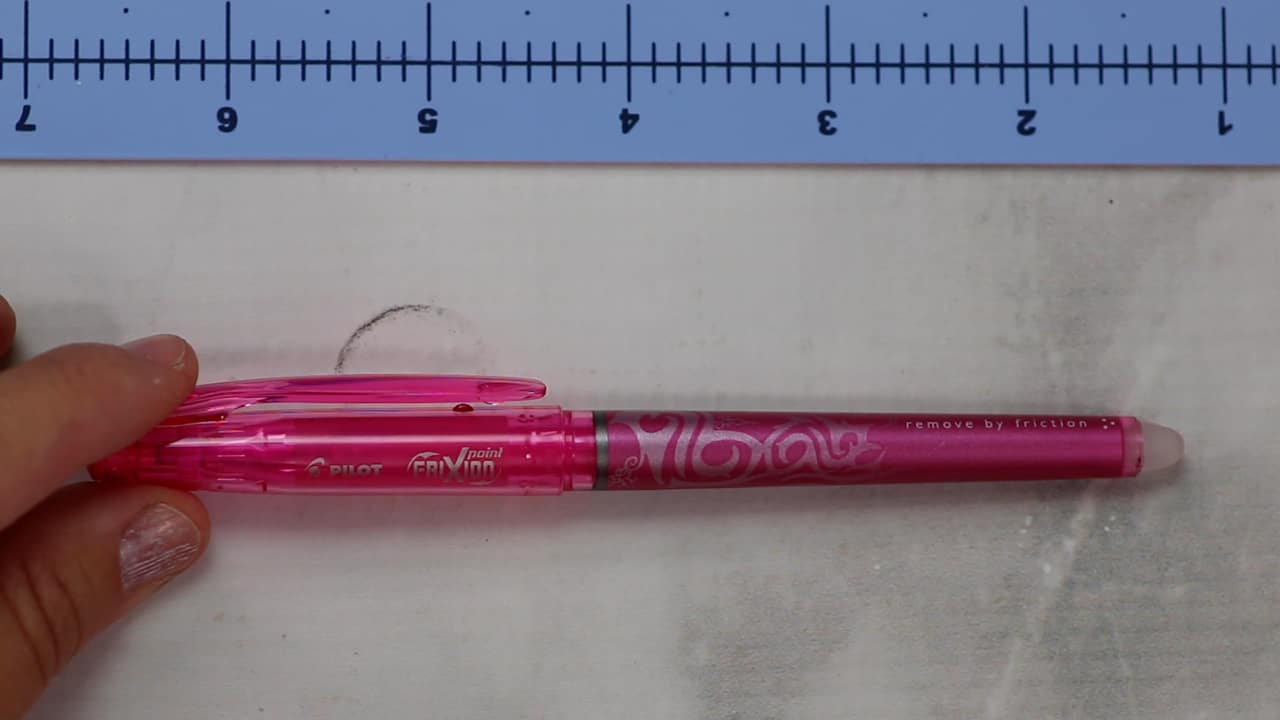
Step 12 – Get out your favorite fabric pen to mark the diagonal line. Frixon on pens is a favorite among sewists because they can be erased with heat.

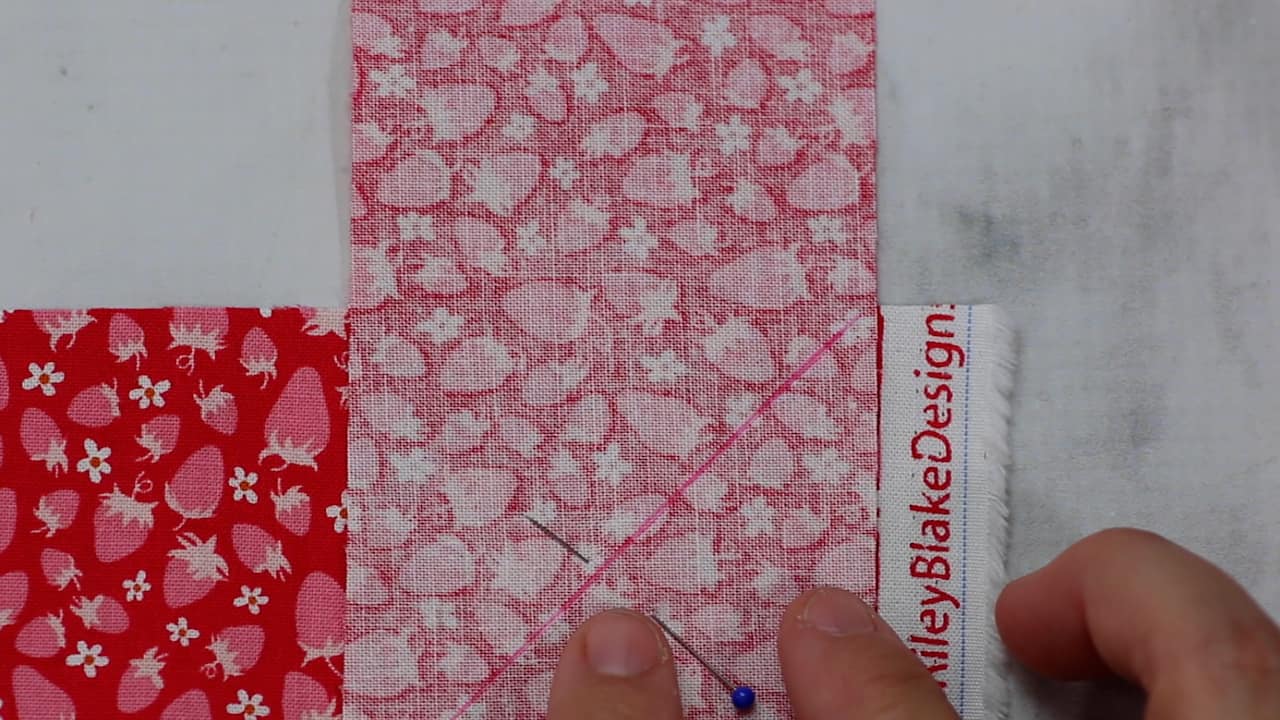
Step 13 – Using your pen, draw a line along the diagonal edge of the ruler from the top right to the bottom left-hand corner.

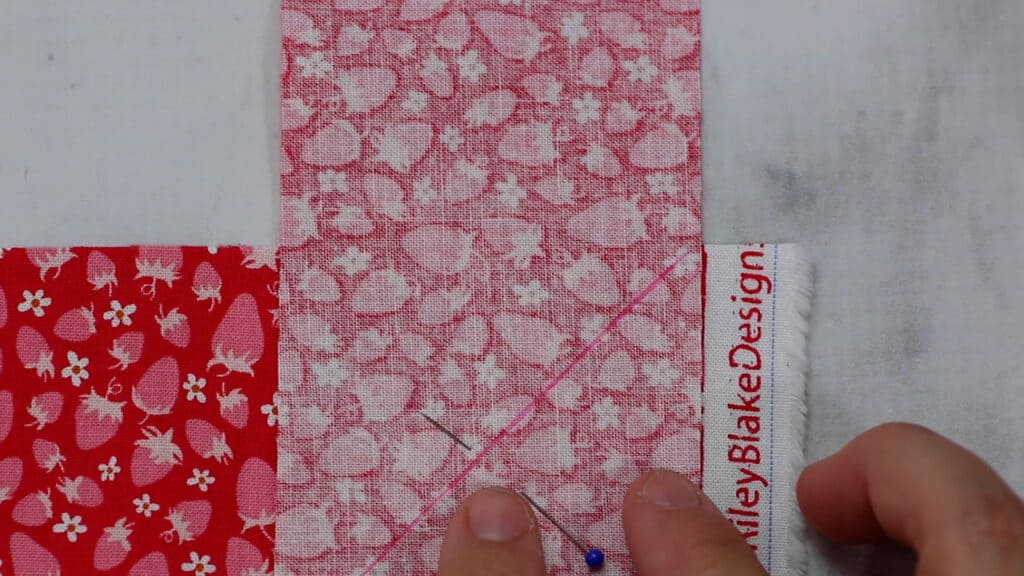
Step 14 – Place 3 pins along the diagonal line to hold the binding strips in place. Sew along the diagonal line, backstitching to start and finish. Remove the pins as you sew.

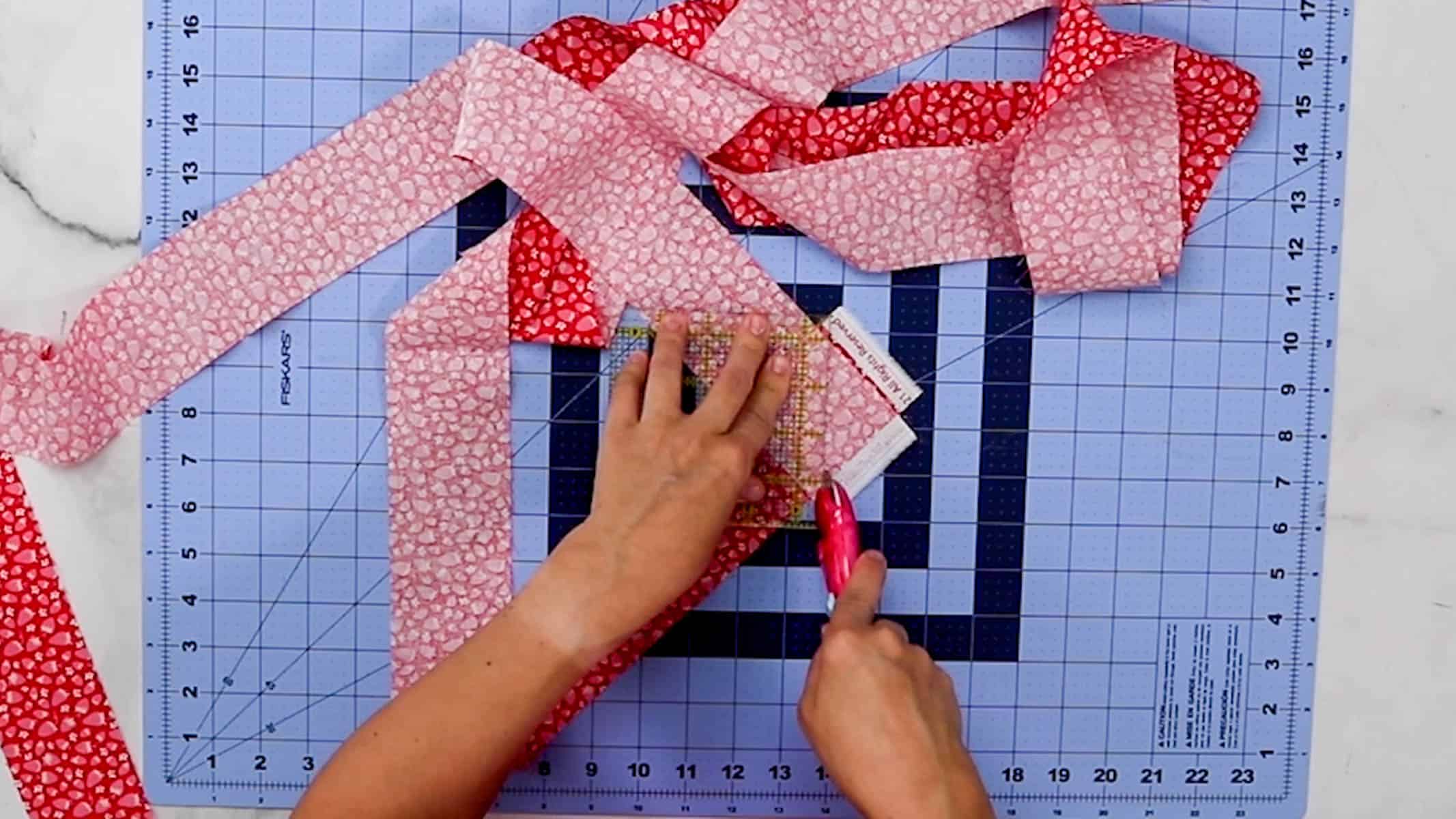
Step 15 – Trim the corners off the binding strips. Place the edge of the ruler 1/4″ away from the diagonal line and cut off the excess fabric.

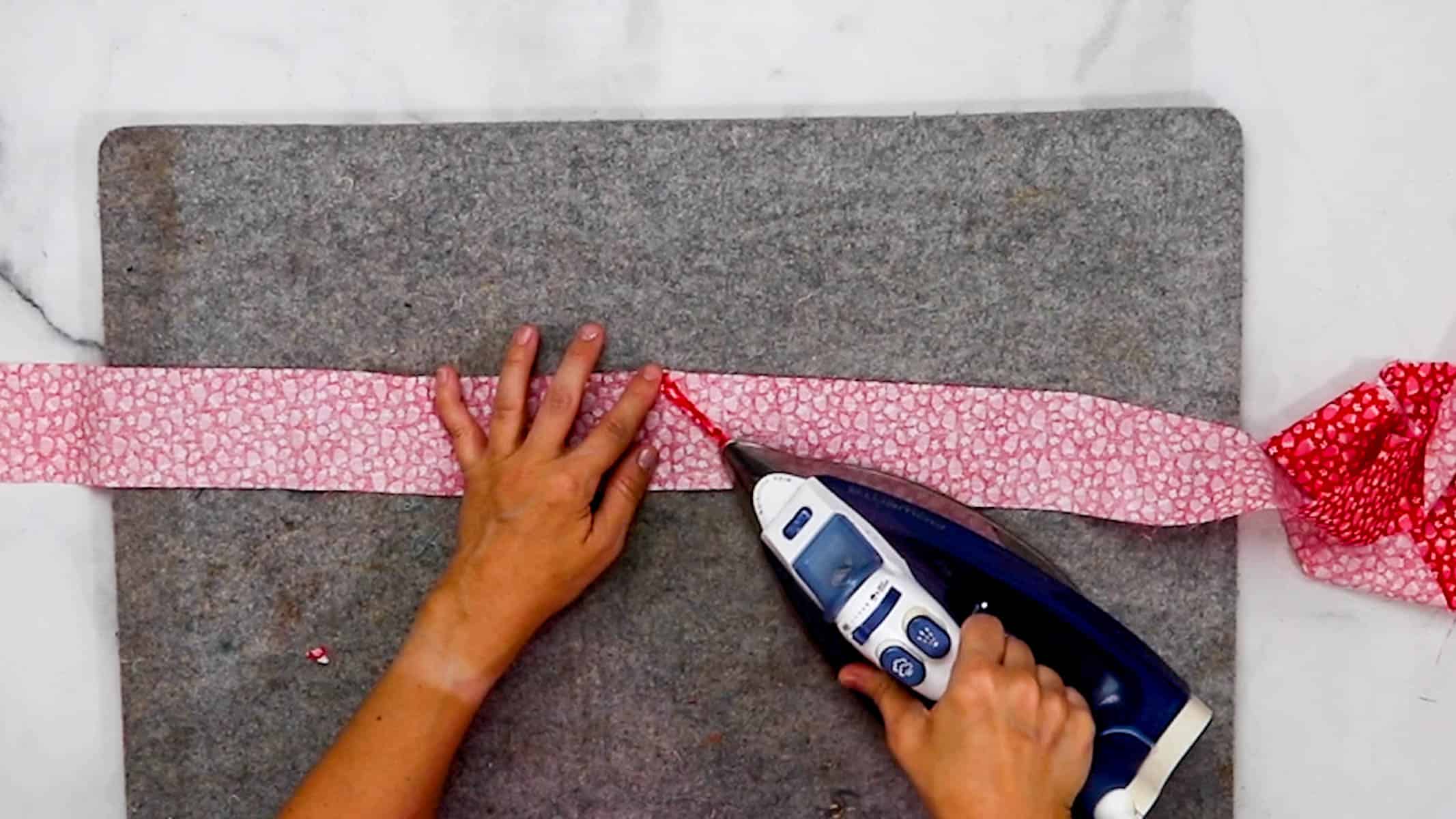
Step 15 – Fingerpress open the seams of the binding strips and press them flat with the iron to reduce the fabric bulk

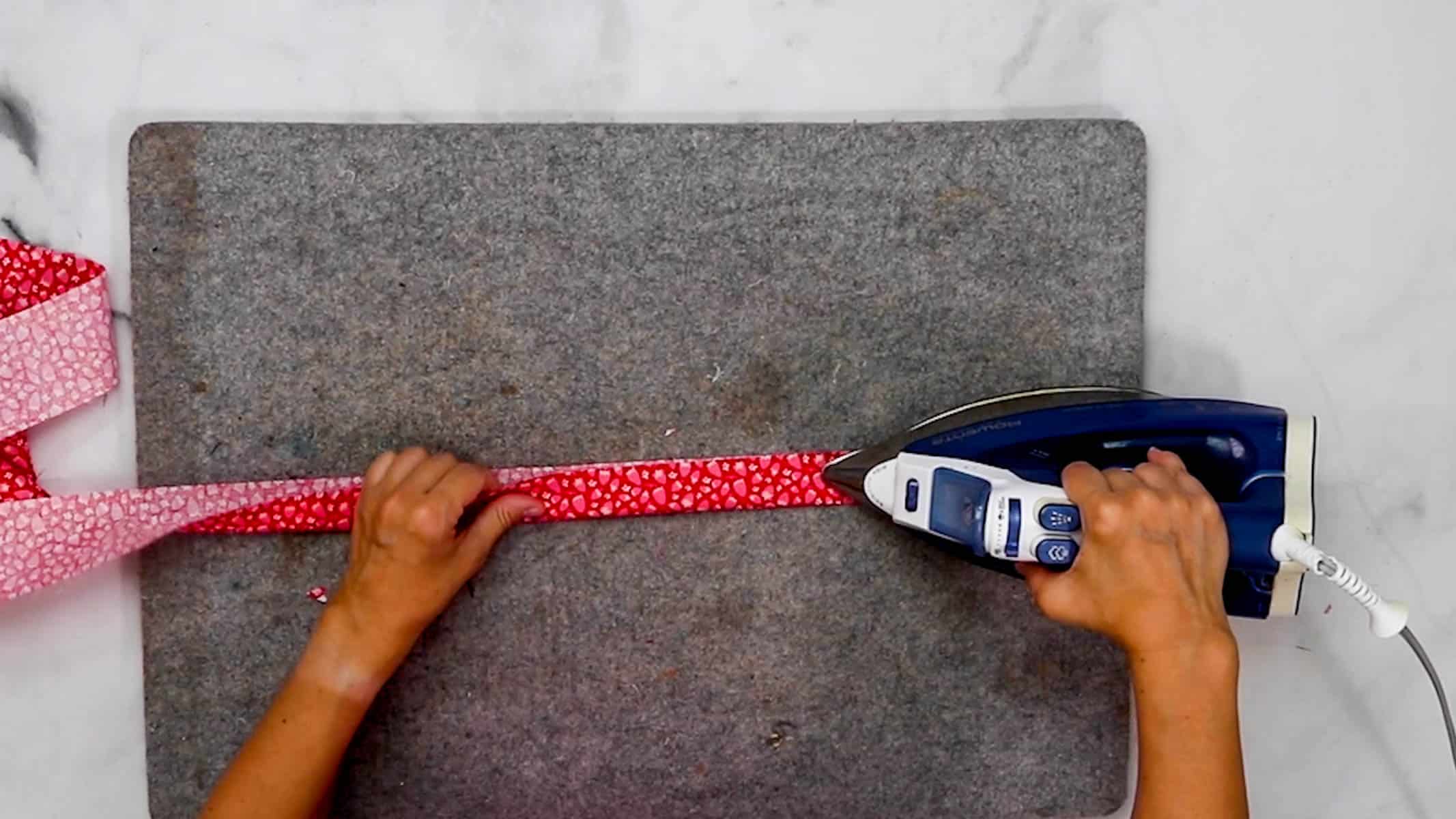
Step 16 – Fold the quilt binding in half lengthwise and press flat.

Attach the Quilt Binding

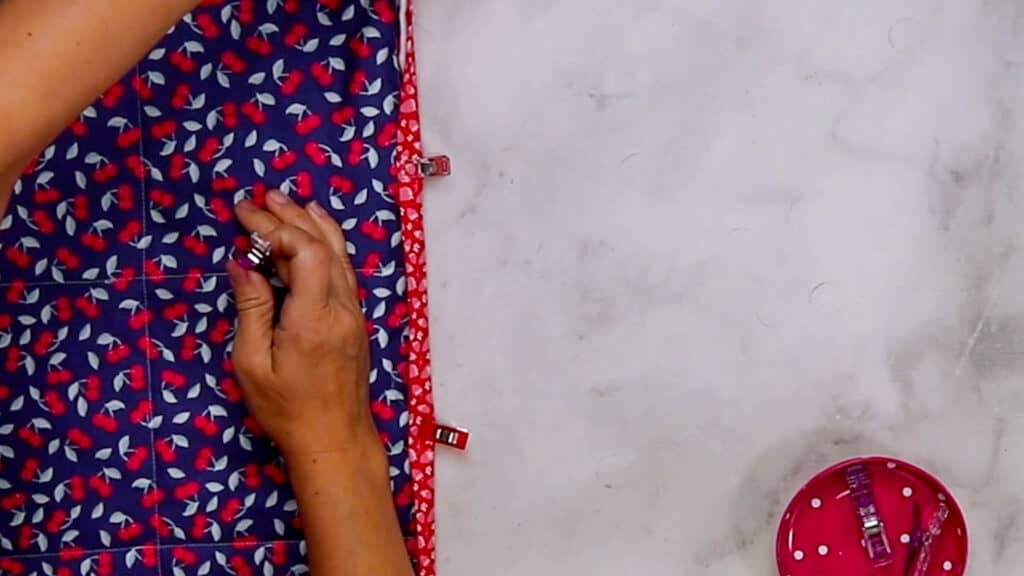
Step 17 – Starting in the middle of the quilt top, place the quilt binding ontop of the quilt top with the raw edges aligned. Pin or clip in place.

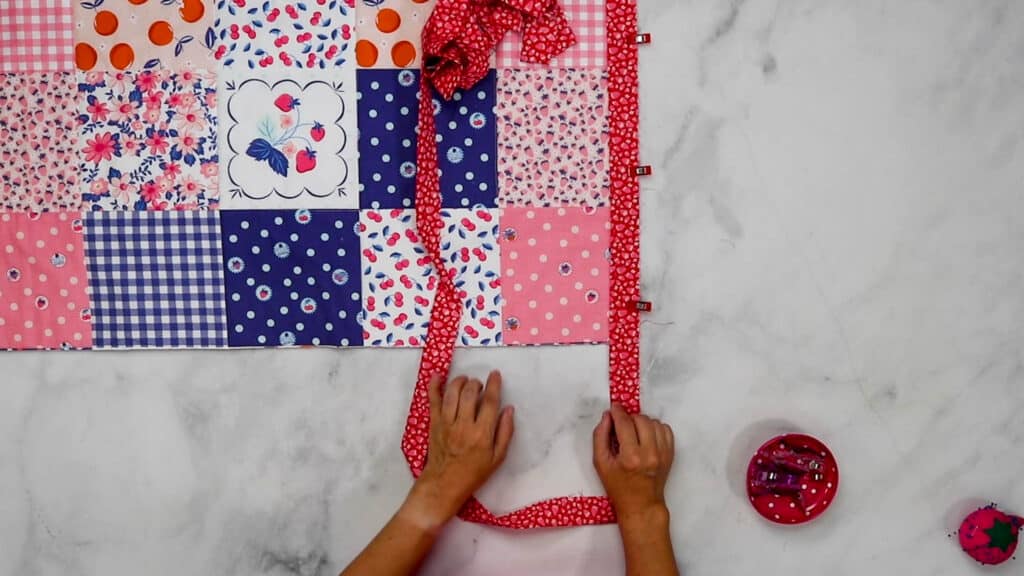
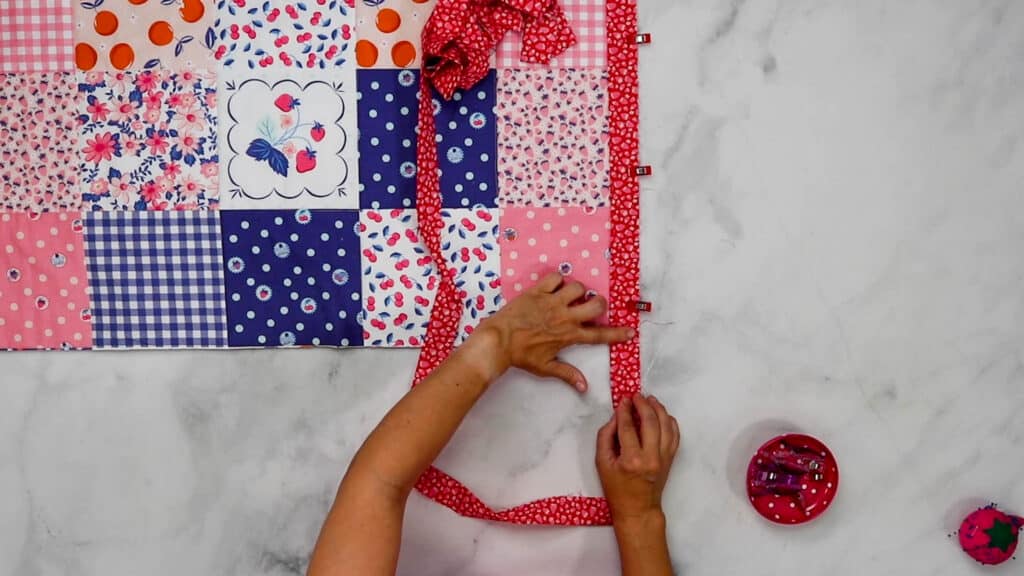
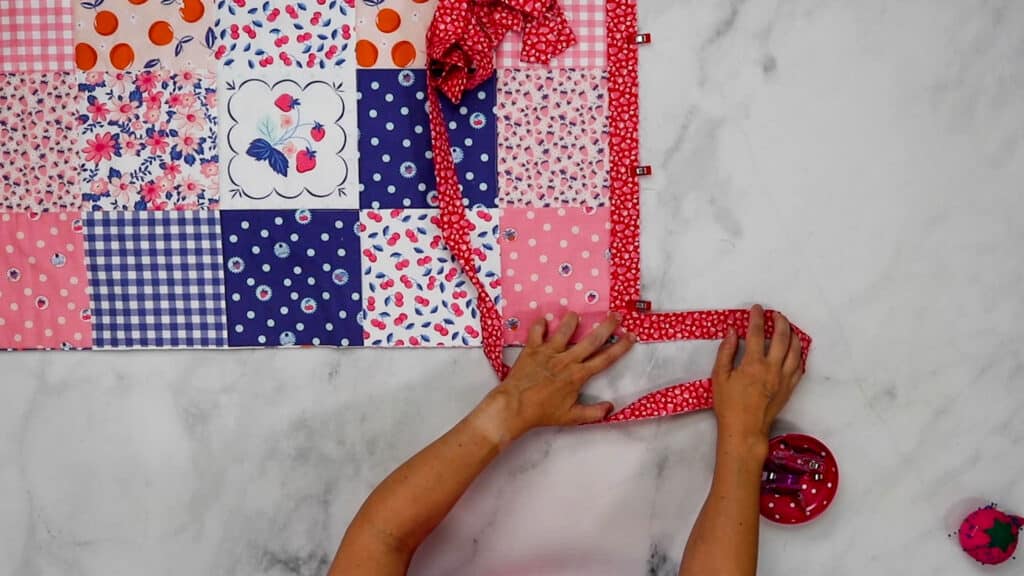
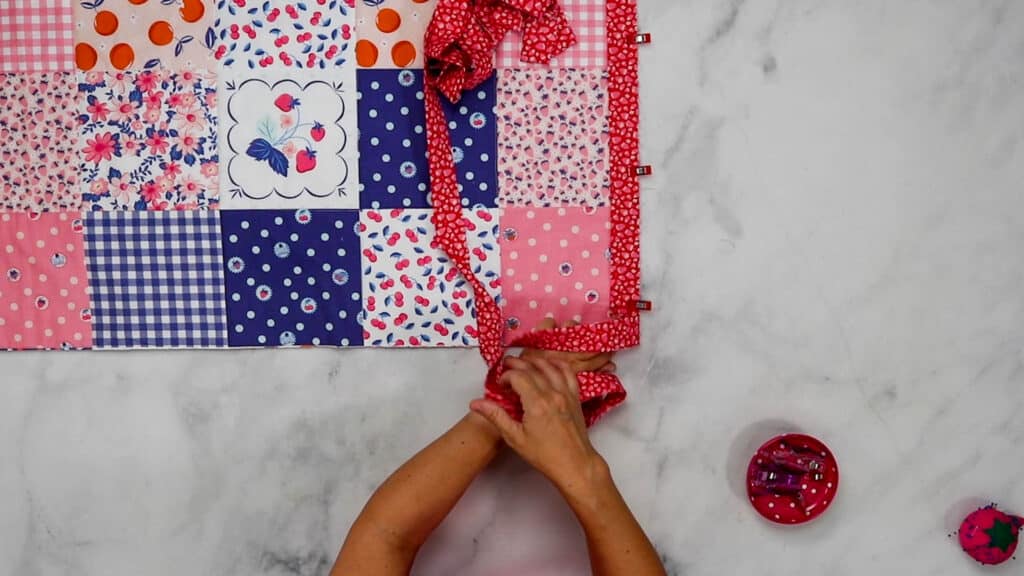
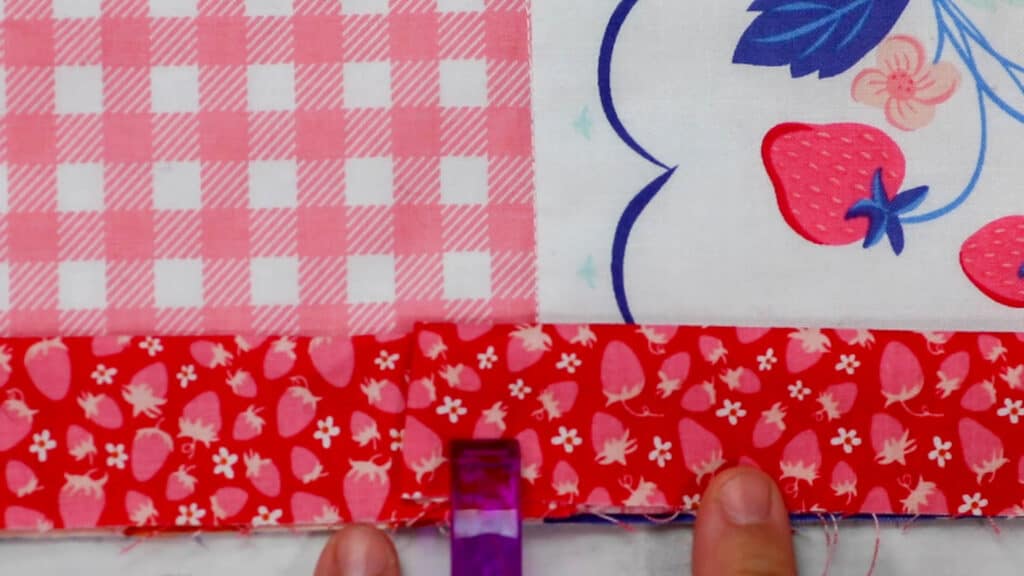
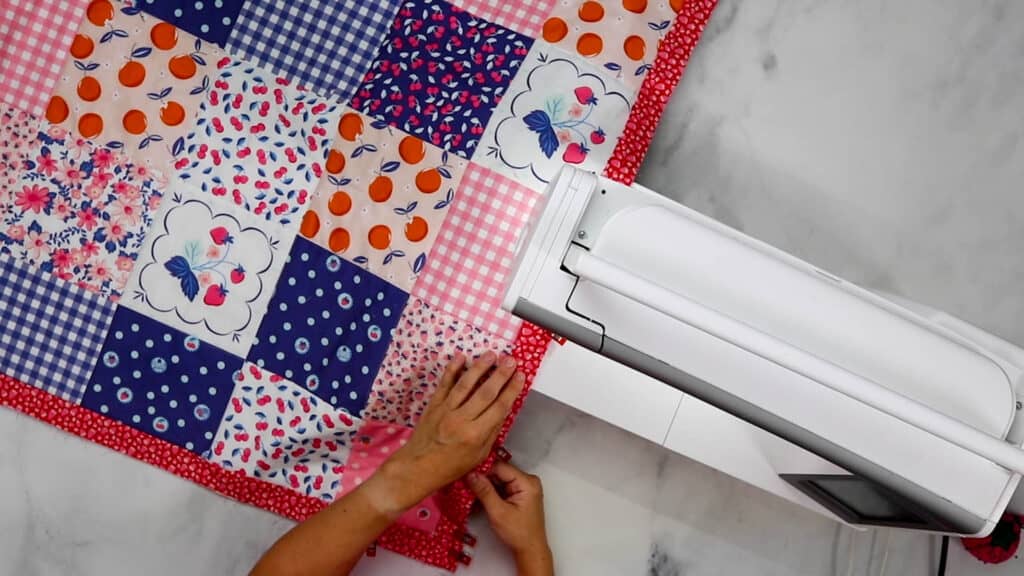
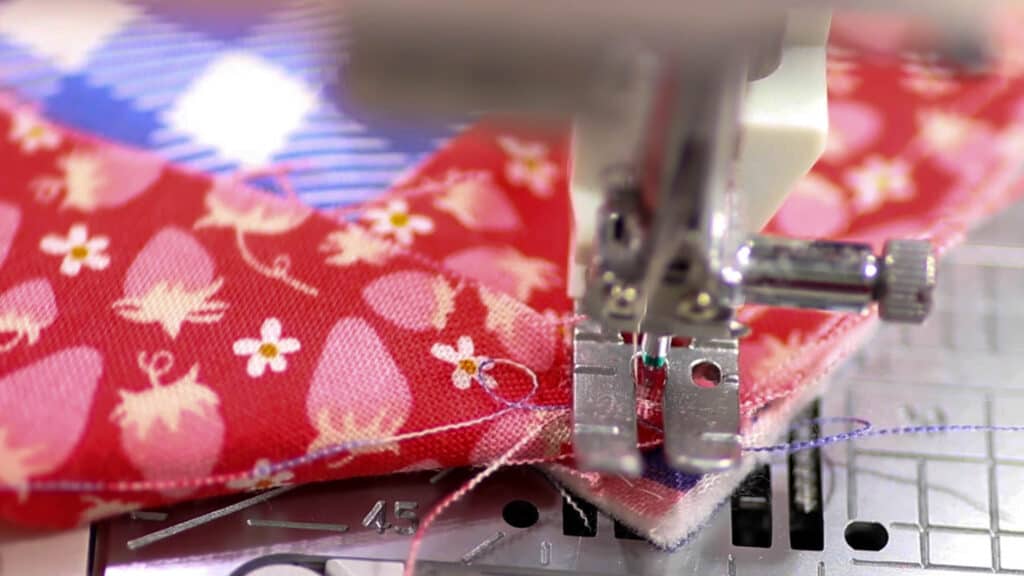
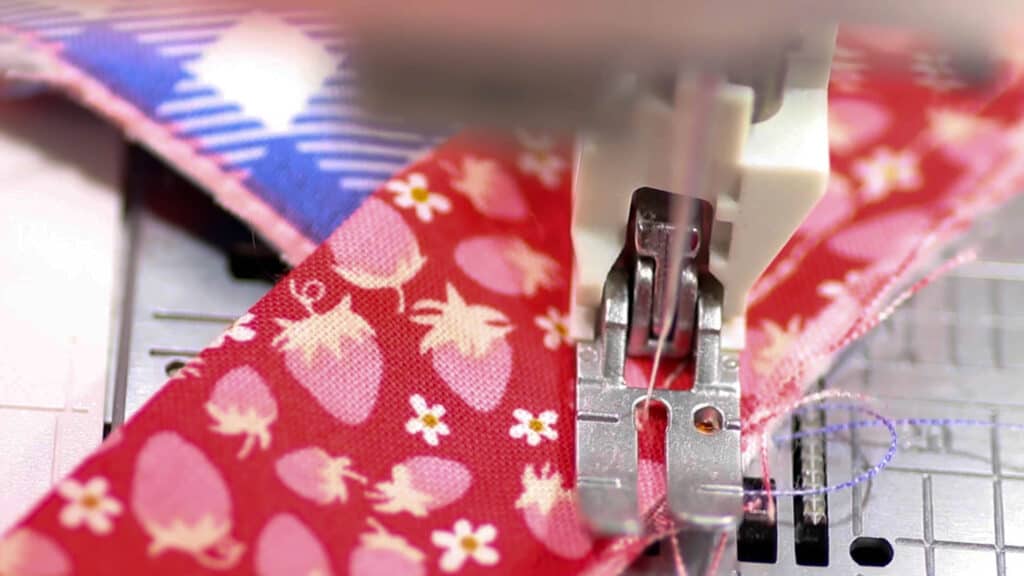
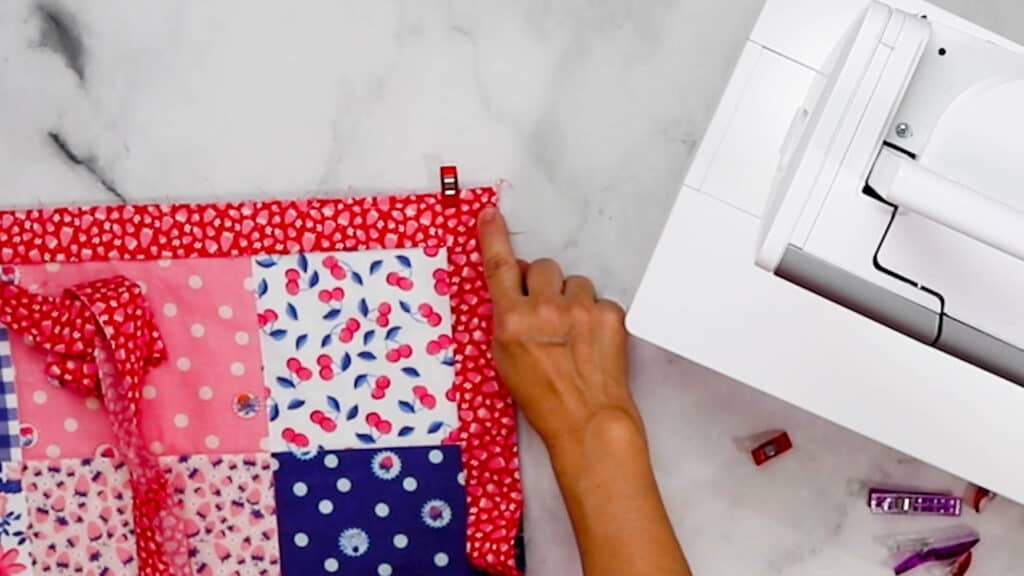
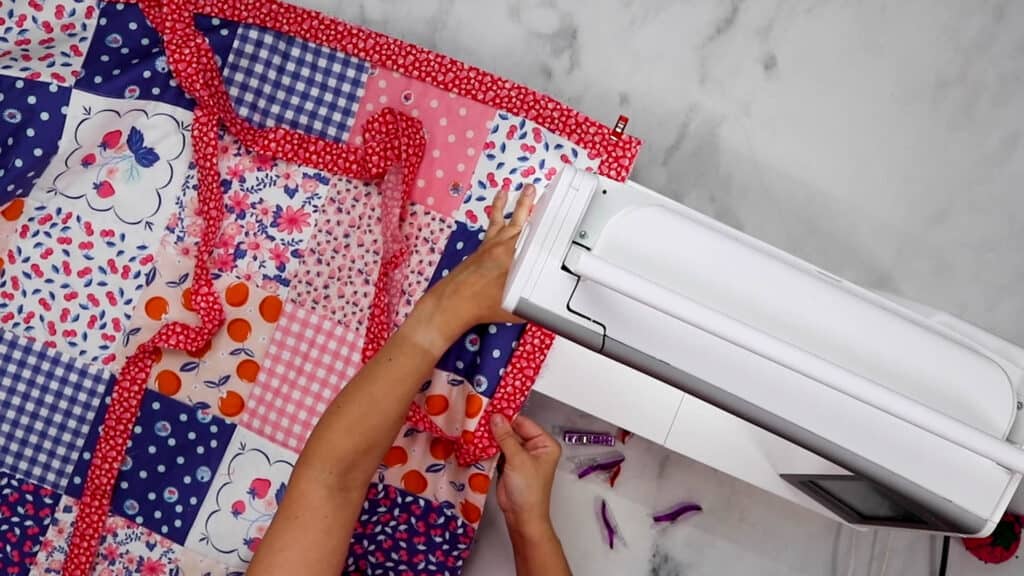
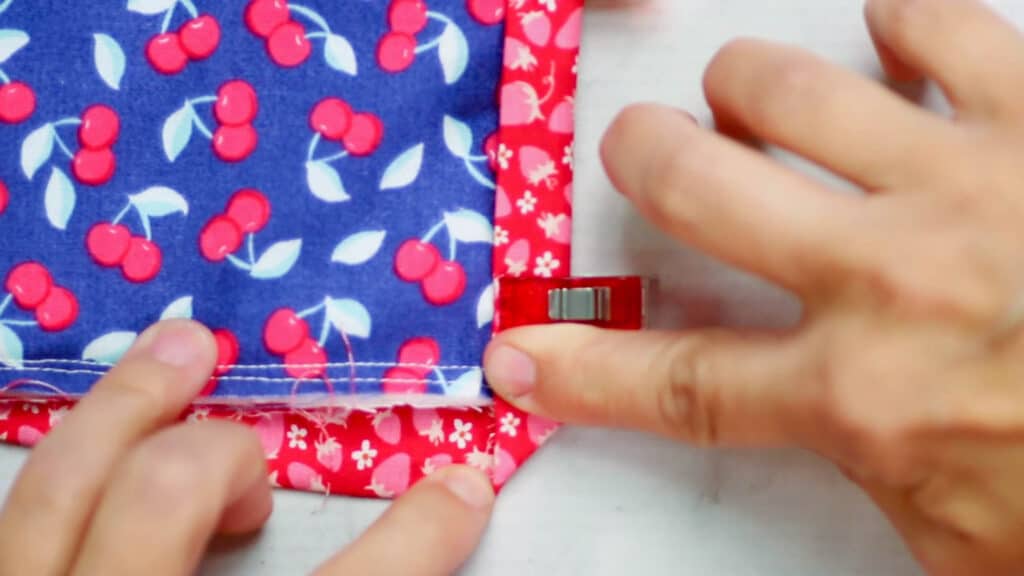
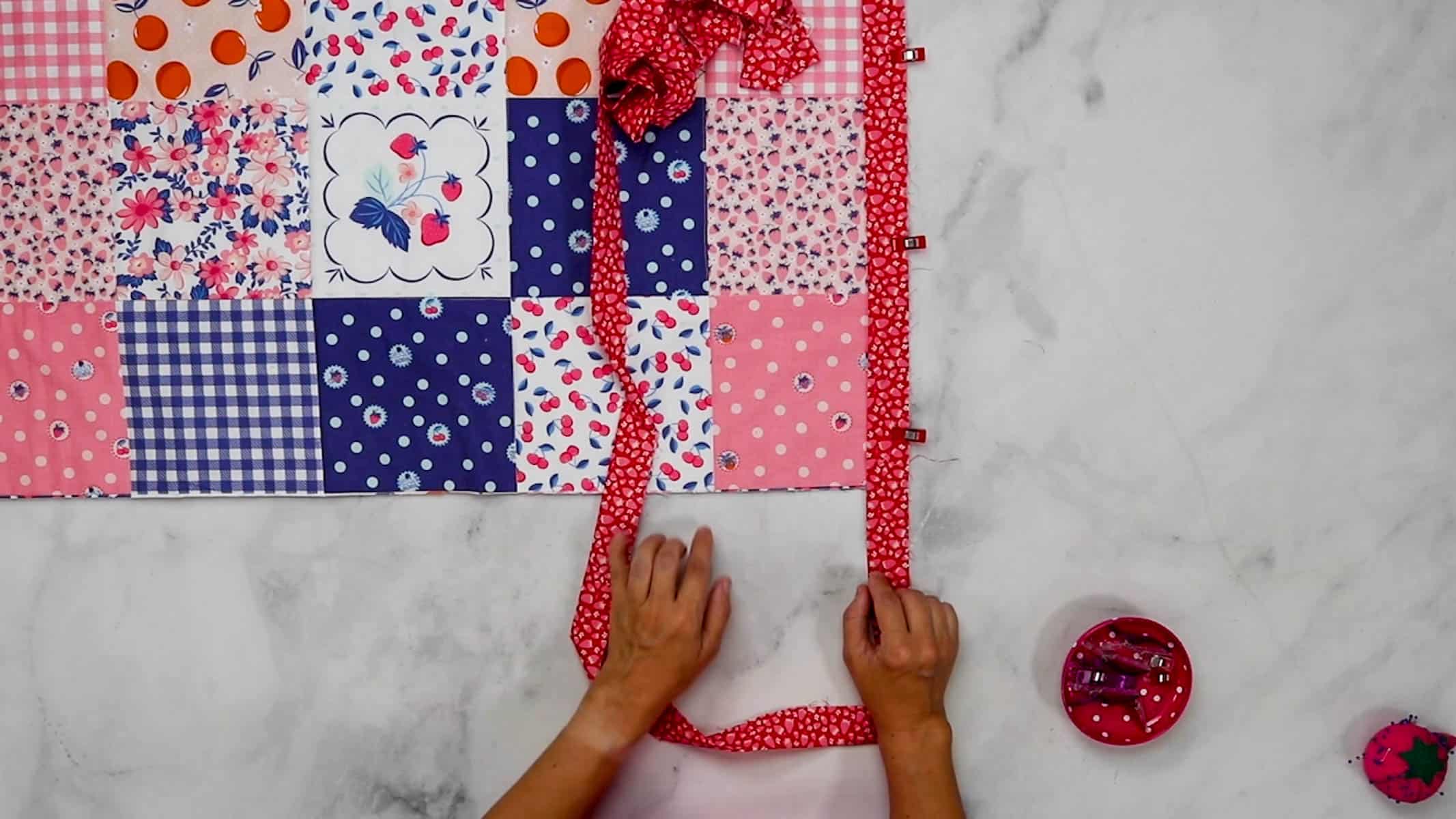
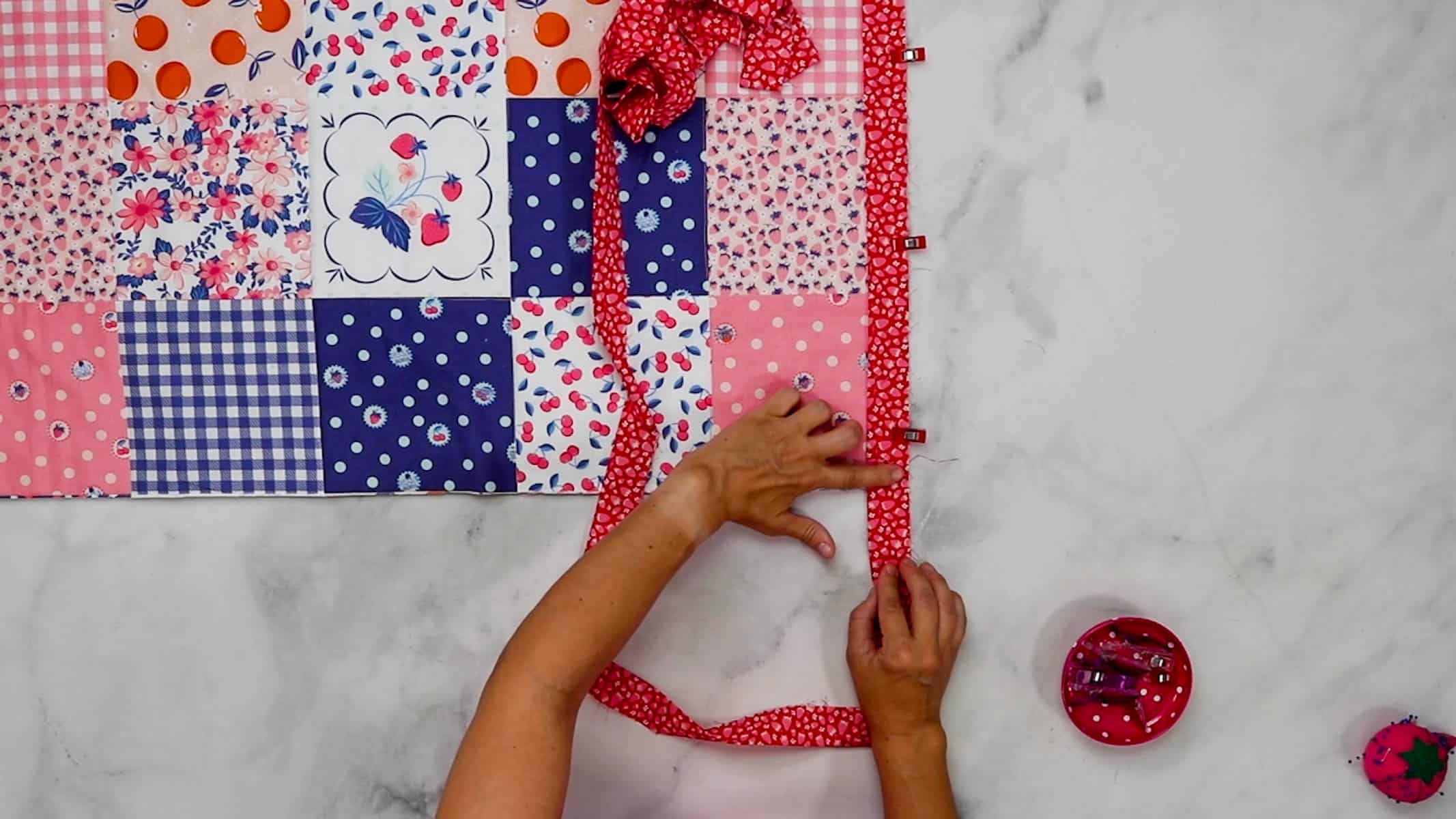
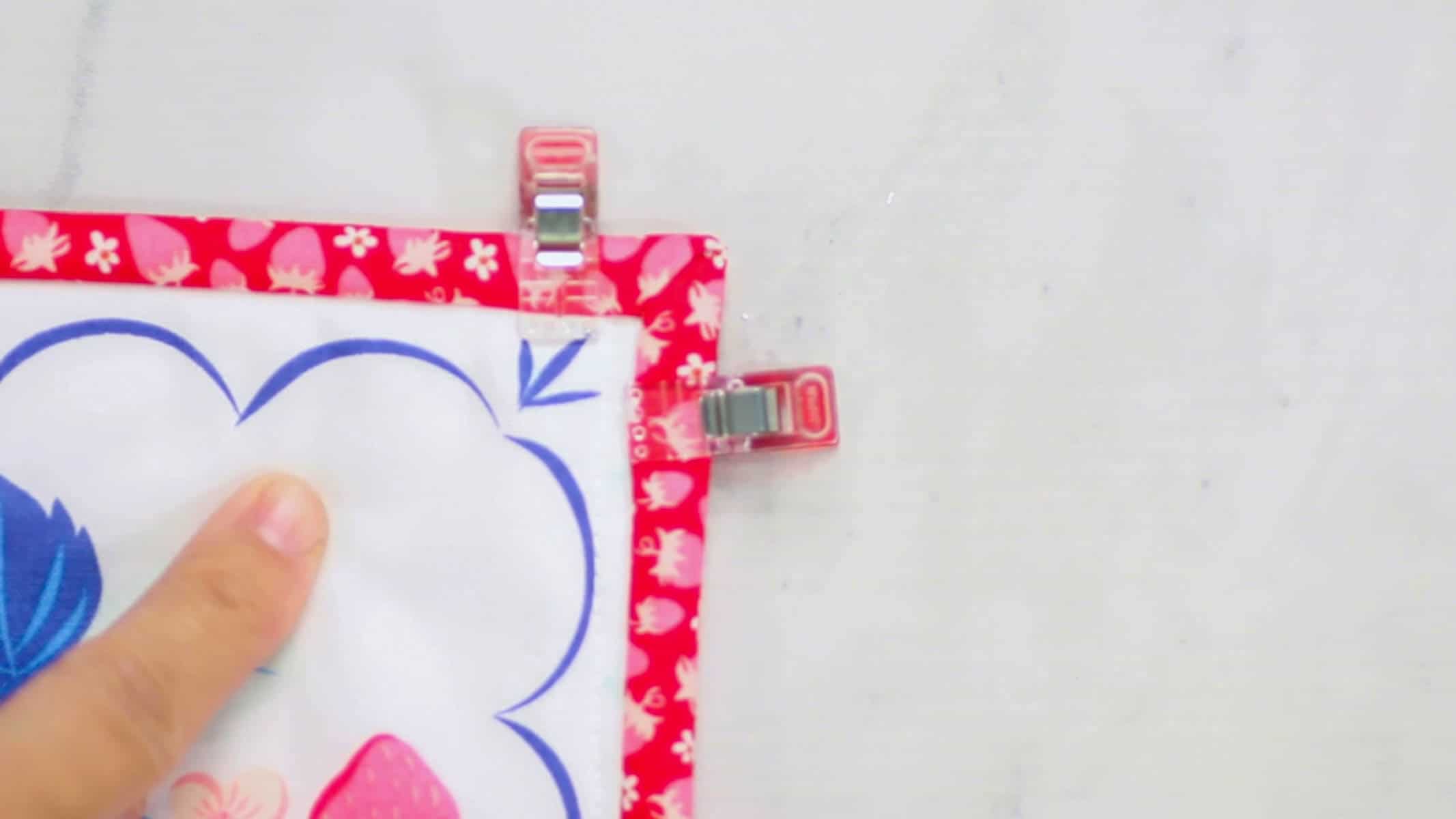
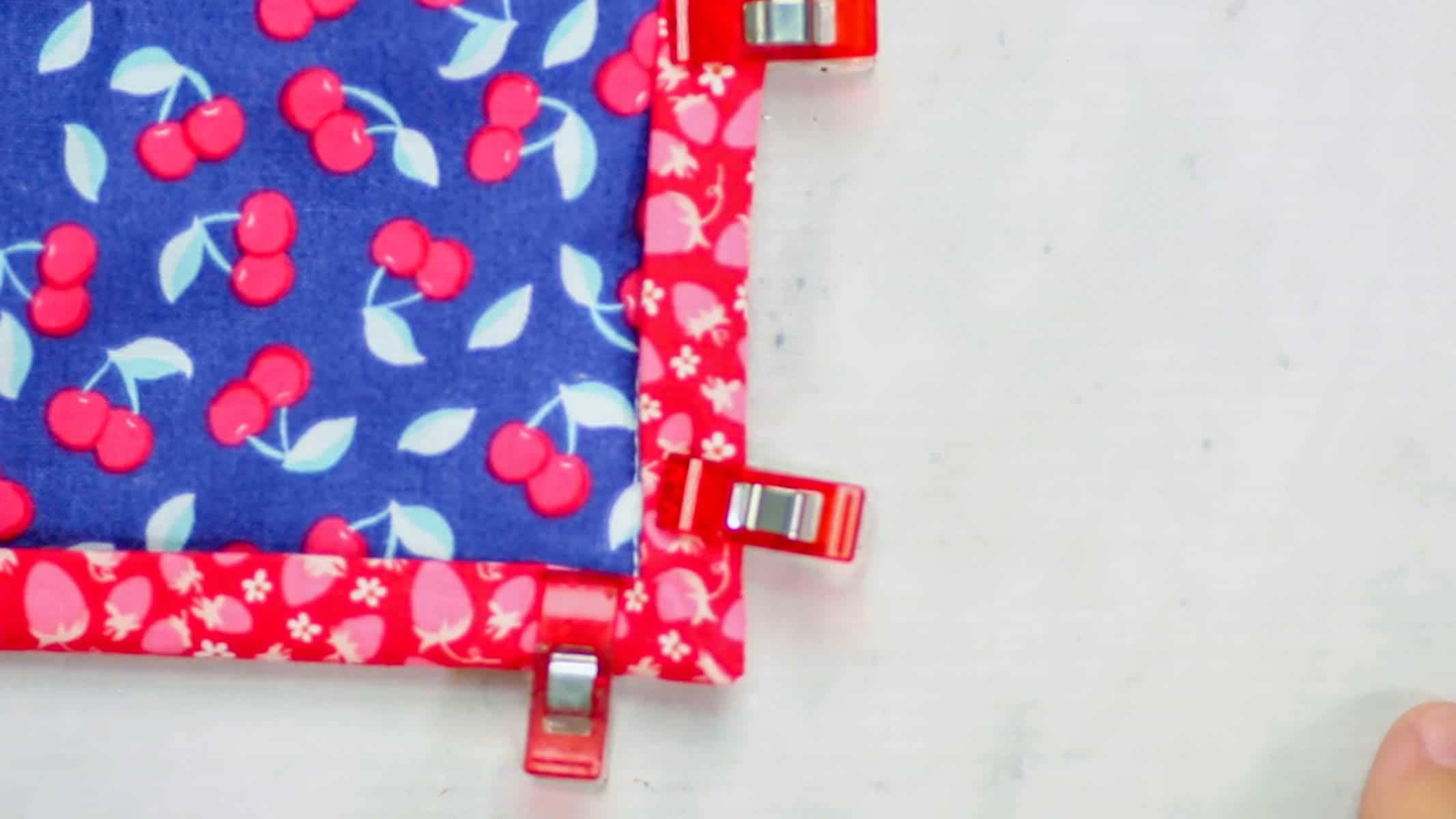
Step 18 – Place your finger on the quilt binding along the bottom edge to hold the binding flush with the edge. *It is important that the mitered corners do not have seams where the binding is joined together. To make sure the seams are not on the corners, you will make a mitered corner fold to check. If the seam allowance does land in the corner, you will need to adjust where you started the binding.

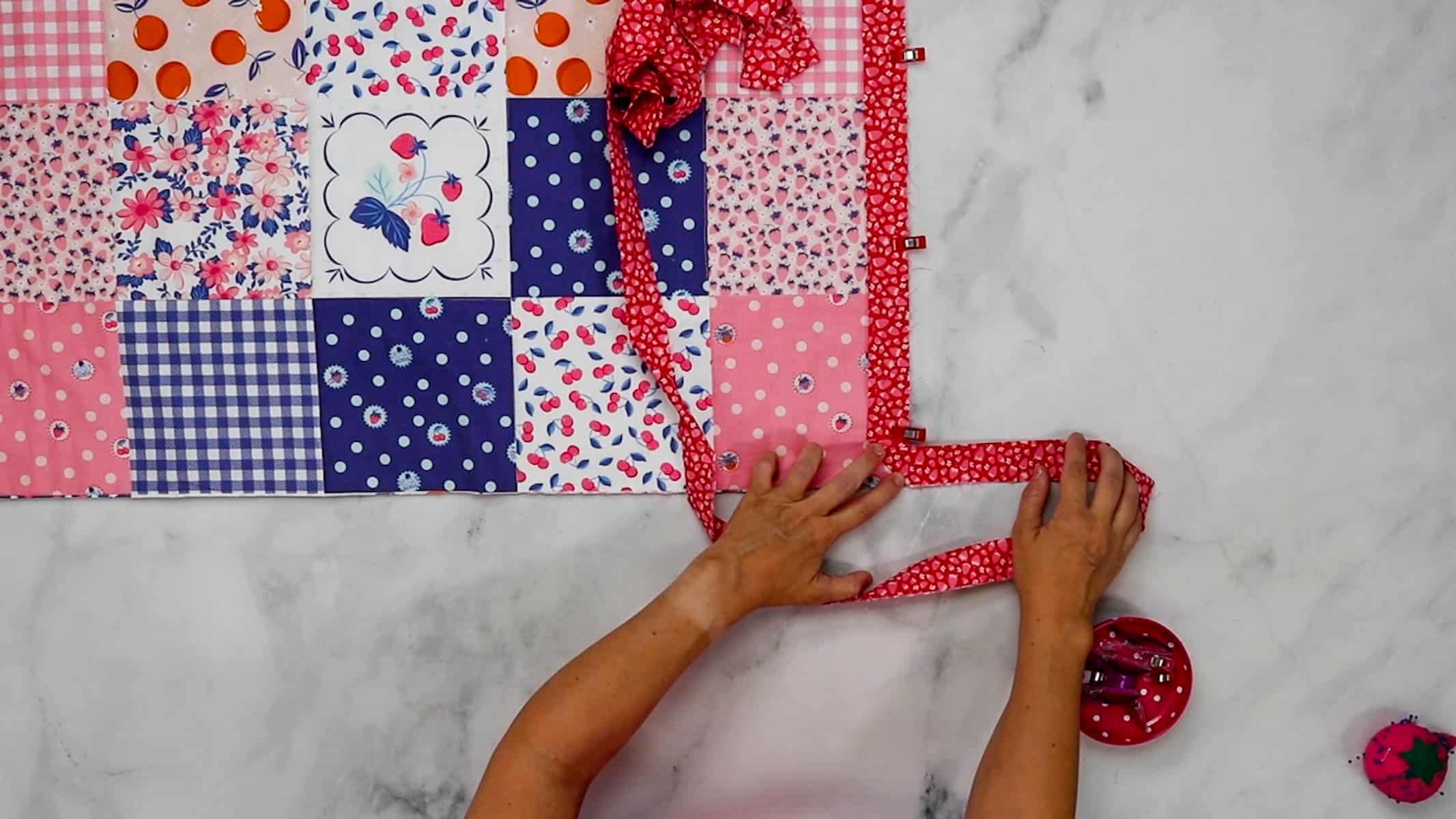
Step 19 – Keeping your finger on the binding, pull the binding to a 90-degree angle toward the outside of the quilt. Lift your finger to make the fold and then place it on the fold to hold it in place.

Step 20 – Keeping your finger in place, pull the binding back to the inside of the quilt top. This will form a small fabric triangle on the corner. *You can make the mitered corner without using your finger to keep the binding in place, however the fabric often slips out, making a smaller fabric triangle.

Step 21 – Continue clipping the binding and folding the mitered corners for the remaining three sides.

Sew the Ends Together

Step 22 – Trim the end of the binding so it only overlaps by two inches.

Step 23 – Open one side of the binding and fold the edge inward 1/2″ and fingerpress.

Step 24 – Place the other end of the binding inside the opened and folded binding edge.

Step 25 – Close the outside binding over the inside binding and clip or pin in place.

Step 26 – Sew the binding onto the quilt top using 1/4″ seam allowance.

Make a Mitered Corner

Step 27 – Stop 1/4″ before you reach the end of the first corner of the binding with the needle down.

Step 28 – Pivot diagonally toward the corner point and sew to the end of the corner.

Step 29 – Fold the binding toward the outside of the quilt. The fold should have an angled corner. This is the same step as you did before to make the mitered corner.

Step 30 – Fold the binding down, to form a small triangle flap of fabric as you did when you made the previous mitered corner and clip in place. This extra fabric is to allow the binding to fold around the backside of the quilt

Fold the Binding to the Back

Step 31 – Fold the binding to the backside of the quilt and clip in place.

Step 32 – Place your finger on the edge of the quilt to hold the binding corner in place, and fold over the next side of the binding to form a mitered corner.

Step 33 – Clip or pin in place to hold. The mitered corner should form a perfect diagonal line from the corner.

Machine Stitch the Quilt Binding Back

Step 34 – You can either hand stitch or machine stitch the quilt binding to finish. I prefer to machine stitch quilt binding. To machine stitch, sew along the the line or ditch between the quilt top and the binding.

When machine stitching your quilt binding, the stitching from the front should catch the binding on the backside.

Watch the Video on Youtube

Print the Instructions

How to Make a Cheater Quilt

How to Make a Cheater Quilt

Yield: 1 Cheater Quilt
Prep Time: 10 minutes
Active Time: 1 hour 30 minutes
Total Time: 1 hour 40 minutes
Difficulty: beginner

Materials

  • Cheater Quilt Fabric Panel - 36" x 36" (You may need more than one depending on the panel size) - I used the Summer Picnic Panels in this quilt. You can find several different varieties on etsy.
  • Crib Size Batting
  • 40" x 40" Backing Fabric
  • 1/2 Yard Fabric for Binding

Tools

  • Sewing Machine Needle
  • Thread
  • Walking Foot
  • Sewing Machine

Instructions

    ***Be sure to starch and press all fabrics before getting started. There is no need to pre-wash the fabric. Part of the beauty of a quilt is the crinkle that comes after the fabric and batting shrink during the first wash.

    1. Place the backing fabric wrong side up.
    2. Lay the batting on top of the backing fabric. The backing fabric can extend past the batting or lay even with it. Smooth all of the wrinkles from the batting and the backing fabric.
    3. Place the fabric panel on top of the batting right side up. Smooth all the wrinkles from the fabric panel.
    4. Check to make sure the batting and backing are several inches wider than the fabric panel. Just to note - my fabric panel was larger than the quilt size I was making, so it was ok if it did not extend past the fabric panel because I was going to cut off some of the panel.
    5. Get out your basting pins. There are several methods to baste a quilt, but the easiest is to use basting pins. These are special quilting pins that have a curve to help you pin and close them without killing your fingers.
    6. Roll up the edge of the quilt half way so it will neatly fit under the throat of your sewing machine.
    7. Starting in the middle of the quilt, sew straight lines down the quilt top following the lines of the squares. Start at the top of the quilt and sew down to the bottom. When finished return to the top and start again. Quilt from the middle of the quilt outward to help prevent bunching. When you have finished quilting the vertical lines, repeat the process for the horizontal lines to make quilted squares.
    8. Fold the fabric in half, selvage to selvage. Trim the edge of the fabric before cutting your strips, so you have a straight edge to begin cutting the fabric. Cut three 2.5" strips across the width of the fabric. Strips will be 42" long and 2.5" high.
    9. Place one of the strips horizontally, right side up. Place the second strip vertically, the wrong side up at the end of the right side of the first strip. Overlap the strips, so the selvages hang over the edges of the opposite strip.
    10. Place your ruler over the binding strips so the 45-degree line is vertical and perpendicular to the vertical strip. The edge of the ruler will be going diagonally from the upper right-hand corner to the lower left-hand corner.
    11. Get out your favorite fabric pen to mark the diagonal line. Frixon on pens is a favorite among sewists because they can be erased with heat.
    12. Using your pen, draw a line along the diagonal edge of the ruler from the top right to the bottom left-hand corner.
    13. Place 3 pins along the diagonal line to hold the binding strips in place. Sew along the diagonal line, backstitching to start and finish. Remove the pins as you sew.
    14. Trim the corners off the binding strips. Place the edge of the ruler 1/4" away from the diagonal line and cut off the excess fabric.
    15. Fingerpress open the seams of the binding strips and press them flat with the iron to reduce the fabric bulk.
    16. Fold the quilt binding in half lengthwise and press flat.
    17. Starting in the middle of the quilt top, place the quilt binding on top of the quilt top with the raw edges aligned. Pin or clip in place.
    18. Place your finger on the quilt binding along the bottom edge to hold the binding flush with the edge. *It is important that the mitered corners do not have seams where the binding is joined together. To make sure the seams are not on the corners, you will make a mitered corner fold to check. If the seam allowance does land in the corner, you will need to adjust where you started the binding.
    19. Keeping your finger on the binding, pull the binding to a 90-degree angle toward the outside of the quilt. Lift your finger to make the fold and then place it on the fold to hold it in place.
    20. Keeping your finger in place, pull the binding back to the inside of the quilt top. This will form a small fabric triangle on the corner.
    21. Continue clipping the binding and folding the mitered corners for the remaining three sides.
    22. Trim the end of the binding so it only overlaps by two inches.
    23. Open one side of the binding and fold the edge inward 1/2" and fingerpress..
    24. Place the other end of the binding inside the opened and folded binding edge.
    25. Close the outside binding over the inside binding and clip or pin it in place.
    26. Stop 1/4" before you reach the end of the first corner of the binding with the needle down.
    27. Pivot diagonally toward the corner point and sew to the end of the corner.
    28. Fold the binding toward the outside of the quilt. The fold should have an angled corner. This is the same step you did before to make the mitered corner.
    29. Fold the binding down, to form a small triangle flap of fabric as you did when you made the previous mitered corner and clip it in place. This extra fabric is to allow the binding to fold around the backside of the quilt
    30. Fold the binding to the backside of the quilt and clip it in place.
    31. Place your finger on the edge of the quilt to hold the binding corner in place, and fold over the next side of the binding to form a mitered corner.
    32. You can either hand stitch or machine stitch the quilt binding to finish. I prefer to machine stitch quilt binding. To machine stitch, sew along the the line or ditch between the quilt top and the binding. Clip or pin in place to hold. The mitered corner should form a perfect diagonal line from the corner. When machine stitching your quilt binding, the stitching from the front should catch the binding on the backside.

Did you make this project?

Please leave a comment on the blog or share a photo on Pinterest

© Shelly
Category: Free Quilt Patterns

Pin to Save for Later

Free Quilt Patterns, Learn How To Quilt

Mini Christmas Stocking Sewing Pattern + Make Adorable Holiday Garland

Nov 6, 2022 · 1 Comment

This Christmas, make a mini Christmas Stocking Garland with a free sewing pattern! This project is easy and will take less than an hour to complete.

Stocking garlands are a must-have for your Christmas decor, and this one is especially cute and simple to make. All you need is felt, a a few sewing supplies, and a free sewing pattern. You can find the pattern on the website below.

More Christmas Sewing Projects

  • 25+ Christmas Sewing Projects
  • 25 Jolly Christmas Quilt Patterns
  • 25+ Adorable Christmas Stocking Patterns
  • Easy Sew Stuffed Christmas Ornaments
  • Quilted Christmas Potholder Pattern
  • DIY Christmas Fabric Banner

Once you have the pattern downloaded, follow the instructions to make this cute stocking garland. It only takes a few minutes to assemble, and it looks beautiful on your Christmas tree or fireplace. You won’t be disappointed with this easy and fun project! You can also use the pattern to make your own DIY Felt Christmas ornament.

Table of contents

  • More Christmas Sewing Projects
  • Supplies
  • Download the PDF Pattern
  • Instructions
  • Watch the Video on Youtube
  • Download the Instructions to Make Later
  • Pin to Make Later

Supplies

  1. Felt Sheets – 5 to 6 colors, plus 1 – 2 white sheets for the tops. One colored sheet will make two stockings, and the white sheet will make 6 tops.
  2. Ribbon – I used 3/8″ red dot ribbon
  3. Fiberfill for stuffing
  4. Cotton macrame cording or cotton twine
  5. Mini Clothes Pins
  6. White Thread
  7. Fabric Scissors

Download the PDF Pattern

Instructions

Step 1 – Download the pattern and save it to your computer. Print the pattern using the actual size option. DO NOT “scale to fit” Use the 1″ test square to check for accurate sizing.

Step 2 – Fold the felt in half and place the pattern piece on it and pin to hold it in place.

Step 3 – Cut out two stocking bottom pieces and two stocking top pieces for each stocking from the felt. For this garland, I cut one stocking for five different colors.

Step 4 – Place the stocking top over the stocking bottom. You will want the stockings facing opposite directions so they join together correctly when sewn together. Be sure to place the more angled edge at the back of the stocking.

Step 5 – Sew across the top edge of the stocking using a 1/8″ to 1/4″ seam allowance.

Step 6 – Place the stockings wrong sides together. Nest the seams so the bottom layer seam is facing downward and the top layer seam is facing upward to reduce the bulk.

Step 7 – Pin the stockings in place to hold them together while sewing. Then cut a 3″ piece of ribbon and fold it in half. Place it in the middle of the stocking along the back edge and pin it in place.

Step 8 – Sew along the perimeter of the stocking, starting at the top side and following around to the other top side using 1/8″ to 1/4″ seam allowance. Leave the top open to place the fiberfill in.

Step 9 – Fill the stocking top with the fiberfill according to preference. I did not overly stuff them because I preferred a flatter look.

Step 10 – Pin the top edge in place and sew the opening closed using a 1/8″ to 1/4″ seam allowance.

Step 11 – Pin the stockings to the cording or twine using the mini paper clips and add to your decor!

Watch the Video on Youtube

Download the Instructions to Make Later

Mini Felt Christmas Stocking Pattern + Make Adorable Holiday Garland

Mini Felt Christmas Stocking Pattern + Make Adorable Holiday Garland

Yield: 5 Stockings
Prep Time: 10 minutes
Active Time: 10 minutes
Total Time: 20 minutes
Difficulty: beginner

Materials

  • Felt Sheets - 5 to 6 colors, plus 1 - 2 white sheets for the tops. One colored sheet will make two stockings, and the white sheet will make 6 tops.
  • Ribbon - I used 3/8" red dot ribbon
  • Fiberfill for stuffing
  • Cotton macrame cording or cotton twine
  • Mini Clothes Pins

Tools

  • White Thread
  • Fabric Scissors
  • Sewing Machine

Instructions

  1. Download the pattern and save it to your computer. Print the pattern using the actual size option. DO NOT "scale to fit" Use the 1" test square to check for accurate sizing.
  2. Fold the felt in half and place the pattern piece on it and pin it to hold it in place.
  3. Cut out two stocking bottom pieces and two stocking top pieces for each stocking from the felt. For this garland, I cut one stocking for five different colors.
  4. Place the stocking top over the stocking bottom. You will want the stockings facing opposite directions so they join together correctly when sewn together. Be sure to place the more angled edge at the back of the stocking.
  5. Sew across the top edge of the stocking using a 1/8" to 1/4" seam allowance.
  6. Place the stockings wrong sides together. Nest the seams so the bottom layer seam is facing downward and the top layer seam is facing upward to reduce the bulk.
  7. Pin the stockings in place to hold them together while sewing. Then cut a 3" piece of ribbon and fold it in half. Place it in the middle of the stocking along the back edge and pin it in place.Sew along the perimeter of the stocking, starting at the top side and following around to the other top side using 1/8" to 1/4" seam allowance. Leave the top open to place the fiberfill in.
  8. Fill the stocking top with the fiberfill according to preference. I did not overly stuff them because I preferred a flatter look.
  9. Pin the top edge in place and sew the opening closed using a 1/8" to 1/4" seam allowance.
  10. Pin the stockings to the cording or twine using the mini paper clips and add to your decor!

Did you make this project?

Please leave a comment on the blog or share a photo on Pinterest

© Shelly
Project Type: sewing / Category: Christmas

Pin to Make Later

Christmas, Holiday, Holidays

Free Baby Quilt Pattern For Beginners – Simple Squares Quilt Pattern

Oct 24, 2022 · 21 Comments

simple-square-quilt-pattern
free-baby-quilt-pattern-for-beginners

Introducing the Simples Squares Quilt Pattern which is a Free Baby Quilt Pattern For Beginners.  The simple squares baby quilt pattern is all the baby quilt happiness. 

baby-quilt-pattern-free

I used the gorgeous line called Crisp Petals from my amazingly talented artist friend Natalie Malan.  She paints the most beautiful watercolor florals that can now be found on fabric as well.  I designed the Simple Squares Quilt Pattern to be beginner friendly and easy enough to piece together in one evening.  Or as a last minute baby shower gift. 

free-baby-quilt-pattern

This free baby quilt pattern is perfect for using fat quarters and I will show you a shortcut to piece together the print blocks quickly. A friend of mine just had her first baby girl, after having three boys and when I saw Crisp Petals I knew it would be perfect.  This fabric lends itself so well to a beautiful light and airy quilt perfect for a baby girl quilt pattern.

free-quilt-patterns-for-beginners

Table of contents

  • More FREE Baby Quilt Patterns:
  • More Baby Sewing Projects
  • Simple Squares Easy Baby Quilt Pattern Supplies Needed
  • Beginner Quilting Tips
  • Free Baby Quilt Pattern For Beginners – Simple Squares Quilt Pattern Tutorial
    • Finished Simple Squares Easy Baby Quilt Dimensions 36 x 48
  • Free PDF Simple Squares Coloring Sheet
easy-baby-quilt-pattern-for-beginners

Use large squares to make an Easy Baby Quilt Pattern that will look beautiful when finished.

More FREE Baby Quilt Patterns:

  • Four Square Charm Pack Baby Quilt Pattern
  • Ribbons and Bows Baby Quilt Pattern
  • Swiss Cross Baby Quilt Pattern
baby-girl-quilt-patterns-free


Since the Free Baby Quilt Pattern finishes at 36″ wide you will be able to back it easily with the regular 42″ wide fabric and have a little bit left over to make some scrappy bibs which will work perfectly with my free baby bib pattern bundle.

More Baby Sewing Projects

  • 50+ Cutest Baby Sewing Projects
  • Basic Baby Hat Sewing Pattern
  • Sherpa Fleece Baby Blanket Tutorial
  • Minky Fitted Crib Sheet Tutorial
  • DIY Baby Leggings
  • Free Baby Bib Pattern
  • Knot Bow Headband

Updated: Simple Squares PDF Pattern now available in the shop.

I originally designed this pattern in the baby size only with the instructions located here on the website. After many requests, I have since updated and created the Simple Squares PDF quilt pattern that is available in sizes baby, small throw, and large throw. The new pattern is updated with all the fabric requirements, shortcut tables for block requirements, pattern diagram assembly in all sizes, as well as a new coloring sheet!

SHOP SIMPLE SQUARES PDF QUILT PATTERN

—>>> Or scroll down for instructions to the free pattern.

Simple Squares Easy Baby Quilt Pattern Supplies Needed

  1. 9-10 Fat Quarters (You can get by with 4 – 5 if you want less color variation).
  2. 1 Yard Riley White or Contrasting Fabric
  3. Cotton Batting
  4. 1 1/2 Yards Backing Fabric
  5. 1/3 Yard Fabric Binding
  6. 100% Cotton Thread
  7. Rotary Blade Cutter
  8. Self Healing Mat
  9. Clear Quilting Ruler

Beginner Quilting Tips

  • Beginner Quilting Supplies
  • How to Use a Rotary Cutter to Cut Fabric
  • Choose the Right Sewing Machine Needle for Quilting
  • How to Chain Piece Quilt Blocks to Save Time

Free Baby Quilt Pattern For Beginners – Simple Squares Quilt Pattern Tutorial

Finished Simple Squares Easy Baby Quilt Dimensions 36 x 48

*You will need (28) 6.5″ white squares and (28) 6.5″ colored blocks.

  1. Using your rotary blade cutter and ruler cut Two (2) 3.5″ x 22″ or WOF(width of fabric) strips from each fat quarter.
  2. Place strips RST (right sides together) and straight stitch 1/4″ seam down the bottom edge.
  3. Open fabric and press seams toward the darker fabric side.how-to-cut-strips-with-a-quilting-ruler
  4. Using your rotary blade and ruler cut paired fabric strips into 6.5″ squares.  For a total of 28 strip blocks.  Cut 28 6.5″white square blocks as well for a total 56 blocks.
  5. Place white fabric and strip blocks RST (right sides together) and sew a 1/4″ seam down the right side of the fabric. Repeat for the rest of the blocks.
  6. Place two strip block/white square pairs RST (right sides together) and sew 1/4″ down the right side of rows

Repeat until you have made 8 rows of 7 blocks each as shown.  Press seams towards opposite sides on each row, so the top row will be pressed to the left and the second row will be pressed toward the right, and so on.

  1. To finish quilt place first and second-row RST (right sides together) and sew 1/4″ stitch down across the bottom edge. 
  2. Repeat for the rest of the rows until the quilt is finished.  Add batting and backing and finish quilting as desired.

Free PDF Simple Squares Coloring Sheet

Click the Image Below to Download the Free PDF Simple Squares Coloring Sheet

You may find these tutorials on How to Bind a Quilt and Finishing a Quilt helpful.
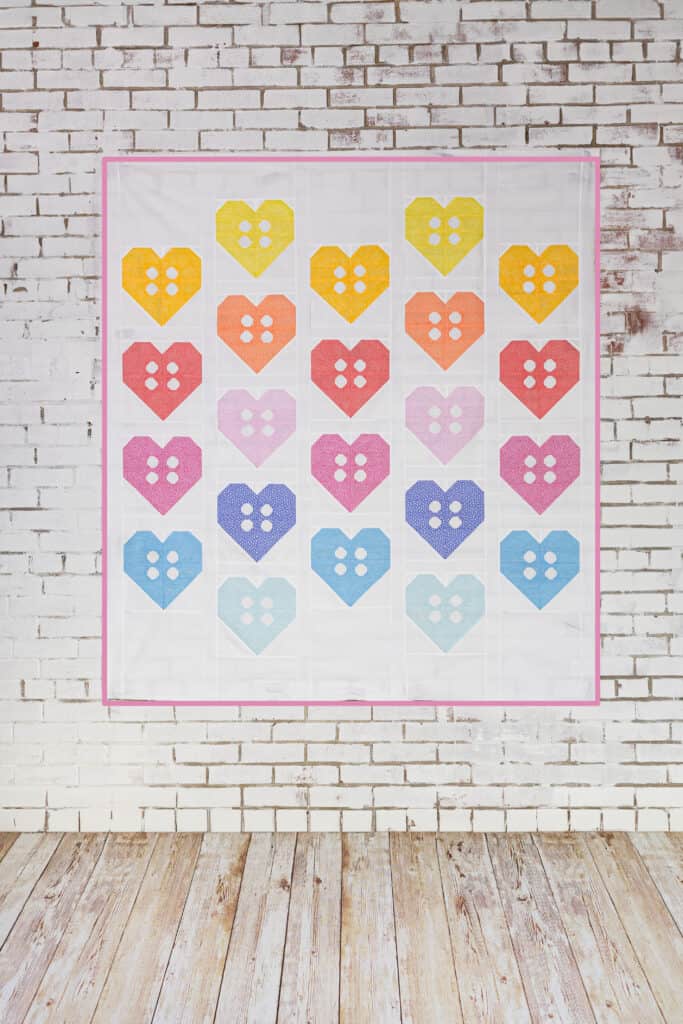
Baby Sewing, FREE Baby Sewing Projects, Free Quilt Patterns, Popular, Quilt Patterns, Quilts baby quilt, free baby, free quilt, quilt pattern, quilting

FREE Trick Treat Bag Sewing Pattern in 2 Sizes!

Oct 23, 2022 · Leave a Comment

Learn how to sew a Trick or Treat Halloween Bag with this Free Pattern, which comes in two different sizes. The pattern also includes five different applique templates for you to decorate the front of the bag with.
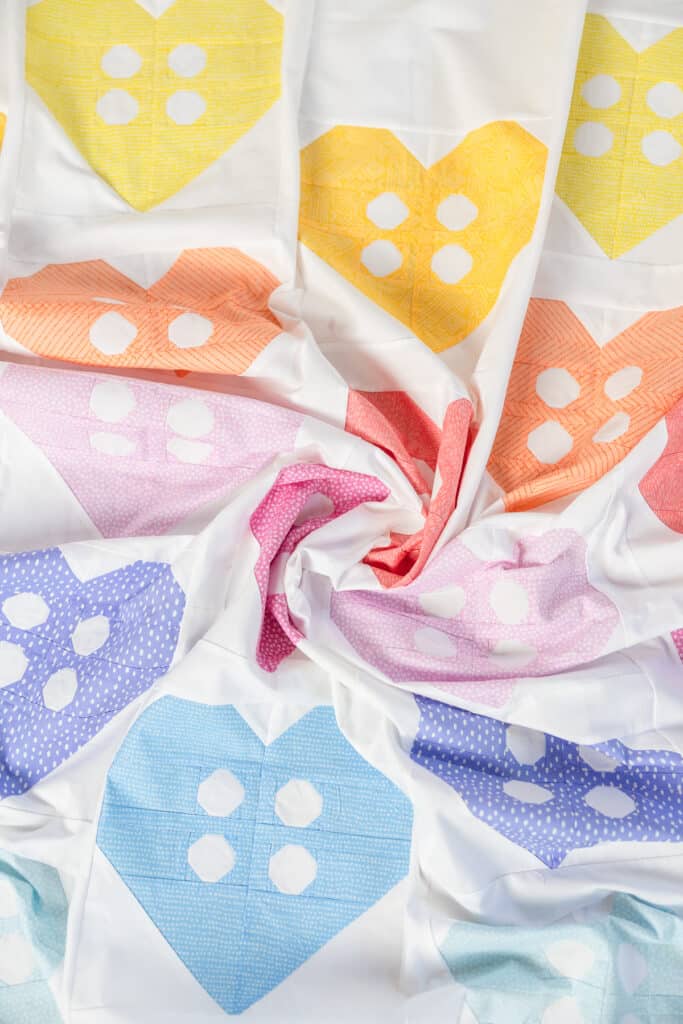
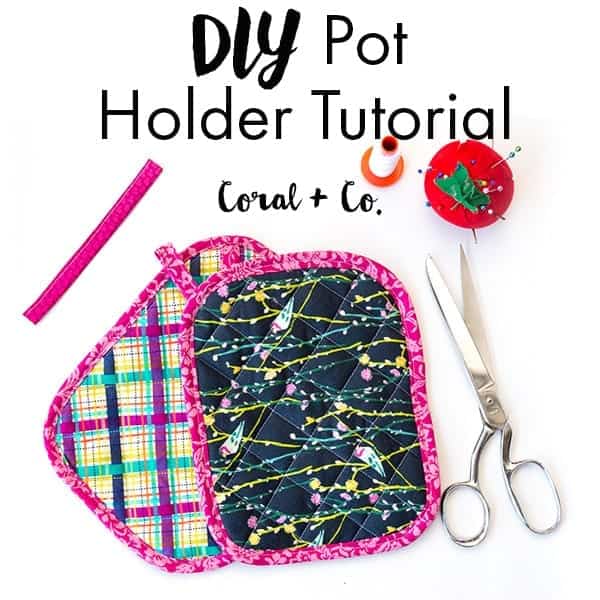
This simple pattern can be sewn in an hour and customized with one of the optional appliqué templates. The templates can be cut with scissors and do not need a cutting machine. There is no inner lining which makes this a perfect project if you are new to sewing or if you just want to whip up a trick or treat bag quickly.

Table of contents

  • Supplies
  • Download the Trick or Treat Bag Pattern and Appliqué Templates
  • Free Trick or Treat Bag Pattern Instructions
    • Cut the Fabric and Appliqué Template
    • Sew the Bag Front
    • Sew the Handles
    • Sew the Bag Together
    • Sew the Corners
  • Watch the Video
  • Printable Instructions

Supplies

Supplies Needed:

  • 2 Half Yards of Cotton Fabric for the Fabric Front and Handles.
    • Black and White Stripe and Halloween Fabric.
  • 2 Fat Quarters for the Contrasting Fabric Band and Applique
  • Trick or Treat Bag Pattern Template (Download Below)
  • Applique Templates (Download Below)
  • Steam a Seam 2 (To attach the Applique)
  • 1 Yard Pom Pom Trim (Etsy has tons of colors to choose from)
  • Pins or Wonderclips
  • Sewing Machine Needle
  • Thread
  • Scissors or Rotary Blade and Cutting Mat

Download the Trick or Treat Bag Pattern and Appliqué Templates

Free Trick or Treat Bag Pattern Instructions

Cut the Fabric and Appliqué Template

Step 1 – Download the Trick or Treat Bag Pattern and tape together.

Step 2 – Cut out the pattern pieces which include one front piece, one back piece, one contrasting fabric band, and two handles.

Step 3 – Cut out the appliqué piece using the template from accent fabric. There are five different appliqué templates to choose from.

Sew the Bag Front

Step 4 – Place fabric front piece right side up with the contrasting fabric band right side down. Pin or clip in place. Sew the bottom edge together using a 1/2″ stitch.
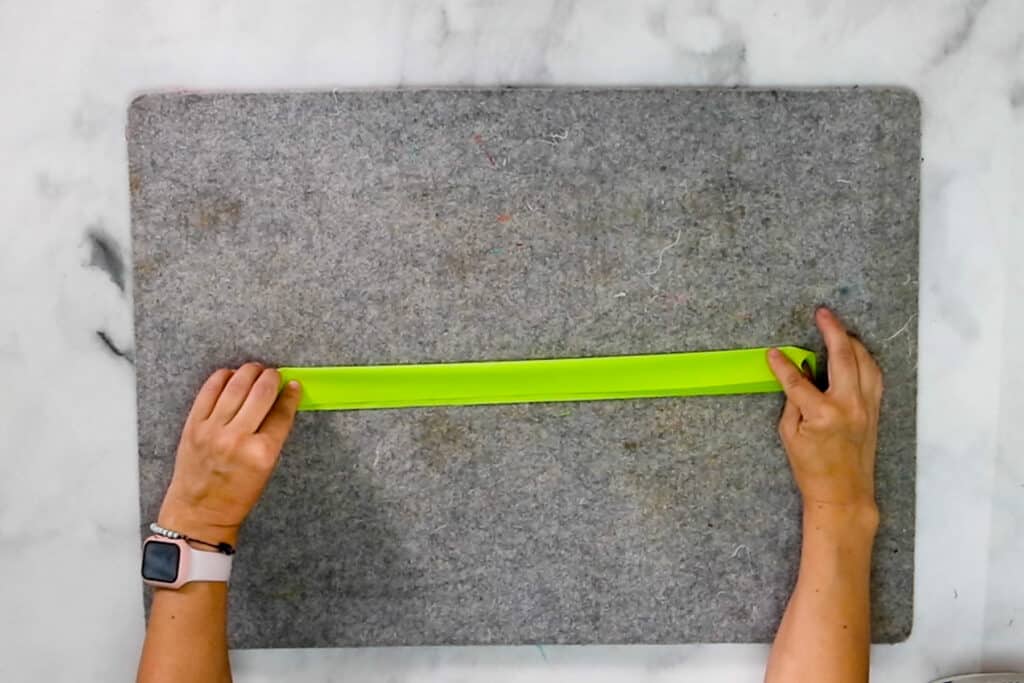
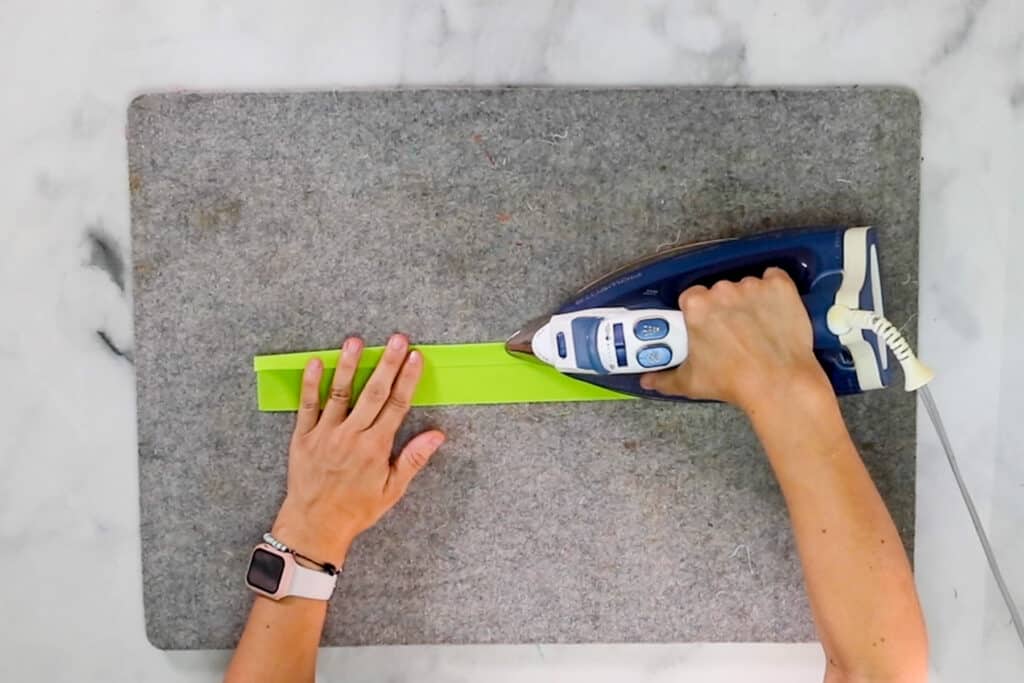
Step 5 – Place the applique piece, with the steam a seam 2 on the back of it, centered on the fabric front. Follow the instructions on the back of the steam a seam 2 package to stick to the appliqué.

Step 6 – Iron the appliqué piece on the front of the trick or treat bag for 20 – 30 seconds to secure in place.

Step 7 – Press the bottom fabric contrasting seam open.

Step 8 – Sew the edge of appliqué using either a straight stitch or zig zag stitch. I used a straight stitch because I did not think I would be washing the bag, which could make the appliqué fray.

Step 9 – Pin the pom pom trim in place right about the seam allowance.

Step 10 – Sew the pom pom trim to the bag using a straight stitch.

Step 11 – Fold the top edge of the bag 1/4″ down and press. Repeat for both sides of the bag.

Step 12 – Fold the top of the bag down again 1″ and press. Do this for the front and back pieces of the bag. We will wait to sew the top hem down, but we want to press the hem in place right now.

Sew the Handles

Step 13 – Fold the handles in half horizontally and finger press or iron.

Step 14 – Open the the fabric handle up and then fold down the top half 1/2″ to the center line and press.

Step 15 – Fold the bottom edge of the handle up 1/2″ to the center line a press in place.

Step 16 – Fold the handle in half horizontally with the raw edges tucked in toward the center line and press.

Step 17 – Sew along the edge of the open side to form the handle. Repeat the above steps for both handles.

Step 18 – Fold the edge of the handle under 1/2″.

Step 19 – Pin the folded handle edge in place on the top hem of the bag. The top hem of the bag has not been sewn yet because we still need to sew the side seams. But it is easier to sew the handles while the bag is in two pieces. The pin will hold the top seam in place.

Step 20 – Repeat for the other side of the bag handle.

Step 21 – Sew the handles in place on the bag.

Sew the Bag Together

Step 22 – Place the bag back right side up.

Step 23 – Place the bag front right side down. Unfold the top hem to sew the sides and pin in place. You will fold the hem back down after you sew the edges of the bag.

To sew the edges of the bag: Sew from the top edge of the side of the bag to 1/2″ from the bottom clipped corner. Then sew 1/2″ from the bottom clipped corner to the other side 1/2″ from the clipped corner edge. Finally sew the last side, starting at 1/2″ from the clipped corner to the top raw edge of the bag top.

Important – Do not sew the clipped corners. These are used to make the bag bottom flat.

Sew the Corners

***The notched corners remain unsewn.

Step 24 – Line up the fabric seams of the notched corners as shown above. Pin in place and sew 1/2″ seam along the raw edge to form the flat bottom of the bag.

*** I have included a clearer shot of the second bag I made to show how to line up the notched corners.

This is the sewn notched corner of the bag in the tutorial for reference.

Step 25 – Turn the bag right side out. Fold the top hem back down and sew the edge of the hem down to secure in place.

Ta Da! You have finished an adorable Halloween Trick or Treat Bag!

Watch the Video

Printable Instructions

Trick or Treat Bag Pattern

Trick or Treat Bag Pattern

Yield: 1 Bag
Prep Time: 15 minutes
Active Time: 30 minutes
Total Time: 45 minutes
Difficulty: beginner

Sew an easy Trick or Treat Bag with this Free Sewing Pattern for Halloween. Incudes five different applique templates and two different sizes.

Materials

  • 2 Half Yards of Cotton Fabric for the Fabric Front and Handles.
  • Black and White Stripe and Halloween Fabric.
  • 2 Fat Quarters for the Contrasting Fabric Band and Applique
  • Trick or Treat Bag Pattern Template (Download Below)
  • Applique Templates (Download Below)
  • Steam a Seam 2 (To attach the Applique)
  • 1 Yard Pom Pom Trim (Etsy has tons of colors to choose from)
  • Pins or Wonderclips
  • Sewing Machine Needle
  • Thread
  • Scissors or Rotary Blade and Cutting Mat

Instructions

  1. Download the Trick or Treat Bag Pattern and tape together. Cut out the pattern pieces which include one front piece, one back piece, one contrasting fabric band, and two handles.
  2. Cut out the appliqué piece using the template from accent fabric. There are four different appliqué templates to choose from.
  3. Place fabric front piece right side up with the contrasting fabric band right side down. Pin or clip in place. Sew the bottom edge together using a 1/2" stitch.
  4. Place the applique piece, with the steam a seam 2 on the back of it, centered on the fabric front. Follow the instructions on the back of the steam a seam 2 package to stick to the appliqué.
  5. Iron the appliqué piece on the front of the trick or treat bag for 20 - 30 seconds to secure in place.
  6. Press the bottom fabric contrasting seam open.
  7. Sew the edge of appliqué using either a straight stitch or zig zag stitch. I used a straight stitch because I did not think I would be washing the bag, which could make the appliqué fray.
  8. Pin the pom pom trim in place right about the seam allowance.
  9. Sew the pom pom trim to the bag using a straight stitch.
  10. Fold the top edge of the bag 1/4" down and press. Repeat for both sides of the bag.
  11. Fold the top of the bag down again 1" and press. Do this for the front and back pieces of the bag. We will wait to sew the top hem down, but we want to press the hem in place right now.
  12. Fold the handles in half horizontally and finger press or iron.
  13. Open the the fabric handle up and then fold down the top half 1/2" to the center line and press.
  14. Fold the bottom edge of the handle up 1/2" to the center line a press in place.
  15. Fold the handle in half horizontally with the raw edges tucked in toward the center line and press.
  16. Sew along the edge of the open side to form the handle. Repeat the above steps for both handles.
  17. Fold the edge of the handle under 1/2".
  18. Pin the folded handle edge in place on the top hem of the bag. The top hem of the bag has not been sewn yet because we still need to sew the side seams. But it is easier to sew the handles while the bag is in two pieces. The pin will hold the top seam in place.
  19. Repeat for the other side of the bag handle.
  20. Sew the handles in place on the bag.
  21. Place the bag front and pieces right sides together. Unfold the top hem to sew the sides and pin in place. You will fold the hem back down after you sew the edges of the bag. To sew the edges of the bag: Sew from the top edge of the side of the bag to 1/2" from the bottom clipped corner. Then sew 1/2" from the bottom clipped corner to the other side 1/2" from the clipped corner edge. Finally sew the last side, starting at 1/2" from the clipped corner to the top raw edge of the bag top.
  22. Important - Do not sew the clipped corners. These are used to make the bag bottom flat.
  23. Line up the fabric seams of the notched corners as shown above. Pin in place and sew 1/2" seam along the raw edge to form the flat bottom of the bag. *** I have included a clearer shot of the second bag I made to show how to line up the notched corners.

Did you make this project?

Please leave a comment on the blog or share a photo on Pinterest

Project Type: sewing / Category: Halloween

This project and more can be found in the FREE resource library too!

Pin the Trick or Treat Bag Pattern to Save for Later

trick-or-treat-bags

Fall, Free Tutorials, Halloween, Holidays

  • Page 1
  • Page 2
  • Page 3
  • Interim pages omitted …
  • Page 18
  • Go to Next Page »

Primary Sidebar

  • Home
  • Blog
  • About
  • Featured Elsewhere
  • Contact

Copyright © 2026 Coral + Co. on the Seasoned Pro Theme